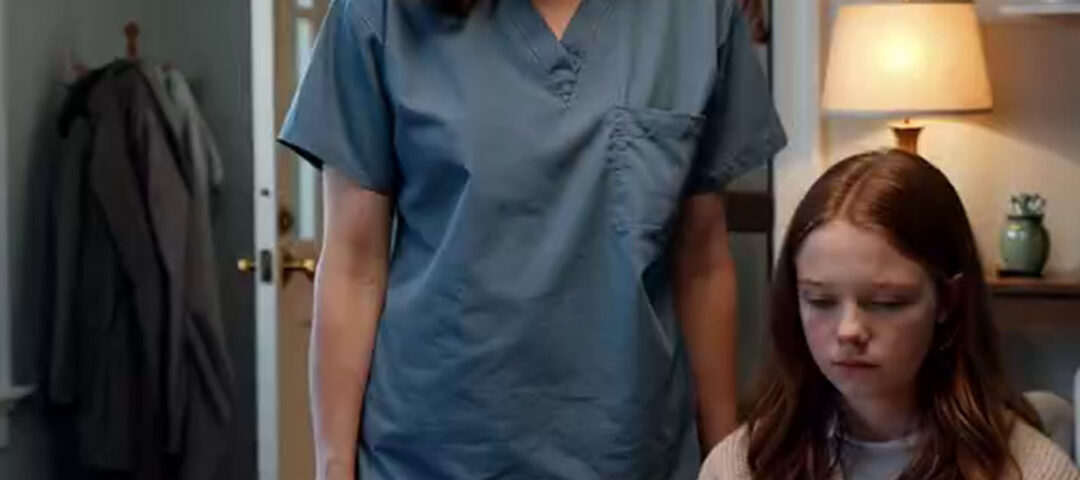
My daughter spent Christmas in an empty house after my family said there was “no room” at the table.
On Christmas, I was working a double shift in the ER. While I was gone, my parents and sister told my sixteen-year-old daughter there was “no room” for her at the table. She drove home alone and spent Christmas in a silent, empty house.
I didn’t make a scene. I didn’t argue over the phone.
I made one quiet move instead.
The next morning, my parents opened their front door, found a letter waiting… and the calls started right away.
The digital clock on my dashboard flashed midnight as I pulled into our driveway. Christmas Eve had officially arrived, though whatever holiday spirit I’d had left somewhere between the third cardiac arrest and the fifth car-crash victim at Oregon Regional.
My shoulders ached after a fourteen-hour shift in the trauma unit, my scrubs carrying the invisible weight of other people’s tragedies. I fumbled with my house key, expecting darkness.
Michael was away on business until tomorrow morning, and Maya had texted earlier about heading to my parents’ for their annual Christmas Eve dinner. The thought of my sixteen-year-old daughter spending time with family had been the one bright spot in my exhausting day.
When I pushed open the door, soft lamplight spilled across our living room.
My breath caught in my throat.
Maya lay curled on the sofa, still wearing her winter coat, her face partially hidden beneath a cascade of dark hair. Her chest rose and fell in the shallow rhythm of troubled sleep. On the coffee table sat an untouched plate of food and a container of her homemade sugar cookies—the ones she’d spent all yesterday afternoon perfecting for her grandparents.
“Maya?” I whispered, kneeling beside her.
Her eyelids fluttered open. For an instant, raw vulnerability flashed across her face before she tried to cover it with a smile that didn’t reach her eyes.
“Hey, Mom.” Her voice cracked slightly. “You’re home early.”
“What happened, sweetheart?”
I brushed the hair from her forehead, noticing the crumpled dress beneath her coat—the one she’d spent weeks choosing, the one she’d tried on for me four times, asking if it was nice enough for Grandma’s fancy dinner.
The dress was wrinkled now, its delicate fabric bearing the evidence of hours spent curled in defeat on our sofa.
As she sat up, the living room light caught the faint tracks of dried tears on her cheeks.
“Nothing happened,” she said with a shrug, reaching for nonchalance and missing by miles. “I just didn’t stay very long.”
“Maya.”
I took her hands in mine. They were still cold.
“Please tell me.”
Her eyes dropped to our intertwined fingers.
“Grandma said there was no room at the table.”
My heart stopped.
“What?”
“There were a lot of people there.” Her voice grew smaller. “Neighbors. Dad’s cousins. Even Grandma’s bridge club friends.”
The image formed in my mind with painful clarity—my daughter driving herself over in the car she’d only had for three months, proudly carrying gifts and homemade cookies, expecting the warm glow of family tradition.
“I drove over around six,” Maya continued, the words tumbling out now. “I parked where Uncle Jack always parks, you know? And I checked my hair in the mirror about a hundred times.”
I nodded, my throat tight.
“Grandma answered the door with that smile. You know the one.”
Maya’s fingers twitched in mine.
“And she said, ‘Oh, we weren’t expecting you until your mother arrived.’”
The familiar cold feeling spread through my chest—the one that always accompanied interactions with my mother. Helen Morgan, master of subtle rejection disguised as practicality.
“I could see everyone at the table,” Maya said. “They had the leaves in, the way they do for Thanksgiving. Twenty-six people, Mom. I counted. There was Aunt Carla and Uncle Jack, and all their kids. There was Mrs. Peterson from next door, and Mr. and Mrs. Lambert from the bridge club.”
I closed my eyes, already knowing where this story ended.
“Grandma told me there wasn’t a chair for me.” Maya’s voice cracked. “She said they hadn’t set a place because they thought I was coming with you later. She said the guest room was full of coats… but I could wait in the kitchen if I wanted.”
My hands began to tremble.
“Aunt Carla pretended to be really interested in the potatoes,” Maya added, swallowing hard. “So I left the gifts and cookies and said I’d see them tomorrow.”
“You drove home in the rain,” I said. It wasn’t a question. I’d driven through the same storm.
Maya nodded.
“It wasn’t so bad.”
But it was. It was bad in ways my sixteen-year-old shouldn’t have to understand yet.
The familiar weight of family obligation pressed down on me—the same weight I’d carried since childhood. I’d spent eight years paying the mortgage and utilities on the house my parents lived in, the house I’d purchased when Dad lost his job and they faced foreclosure.
Eight years of monthly checks accompanied by criticism about how I’d abandoned the family for my fancy nursing degree.
My father’s voice echoed in my memory: You think you’re better than us with your fancy degree.
My sister Carla’s constant refrain: Must be nice to abandon family for education.
Every family gathering laced with barbs disguised as jokes. Every holiday heavy with unspoken resentment.
For years I’d been the family peacekeeper—smoothing ruffled feathers, making excuses, writing checks. I’d endured it all because that’s what family did. Because walking away seemed crueler than staying.
But as I helped Maya to her feet, as I gently removed the coat she’d been wearing for hours in our warm house, something shifted inside me.
“They didn’t run out of chairs, Mom.” Maya’s voice was small but steady. “They just didn’t want me there.”
My hands stopped trembling.
I helped my daughter to bed, my voice steady despite the storm raging inside me. I tucked her in as if she were still a child, though her long limbs barely fit under the quilt my grandmother had made.
I watched her eyelids grow heavy with the emotional exhaustion of the evening.
“Never again, sweetheart,” I whispered as she drifted off. “Never again.”
Later, I heard the front door open and close quietly. Michael’s familiar footsteps crossed the living room, followed by the soft thud of his suitcase being set down.
“Steph?” he called softly.
I met him in the hallway, the untouched plate of food and unopened container of cookies still on the coffee table, telling a story I couldn’t yet bring myself to repeat.
When I finally explained what had happened, I watched shock transform his features.
“They turned her away?” His voice held the disbelief of someone who had grown up in a normal family—someone who couldn’t quite grasp the particular cruelty of mine.
I nodded, something cold and clear crystallizing inside me. My mother’s petty tyranny, my father’s weak submission, my sister’s jealous complicity.
In the quiet of our home, with my daughter sleeping down the hall, I made a decision without speaking it aloud.
The decision every parent eventually faces—the moment when compassion for others must bow to the fierce protection of your child.
Some people didn’t deserve second chances. Some tables weren’t worth having a seat at, and some chairs were better left empty.
The next morning, manila folders lay spread across our kitchen table—an archive of eight years of financial servitude.
Michael stood behind me, his hand a steady weight on my shoulder, as I traced my finger over the neat rows of numbers in my checkbook register.
“Thirteen hundred,” I whispered, flipping through page after page of identical entries, every month for eight years.
“That’s over a hundred thousand, Steph.” Michael’s voice held no judgment—just the quiet calculation of a man who worked with numbers for a living.
I’d risen before dawn on Christmas morning, my body clock still calibrated to hospital shifts despite the rare day off. While Maya and Michael slept, I slipped into my home office and unlocked the bottom drawer of my filing cabinet.
The records I’d kept out of habit rather than intention now spread before us like evidence at a crime scene.
“Look at this.”
I pushed a property tax statement toward Michael.
“The house is solely in my name. I’m not helping them with their mortgage. There is no mortgage. I bought that house outright.”
Michael nodded, his jaw tightening as he scanned the document.
“And these payments?”
“Utilities. Property tax. Home insurance. Maintenance.” Each word felt like a stone dropping into a deep well. “I’ve been paying for everything, for years.”
The kitchen light cast harsh shadows across the growing pile of evidence.
Bank statements showed regular transfers to my sister Carla for her children’s private-school tuition.
Credit card bills detailed gifts purchased for nieces and nephews—laptops, gaming systems, designer clothes—while Maya had learned to keep her wishes modest.
“Remember last Christmas?”
I pulled out a credit card statement.
“I bought Carla’s daughter Lily that thousand-dollar laptop for her coding class. Maya asked for art supplies—just watercolors and decent paper.”
Michael’s finger traced down to a handwritten note I’d made on the statement margin.
Helen said Maya’s request was, finally, reasonable.
Beneath that, another folder held a stack of birthday cards from the past five years. Each one from my parents contained a crisp twenty-dollar bill for Maya. Each one for Carla’s children contained checks for hundreds.
“I should have seen it sooner,” I whispered.
The morning light strengthened, illuminating a small leather-bound book I’d found tucked between Maya’s mattress and box spring while putting away clean sheets last month.
I hadn’t meant to read it then, respecting her privacy.
Now, with her permission given in a sleepy morning conversation, I opened the journal to the pages she’d marked.
Grandma told everyone my art award wasn’t real because my school gives them to everyone.
(It was the regional showcase winner. Only one student from each high school.)
Oh. Cousin Lily’s dance recital today. Everyone went. Grandma said there wasn’t enough room in the car for me.
Found out later they took two cars.
Christmas at grandparents again. All the cousins got Apple Watches. I got socks.
Mom looked sad but didn’t say anything. I don’t want to make it worse for her.
The last entry was dated just two months ago.
Haven’t told Mom about Thanksgiving dinner. She works so hard. No point making her feel bad when she can’t fix Grandma anyway.
My hands trembled as I closed the journal.
“She’s been protecting me,” I said, the words scraping my throat.
“While you’ve been protecting them,” Michael said, his voice tight, “you’ve been paying for your own daughter’s rejection.”
The kitchen grew quiet except for the gentle hum of the refrigerator. Outside, a neighbor’s child shouted with Christmas-morning delight.
Inside our home, the only gift being unwrapped was the harsh truth of years of exploitation.
“This isn’t about one dinner,” I said finally, clarity replacing the confusion that had clouded my judgment for years. “It’s about Maya’s worth.”
Michael pulled out the chair beside me, his movements deliberate as he gathered the scattered papers into neat piles.
“You’ve been their safety net for years,” he said quietly. “They’ve been Maya’s nightmare.”
The doorbell rang, startling us both.
I glanced at the clock. Ten-thirty.
Sarah Williams stood on our porch, a bottle of champagne in one hand and a foil-covered dish in the other.
“Merry Christmas!” she called as I opened the door. “I brought brunch—hope that’s okay.”
Sarah—my attorney friend who’d helped me purchase my parents’ house years ago—took one look at my face and set down her offerings on the entry table.
“What’s wrong?”
An hour later, Sarah sat at our kitchen table, legal pad covered with notes, champagne forgotten.
“It’s straightforward,” she said, tapping her pen against the property tax statements. “The house is in your name. They’re essentially tenants without a formal agreement. We can file a sixty-day notice to vacate.”
“Isn’t that cruel?”
The question slipped out before I could stop it, the ingrained guilt rising one last time.
Sarah’s eyes narrowed.
“Is it cruel to stop someone from taking advantage of you? Is it cruel to protect your daughter?”
At nine, my phone buzzed with a text from Jennifer, a fellow nurse who’d canceled Christmas plans to cover my shift.
How’s your day going? Better than the ER, I hope.
I texted back a brief summary of the morning’s discoveries.
Her response came immediately.
My mother did the same to my son. Call me if you need to talk to someone who’s been there.
Michael’s hand covered mine on the table.
“I’ll support whatever you decide.”
“I need to talk to Maya first,” I said.
We found her in her room, sketching by the window, morning light catching in her dark hair. The Christmas tree lights reflected in the glass, casting colored shadows across her drawing.
“Mom?” She looked up, sensing the weight of our presence. “What’s wrong?”
I sat beside her on the bed, choosing my words carefully.
“We’re not going to your grandparents’ for New Year’s.”
Something flickered in her eyes—relief, uncertainty, then a cautious hope.
“Really?”
“Really. And there are going to be other changes too.”
I explained as gently as I could about the house, the financial support, the decision forming in my mind. With each sentence, her shoulders relaxed incrementally, as if a burden was lifting.
“Sarah’s downstairs,” I finished. “She’s helping us draft some letters.”
Maya nodded slowly.
“Are you sure? They’re your parents.”
The simple question held layers of concern—not for herself, but for me. Even now, she worried about my feelings, my relationships.
“I’m sure,” I said. The decision solidified with each passing moment. “This isn’t just about one dinner. It’s about you. About us.”
Later that evening, after Sarah had gone home promising to return with formal documents, after Jennifer had called offering quiet encouragement and understanding, after Michael had ordered Chinese food because none of us felt like cooking, I sat at the kitchen table again.
The eviction notice lay before me, its formal language masking the emotional weight behind each word.
Sixty-day notice to vacate premises.
Next to it, a letter terminating financial support, effective immediately.
My hand didn’t shake as I signed both documents.
Michael stood in the doorway watching.
“You okay?”
“No,” I admitted. “But I will be.”
The weight of years of enabling toxic behavior pressed down on me as I sealed the envelopes.
“Tomorrow, these will be delivered,” I said. “Tomorrow, everything will change.”
I climbed the stairs slowly, exhaustion from the emotional day settling into my bones.
I paused at Maya’s door, finding her still awake, scrolling through her phone.
“All done?” she asked.
I nodded.
“All done.”
She set down her phone, studying my face.
Then, slowly, her lips curved into a genuine smile—the first I’d seen in days.
“Mom,” she said softly, “I’ve never seen you stand up to them.”
In that moment, in my daughter’s quiet approval, I found the strength to face whatever came next.
Three days later, the eviction notice lay in torn halves on my porch, Helen standing over them with color high in her cheeks.
Despite the winter chill, sweat beaded along her hairline, her finger jabbing toward me like a weapon.
“This is how you repay everything we’ve done for you?”
She waved the torn paper.
“After all the sacrifices?”
I leaned against the doorframe, surprised by the calm spreading through my chest. The old Stephanie would have rushed to smooth things over, would have felt the familiar twist of guilt in her stomach.
But Stephanie had watched her daughter come home alone on Christmas Eve.
“You’ll need to leave the premises within sixty days, as legally required.” My voice remained steady. “Since you’ve destroyed the notice, I’ll have my attorney send a certified copy.”
Helen’s mouth opened, then closed.
This script wasn’t following her plan.
“Lily’s robotics camp is next month.”
She switched tactics, her voice softening. “Eight hundred dollars. If you’ll just handle that, we can forget this nonsense.”
My sister Carla’s daughter—the golden grandchild who never lacked for attention or chairs at family dinners.
“No.”
One syllable. So simple, yet it had taken forty-two years to find.
Helen’s mask slipped.
“You always were a selfish girl, putting yourself above family.”
“Goodbye, Mother.”
I closed the door on her sputtering rage.
Inside, I leaned against the wall, waiting for the familiar flood of guilt that never came.
Instead, I picked up my phone and called Sarah Williams.
“We need another eviction notice—certified this time.”
The voicemails started that evening.
Dad’s voice carried none of Helen’s fire, just a weary disappointment—more effective at triggering guilt than my mother’s rage had ever been.
“Stephanie, you’re destroying this family over nothing. Your mother is beside herself. Call us back so we can fix this.”
Nothing.
Maya’s exclusion was nothing.
Eight years of financial support was nothing.
I deleted the message.
By morning, my phone buzzed with extended family.
Uncle Robert asking what this nonsense was about evicting my parents.
Aunt Susan wondering if I was having some kind of breakdown.
Cousin Beth suggesting I speak with my pastor about honoring thy father and mother.
Then came Carla’s Facebook post, shared by seventeen family members before lunch.
Prayers needed for my elderly parents facing homelessness because my sister has abandoned her family responsibilities.
Some people forget who was there for them when they needed help.
The bank manager looked uncomfortable as I sat across from him, requesting the termination of automatic payments to my parents’ accounts.
“These have been set up for… eight years?” he asked, scanning the screen.
“Yes,” I said. “Mortgage, utilities, property tax, and a monthly stipend.”
I placed my driver’s license on the desk.
“All of it ends today.”
His fingers tapped across the keyboard.
“And you’re certain?”
“Completely.” I met his eyes. “I’d also like printed records of all payments made to date.”
He nodded, clearly relieved I wasn’t emotional. People expected tears from women changing long-established financial arrangements. They expected wavering and second-guessing.
They didn’t expect the calm that comes with absolute clarity.
At home that evening, I created a folder on my laptop.
Documentation.
Inside went scanned bank statements, property records showing my name as sole owner, and screenshots of Carla’s posts.
I started a new document titled Communication Timeline.
Every call, text, and voicemail would be noted.
Their tears never stopped them from hurting Maya.
The thought appeared in my mind with crystal clarity as I typed.
Why should my tears stop me from protecting her?
Michael found me in the home office, printouts spread across the desk.
“Security cameras arrived,” he said, setting a box on the floor. “I’ll install them tomorrow.”
I nodded, adding a note to the timeline about Helen’s visit.
“Your mother called my cell,” he added. “Said I needed to control my wife.” His laugh held no humor. “I told her I’ve never tried to control you, and I’m not starting now.”
I reached for his hand.
“Thank you.”
“Stephanie.” His voice softened. “Are you sure about this?”
“I’ve never been more sure of anything.” I squeezed his fingers. “They had twenty-six people at that table, Michael. Twenty-six people. And no room for Maya.”
Three days later, Helen ambushed me outside the hospital.
My night shift had ended at seven a.m., and I was walking to my car when her voice sliced through the crisp morning air.
“After all we’ve done for you!”
She stood blocking my path, Raymond beside her looking uncomfortable in the harsh fluorescent lights of the parking garage.
Two nurses from my unit slowed their pace, watching with concern.
I gave them a small nod to indicate I was okay.
“What you’ve done to Maya is unforgivable,” I said, keeping my voice measured.
“One dinner.”
Helen threw her hands up.
“This is about one dinner? You’re throwing your parents out on the street because your daughter didn’t get special treatment?”
“Special treatment?”
The words escaped before I could contain them.
“She’s my child. Your granddaughter. She drove herself to a family dinner and was told there wasn’t room.”
“We didn’t expect her until you arrived,” Helen snapped.
“There were twenty-six people at that table,” I said, voice steady. “Neighbors. Bridge club members. Everyone but Maya.”
Helen stepped closer.
“I have always put this family first. I have sacrificed everything.”
“The house is mine,” I said. “The bills are ending. Maya deserves better.”
I moved past them toward my car.
“Any further communication should go through my attorney.”
“You ungrateful—” Helen’s voice rose, echoing through the concrete structure.
One of the nurses turned back, witnessing Helen’s mask slip completely.
“She’s paid your bills for eight years,” the nurse called, surprising me.
Jennifer—who had listened to more family stories during our breaks than anyone should have to endure.
“This is a private matter,” Helen snapped.
“Not when you’re harassing my colleague in our workplace,” Jennifer said, folding her arms.
Later that week, Pastor Thomas called.
“Your mother spoke at the prayer group,” he said carefully. “She gave quite a performance.”
“I imagine she did.”
“I wanted you to know I’ve spoken privately with several members who heard her version of events.” His voice was kind but firm. “I reminded them that family situations are rarely as simple as they appear from one perspective.”
“Thank you.”
The lump in my throat caught me by surprise.
“Boundaries aren’t unchristian, Stephanie,” he said. “Neither is protecting your child.”
The next morning, Maya’s therapist confirmed what I already suspected.
“This exclusion pattern shows clear intentionality,” Dr. Winters said. “It’s not accidental. And it’s having a significant psychological impact on Maya’s sense of belonging and self-worth.”
I nodded, adding her assessment to my growing documentation.
On day thirty-five, the moment arrived that shifted everything.
The process server delivered the certified eviction notice—not to my parents’ home, but to the family Sunday dinner I knew they’d be attending at Carla’s house.
A calculated decision that I didn’t regret.
Within hours, my phone lit up with a call from Cousin Martha.
“They’re living in your house?” Her voice was stunned. “All these years? Helen told everyone you were helping with a few bills because Raymond had been so generous with your college tuition.”
“No,” I said, keeping my voice even. “Dad lost his job. They were facing foreclosure. I bought the house and let them stay in it.”
“Good Lord.” Martha’s voice dropped. “And you’ve been paying everything? Mortgage? Utilities? For eight years?”
Silence stretched between us.
“Martha.”
I drew a breath.
“They told Maya there wasn’t room at the table on Christmas Eve. Twenty-six people, including neighbors and the bridge club. But no room for my daughter.”
Martha’s voice hardened.
“That sounds like Helen.”
The dam broke.
Within days, the carefully constructed narrative Helen had built began crumbling. Extended family support evaporated as financial truths emerged.
Uncle Robert stopped calling.
Aunt Susan’s concern shifted from my mental health to Helen’s manipulation.
I continued building my documentation wall.
Maya’s exclusion timeline spanned five pages. Birthday parties where she was the only grandchild not invited. Family vacations where there wasn’t enough room in the car. Holiday gatherings where her gifts were noticeably smaller or absent entirely.
Sarah, my attorney, reviewed the growing file with professional detachment.
“Let them make their choices,” she advised. “We document the consequences.”
By day forty-five of the sixty-day notice, I was reviewing property tax records when my phone buzzed with a text from Carla.
I hadn’t heard from my sister directly since the eviction notice was delivered to her Sunday dinner.
We need to talk alone.
I stared at the screen, detecting an unusual sincerity in those five words.
My finger hovered over the reply button.
“Are you still sure about this, Mom?”
Maya stood in the doorway, watching me with worried eyes.
I looked up at my daughter—stronger now. Sleeping through the night again. Laughing, returning.
The weight of obligation felt lighter each day we moved forward without the burden of their approval.
“Some bridges can’t be unburned,” I said quietly. “And some shouldn’t be.”
The coffee shop bustled with mid-morning customers, their conversations creating a protective wall of ambient noise.
I arrived twenty minutes early, selecting a corner table with clear sight lines to both entrances. Michael would remain in the car—close enough to intervene if necessary, far enough away to give me space to handle this myself.
I placed my phone on the table, the recording app already running beneath a seemingly innocent screensaver of Maya’s senior photos.
The manila folder beside it contained only a fraction of the financial documents I’d compiled—just enough evidence to make my point without revealing my full hand.
Attorney Sarah’s advice echoed in my mind as I rehearsed potential responses.
When Carla tries to make you feel guilty, acknowledge her feelings without accepting responsibility.
When she minimizes Maya’s exclusion, redirect to documented facts.
I straightened my spine as Carla pushed through the door, her designer purse swinging from her arm.
The familiar knot formed in my stomach—the Pavlovian response to family confrontation that had controlled me for decades.
I won’t let guilt replace boundaries again, I whispered to myself as she approached.
“You look tired,” Carla said by way of greeting, sliding into the seat across from me.
Her critical assessment wasn’t entirely wrong. All these days of standing firm against escalating family pressure had taken its toll.
“How are you, Carla?”
I kept my voice neutral, noting how she immediately scanned the folder on the table.
“This family situation is breaking Mom’s heart,” she replied, stirring her coffee with unnecessary vigor. “We need to stick together, Stephanie. That’s what family does.”
I waited, letting silence do the work.
“They don’t believe you’re really going through with the eviction,” Carla continued, lowering her voice. “Mom keeps saying you’ll come to your senses before the deadline.”
“Have they started packing?” I asked, already knowing the answer.
Carla’s gaze dropped to her cup.
“It’s hard for them at their age. They’ve lived there for eight years.”
“In a house I’ve paid for,” I reminded her gently. “They’ve had forty-five days to make arrangements.”
“Where will they go?” Her voice pitched higher, the familiar guilt strategy. “Dad’s arthritis is worse, and you know Mom can’t handle stairs anymore.”
I took a deliberate sip of water, letting the coolness steady me.
“Their housing isn’t my responsibility anymore.”
“Maya can have a seat next time,” Carla blurted, leaning forward. “If you’ll just stop this madness, we’ll make sure she’s included. I promise.”
The rehearsed line I’d prepared evaporated as white-hot anger flashed through me.
I reached into the folder and slid a single page across the table.
“This is a timeline of every time Maya was excluded from family events over the past three years,” I said quietly. “Different occasions, Carla. Birthdays. Holidays. Weekend barbecues.”
She glanced at the paper without touching it.
“Did you ever once stand up for her?” I asked.
The question hung between us.
Carla’s silence was more damning than any excuse she might have offered.
“The eviction stands,” I said, my voice steadier than I’d expected. “The financial support ends.”
“You can’t just—”
“Their emergency doesn’t constitute my crisis,” I interrupted.
The phrase borrowed from my session with Pastor Thomas last week.
“Not anymore.”
Carla’s face flushed.
“So that’s it? Thirty years of family ties severed because Maya got her feelings hurt at Christmas?”
I closed the folder without responding to her bait, leaving my coffee untouched as I stood.
“Maya is my family,” I said. “I chose her.”
The fifteen-minute drive home passed in silence, Michael’s hand occasionally squeezing mine at stoplights.
“You did the right thing,” he said as we pulled into our driveway.
The simple validation nearly undid me after years of questioning my every decision.
“Sarah called,” he added. “She confirmed they haven’t filed any challenges to the eviction. Legally, there’s nothing they can do at this point.”
I nodded, the tension in my shoulders easing slightly.
“Pastor Thomas left a message too,” Michael said. “He’s offered to help them find alternative housing.”
“Without you financing it,” Michael clarified, his protective instinct evident.
“Without me financing it,” I agreed.
Jennifer from work had promised to come by that evening—another unexpected ally who’d emerged when I’d finally allowed myself to be vulnerable about my family situation.
“You’re not alone in this,” she’d told me, sharing her own story of establishing boundaries with toxic relatives.
Maya’s bedroom door stood open as we passed. Her therapist’s latest art project spread across her desk.
The colorful family tree she’d created showed only branches that nourished her—Michael and me at the trunk, friends and supportive relatives flourishing above.
The barren limbs representing Helen, Raymond, and Carla had been deliberately left without leaves.
The first cracks in the family unity appeared three days later, when Helen called to offer partial rent payments if the eviction could be postponed indefinitely.
“I’m not your landlord,” I replied calmly. “I’m selling the property.”
And Raymond reached out separately that same evening, the first acknowledgment of wrongdoing in his stumbling message.
“We might have been too harsh on the girl,” he admitted, as if minimizing years of exclusion might soften my resolve.
Through Michael’s cousin, who still spoke with Carla’s husband, we learned my parents were arguing about the possibility of Helen and Raymond moving in with them—a prospect neither welcomed.
When Helen’s rental applications were rejected due to poor credit, her panic manifested in increasingly desperate calls that I let go to voicemail.
The family that had seemed so formidable was fracturing under the weight of impending homelessness.
I was reviewing hospital schedules in our home office when the doorbell rang unexpectedly.
Through the security camera Michael had installed, I saw Carla standing alone on our porch, shoulders hunched against the spring rain.
“I’ll handle this,” I told Michael, who hovered protectively in the hallway.
Carla’s mascara had smudged beneath her eyes, her usual perfect appearance showing signs of strain.
“We need help with the rental deposit,” she said without preamble when I opened the door. “Just… help, Stephanie. They’ll pay you back.”
The request might have worked two months ago, triggering my caretaker instincts and opening my checkbook without question.
“You saw them turn Maya away,” I said instead, my voice quiet but firm. “You sat at that table and said nothing.”
Something shifted in Carla’s expression—the first recognition of consequences beyond inconvenience.
“I didn’t think you’d actually go through with it,” she whispered.
“That was your choice,” I replied, feeling no triumph at her distress. “This is mine.”
She left in silence, her final attempt at manipulation falling flat against the boundary I’d established.
From her window upstairs, Maya watched her aunt’s departure.
I found her there moments later, her expression thoughtful rather than victorious.
“Are you okay, Mom?” she asked, reaching for my hand.
In that moment, I realized the true measure of our healing—that my daughter now worried about my well-being as much as I worried about hers.
The knowledge strengthened my resolve even as it softened my heart.
“I’m better than okay,” I told her.
And for the first time in months, it wasn’t a lie.
Day fifty-eight arrived with the inevitability of a ticking clock.
I stood at my living-room window, watching six cars pull into our driveway one after another.
The family intervention my mother had orchestrated unfolded with military precision, just as I’d expected.
“They’re all here,” I called to Michael, who was helping Maya with her calculus homework at the kitchen table.
Michael looked up, his expression calm but resolute.
“Right on schedule.”
I smoothed my hands over my cardigan, steadying the slight tremble in my fingers.
Two days before the eviction deadline, Helen had pulled out her final weapon: the extended family.
The doorbell rang.
I opened it to find my mother surrounded by a semicircle of relatives—Aunt Louise, Uncle Thomas, cousins Brenda and Patrick, and my father’s brother Frank with his wife, Dorothy.
Helen’s eyes were already glistening with rehearsed tears.
“We need to talk as a family,” she announced, pushing past me without waiting for an invitation.
They filed in, faces wearing identical masks of concern.
Michael and Maya joined me in the living room as our uninvited guests arranged themselves on our furniture like a jury.
“Stephanie,” my father began, his voice carrying the practiced cadence of a prepared speech. “The Bible tells us to honor thy father and mother. Have you forgotten that commandment?”
I met his gaze steadily.
Eight years of payments had purchased me the right to this moment.
“We’re not here to judge,” Aunt Louise added, though her tone suggested otherwise. “But your parents are in their seventies. Do you want them dying on the streets because you’ve had some… misunderstanding?”
“Misunderstanding?”
Helen dabbed at her eyes with a tissue.
“I never meant to hurt anyone,” she whispered. “There must have been some confusion about Christmas Eve.”
Maya shifted uncomfortably beside me on the sofa.
I felt her tense when Helen looked directly at her.
“Think about Maya’s reputation in the family,” Helen said softly, her voice laced with subtle threat. “She’ll be known as the reason her grandparents lost their home. Is that what you want for her?”
I placed my hand over Maya’s.
Her fingers were cold.
The pressure had been building steadily since the eviction notice. Pastor Thomas had called three times, urging Christian reconciliation. Church members phoned with thinly veiled concerns.
Yesterday, my supervisor had mentioned my family situation was causing workplace tension after Helen had called the hospital in tears.
An anonymous letter had appeared in our mailbox, suggesting an elder-abuse investigation was possible.
The extended family hinted at financial exploitation—since my name was on the deed, but I was forcing elderly relatives into homelessness.
Even Michael hadn’t been spared. Frank had cornered him at the hardware store, asking pointed questions about controlling his wife’s decisions.
“Maybe we should let them stay until they find some place,” Maya whispered when the family broke into smaller conversations, “just until they have something lined up.”
My heart twisted.
After everything, Maya’s capacity for compassion remained intact.
It was both her greatest strength and what Helen had exploited for years.
One more month, I found myself thinking, just to make the transition smoother.
Michael caught my eye from across the room.
His slight head shake reminded me of our late-night conversation when I’d nearly broken two weeks earlier.
“This pattern doesn’t end with extensions,” he’d said then. “It’s not one more month. It’s the rest of our lives.”
Later that evening, after our unwanted guests had departed with promises to pray for our hearts to soften, I sat with Maya on her bed.
“Is it cruel to make them leave?” she asked, twisting her comforter between her fingers.
I chose my words carefully.
“There’s a difference between boundaries and cruelty. Boundaries protect us from harm. Cruelty aims to cause pain.”
“But they’ll have nowhere to go.”
“They’ve had sixty days to find somewhere. They have savings, Social Security, and Aunt Carla’s home has three empty bedrooms.”
I took Maya’s hands in mine.
“They’re counting on you giving in. That’s why they brought up your reputation. They know your kindness is their best weapon against us.”
Understanding dawned in Maya’s eyes.
“Like Christmas Eve,” she said quietly, “when Grandma said there was no room… but there were empty chairs at the end of the table.”
“Exactly like that.”
The final day arrived with strange calm.
Michael, Maya, and I sat in the living room as the security cameras showed Helen and Raymond pulling into the driveway in their Buick, followed by a small rental truck.
No sign of Carla.
She’d stopped speaking to our parents after they’d tried moving into her home last week.
I’d prepared for every contingency.
Sarah, my attorney, stood discreetly in the kitchen, reviewing final paperwork.
A process server waited in his car down the street in case Helen refused to sign the property release.
The property manager I’d hired was conducting a walkthrough, documenting the condition of the house for legal purposes.
The doorbell rang at exactly noon.
Helen’s face hardened when she saw the clipboard in my hands.
“After everything we’ve done for you,” she hissed.
I felt Maya stiffen beside me, but her voice remained steady.
“Would you like some water before you start loading the truck? It’s warm today.”
Helen ignored her.
“This is your last chance to be reasonable, Stephanie.”
I handed her the property release forms.
“I’m not doing this to you,” I said evenly. “I’m doing this for Maya.”
Something shifted in my father’s expression—a flicker of recognition I’d never seen before.
“We should have treated the girl better,” he said quietly. Not to me, but to Helen. “We shouldn’t have kept her waiting in the kitchen that night.”
It was the closest thing to a genuine apology I’d ever heard from him.
Helen snatched the papers from my hands, signing with angry strokes before thrusting the clipboard back at me.
“You’ll regret this when we’re gone,” she said, voice trembling with rage rather than tears for once.
I took the keys she held out.
“I already regret the years I let you hurt my daughter.”
The loading process took less than two hours.
Helen and Raymond had accumulated surprisingly few possessions in the eight years they’d lived in my house. Most of the furniture belonged to the property—purchased by me when they’d moved in with nothing to sit on.
Michael helped carry the heavier items, despite Helen’s cold silence.
Maya wrapped fragile photographs in newspaper without being asked.
I stood in the doorway, watching the family power dynamics shatter with each box loaded into the truck.
Their new address was listed on the rental agreement: a cramped one-bedroom apartment in a building with peeling paint across town.
When I drove by yesterday, an eviction notice had been posted on the door of Unit 3C.
They’d already found new landlords to manipulate.
The extended family who’d arrived in force for the intervention were notably absent today. Reality had finally penetrated the fog of Helen’s manipulations.
Eight years of support ending. Sixty days of warning ignored.
The consequences now were impossible to avoid.
There were no dramatic scenes, no shouting matches.
Just the quiet finality of closing doors and signed documents.
I stood in the doorway with Maya and Michael as the rental truck pulled away, followed by my parents’ Buick.
Helen didn’t look back.
Raymond lifted his hand in a brief, uncertain wave.
When they disappeared around the corner, I closed the door with a soft click—the symbolic sound of one chapter ending.
The next morning, Maya found me in the kitchen, concern etched across her features.
“There’s a for-sale sign in the yard,” she said. “Are we moving because of them?”
I pulled her into a hug.
“We’re moving forward, not away.”
My phone buzzed with a notification, a blocked number leaving a voicemail.
Helen, most likely, with one final attempt to regain control.
I held my finger over the delete button, considering.
“Some messages don’t deserve to be heard,” I said, pressing delete before the red badge could tempt me into listening.
The message vanished, along with the last of my guilt.
The morning sun streamed through our bay windows, casting golden rectangles across the dining table where college brochures fanned out like a paper garden.
Maya’s fingertips traced the embossed logo of her top choice while Michael refilled our coffee cups.
Two years had transformed our lives completely.
“Oregon State has that environmental science program I told you about,” Maya said, tucking a strand of hair behind her ear.
The dark shadows that once lived beneath her eyes had vanished, replaced by a quiet confidence that made my heart swell.
I studied the photographs lining our hallway.
Maya at her science fair victory. Maya on a hiking trip with friends. Maya smiling as she received her acceptance letter.
Each image captured the steady rebuilding of her spirit—brick by brick, smile by smile.
“Whatever you choose, we’re behind you,” Michael said, his hand finding mine under the table.
Our new home breathed with lightness.
Friends dropped by unannounced. Colleagues stayed for impromptu dinners. The relatives who stood by us occupied the guest rooms during holidays.
There was a peace here that felt both earned and natural, like we’d finally found our proper altitude after years of struggling to breathe.
The doorbell chimed.
“That’ll be Jennifer and Dave,” I said, rising to answer it.
“And I bet they brought those cranberry muffins,” Maya called after me, already heading to the kitchen to put on more coffee.
By evening, our dining table extended to its full length, chairs borrowed from neighbors to accommodate everyone for Christmas Eve dinner.
Maya moved confidently between kitchen and dining room, carrying serving dishes with an easy grace.
No trace remained of the girl who once slept in her coat, waiting for me to come home and erase her pain.
“We need more water glasses,” she announced, disappearing back into the kitchen.
I paused, serving spoon suspended above the mashed potatoes, struck by the parallel to that Christmas Eve two years ago.
The same holiday, the same meal preparation—yet everything transformed.
My mother’s voice echoed faintly from the past.
No room at the table.
Looking around, I saw every chair filled with people who genuinely wanted to be here.
No forced politeness. No cutting remarks disguised as jokes. No performance of family without its substance.
Just authentic connection.
“No empty chairs at our table,” I whispered to myself.
Michael caught my eye across the room and winked, understanding the significance without explanation.
The laughter rising around us sounded nothing like the strained chuckles at my parents’ house.
It bubbled up naturally, without agenda or edge.
Later, after dishes were cleared and dessert was served, Jennifer cornered me in the kitchen.
The young nurse reminded me of myself ten years ago—overworked, eager to please, and drowning in family expectations.
“My brother’s been living in my spare bedroom for eight months,” she confided, voice low. “He hasn’t looked for work, criticizes everything I do, and my parents say I’m selfish for wanting my space back.”
I rinsed cranberry sauce from a serving bowl, considering her words.
“Your peace matters too,” I told her gently. “Sometimes the kindest thing is a boundary.”
Maya appeared in the doorway, catching the tail end of our conversation.
“Mom helped me understand something important,” she added, sliding next to me at the sink. “Letting someone take advantage of you isn’t doing them a favor. It just teaches them that using people works.”
Jennifer’s eyes filled with grateful tears.
“But how do you actually do it?” she asked. “Set the boundary, I mean.”
“Start by believing you deserve it,” I answered, with no trace of uncertainty in my voice.
My phone buzzed in my pocket—a blocked number.
I pulled it out, glimpsed the first words of a text.
Hope you’re proud of what you’ve done.
Without reading further, I deleted the message.
No spike of anxiety followed. No gnawing guilt. Just peaceful dismissal of someone else’s attempt to reassert control.
Maya rushed back into the kitchen, clutching an envelope.
“Mom, it came early,” she said, breathless. “My acceptance letter.”
I pulled her into an embrace, feeling the solid presence of the young woman she’d become.
Her resilience humbled me daily.
Her capacity for joy, despite everything, amazed me.
The next morning, Maya packed an overnight bag for her campus visit weekend.
The hesitant girl of two years ago had transformed into someone who looked forward rather than back.
I slipped a framed photograph into her suitcase when she stepped into the bathroom—our chosen family gathered around last Thanksgiving’s table, faces bright with genuine connection.
“Remember who truly loves you,” I whispered when she discovered it.
Before she left, I made one final entry in the journal I’d kept since that fateful Christmas Eve.
They said there was no room for my daughter at the table.
Now, there’s no room left in our lives for cruelty.
We stood together in the doorway—mother and daughter silhouetted against the winter sunshine—stepping forward together into light.