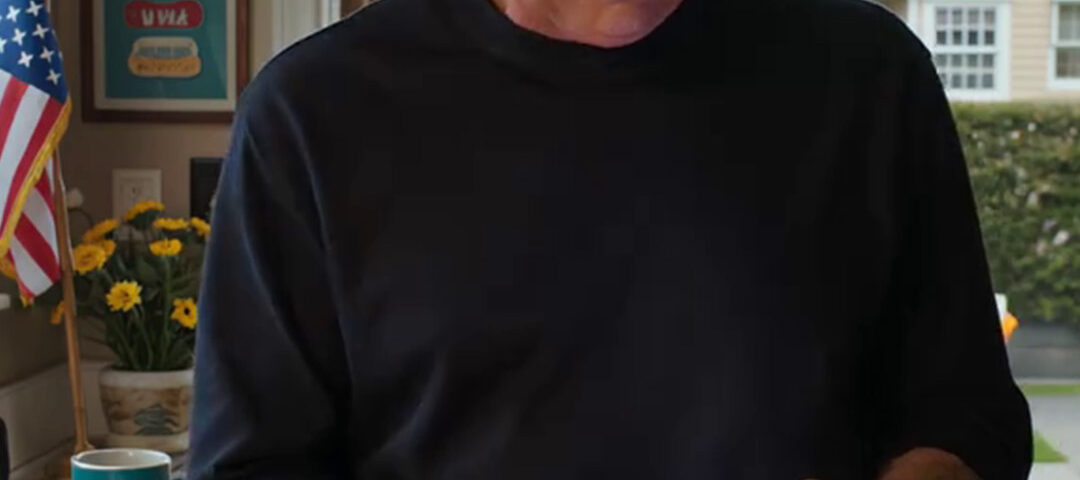
My wife texted me, “Plans changed—you’re not coming on the cruise. My daughter wants her real dad.” By noon, I’d cut off everything I’d been covering, sold the house, and left town. When they came back…
The French press timer beeped.
Four minutes.
Caleb Morrison poured coffee into his mug, watching the dark stream spiral. Tuesday morning in early June, 9:47 a.m. Three hours and forty‑three minutes until their flight out of the small regional airport an hour from their little Midwestern town.
His phone buzzed on the counter.
He picked it up, read the message once, then again.
You’re not coming on the cruise. Taran wants her real family. Rowan’s coming instead. We’ll talk when I get back.
The coffee was still pouring. His hand didn’t shake. Not yet.
He set the phone face down on the granite and finished pouring. The kitchen clock ticked. Somewhere down the hall, the air conditioner clicked on. Outside, a pickup rolled past on their quiet cul‑de‑sac, heading toward the highway that led to Walmart, the diner, the strip of chain stores that passed for downtown.
On the kitchen table, the cruise documents sat in their plastic sleeve. His handwriting on the Post‑it note: Departure 12:30 p.m.
Beneath it, the booking confirmation. Three passengers. Total cost: $11,400.
He picked up the paper, read the amount again, set it down exactly where it had been. The mortgage statement was visible in the mail pile. $2,100 a month. His name only. Sixteen years of payments.
On the wall, the wedding photo. Marbel and Taran in the center. Caleb at the edge of the frame.
He’d never noticed that before.
His phone buzzed again.
I know you’re upset, but Taran needs this. Be understanding.
Caleb deleted the message, opened his laptop, and typed four words into the search bar.
Real estate lawyer near me.
The airline rep answered on the third ring. Caleb navigated the phone tree—press three, press two, enter confirmation number.
“I need to cancel a reservation,” he said. “Caleb Morrison.”
“I’m sorry to hear that, sir. Let me pull up your booking. Is everything okay?”
“Change of plans.”
“Uh, I see three passengers on this reservation. Are you canceling for everyone or just yourself?”
“Just myself.”
The hold music started. Steel drums. Something tropical. The kind of music that plays in airport terminals and cruise‑ship lobbies, the soundtrack of other people’s vacations.
“Mr. Morrison, unfortunately this is a non‑refundable ticket. You’ll lose the $847.”
“I understand.”
“Are you sure you want to proceed?”
“Yes.”
She took his confirmation number. He wrote it on the cruise document in blue ink. Then he crossed out his name on the passenger list.
The cruise line was next. Different hold music. Same tropical instrumentation.
He gave them his cabin number, asked to be removed from the reservation.
“The other passengers can still go?”
“Yes, they’re going.” His voice was steady. The woman on the phone wouldn’t know anything was wrong. Just a man making travel arrangements. Calm, reasonable.
After he hung up, Caleb walked to the home office and opened the filing cabinet. The folders were labeled in his handwriting, color‑coded, alphabetized.
He pulled the one marked HOUSE PURCHASE & TAX.
The property deed inside was dated 2007.
Purchased for $187,000.
One name on the title.
Caleb Morrison.
He photographed it with his phone. Three angles. Then he called the number the search engine had given him.
The lawyer answered on the second ring.
“I own a house,” Caleb said. “My wife’s name isn’t on the deed. We’ve been married fourteen years. I need to know if I can sell it without her permission.”
There was a long pause on the other end.
“Let me pull up your state’s property law,” the attorney said. “This is… Are you sure you want to do this?”
Caleb looked at the deed in his hand. His house, his name. Fourteen years.
“Yes.”
At 10:15, a car pulled into the driveway.
Caleb stood at the bedroom window, curtain pulled slightly aside. Rowan’s 2019 Camry, newer than Caleb’s 2014 F‑150.
The front door opened below. Marbel came out first, pulling her large suitcase. Taran followed with a backpack and carry‑on.
They were laughing.
The sound didn’t carry through the window, but he could see it in their faces. Relief. Freedom.
Rowan got out of the car and opened the trunk. Taran set down her bags and hugged him. A full embrace.
Caleb counted.
Eight seconds.
Marbel touched Rowan’s arm. Familiar. Easy. The way you touch someone you’ve touched a thousand times before.
The bags went into the trunk. Taran climbed into the back seat. Marbel into the front. Rowan walked around, got in, backed out, turned, and drove away toward the highway that led to the airport two towns over.
Caleb let the curtain fall.
He stood there for thirty seconds, not moving. Then he walked downstairs.
The house was silent. On the kitchen counter, he found a note in Marbel’s handwriting.
Took Uber to airport. Rowan picking us up actually. Thanks for understanding. Love you.
He read it three times. The word love looked like a lie written in cursive.
He crumpled the note, then smoothed it back out.
Evidence.
Across the street, the neighbor, Rita—the widow in her sixties—was getting her mail. She looked over, saw him in the window. Their eyes met for a second before she looked away.
She’d seen Rowan pick them up.
She’d seen a lot of things over the years.
Caleb realized that now.
He folded Marbel’s note and put it in the folder with the property deed. Then he went back to his laptop and waited for the lawyer to call back.
The attorney’s office was above the hardware store on Main Street in their Ohio town, a small‑town law practice with wood paneling and actual books on the shelves. A framed print of the American flag hung behind the desk, the kind you bought from a catalog fundraiser.
James Brennan looked about fifty, wore reading glasses on a chain.
Caleb sat in the worn leather chair and slid a folder across the desk.
Property deed. Mortgage statements. Marriage certificate.
Brennan read in silence for three minutes. Caleb waited. He was good at waiting.
The attorney made notes on a yellow legal pad with a fountain pen. Then he pulled up something on his computer and turned the monitor.
“Separate property statute,” Brennan said, pointing. “Assets acquired before marriage remain separate unless explicitly transferred. Your house qualifies.”
“So I can sell it legally?”
“Yes.” Brennan leaned back. “Is this about infidelity?”
“It’s about respect.”
The attorney didn’t push. Just wrote something else on his pad.
“How long married?”
“Fourteen years.”
“Kids together?”
“Stepdaughter. She’s twenty now.”
Brennan looked up at that, studied Caleb’s face.
“You’ve been thinking about this for a while.”
“No,” Caleb said. “I’ve been ignoring it for a while. As of this morning, I’m done ignoring it.”
The attorney wrote down a figure and turned the pad around.
“$2,500 retainer for a clean divorce. $5,000 if she contests.”
“She won’t have money to contest.”
Brennan paused. “You want to tell me what happened?”
“She texted me. I’m not family. I’m taking her at her word.”
There was another long pause. Then Brennan picked up his phone.
“I can have a realtor here in thirty minutes,” he said. “In this market, you’ll have offers in a week. But once you do this, Mr. Morrison, you can’t undo it. She’ll come home to a sold house.”
Caleb looked at his wedding ring. Fourteen years of wearing it. The skin underneath was paler than the rest of his hand.
“Good,” he said. “Make the call.”
Five years earlier. Taran’s high school graduation.
Caleb stood outside the auditorium holding two tickets. Family‑section seating, limited to two per graduate. He’d gotten there early to make sure they had good seats.
Marbel arrived with Taran. Rowan was with them, wearing his faded Tennessee Titans cap like always.
“Oh,” Marbel said, seeing the tickets in Caleb’s hand. “Rowan’s going to sit with us. You don’t mind sitting in general admission, do you?”
It wasn’t a question. She was already holding her hand out for the second ticket.
Caleb gave it to her.
He walked to the back of the auditorium and sat alone on a metal folding chair. From there, he could see them in the third row. Good seats. Marbel, Taran, Rowan.
Rowan said something and Taran laughed.
When they called Taran’s name, Rowan stood up and cheered—loud, proud.
Caleb clapped from the back row. No one turned around.
After the ceremony, they went to dinner at the steakhouse off the interstate. Caleb had made the reservation.
He sat at the end of the table. Rowan sat across from Taran, talking about her plans for college.
Caleb had helped with the applications, spent two months working through essays with her.
Rowan ordered the ribeye. Thirty‑two dollars. Didn’t reach for the check.
Caleb paid $340 for six people.
In the parking lot, they took a photo. Taran stood between Marbel and Rowan.
Someone—one of Marbel’s friends—said, “Oh, Caleb, can you take the picture?”
He took the picture.
Back in the present, Caleb opened the photo album from that day. There he was behind the camera. Present, but not included.
He closed the album.
The realtor’s card was on his desk. Denise Brock. The attorney had called her while Caleb was still in the office.
She answered on the first ring.
“Mr. Brennan told me about your situation,” she said. “I can have a photographer there tomorrow and a sign in the yard by Thursday.”
“Do it.”
“I’ll need to do a walkthrough, get measurements, stage it properly.”
“Whatever you need to do, just do it fast.”
“Mr. Morrison, I have to ask, does your wife know you’re doing this?”
“She will.”
Denise was quiet for a moment.
“Okay. I’ll be there at 9:00 a.m. tomorrow.”
After he hung up, Caleb opened his laptop and created a new spreadsheet.
Label: FINANCIAL CONTRIBUTION ANALYSIS 2009–2023.
He pulled fourteen years of bank statements from the filing cabinet, all of them in plastic sleeves, organized by year. He’d always kept good records.
The first entry: mortgage payments.
$2,100 a month times 168 months.
He entered the formula and watched the cell populate.
Property tax came next. $3,200 a year times fourteen years.
$44,800.
Then Taran’s college. He had all the receipts—tuition, room and board, books, fees. Four years.
$127,000.
Her car, the 2018 Honda he’d co‑signed for, then paid off when she couldn’t make the payments.
$22,000.
Insurance on that car. Five years.
$9,000.
He kept going. Every number precise. No rounding.
This wasn’t anger. This was documentation.
When he finished, he created a second column and labeled it MARBEL’S CONTRIBUTIONS.
He moved down the rows.
Every cell: zeros.
He created a third sheet. JOINT BANK ACCOUNT ANALYSIS. Listed every deposit—all from his paychecks. Listed every withdrawal. Hers were marked with her initials in the memo line when she bothered to add one.
One hundred sixty‑eight deposits from him.
Zero from her.
Four hundred twelve withdrawals.
He color‑coded it. His contributions in green, hers in red. The spreadsheet turned into a sea of green with islands of red.
Total at the bottom: $552,000 invested over fourteen years.
He saved the file, printed two copies, and put them in the folder labeled DIVORCE.
Then he opened a new browser tab, typed in Marbel’s name, and added “Facebook.”
He hadn’t looked at her social media in years.
That was about to change.
Her profile was public.
Caleb scrolled through the timeline methodically. Screenshot, save, rename with the date. He created a folder on his desktop.
EVIDENCE – SOCIAL MEDIA.
He started counting. Made tally marks on a notepad.
Photos with Rowan: forty‑seven over fourteen years.
Photos with Caleb: three. All holidays. All staged.
Her relationship status: It’s complicated.
They’d been married fourteen years.
Still complicated.
He checked the About section. She’d listed Taran, her parents, her job history from before they married.
No mention of him. No mention of being married at all.
He opened the comments on a photo from 2019. Marbel and Rowan at a diner off the highway. Caption: Late lunch with my favorites.
Taran was in the photo, too. The three of them in a booth.
Someone had commented, “You two look so good together.”
Marbel had liked the comment.
Caleb checked his calendar. Cross‑referenced the date on the photo.
He’d been on a business trip to Atlanta that week.
He opened Taran’s Instagram next. Public profile. Eight hundred forty‑seven posts.
He searched for his name.
Zero results.
He searched for “stepdad.” One post. Father’s Day four years ago. Generic card graphic.
Happy Father’s Day to all the stepdads out there.
No photo, no personal message. Just a repost.
He searched her tagged photos. Four hundred twelve total. Counted the ones with Rowan.
Sixty‑seven.
Counted the ones with Caleb.
Four.
Her bio read: 20. State U ‘25. Blessed. Dad’s girl.
Dad’s girl.
Meaning Rowan, not the man who paid her tuition.
Caleb found a post from three months ago. Screenshot of a cruise booking confirmation.
Taran’s caption: Dream vacation with my real family. Can’t wait.
Eight hundred forty‑seven likes.
She’d known for three months. They’d all known. They’d planned it, booked it, posted about it.
He was never supposed to see that post. Never supposed to know.
He screenshot everything. Sixty‑three images saved.
Then he opened the college tuition portal. He was the account holder. He’d paid every semester.
He downloaded four years of billing statements. The numbers totaled $130,000. That wasn’t right. He checked his spreadsheet, adjusted.
Tuition: $73,600.
Room and board: $44,800.
Books and fees: $8,600.
$127,000.
That matched.
He looked at the emergency contact list on file with the university.
First: Rowan Morrison. Relationship: father.
Second: Caleb Morrison. Relationship: stepfather.
He checked the car insurance portal, Taran’s policy. Policy holder: Caleb Morrison. Cost: $1,847 per year for five years.
He’d paid $9,235 to insure a car for someone who listed him second on her emergency contacts.
Caleb opened the phone bill. Family plan. Taran’s line cost $55 a month.
He looked at the call logs for the last two years.
Calls to Marbel: 840.
Calls to Rowan: 420.
Calls to Caleb: 63.
He sat there staring at that number. Sixty‑three phone calls in two years. Once every eleven days, probably most of them her needing something—money, a signature, permission.
He logged into the car insurance portal again, clicked MANAGE POLICIES, found Taran’s name.
Remove driver.
A confirmation screen popped up.
Removing Taran Morrison will cancel her coverage effective immediately. Are you sure?
He thought about the Instagram post.
Real family.
He clicked CONFIRM.
The phone plan was next.
Day Two.
5:30 a.m.
Caleb woke and reached across the bed out of habit. Cold sheets, empty space.
He made coffee in the silent kitchen. No music, no morning news, just the click of the coffeemaker and the hum of the refrigerator.
He sat at the kitchen table with his mug and a notepad.
He wrote two column headers.
Reasons to Stay.
Reasons to Leave.
Under Reasons to Stay, he stared at the blank space for eight minutes.
Under Reasons to Leave, he wrote: They left first.
He crossed out the whole exercise and flipped to a new page.
WHAT I NEED TO KNOW.
Three questions.
How long has she loved Rowan?
Did she ever love me?
What did Taran know?
He looked at the last question for a long time. Taran was six when they met. Twenty now. She’d seen everything—every slight, every exclusion, every time Rowan showed up and Caleb stepped back.
She knew.
His phone was on the table. He opened Taran’s Instagram again, scrolled to her oldest posts.
Age fourteen. Photo with Rowan.
Caption: Best day.
Age sixteen. Father’s Day. Generic post for stepfathers. No photo of Caleb.
Age eighteen. Graduation photo. The one from five years ago. She’d tagged Rowan. Not him.
Her whole digital life, and he appeared four times. Background character. Funding everything. Acknowledged for nothing.
He closed the app.
Opened the college tuition portal instead. Clicked MANAGE PAYMENTS. The auto‑transfer from his checking account to her student account—$400 a month for spending money.
Canceled. Effective immediately.
At 9:00 a.m., his phone rang.
Marcus.
He hadn’t talked to Marcus in three years.
“Caleb, saw your house is for sale. Drove by. You okay?”
Caleb paused.
“Come over now if you can.”
“I’ll be there in twenty.”
Marcus showed up with two beers, the domestic kind Caleb always bought on sale at the local grocery store. He didn’t say anything. Just handed one to Caleb and sat down on the porch steps.
Caleb told him about the text. The cruise. The fourteen years of being second.
Marcus listened without interrupting.
When Caleb finished, Marcus was quiet for a minute.
“I knew,” Marcus finally said. “We all knew. I’m sorry I didn’t say anything. Your wife—” He stopped, corrected himself. “Marbel—when I’d call to invite you out, she always said you were busy. Every time for three years. I figured eventually you’d call me if you wanted to stay friends.”
Caleb set his beer down.
“I never knew you called.”
“Yeah.” Marcus looked at his boots. “I figured that out too late. My wife saw Marbel with that Rowan guy at a restaurant about two years ago. Forty miles from here, off the interstate. Like they were hiding.”
“They weren’t hiding enough.”
“No, they weren’t.” Marcus took a drink. “You selling the house?”
“It’s mine. She’s not on the deed.”
“Jesus, Caleb.”
“I bought it two years before we got married. Never added her name. Didn’t think about it. Turns out that was the smartest thing I ever did.”
Marcus stood up.
“You need help moving? I got a truck.”
“In time. I don’t know where I’m going yet.”
“Then you call me when you do.” Marcus put his hand on Caleb’s shoulder and squeezed once. “You were always good to her. She took advantage of a good man. That’s on her, not you.”
“I stayed fourteen years. That’s on me.”
“Staying that long while being treated like that—that’s not cowardice, Caleb. That’s hope. And she killed it.”
After Marcus left, Caleb sat on the porch alone. The beer was getting warm in his hand. He didn’t drink it.
Across the street, Rita came out to water her roses. She looked over, hesitated, then crossed the street, hose still running in her yard.
“Caleb.” She stopped at the bottom of his porch steps. “I need to talk to you. I can’t keep quiet anymore.”
Rita led him to her porch. They sat on the swing. It creaked. She pulled out her phone and opened the Ring app.
“This is from last April,” she said, showing him a video.
Then July.
Then October.
Each video showed the same thing.
Rowan’s car in Caleb’s driveway. Time stamps 8:00 p.m. to 3:00 a.m. Then 7:30 a.m. the next morning.
Overnight stays.
“How many times?” Caleb asked.
“More than I saved videos for. I didn’t know if you knew. I didn’t want to hurt you if you… if you had some kind of arrangement.”
“I didn’t know.”
Rita’s eyes went wet.
“I’m so sorry. I thought maybe in a modern marriage, sometimes people have understandings.”
“The only understanding here is that I was the only one who didn’t understand.”
She handed him a USB drive.
“All the footage. Two years’ worth. Dates and times. I thought maybe someday you’d need it.”
Caleb looked at his house from Rita’s porch. The house he’d paid for, maintained alone, defended as ‘our home’ for fourteen years.
“Rita,” he said, “did you ever see them together? I mean, actually together.”
She nodded.
“Your porch. Fourth of July, 2021. You were at your brother’s place for the weekend. They were… affectionate. On your steps.”
His porch. His house. His humiliation on display for the neighbors to see.
“Thank you,” Caleb said. “For telling me. For keeping the evidence.”
“Will you use it for a lawyer?”
“Yes.”
Rita stood to walk back to her house, then stopped and turned around.
“Caleb, I’ve lived across from you for fourteen years. I watched you leave for work every morning, come home every night, mow that lawn every Saturday. You’re a good man. You deserve better than what she gave you.”
He didn’t say anything. Just nodded.
After Rita left, Caleb sat there holding the USB drive. Two years of footage. Proof. Evidence. Truth.
But Rita had only gotten the Ring camera two years ago, which meant it had been happening longer than that.
How much longer?
He went inside and opened the family computer—the one they used for household bills and taxes. Logged into the shared email account. Clicked on the trash folder.
8,400 messages. Never emptied.
He searched “Rowan.”
One hundred twenty‑seven results.
He sorted by date, oldest first.
The first email was from 2015. Eight years ago.
Subject: Miss you.
He started reading.
Twenty‑three emails.
Caleb read them all.
Can’t believe you’re stuck with him. – Rowan.
He pays for everything but gives me nothing I need. – Marbel.
Taran graduates next year. Then I’m free. He won’t fight me. – Marbel.
He’s so clueless. Suspects nothing. Makes it easy. – Marbel.
2023, March. Planning cruise. Just us three. He won’t mind. He never does. – Marbel.
The last one was from six weeks ago.
So cruise is confirmed. Just you, me, and Taran. – Rowan.
Yes. Told Caleb it’s a mother–daughter trip. He believed it. He always believes me. – Marbel.
Caleb printed every email. Twenty‑three pages. Eight years of proof she’d never loved him.
He added them to the divorce folder.
Then he made an appointment with attorney Brennan for that afternoon.
Day Four.
Brennan’s office. 2:00 p.m.
Caleb brought a folder two inches thick. Property deed. Spreadsheets. Printed social media posts. Rita’s USB drive.
Brennan played the Ring footage on his laptop, fast‑forwarded through the timestamps. Forty‑seven overnight visits in two years of recordings.
Caleb laid out the emails, the financial analysis, the Instagram post about the “real family” cruise.
Brennan took notes, occasionally looking up at Caleb with something like concern.
“How long have you suspected?” he asked.
“Fourteen years.”
“Why now?”
“Because she texted me I’m not family.”
Brennan drew a timeline on his whiteboard.
Marriage: 2009.
First email: 2015.
First Ring footage: 2021.
Cruise: 2023.
He wrote numbers underneath.
$552,000 contributed by Caleb.
Zero from Marbel.
“This isn’t just infidelity,” Brennan said. “This is financial exploitation with an ongoing affair.”
“Can I sell the house while they’re gone?”
“Can you? Yes. Should you?” Brennan set down his marker. “That’s different.”
“I’m not asking if I should,” Caleb said. “I’m asking how fast.”
Brennan pulled up a template on his computer. Divorce petition. He filled in the names.
Petitioner: Caleb Morrison.
Respondent: Marbel Morrison.
“$2,500 retainer,” he said. “I’ll have the paperwork ready by Monday.”
“The house,” Caleb said.
Brennan picked up his phone again.
“Denise Brock is the best realtor I know. She’s aggressive. In this market, you’ll have offers by next week.”
“They get back Monday.”
“Then we’ll have a sale pending before they land.”
Brennan leaned back in his chair.
“Mr. Morrison, I’ve practiced family law for twenty‑six years. This is the most documented case of quiet exploitation I’ve seen. You’ll win legally. You’ll win everything. But winning in court doesn’t mean you’ll feel like you won.”
Caleb stood up.
“I don’t need to feel like I won,” he said. “I need to feel like I left.”
Thursday morning, 8:05 a.m.
Denise Brock’s SUV pulled up. Two workers unloaded a FOR SALE sign—wooden post, metal frame, company logo.
Six hits with a sledgehammer and the post went into the front lawn. They attached the sign.
BROCK REALTY. FOR SALE. CALL DENISE. 555‑0147.
Caleb watched from the living‑room window, coffee mug in hand. No steam rising. He’d been holding it too long and it had gone cold.
Across the street, Rita came outside, saw the sign, looked at Caleb’s window. Their eyes met. She nodded.
Solidarity.
A neighbor two houses down slowed while walking past, stared, kept walking, already composing the small‑town version of the story in her head.
Denise straightened the sign and took a photo with her phone. Caleb’s phone buzzed.
Sign is up. Listing goes live at 2 p.m. First showing already requested for 5:00 p.m. today.
At 9:47 a.m., exactly one hour after Marbel had texted him that he wasn’t family, Caleb’s phone rang.
Unknown number.
“Mr. Morrison, this is Century Bank fraud alert. We detected an unusual withdrawal attempt from your savings account. $8,500 initiated from an IP address in the Caribbean. Do you authorize this transaction?”
Caleb’s jaw tightened.
“No. Block it and remove all secondary account holders immediately.”
“Sir, can you verify—”
“Remove Marbel Morrison from every account with my name on it. Checking, savings, joint account, everything. Right now.”
“I’ll need to transfer you to account services.”
Ten minutes later, it was done. She had access to nothing.
His phone started buzzing again. Unknown number.
Cruise‑ship Wi‑Fi.
He didn’t answer. Three missed calls.
Then a text message from the cruise number.
Caleb, what did you do? My cards don’t work.
He blocked the number.
Then he called attorney Brennan.
“She just tried to steal our retirement savings,” he said. “I need the divorce petition filed today.”
The realtor walked through the house that afternoon, taking measurements and photographing every room.
“Where’s your wife?” Denise asked. “She should approve the staging.”
“She’s traveling. I’m the sole owner.”
Denise checked the title on her phone. Confirmed. Just his name.
“You’re sure about this? It’s a beautiful home.”
“It’s a house,” Caleb said. “It stopped being a home a long time ago.”
They walked through Taran’s room. Denise noted the natural light, the hardwood floors.
Caleb saw the photo collage on the wall. Twenty‑three pictures of Rowan. Zero of him.
“We’ll need to stage it neutral,” Denise said. “Remove personal items.”
Caleb started taking down family photos that afternoon. Twelve frames from the walls, stacked in the garage.
One was from their wedding. June 12, 2009. Courthouse ceremony. Marbel in a simple white dress. Taran in a flower‑girl dress, age six. Caleb in a borrowed suit.
He looked at the photo more closely than he ever had before.
Taran was holding Rowan’s hand, not his.
Rowan had attended Marbel’s wedding. To another man.
Caleb found an envelope at the bottom of the wedding box. Inside, a card.
To my best friend, Marbel. Love, Rowan. You deserve to be happy. Call me if you need anything.
Dated June 12, 2009. Their wedding day.
Rowan telling her to call him on her wedding day.
Caleb carried the entire box to the trash bin. Fourteen years of false memories.
He threw it all away.
Denise called that evening.
“First offer came in,” she said. “$355,000. All cash. Ten‑day close.”
“Accept it.”
“Don’t you want to wait? We might get higher offers tomorrow.”
“I want it closed before they get back. Accept it.”
Denise was quiet for a moment.
“I’ll draw up the paperwork. Closing is scheduled for two days after they return. Is that fast enough?”
“It’ll do.”
At 2:00 p.m., the listing went live.
Caleb sat in the empty living room—photos already gone, surfaces cleared—and watched the views tick up on the real‑estate website.
His phone buzzed again. Text from Denise.
Three showings scheduled for tomorrow. Market’s hot. Could have multiple offers by Saturday.
By Saturday, they’d be on a beach somewhere in the Caribbean. Tanned and happy. No idea their life was being dismantled back in a quiet Ohio subdivision.
He opened the laptop and went back to the shared email account. The emails he’d found were from the trash folder—messages she’d deleted but never permanently removed.
He wondered what else was in there.
He searched “Caleb.”
Eighty‑nine results.
He started reading. Most were mundane—appointment confirmations, bills—but some…
Marbel to her sister: Caleb’s a good provider, but that’s all he is. I need more than someone who pays the mortgage.
Marbel to a friend: He won’t even notice I’m gone. He’s at work all day anyway.
Rowan to Marbel: When are you leaving him? You’ve been saying ‘soon’ for five years.
2020, later. Marbel to Rowan: When Taran’s settled in college. I need his money until then. He won’t cut her off. He’s too soft.
Caleb saved every one. Screenshot. Rename file.
His phone rang again.
Marcus.
“Got something for you,” Marcus said, and then texted a link. “Buddy of mine has a rental. Small place, next town over. Month to month. Clean slate. New town. Nobody knows you there. Nobody pities you.”
Caleb clicked the link.
One‑bedroom. $850 a month. Maple Ridge. Forty‑five miles away, off the interstate. Available immediately.
“Marcus,” Caleb said, “why didn’t you fight harder to stay friends?”
Marcus’s voice went quiet.
“I tried, brother. But you’d already disappeared.”
Day Ten. Wednesday.
Two days before their return.
Caleb walked through the house at 3:03 a.m. Couldn’t sleep. Hadn’t been sleeping.
He went room by room, barefoot, lights off, touching the walls he’d painted in 2011, then again in 2016. Two coats each time. His work. His house.
In the kitchen, he opened cabinets. Her favorite tea, the expensive kind from the organic aisle at the big‑box grocery store. He’d bought it. She’d never bought his coffee. Never asked what he liked. Just drank what he provided.
Living room, empty walls where the photos had been. Rectangles of unfaded paint. Ghosts of a life that never existed.
He stood in the doorway of Taran’s room and turned on the light. Sat on her bed. It was still made from Christmas, the last time she’d been home.
He opened her desk drawer.
Father’s Day cards. Fourteen of them. Every single one addressed to Rowan.
He read one from 2019.
Dad, you’re my hero. Thanks for always being there.
Caleb had been there. Paid for the desk she’d written that card at, the room she’d slept in, the college she’d gone to. But “there” meant nothing if you weren’t blood.
He put the cards back and closed the drawer.
In the master bedroom, he looked at Marbel’s nightstand. Opened it.
Journal. Leather‑bound, expensive. He’d bought it for her birthday two years ago at the bookstore off the highway, when they’d still gone into the city sometimes on Saturdays.
He opened to a random page.
Six months ago.
Caleb asked about summer vacation. Told him maybe. Already booked trip with R & T for July. He won’t fight it. He never does. Sometimes I feel guilty. Mostly I just feel stuck.
Another entry.
One year ago.
Rowan asked when I’m leaving. Soon. After Taran’s settled. Caleb deserves better than me, but he’s too comfortable to leave on his own.
The last entry, week before the cruise.
Told C he’s not coming. He’ll be hurt, but he’ll accept it. That’s who he is. Accepts everything.
She’d been right.
He had accepted everything.
For fourteen years, he’d accepted being second, being invisible, being useful but never valued.
He photographed every page of the journal. Forty‑seven pages. Fourteen months of entries.
Evidence. Truth. Proof he wasn’t imagining it.
Then he read the first entry from fourteen months ago.
Started this journal because therapist said I need to process my feelings about Caleb. I don’t know if I’ve ever loved him. I think I love the idea of stability. Now I just feel trapped. Trapped in the house he bought with the man who loves me.
Caleb laughed. Harsh, broken sound in the silent kitchen at 3:00 a.m.
She felt trapped.
He’d been the one in prison, and she’d held the key the whole time.
Friday morning.
Caleb had an appointment he’d forgotten about. Annual physical with Dr. Chen over at the clinic by the Walmart.
He almost canceled, but something made him go.
The nurse took his vitals.
“Weight, 178 pounds.” She frowned. “Mr. Morrison, you were 196 at your appointment six months ago.”
“I know.”
“Blood pressure, 158 over 94.” She frowned again. “This is elevated. Last year you were 128 over 82. Are you under stress?”
Dr. Chen came in, looked at the chart, looked at him.
“Caleb, what’s going on?”
“Divorce. Selling the house. It’s been a difficult couple of weeks.”
“Couple of weeks? You’ve lost eighteen pounds. Your blood pressure is borderline stage‑two hypertension.”
She pulled up a chair.
“How much are you sleeping?”
“Three, four hours. Sometimes none.”
“Eating?”
“Not much. Can’t taste anything.”
She ordered bloodwork—cortisol, glucose, cholesterol. Drew the samples herself.
“This level of stress can kill you,” she said. “Literally. Blood pressure this high can cause stroke, heart attack. You’re sixty‑two, Caleb. Your body can’t sustain this.”
“I’ll be fine when it’s over.”
“When what’s over? The divorce? The sale?” She leaned forward. “In thirty years of medicine, I’ve seen this pattern. Stress from betrayal kills people. Not dramatically. Slowly. You need to survive this to live.”
“I’m not trying to survive it, Dr. Chen. I’m trying to win it. There’s a difference.”
She touched his arm.
“Winning is living to seventy. Don’t lose sight of that.”
He signed the checkout forms, declined the prescriptions for blood‑pressure medication and sleeping pills.
In the parking lot, he sat in his truck for ten minutes and looked in the rearview mirror. Didn’t recognize the man looking back. Aged beyond his sixty‑two years. Gray hair—when had that happened? Weight loss visible in his face. Cheekbones sharp. Eyes sunken.
He looked like his father had at the end. Divorced, alone, diminished.
Is this what giving everything looked like? Emptied out. Used up.
He started the truck and drove home. The FOR SALE sign in the yard greeted him.
A SOLD rider was attached now.
Now it was done.
Saturday. Day Eleven.
One day before their return.
Caleb couldn’t stay in the house anymore. The walls pressed in. Every room held evidence of his erasure.
He went to the garage, his workspace, the only room that had ever really been his.
He sat in an old aluminum lawn chair and looked at the pegboard where his tools hung, each one outlined in marker, organized, maintained. His competence on display. Table saw. Drill press. Hand tools inherited from his father. Wrenches, screwdrivers, hammers. Decades of collection.
Along the wall, boxes. Christmas decorations. Taran’s baby clothes. Not his to keep, but he’d stored them anyway. Wedding photos.
He opened the wedding box he’d thrown away, pulled it back out of the trash.
Their wedding album was on top.
June 12, 2009. Small wedding. Courthouse. Eight people.
He flipped through the photos. Marbel in her white dress, simple, pretty. Taran at age six in a flower‑girl dress.
One photo stopped him.
Taran stood between Marbel and Rowan. Not between Marbel and Caleb.
Rowan had come to the wedding—to Marbel’s wedding to another man—and Taran’s little body had already chosen where to stand.
Caleb looked at the next photo. Reception at the local diner just off Main Street. Twelve people. He sat at one end of the table. Rowan sat next to Marbel.
Even on their wedding day, he’d been peripheral.
He found more photos. The ceremony. He stood beside Marbel, but she was looking past him—at Rowan, standing in the small crowd.
Why hadn’t he seen it then? Or had he seen it and ignored it?
He put the album back in the box.
Started to close the garage door, then stopped.
Across the street, Rita’s porch light was on.
3:00 a.m.
She was awake, too.
She waved.
He waved back.
Two neighbors who’d barely spoken for fourteen years because Marbel had called Rita nosy, and he’d believed her.
Fourteen years of isolation. Fourteen years of believing he had a family.
In thirty‑six hours, they’d be homeless.
And he felt nothing but relief.
Monday. 4:30 p.m.
Caleb stood in the driveway waiting.
At 4:47, Rowan’s car pulled in.
They saw the sign.
SOLD.
The car stopped too fast. Brakes squealed. All three of them got out, staring.
Marbel’s face went through shock, confusion, panic.
She ran to the front door and pulled the handle.
Locked.
She pounded.
“Caleb! Caleb!”
He came around from the garage side, stopped fifteen feet back, clipboard in hand. Moving‑inventory checklist, realtor papers.
“What did you do?” she screamed.
“I sold the house. My house. Closing is Wednesday.”
“You can’t.”
“I did. Check the deed. My name only.”
Taran stepped forward.
“Where are we supposed to go?”
Caleb looked at her. Twenty years old. Adult. Making adult choices.
“That’s not my problem,” he said. “You wanted your real family. Ask them.”
Rowan opened his mouth.
Caleb held up his hand.
“You were in my house. I know how many times. Rita has footage. I have emails. You ate food I bought. Slept in my bed. Get off my property.”
Marbel’s face crumpled. Tears. The performance he’d seen a thousand times.
He felt nothing.
“We can talk about this like adults,” she said.
“Adults don’t exclude their spouse from family vacations via text. Adults don’t try to steal from joint accounts.” He nodded toward the porch. “Read the divorce papers.”
He pointed to the steps.
Eight boxes, neatly packed, labeled in his blocky handwriting.
A thick envelope—DIVORCE PETITION—taped to the largest one.
“You have forty‑eight hours to remove your belongings,” he said. “After that, Goodwill. Water and electric are off Friday. You’re trespassing if you’re here after that.”
Taran’s voice went shrill.
“You’re a monster.”
Caleb looked at her. Really looked at her.
“No,” he said. “I’m the man who paid for everything you have. Check your bank account. Your car insurance. Your phone. All canceled. You wanted your real family. Now you have exactly what they can give you.”
And he walked to his truck, got in, and drove away.
In the rearview mirror, he saw Marbel sink onto the porch steps, Taran screaming at Rowan, Rowan standing there, useless.
He turned the corner. They disappeared from view.
Rowan’s apartment. Studio. Six hundred square feet just off the highway. The kind of place you rented when you thought it was temporary.
Taran sat on the couch, typing on her phone. She tried to use her debit card online.
Declined.
She checked her bank account.
Zero.
The auto‑transfer from Caleb’s account had stopped.
She tried her credit card.
Declined.
She checked her email.
Your account has been closed by the primary card holder.
She called her car insurance. Automated message.
This policy has been canceled. To reinstate coverage…
She hung up, went outside, and tried to start her car.
The immobilizer activated. Insurance lapsed. The car was a brick.
Her phone showed SOS only in the corner.
Service canceled.
She borrowed Rowan’s phone and called the bank.
“Your account was funded by an external source that has been removed,” the rep explained. “You’ll need to make deposits from your own income.”
She hung up.
Marbel was making her own calls. One by one, she watched her life collapse. Bank savings gone. Checking frozen. Credit cards canceled.
She called friends.
Can we stay with you?
Met with excuses.
Renovations. Family visiting. Not a good time.
Nobody wanted the drama.
Taran looked at Rowan.
“Dad, can you help with money for school? Tuition’s due in two weeks. Nine thousand two hundred.”
Rowan shifted, uncomfortable.
“Baby, I don’t have that kind of money.”
“Can you co‑sign a loan? My credit’s okay, but I need—”
“My credit’s… not great,” he said.
Taran stood up.
“What do you mean? You’re my dad. Dads help with college.”
“I’m your dad, yes, but I’m not—” He stopped, looked at the floor. “Caleb was the one with money.”
The truth settled in. Heavy. Undeniable.
“You never paid for anything, did you?” she said, voice rising. “Rowan, you never paid for anything.”
“I gave you love,” he said weakly. “I was there emotionally. I was there for birthdays, for holidays. Caleb was there for homework, tuition, car insurance—everything that actually cost something.”
Rowan didn’t have an answer beyond that.
Taran picked up her phone—Rowan’s phone—opened her texts, found Caleb’s number, and typed:
I’m sorry. I was wrong. Can we talk?
She stared at it for ten minutes.
Sent it.
Three dots appeared.
He was typing.
Then they stopped.
No response.
One hour. Two hours. Nothing.
She called. Voicemail.
You’ve reached Caleb Morrison. Leave a message.
His voice. Familiar, distant. Belonging to a life she couldn’t return to.
She hung up. Tried again.
Voicemail.
He wasn’t answering.
He was done.
Tuesday.
Marbel tried to call Caleb. Blocked.
She tried to email. Bounced back.
Finally, she reached him through the attorney. Brennan called Caleb.
“Your wife wants to talk,” Brennan said. “She’s asking if there’s any way to—”
“No.”
“She’s willing to go to counseling. She says she made a mistake.”
“Fourteen years of pattern isn’t a mistake,” Caleb said. “It’s a choice.”
“Mr. Morrison, I have to advise you the court will ask if you attempted reconciliation.”
“I’m not reconciling with someone who texted me I’m not family. File the petition.”
Brennan filed it that afternoon.
A process server delivered the papers to Rowan’s apartment Wednesday morning. Marbel signed for them.
Forty‑seven pages.
Petitioner: Caleb Morrison.
Respondent: Marbel Morrison.
Grounds: irreconcilable differences.
Property division: all premarital assets to petitioner. House sale proceeds—$358,000—to Caleb. No alimony. No child support. Taran was an adult.
Exhibits attached.
Property deed.
Financial records.
Fourteen years sole provider.
Rita’s witness statement.
Ring‑camera footage. Forty‑seven overnight visits.
Email thread, Marbel to Rowan, 2015–2023.
Journal excerpts. Her own words.
Bank fraud attempt documentation.
Everything she didn’t know he had.
Her lawyer—she’d scraped together $500 for a consultation—reviewed it.
“Did you try to withdraw his savings from a cruise ship?” the lawyer asked.
“I panicked,” she said. “I needed money.”
“That’s theft,” the lawyer said. “He could press charges.”
“He’s not.”
“Be grateful.” The lawyer set down the papers. “You can’t win this. He has documentation going back years. Sign the settlement.”
“What do I get?”
“Your personal belongings. Your car, which you’ll have to repair yourself. That’s it. Nothing from the house. It was his before the marriage. You have no claim.”
Marbel sat in Rowan’s apartment, surrounded by boxes. Her whole life in eight cardboard containers.
Rowan read over her shoulder.
“He has everything,” Rowan said. “Your journal. Our emails. The bank thing.”
“Rowan, he’s going to destroy you in court,” he added quietly.
She looked at him.
“You said you’d take care of me,” she said. “You said when I left him we’d be together.”
Rowan stepped back.
“I didn’t think— I mean, I don’t have money for a lawyer for you. I thought you’d get half the house.”
Marbel laughed. Sharp. Broken.
“There is no half,” she said. “There never was. It was always his. I was just living in his house, spending his money, pretending I mattered.”
Thursday. Divorce hearing.
County courthouse. Small courtroom. Family court. Fluorescent lights humming overhead. An American flag behind the judge’s bench, faded at the edges.
Judge Winters presiding.
Caleb arrived with attorney Brennan. Suit and tie. Calm.
Marbel arrived alone. No lawyer. Couldn’t afford one.
Three people in the gallery. Rita. Marcus. One random observer waiting for the next case.
The judge called the case.
“Morrison versus Morrison, docket number 23‑D‑8847.”
“This is uncontested?”
Both nodded.
“Ms. Morrison, you understand you’re waiving rights to property, alimony, and any claims against petitioner’s assets?”
Marbel’s voice was quiet.
“Yes, Your Honor.”
“Very well.”
The judge reviewed the evidence summary. Forty‑seven pages, condensed to three paragraphs.
“Mr. Morrison, the court notes you’re waiving any claim to alimony despite significant financial disparity. Is this correct?”
“Yes, Your Honor. I want a clean break.”
“Ms. Morrison, the evidence shows a pattern of financial dependence in an extramarital relationship. Do you contest any of these findings?”
“No, Your Honor.”
The judge paused, looked at both of them.
“Marriage is a partnership,” she said. “This was not.”
“Divorce granted.”
One tap of the gavel.
Eleven minutes total.
Fourteen years dissolved in eleven minutes.
They signed the papers. Originals to the court. Copies to each party. Marbel’s signature shook. Caleb’s was steady.
They left through different exits.
Outside, Rita was waiting.
“How do you feel?” she asked.
Caleb looked at the divorce decree in his hand. Official. Final.
“Lighter,” he said. “And heavier. Both.”
Marcus pulled up in his truck.
“Got that place ready for you in Maple Ridge,” he said. “Want to go see it?”
Caleb looked back at the courthouse.
Marbel emerged alone, holding papers, crying. For fourteen years, he would have gone to her, comforted her, fixed it.
He turned to Marcus.
“Let’s go.”
Two weeks later.
Marbel at Target, red shirt and khakis, job interview in the break room. The manager was younger than her, early thirties, efficient, corporate‑trained.
“I see you have an employment gap,” the manager said, checking the application. “2009 to 2023. What did you do during this time?”
“I was a homemaker,” Marbel said.
“Any volunteer work? PTA involvement, skills development?”
“No. I raised my daughter.”
The manager made a note.
“We’re hiring for cashier. $13.50 an hour, part‑time. Twenty‑five hours a week. Interested?”
Marbel’s pride crumbled, but she needed money.
“Yes.”
“Orientation is Monday, 6:00 a.m.”
Forty‑seven years old, starting over at near‑minimum wage in a town where everyone knew her business.
She walked out to Rowan’s car. He’d let her borrow it.
Did the math in her head. $13.50 times twenty‑five.
Roughly $337 a week. Maybe $1,350 a month before taxes.
Rowan’s rent had just increased to $2,500. Between the two of them, they barely had enough.
She texted Rowan.
Got a job. Starts Monday. We’ll make it work.
He replied.
Good. Landlord raised rent to $2,500. We need more income.
She stared at the text.
This was what “real family” gave you. Rowan’s financial anxiety. Not Caleb’s quiet competence.
She drove past their old street. Parked outside the house.
New owners were moving in. Young couple, baby in a car seat, laughing as they carried boxes up the front walk. An American flag hung fresh on the porch where hers had once faded in the sun.
Her house. Her life. Gone.
The diner. Tuesday lunch rush.
Darla was serving the counter when Marbel came in. Sat in a corner booth. Ordered coffee and the cheapest sandwich.
Darla brought the coffee, then sat down uninvited.
“Marbel, I’m going to speak plainly,” Darla said. “This is a small town. You need to hear it.”
Marbel crossed her arms, defensive.
“Caleb came here three times a week for fourteen years,” Darla said. “Always alone, always polite, tipped twenty‑five percent even when business was slow and he was tired. He ordered the meatloaf every Tuesday. Asked about my kids. Never complained.”
She paused.
“You came here with Rowan maybe a dozen, fifteen times over the years. While you were married. Caleb never came in here with anyone.”
“That’s not your business,” Marbel said.
“In a small town, honey,” Darla said, “everything’s everybody’s business. And here’s the business. Good men are rare. You had one. You took him for granted. Now he’s gone. Don’t expect sympathy from folks who saw you throw away what they’d kill for.”
A young guy at the counter, newcomer to town, early thirties, spoke up.
“Seems pretty harsh, though,” he said. “Selling the house while they’re on vacation.”
Darla considered.
“Maybe harsh for two weeks,” she said. “But fourteen years of taking a man for granted? That adds up to harsh, too.”
An old‑timer next to the young guy nodded.
“They’re both right,” he said. “It’s harsh and it’s fair. That’s what happens when good people get pushed too far.”
Marbel left cash on the table, walked out, drove to the grocery store.
The cashier who used to babysit Taran was working.
“Oh, Ms. Morrison, I heard about the divorce,” she said as she scanned the discount bread. “Caleb was always so good to your daughter. Shame.”
Marbel drove to the bank.
The teller who’d processed their mortgage for fourteen years looked up.
“Ms. Morrison, I see your account is closed,” she said gently. “Do you need help opening a new one?”
Everywhere she went—reminders, witnesses, judgment.
She texted Rowan.
I can’t stay here. This town is killing me.
He replied.
My lease is month‑to‑month. We could move.
Move where?
She stared at the phone.
Nowhere.
They could go nowhere. Because Rowan had nothing.
And now neither did she.
Taran sat on Rowan’s couch, again. Student‑loan payment notification on her phone.
$340 per month starting September.
Bursar email. Fall semester tuition due: $9,200.
She looked at Rowan, watching TV, drinking beer, relaxed in a way Caleb never had been.
“Dad, I need $9,200 for school,” she said. “Tuition’s due in two weeks. And there’s the loan payment—three forty a month starting in September.”
“Baby, I told you,” Rowan said. “I don’t have that.”
“Can you co‑sign a loan now?”
“My credit’s not good enough. I already said.”
Taran’s voice rose.
“What do you mean? You’re my dad. Dads help with college.”
“I’m your dad, yes, but I’m not—” He sighed. “Caleb was the one with money. I let him handle everything because it was easier. I told myself being there emotionally was enough.”
He stared at the TV, muted now.
“It wasn’t,” he said. “I failed you both.”
Taran didn’t forgive him. But she heard it—the first honest thing he’d said in weeks.
“Yeah,” she said. “You did.”
Six months later.
The diner, Tuesday lunch.
Customer to Darla: “You see Caleb Morrison lately?”
“No,” Darla said. “He moved to Maple Ridge. About forty‑five miles north. Good for him. Fresh start.”
“Rita says he looks better,” another waitress chimed in. “Lost weight, but in a healthy way. Taking care of himself.”
At the grocery store.
Cashier to co‑worker: “Marbel came through my line yesterday. How’s she doing? Looks tired. Using assistance vouchers. Working at Target now.”
“That’s rough,” the co‑worker said. “Fourteen years of marriage, now starting over.”
“She had a good man,” the cashier said. “Took him for granted. Now she’s learning what that costs.”
At the hardware store.
Customer to Marcus: “You still talk to Caleb Morrison?”
“Yeah,” Marcus said. “He’s doing okay. Built himself a workshop. Does woodworking now. Good man. Glad he got out of that situation.”
Marcus smiled.
“He was always a good man,” he said. “Just took him a while to see he deserved better.”
Marcus’s phone buzzed.
Text from Caleb.
Finished the dining table. Maple with walnut inlay. Seats six. Might have Thanksgiving this year. Invite you and Sam for fishing and food. Thoughts?
Marcus typed back.
We’ll be there. Proud of you, brother.
He looked out the hardware‑store window and saw Rowan’s car drive by. Marbel in the passenger seat. They looked older, harder, diminished.
In the last photo Marcus had seen of Caleb—sent in a text weeks ago—Caleb looked younger. Lighter somehow.
Sometimes the only way through is out.
Fourteen months after the text.
Saturday, 6:00 a.m. Early spring.
Caleb woke without an alarm.
The bedroom was small. Unfamiliar in the good way. Nothing here reminded him of before.
He made coffee. French press. Same one he’d always used.
Four‑minute timer. Different kitchen. Smaller. His.
He carried the mug to the front porch of the little rental house in Maple Ridge. Two wooden steps, unpainted. The boards creaked under his weight.
He sat on the top step and set the mug beside him. Pulled a small notebook from his jacket pocket.
Reviewed his list.
Fix gutter.
Oil downspout.
Change truck oil.
Call Sam about fishing Sunday.
Plant tomatoes next week.
He added a new line.
Check county auction for table saw.
He put the notebook away and tasted the coffee. Black, strong, the way he’d always preferred it. No one to accommodate now.
The morning was cold. Forty‑eight degrees. His jacket was enough.
A cardinal called from the dogwood tree in the yard. Pale pink blooms against a gray‑blue sky.
He heard it again, closer. Smelled dew on the grass, faint wood smoke from a neighbor’s chimney.
The sun edged over the low line of maples and oaks behind the rental row. Light touched the treetops first, gold spreading across gray.
A truck passed on the road. The driver waved.
Caleb raised his hand. Small gesture. Enough.
The neighbor’s dog barked, distant, friendly.
He looked at his house. Small. Two‑bedroom, one‑bath rental. Month‑to‑month. His name on the mailbox. His choice. His rent payment.
He looked at his truck in the driveway. His maintenance. His tools in the bed. His schedule.
The cardinal flew from the dogwood to the porch railing, four feet away. They looked at each other. Bird curious, man still.
Caleb finished his coffee. The mug was empty now.
The cardinal flew off toward the sunrise.
He stood. His knees protested slightly. Sixty‑two years old. Age evident, not debilitating.
He picked up the empty mug, looked back at the house one more time, then forward—driveway, truck, road beyond.
He turned, walked to the front door. The screen door opened. Hinges squeaked.
He’d oil them later.
He stepped inside. The door closed behind him. Not slammed. Not hesitant.
Just closed.
The porch was empty. Dogwood blooming. Sun rising. Shadows shortening on the boards.
The cardinal returned, landed on the railing, stayed for a moment, then flew away.
Day beginning.