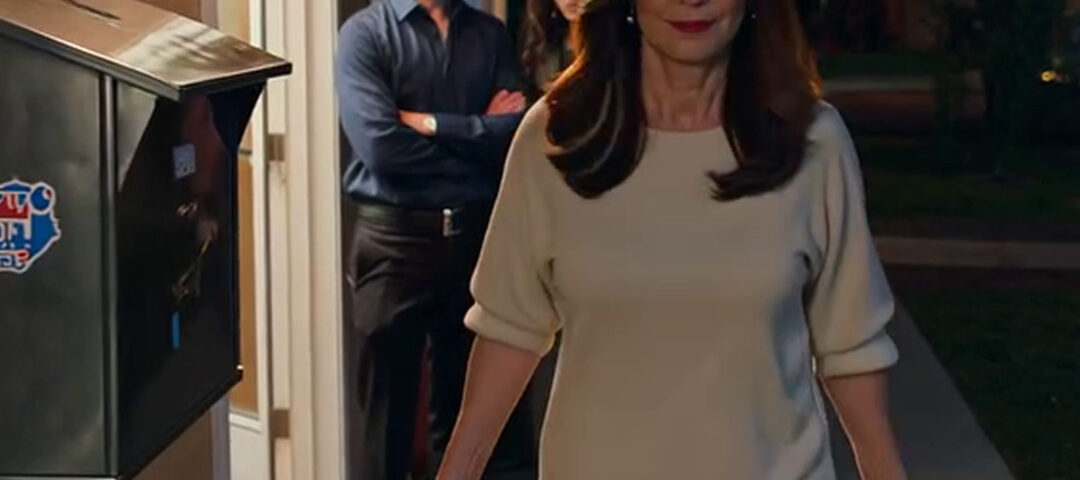
My daughter told me to move out because, in her husband’s words, I was “an extra mouth to feed” in their house. Three months later, I owned the building they were living in, and the cost of staying there had quietly tripled.
I never thought I’d be left out in the cold by my own daughter. I never imagined the man she married would strip me of my dignity in my lowest moment—and that she would let him. But what they didn’t know was that life had one last card for me to play. When I finally played it, everything changed.
My name is Margaret. I’m fifty-eight years old, and until not long ago, I believed in something called unconditional love, especially when it came to family. I built my life around my husband and our daughter, Amanda. Every meal I cooked in our little Texas kitchen, every holiday I planned with too much pie and not enough chairs, every dollar I tucked away was for them.
When my husband passed from cancer last year in a quiet Austin hospital room with the TV softly humming in the corner, it felt like the floor vanished beneath me. The house we’d built from scratch in Cedar Park, just north of Austin—fresh concrete driveways, kids’ bikes in the yards, American flags hanging from porches in the summer—turned into a museum of ghosts. Too many memories. Too many nights waking up expecting to hear his voice calling from the kitchen, the scent of coffee drifting down the hall.
I sold that house. I told myself it was practical, that I couldn’t keep up with the yard or the property taxes, that it was smarter to start over. But really, I sold it because I couldn’t stand walking past his recliner and seeing it empty.
Amanda and her husband, Chad, offered me a place to stay for a while—or at least, Amanda did. Chad barely looked up from his phone the afternoon I moved into their two-bedroom unit in East Austin, in one of those plain stucco buildings squeezed between a taqueria and a strip mall with a nail salon and a discount liquor store. Cars lined the cracked asphalt lot, and a faded American flag fluttered from the leasing office porch, its colors bleached by the Texas sun.
I tried not to make waves. I kept to my small room in the back, the one that used to be a storage room. I cooked and cleaned, folded their laundry the way my mother had taught me, offered to run errands to H-E-B or pick up prescriptions, always trying to be helpful, always trying to stay out of the way.
But Chad had a way of making me feel like an intruder in my own daughter’s life. His eyes always carried this simmering irritation, like I was a splinter under his skin.
It started with small things. He’d roll his eyes if I asked a question about the thermostat or the Wi-Fi. He’d change the TV channel when I was mid-show without even looking at me. Once, as he passed me in the narrow hallway, I heard him mutter under his breath, “Freeloader.”
I tried to convince myself I misheard, but deep down I knew I hadn’t.
Amanda said nothing. I’d look to her for backup, for a word, anything. But she always played it down.
“He’s stressed,” she’d say. “Work’s been rough.”
I swallowed the shame and stayed quiet. That’s what mothers do, right? We make ourselves smaller so our children can stretch out.
But that night—the night that changed everything—shattered whatever illusion I had left.
We were at the dinner table, a wobbly second-hand thing they’d found online. I had made chicken pot pie, Chad’s favorite, the way he liked it, with extra pepper and a flaky crust that filled the apartment with the smell of butter and thyme. Amanda was scrolling on her phone despite the no-phones rule she’d once tried to enforce. Chad was sipping beer like he always did after work, label half-peeled, the local news murmuring in the background.
The silence was heavy, thicker than the gravy in the dish.
Then out of nowhere, Chad looked up and said, “You know, maybe it’s time we stop pretending this is temporary. We’re not a charity.”
Amanda froze. My fork hovered mid-air. I stared at him.
“What do you mean?” I asked quietly.
He smirked, leaning back in his chair, eyes narrowed.
“I mean, how long is this supposed to go on? You’re not working. You’re not contributing. We’ve got bills. We didn’t sign up for extra mouths to feed.”
My breath caught. For a second, all I could hear was the hum of the refrigerator and the traffic on the street outside.
I turned to Amanda, desperate for her eyes, her voice, anything.
“Amanda?”
She wouldn’t meet my gaze. “Maybe it’s best,” she mumbled, fingers still resting on her phone. “If you find something more stable. For everyone’s sake.”
Everyone’s sake.
I didn’t scream. I didn’t argue. I didn’t remind them of the years I’d spent packing school lunches or paying for braces, of the weekends I’d spent driving Amanda to soccer tournaments across Texas in our old pickup while her father took extra shifts.
I stood up, walked down the short hallway to my room, and packed my things. Two suitcases. That was all I had left of my life. A few folded sweaters, a pair of worn jeans, photo frames wrapped in T-shirts, my husband’s old flannel tucked in the side pocket.
I didn’t cry while I packed. The tears came later.
When I stepped out into the night, the wind bit through my coat. The parking lot lights buzzed, throwing long shadows across the cracked pavement. I stood there on the curb in front of their building, looking up at the windows glowing warm with the light I was no longer welcome to sit under, and realized I had nowhere to go.
Amanda didn’t walk me out.
Chad didn’t bother pretending.
I sat on that curb for an hour, watching cars pull in and out, listening to the distant whine of sirens on I-35. My phone battery was dead. My heart felt the same. I remember thinking, This is what it feels like to be erased.
That night, I checked into a cheap motel off the highway, the kind with peeling wallpaper, buzzing fluorescent lights, and a vending machine that eats your change and rattles anyway. The air smelled like stale cigarettes and cleaning fluid that never quite did its job.
I lay awake on the stiff mattress, staring at the ceiling tiles, wondering how everything could turn so cold so fast. Wondering what I had done to deserve this kind of abandonment.
The next morning, I charged my phone in the lobby and sent Amanda a message.
I understand. I love you always.
No reply.
The next week, I sent another. Then another. Texts on her birthday. Little updates. A photo of the sunrise over the empty motel parking lot. Silence.
Three months passed. Each day felt longer than the last.
I tried applying for jobs. Anything. Grocery stores, front desks, reception at a budget hotel, seasonal work at a big-box store. But no one wanted to hire a grieving widow in her late fifties with no recent work history and a face that still looked like it woke up crying.
I considered cleaning houses, babysitting, whatever would keep me afloat, but my body didn’t move the way it used to. My knees ached when I climbed the stairs. My back protested every time I lifted a suitcase.
The loneliness was suffocating, but worse than that was the shame. I had given everything to that girl. My youth, my sleep, my small dreams. How could she turn her back so easily?
One evening, as I was going through a box of old family keepsakes I’d stuffed into the corner of the motel closet, trying to feel close to something, anything, I found it.
At first, it was just clutter—old snapshots from Fourth of July cookouts, a faded Polaroid of Amanda in an oversized Little League jersey, a church bulletin from an Easter service in 1992. Underneath all of that, tucked at the very bottom, was a small leather-bound book.
My mother’s diary.
I don’t remember packing it when I left Cedar Park. I almost put it back, thinking my heart couldn’t take another ghost. But something about the worn softness of the leather in my hands made me pause.
I sat on the edge of the motel bed, turned on the yellowed lamp on the side table, and opened to the first page.
Her handwriting was exactly as I remembered from the notes she used to slip into my lunchbox when I was a girl at Cedar Park Elementary: looped, neat, always in dark ink that never smudged.
At first, it was ordinary stuff. Weather. Church. Complaints about grocery prices at the local H-E-B. Little sketches of people she’d seen in the pews on Sunday. The kind of domestic nothing that builds a life.
Then I reached an entry dated in June.
He came again today. Said he wished things were different. That he wished I could be his wife. But he has a family, a business, a name to protect. Margaret will never know. She must never know. I just pray one day she understands how much I loved her, even if she was born out of mistake and desire.
I read it twice. Then again.
She must never know.
My breath caught in my chest. I flipped further, fingers shaking. Entry after entry, there were hints—meetings in hotel lobbies off the interstate, small cash payments she tried to refuse but needed desperately to keep the lights on, late-night phone calls from a man whose words were cloaked in apology and cowardice.
She never wrote his full name, only his initials: H.J.S.
Then another entry, dated in February.
He said he’d made arrangements that if anything ever happened to him, he’d ensure Margaret had something, a part of what he built. It won’t be official, of course. It’s too dangerous. But he promised me a trust, a letter. He said his lawyer, Mr. Goldstein, would know that name.
Goldstein.
The name hit me like a punch to the stomach. I’d seen it before, I was sure of it. Somewhere. It took me two days and several shaky online searches from the motel’s shared computer in the lobby, but eventually I found him.
Leonard Goldstein. Retired estate lawyer. Still listed as “of counsel” under a private firm in Dallas. On the law firm’s website, his photo showed an older man with kind eyes behind wire-rimmed glasses and a University of Texas diploma on the wall behind him.
I didn’t call. I couldn’t. My hands trembled too much, and my voice felt like it would break the second I said my mother’s name out loud.
So instead, I wrote him a letter. A real letter, on lined paper, in my uneven hand. I explained who I was, who my mother was, and asked—begged—for a conversation.
Two weeks later, my motel room phone rang. The front desk clerk knocked on my door, calling through the thin wood that there was a call for “Miss Margaret.”
I picked up, my whole body buzzing.
“I always wondered if you’d reach out someday,” the man on the other end said when I mentioned my mother’s name. His voice cracked in the middle like a bridge worn thin. “There’s something you need to see.”
I took a Greyhound bus to Dallas the next morning, my two suitcases wedged between my legs, the Texas highway stretching outside the window in a blur of billboards, truck stops, and wide, empty fields. My suitcase was only half-packed, just in case he turned out to be some scam artist and I had to walk away with whatever dignity I had left.
But when I walked into that quiet office filled with floor-to-ceiling shelves of old leather-spined books and the soft ticking of a wall clock, I knew it was real. The reception area smelled like paper and polished wood, the kind of place where time feels heavier.
Mr. Goldstein met me himself. His eyes softened when he saw my face.
“You look just like her,” he said quietly. “Come in.”
He handed me a sealed envelope, yellowed and fragile, like it might dissolve in my hands if I breathed too hard on it. On the front, in curling handwriting, was my name.
To my daughter, Margaret Louise.
The return address in the upper corner made my heart stutter.
Harold James Sterling.
The founder of Sterling Energy, one of the biggest oil firms in Central Texas. A man whose face I had seen for years in newspaper clippings, on the local evening news, speaking at charity galas in downtown Austin hotel ballrooms draped with American flags. A man with a wife, children, a reputation, a legacy carved into the Texas skyline in glass and steel.
I opened the letter slowly.
I couldn’t read the whole thing in one go. I cried before the second paragraph. In it, he admitted everything—the affair, the regret, the quiet love he had never had the courage to make public.
In the event of my death, I have ensured a portion of my personal assets, untraceable through my estate, are to be delivered to you via Mr. Goldstein. You are my blood, and though I was too much a coward to claim you in life, I claim you now in death.
Mr. Goldstein slid a folder across the table. Inside were account statements, a modest investment portfolio, ownership papers, titles. Numbers that didn’t feel real. The total value was a little over a million dollars.
I stared at the papers. Then at him.
“This is real?” I whispered.
He nodded. “It’s yours. It always was.”
My heart thundered, not because of the money, but because for the first time in my life, I felt chosen. Seen. Not as the woman left sitting on the curb outside her daughter’s apartment building, but as someone whose existence had mattered enough for a man with a skyscraper named after him to leave a piece of his world behind.
I didn’t scream or laugh or break down. I just sat there, quiet as a whisper, letting the truth wash over me like long-awaited rain over parched Texas earth.
That night, back in the motel room, I didn’t sleep. I stared at the ceiling like I had for months. But this time, a slow, disbelieving smile crept onto my face.
They thought they had discarded me.
They thought I was done.
They had no idea.
I wasn’t broken. I was just getting started.
I didn’t go back to Austin right away. Something inside me had shifted permanently. I wasn’t just Margaret, the forgotten mother. I was someone new now—someone who had been lied to her entire life and finally saw the truth written in ink that refused to fade.
For the first time in months, maybe years, I wasn’t drowning in shame. I was breathing in clarity.
I stayed in Dallas a few more days. I walked through quiet neighborhoods where kids rode their bikes in cul-de-sacs and American flags flapped from porches. I sat in coffee shops downtown, sipping burnt coffee and watching people in suits hurry past with briefcases and purpose. People who hadn’t been tossed aside like I had. People who didn’t know what it felt like to sit on a curb with your life reduced to two suitcases.
And for once, I didn’t envy them. I studied them. I wondered who among them wore smiles that masked heartache, who had clawed their way back from being invisible.
Mr. Goldstein didn’t just hand me inheritance documents. He gave me time. Time to process. Time to understand what I now held in my hands.
It wasn’t just wealth. It was power.
I had no idea what to do with it yet, but grief has a way of becoming fuel when you’ve been humiliated enough.
When I finally returned to Austin, I didn’t go back to the motel off the highway. I booked a short-term rental downtown, just off South Congress Avenue, in a small apartment with clean white walls, hardwood floors, and big windows that looked out over food trucks, neon signs, live-music bars, and a mural painted in red, white, and blue. The kind of place Amanda and Chad would never imagine me affording.
I began dressing differently. More polished. More deliberate. Not flashy—no designer labels, nothing that screamed for attention. Just well-cut jeans, simple blouses, a good blazer I found at a department store in the outlet mall. The kind of invisible that moves through the world without question.
I started watching YouTube videos on investing, real estate, contracts. I took notes in a cheap spiral notebook. I learned the language of business, not because I wanted to build an empire, but because I wanted to protect myself. I wanted to know what words like “leasehold,” “escrow,” and “LLC” actually meant. I vowed that I would never be powerless again.
That’s when I found it.
The listing was buried on a real estate auction site, the kind investors scroll through over late-night coffee. A small apartment building in East Austin, described as “distressed but structurally sound,” with delinquent property taxes and a motivated seller.
The address made my heart slam against my ribs.
It was the exact complex where Amanda and Chad lived.
I stared at the screen, the glow of my laptop reflected in the window behind me, the city lights twinkling beyond the glass. My hands trembled as I scrolled through the photos. Peeling paint. Rust around the stair railings. A sagging fence around the courtyard. The same building I had stood in front of months earlier with a dead phone and nowhere to go.
The property was scheduled for auction in two weeks.
I didn’t hesitate.
With Mr. Goldstein’s help, I created an LLC—an anonymous shell company that would keep my name off the public-facing paperwork. We filed the documents. We transferred the funds into a separate account. We prepared the bids.
I wasn’t planning revenge. Not exactly.
I was taking control of the one place they thought they ruled.
The auction came and went in a quiet county office, fluorescent lights humming overhead, my attorney representing the LLC while I sat in the back pretending to wait for someone else. Numbers were called, paddles raised, a few men in baseball caps muttered into their phones.
I won.
Quietly. Legally. Entirely under the radar.
And just like that, I owned the building where my daughter and her husband had kicked me out with two suitcases and a hollow excuse.
I remember sitting at my new apartment’s small dining table, the deed in my hands, my reflection faint in the sliding glass door, and whispering aloud, “Let’s see how Chad likes paying rent to a mouth he couldn’t feed.”
A month later, the notification letters went out to all tenants. Rents would be reassessed. Lease terms reviewed. Property improvements scheduled. For most tenants, the increases were modest—small upticks to match the market and cover repairs.
For Chad and Amanda, the new amount was triple. Not double. Triple. Market value plus overdue fees, calculated down to the penny.
I didn’t need to see his face to know he exploded. I could feel the rage from miles away.
Two days after the notices went out, my phone lit up with a voicemail from Amanda. It was the first time she’d reached out since the night I left.
“Mom, I don’t know if you heard, but something weird’s going on,” she said. Her voice wavered. “Our rent just shot up. Like, a lot. Chad’s losing it. I just—I don’t know. Can we talk?”
I didn’t respond.
This wasn’t about vengeance. This was about gravity. They needed to feel the weight of their choices.
One night, curiosity got the better of me. I drove by the building, my car slowly rolling past the entrance like any stranger’s. Their lights were on. Through the thin curtains, I could see shapes moving in the living room. Amanda pacing. Chad gesturing wildly, his silhouette sharp and angry.
I watched for a minute, then drove away.
Part of me felt hollow. Part of me felt vindicated. And part of me still hurt like hell, because even now, knowing what I knew and holding what I held, I would have given almost anything to be invited back in—not to the apartment, but to my daughter’s heart.
But I knew that wasn’t possible. Not yet.
So I stayed silent and waited, because sometimes the loudest justice is the one that doesn’t say a word.
I didn’t realize how much I had changed until I saw the building through a different set of eyes: not as a place that had rejected me, but as a business, an asset, a responsibility.
I started repairs. Small ones at first. Leaks in the roof. Broken locks on the laundry room door. Flickering hallway lights that made the stairwell feel unsafe. I hired a property manager, a no-nonsense woman named Teresa who’d been managing rentals in Austin for twenty years and knew every trick in the book, including the ones tenants and landlords like to pretend they don’t use.
Chad never noticed the repairs. He was too busy sending angry emails.
He fired off long messages to the property manager, demanding explanations for the rent increase, calling it robbery, extortion, a scam. He insisted they’d “never been late once” and that the building was “a dump” unworthy of higher rent.
Teresa responded with polite, legal language about “market rate adjustments” and “lease term modifications.” No special exceptions.
He wasn’t going to move. I knew that. A man like Chad would see leaving as defeat. He needed to feel in control, even as the ground shifted beneath him.
Amanda, caught in the middle, kept trying to reach me. Soft, hesitant voicemails.
“Hi, Mom. Just wanted to see if maybe you had time to talk. I know things have been complicated…”
Sometimes it was just, “I really need you.”
I didn’t return them—not because I wanted to be cruel, but because I needed her to feel the void she had created the night she looked at the floor instead of at me.
Every time doubt crept in, I opened my mother’s diary. I traced the lines where she’d written, Margaret will never know. She must never know. Now I did know, and with that knowledge came a kind of armor no one could tear through.
I was no longer the woman begging to stay under their roof.
I was the woman who owned it.
I updated the property signage, replacing the faded plastic letters with a clean metal plaque. I installed a security camera near the lobby and had the mailboxes repaired and labeled properly. The new management name was printed clearly: ML Holdings.
ML for Margaret Louise.
No one knew who was behind it.
Then came the notice for annual inspections—mandatory, routine. Chad sent another furious response through the tenant portal, filled with empty threats and self-righteous indignation.
I smiled as I read it.
Meanwhile, I was becoming someone I barely recognized. I wore my hair differently now, in soft waves instead of a loose bun. I walked with purpose. I started attending small business meetups at a coworking space downtown under a pseudonym, learning the ropes of real estate and networking with people who spoke casually about cap rates and equity lines.
No one asked about my past. They only saw a quiet, composed woman with sharp eyes and cash on hand. The best disguise is the truth you don’t say.
One morning, I passed Amanda and Chad in the parking lot as I exited a tenant meeting. I wore sunglasses, my hair pinned back, a slim binder tucked under my arm. Amanda barely glanced at me. Chad didn’t recognize me at all.
Later that night, I sat in my living room, sipping tea and thinking about how strange it felt to walk right past your own child and be invisible—not because you’re weak, but because you’re stronger than they remember. They couldn’t see me now because they only knew the version of me they used to control.
That woman was gone.
The calls from Amanda kept coming, then faded into texts. Short ones.
Hey. Can we talk?
Hey. I miss you.
I didn’t reply. Silence sat between us like a third person in the room.
Word filtered in from the building staff. The bathroom in Amanda and Chad’s unit had mildew creeping up the shower tiles. The kitchen floor was cracked. Mail piled up behind their door. They were cutting corners, living lean. Chad was taking extra hours at work. Amanda had been seen sitting on the back steps, shoulders shaking, eyes red.
I should have felt pity.
What I felt was clarity.
This wasn’t just about rent. It was about power. And Chad was losing it fast.
My new apartment overlooked a different courtyard now, in a safer neighborhood with trimmed lawns and porch lights that worked. I didn’t watch them all the time, but sometimes, when the night was especially quiet and the city hummed in the distance, I found myself replaying the sound of his voice calling me an “extra mouth to feed.”
Every time, I reminded myself: this was consequence, not cruelty.
Then things escalated.
One afternoon, Teresa forwarded a noise complaint from a neighbor. Raised voices. Glass breaking. Shouts about “losing control” and “this is all your fault.” The maintenance man went to the door to make sure no one needed the police. No one answered, but through the cheap wood he could hear Chad pacing, muttering, Amanda crying.
The silence afterward was heavier than the yelling.
A few days later, I received a strange envelope at my downtown address. No name on the outside. No return address. Just my unit number, written in an angry hand.
Inside was a single piece of paper.
I know what you’re doing. You think you’re clever, but you don’t scare me. I’ll find out who you are, and when I do, you’ll regret it.
No signature. But I recognized the handwriting instantly.
Chad wrote the way he spoke—angry, uneven, pressing so hard the pen nearly tore through the page.
I sat there with the letter in my hands, my heart thudding, not from fear, but from memory. It pulled me straight back to the moment he stood in Amanda’s kitchen, looking at me like I was dirt beneath his sneakers.
Now he was the one grasping at shadows, choking on uncertainty, screaming into a void that refused to answer.
Poetic, yes. But also dangerous.
I doubled down.
I had my lawyer contact building security. We installed more cameras in common areas—discreet, legal, routine. I made sure the other tenants were protected, that any hint of harassment would be documented and acted upon.
The building wasn’t going to fall apart because one man couldn’t handle the weight of his own cruelty.
Meanwhile, Amanda’s world was shrinking. Teresa mentioned she’d started walking to work—her car had been sold. Their lights went off earlier, sometimes by eight. The heat flickered in the winter cold snaps. They were living on the edge now, and there was only so much pretending that could cover that.
Still, I kept my distance.
This wasn’t about revenge.
It was about resolution—letting Chad’s world close in until he finally understood how small he really was, and letting Amanda decide whether she would stay in the cage or find the key I’d quietly placed within reach.
I knew she wasn’t ready yet. But the walls were closing in, and secrets have a way of leaking through cracks.
I didn’t expect the knock on my door that night.
It had been quiet for days. No updates from Teresa. No voicemails from Amanda. No anonymous threats in my mailbox. Just silence, the kind that feels like a storm crouched in the distance, waiting.
The knock was soft and slow.
When I opened the door, Amanda stood there, soaked from a sudden Texas rainstorm, a grocery bag clutched to her chest like it was the only thing keeping her upright. Her eyes were red, makeup smudged, hair plastered to her cheeks.
Her mouth opened, but no words came out.
I stepped aside. She walked in slowly, dripping water onto my hardwood floors. I handed her a towel and we moved around each other without speaking, like two people who used to know the choreography and had forgotten the steps.
I warmed the kettle and poured two mugs of chamomile tea. She sat on the edge of the couch like she wasn’t sure she was allowed to stay.
“He’s not who I thought he was,” she said finally, eyes fixed on the steam rising from her cup.
I stayed quiet.
“I mean, part of me always knew,” she went on. “But I told myself it was stress. That he just needed support. That if I was patient, he’d come around.”
Still, I said nothing.
She looked up, her voice trembling. “He thinks someone’s targeting us. He’s obsessed. He’s been going through my phone, my emails. Last week he followed me to work. Said he was making sure I wasn’t ‘involved.’”
A shiver ran through her that had nothing to do with the rain.
“He asked if I was hiding something,” she whispered. “If you were hiding something.”
That caught my breath, but I didn’t speak.
“I told him I hadn’t spoken to you in weeks,” she said. “That I didn’t even know where you were.”
She paused.
“But that was a lie.”
I met her eyes for the first time.
“I found your building listed in a security notice,” she admitted. “Same management company. I figured it out. It wasn’t hard.”
Of course it wasn’t. Amanda was smart. Always had been. But smart doesn’t always mean brave.
“I miss you,” she whispered. “But I don’t even know how to be around you anymore.”
My hand tightened around the mug.
“You left,” she said softly, voice cracking. “And I let you. I let him push you out.”
“No, Amanda,” I said at last, my voice low. “You didn’t let him.”
She opened her mouth, ready with another excuse.
“You stood with him,” I finished.
That stopped her cold. She blinked, lips parting as if to deny it, to defend herself. But there was nothing left to defend. The truth sat between us, heavy and undeniable.
I stood and walked to the window, looking out at the city lights reflected in the wet street below.
“I begged for your voice that night,” I said quietly. “Just one word. Just one. And you stayed silent.”
Behind me, she let out a quiet, broken sound.
“I didn’t think it would get this bad,” she said. “I thought I could manage him.”
“You can’t manage a man like that,” I replied. “You survive him or you leave him.”
She didn’t answer. She didn’t have to.
We sat in silence for a long time—two women who shared blood but not trust. Not yet. Maybe never. When she finally stood to go, she set her mug down carefully, her eyes rimmed with unshed tears.
“I don’t expect forgiveness,” she said. “I just needed to remember what it felt like to be safe.”
I walked her to the door. She paused, then turned suddenly and wrapped her arms around me. I didn’t return the hug at first. Then I did, but gently, cautiously, like someone trying to hold a memory without crushing it.
When she pulled back, she didn’t say goodbye. She just looked at me one last time and left.
As the door clicked shut, something shifted deep in my chest. Not forgiveness. Not yet. But the faintest flicker of something that might one day grow into it, if she let it.
The invitation went out the following Tuesday morning. Routine. Professional. Emotionless.
Notice: Property-wide meeting to discuss upcoming building renovations. Mandatory attendance. Questions welcome.
I knew Chad would be there. He wouldn’t be able to resist. He wanted a name, a face, someone to point a finger at.
He had no idea he’d be walking straight into the hands of the woman he had discarded like an old appliance left on the curb.
The day of the meeting, I arrived early. I wore a charcoal gray blazer and dark jeans, simple and clean. My hair fell in soft waves around my shoulders. I looked nothing like the woman who had once begged for a sliver of dignity at Amanda’s kitchen table.
The common room filled slowly. Tenants trickled in, some curious, some annoyed at the inconvenience, most indifferent. A TV in the corner quietly replayed footage of a local high-school football game, the home team marching under bright stadium lights with American flags held high.
Then Chad arrived.
He stormed in with the swagger of a man expecting a fight, Amanda trailing behind him like a reluctant shadow. He didn’t look around, didn’t notice me sitting near the back. He went straight to the front where Teresa stood next to a projector screen.
“Where is she?” he demanded. “I want to speak to the person in charge today.”
Teresa remained calm. “All questions will be addressed during the presentation, sir.”
He scoffed loudly. Amanda stared down at her shoes.
The meeting began with the basics: timelines for exterior repairs, upgraded insulation, improved lighting, new security protocols. Practical, boring, necessary changes—all funded in part by the rent increases, including his.
Then Teresa paused.
“We’d also like to thank ML Holdings for their commitment to revitalizing the property and prioritizing tenant comfort,” she said. “The owner is here today. Should anyone have questions, she’s available to speak after the presentation.”
She turned toward the back of the room.
I stood up.
The room fell silent.
I walked slowly toward the front, every step steady, my heartbeat loud but controlled in my ears. Chad’s face twisted from confusion to disbelief. Amanda’s mouth parted in shock.
“Good evening,” I said. “My name is Margaret. I’m the owner of this building.”
You could have heard a pin drop.
Chad shot to his feet so fast his chair scraped the floor.
“You?” he spat. “This is a joke. What kind of game is this?”
I looked at him—really looked at him—and saw the cracks he’d tried to hide. Sweat at his temples. Puffiness under his eyes. The wild panic of a man who suddenly realizes the ground beneath him isn’t as solid as he believed.
“No game,” I said softly. “Just business.”
“You manipulated this,” he hissed. “You’ve been behind this the whole time. You raised our rent. You’re trying to ruin us.”
I held my ground.
“I gave you a roof,” I replied. “I made improvements. I treated every tenant equally. What I didn’t do was forget.”
He opened his mouth to argue, but I turned back to the room.
“If anyone has questions about the changes or improvements,” I said, “I’m happy to answer them after the meeting. Thank you.”
The presentation resumed, but the tension never left the air. Chad didn’t sit. He stood rigid, trembling with anger. Amanda sat with her hands clasped in her lap, eyes wide and wet.
When the meeting ended, tenants approached me to shake my hand, ask about repairs, thank me for the new lighting, the fixed laundry room, the upgraded mailboxes. Some had suspected something; most had no idea.
Chad waited until the room emptied.
Then he marched toward me.
“You think you’ve won?” he hissed, his voice low and venomous. “This is nothing. You’ve made an enemy.”
I looked him in the eye.
“No, Chad,” I said quietly. “I didn’t make anything. You did. The day you looked me in the eye and treated me like I didn’t matter.”
He blinked, momentarily thrown.
Amanda stepped between us.
“Chad, stop,” she said.
He turned, astonished. “What did you just—”
“I said stop,” she repeated, louder this time. Her voice didn’t shake.
“She’s not your enemy,” Amanda said. “She never was. You are.”
He stared at her like she’d slapped him. In a way, she had.
Amanda turned to me, her voice trembling for a different reason now.
“I didn’t know,” she said. “I swear. About the building, the money, any of it.”
“I know,” I answered.
“Why didn’t you tell me?” she asked.
“Because you had to see it,” I said. “Not just hear it.”
She blinked back tears.
Chad scoffed, stepping backward, trying to reclaim control. “You two deserve each other.”
“No,” I said calmly. “She deserves better.”
Then I turned and walked away.
For the first time since that awful night in their kitchen, something inside me settled. Not revenge. Not satisfaction. Just power. Quiet, firm, and entirely mine.
Four days later, Amanda showed up at my door again.
This time, she was holding something that made my knees buckle the second I saw it.
A book. Faded leather. Corner torn. Spine barely holding together.
My mother’s diary.
I opened the door without a word. She stepped in, eyes wide, breath shaky.
“I found it in my closet,” she said. “The last time I visited you, you must have left it behind.”
She placed it on the coffee table like it was sacred. For me, it was.
“I read it,” she blurted. “I wasn’t trying to pry, but I recognized her handwriting. I was just… looking for something that made sense.”
Silence settled between us like a heavy curtain.
“I didn’t know about Harold Sterling,” she whispered. “Or the money. Or the trust. Or any of it.”
I nodded slowly. “I didn’t know either. Not until I had nothing else to lose.”
“Why didn’t you tell me?” she asked. “Why did you let me believe you were helpless?”
I looked her in the eye, and for once, she didn’t look away.
“Because I was helpless,” I said. “The night you closed the door on me, I didn’t have a plan. I didn’t have money. I didn’t even have a place to cry where someone wouldn’t knock and tell me to keep it down.”
Amanda winced.
“I found the diary at my lowest point,” I continued. “When I was counting coins to eat dinner. When I hadn’t spoken to anyone in a week. That diary—it didn’t just tell me who I was. It reminded me that I mattered. That my mother didn’t just love me. She fought for me silently, in ways she could never say out loud.”
Amanda sat down, hands clenched in her lap.
“I don’t know how I became the kind of daughter who could do what I did,” she admitted. “I keep asking myself that over and over.”
“You didn’t become her all at once,” I said. “It was small choices. Letting things slide. Choosing peace over truth. Believing love meant loyalty, even when it hurt.”
She swallowed hard, then stood and walked closer.
“I’ve left him,” she said.
The words landed between us like a dropped weight.
“He tried to go through my things again. My laptop, my bag. I told him no. That was it. He screamed, packed a bag, and left. Said he’d be back.” She took a shaky breath. “I changed the locks the next day.”
I stared at her, stunned.
“I don’t know who I am without him,” she confessed. “But I’d rather find out than keep disappearing.”
A silence passed between us, thick with everything we hadn’t said. She looked down at the diary.
“You didn’t deserve what I did,” she said finally. “What we did. I can’t fix that. But I want to try.”
I sat down beside her.
“I used to dream about hearing those words,” I said. “But when you say them now, they don’t fix the past.”
Her eyes flickered with worry.
“They rewrite it,” I finished gently. “You see me now. That changes everything.”
We sat there together for a long time, the kind of silence that doesn’t hurt but heals. The kind that comes after truth has finally had its say.
Not long after, an email came in from Chad.
Subject line: We need to talk. Now.
I almost didn’t open it. Curiosity won.
I read it slowly, carefully, his words sharp and frantic, dripping with desperation.
I know everything about the building. About the inheritance. About your little secret with Sterling. You think you’re clever? You think you can ruin my life and walk away smiling? Let me make something clear. If you don’t undo this, I will go to the press. Your name, your mother’s affair—everything. Let’s see how your precious reputation holds up when everyone knows what kind of family you really come from.
I stared at the screen in silence.
He had finally connected the dots. Maybe through rumors. Maybe through something he’d snooped from Amanda before she locked him out. It didn’t matter.
I wasn’t afraid.
I had planned for this moment since the day I bought the building.
I forwarded the email to my attorney. By the next morning, Chad received a cease-and-desist letter, neatly drafted and impossible to ignore. Attached were records of every threatening message he’d sent to the property office, the falsified documents he’d tried to submit under a fake law firm name, and the tampered emails we had quietly traced back to his IP address.
There were tenant complaints, maintenance sabotage logs, even audio clips of his rants in public spaces around the building.
We didn’t need to press criminal charges. One well-aimed defamation and harassment suit was enough to show him how fragile his position really was.
He panicked. I knew because Amanda called me two days later.
“He’s gone,” she said, her voice shaking. “Packed up while I was at work. Left a note saying he was being hunted. Said you ruined his life.”
“He ruined his own,” I said quietly.
Amanda was silent for a moment.
“I’m sorry,” she whispered. “For ever thinking he deserved my silence.”
“You were scared,” I replied. “I’ve been there. Fear makes you small. But you don’t have to stay that way.”
It wasn’t long before Chad tried one last pathetic maneuver—posting vague rants on social media, implying corruption and betrayal, hinting at secrets. He never named me. He couldn’t afford to. Not after the second letter from my attorney arrived, warning him that every word he published would be read with a legal magnifying glass.
He went quiet after that. Publicly, at least.
Privately, I knew he’d never forget the day he realized the woman he’d kicked out with two suitcases and a tired face now owned the roof over his head, the lease under his name, and the keys to every locked door he once thought were his.
Amanda, meanwhile, was transforming.
She moved out of the unit within a month, found a small studio near her job—a walk-up with a fire escape and a window that looked out over a brick alley instead of a parking lot. She started therapy. She joined a community art class at a local rec center, painting on Tuesday nights while the smell of chlorine from the indoor pool drifted down the hallway.
One evening, she brought me a canvas she’d finished. An abstract of a phoenix in dark reds and golds, rising up from a blur of gray.
“I don’t know if it’s any good,” she said, embarrassed.
I hung it above my fireplace.
We talked more often now. Not every day. But when we did, the conversations were real, honest. No more pretending everything was fine when it wasn’t. No more swallowing our words.
The last piece of the puzzle came in another envelope from Mr. Goldstein.
Congratulations, Margaret, the letter began. The building has officially been transferred. The final tenants have signed new agreements. The lawsuit against Mr. Harmon has been resolved in your favor. You are now free to sell, hold, or restructure as you see fit.
I folded the letter carefully and held it to my chest.
This wasn’t just about money or property or winning some secret war. This was about truth. About reclaiming my name, my story, my strength.
The next morning, I called a realtor.
I was ready to close that chapter and open the door to a life I no longer had to survive.
I could finally live it on my own terms.
I sold the building in late spring. The final paperwork was signed on a bright, cloudless Tuesday in a downtown office with floor-to-ceiling windows and a view of the Texas State Capitol. No fanfare. No champagne. Just the quiet scratch of pens, a firm handshake, and the weight of three years of grief, betrayal, and silence finally lifting from my shoulders.
The money was wired to my account the next day.
I didn’t celebrate with a shopping spree. I didn’t race off to some tropical beach.
Instead, I wrote a check. A large one.
Half of the proceeds went to a local shelter for women and children in crisis, not far from the freeway I’d stared at for hours from my motel window. I walked into the building myself, met the director, and asked them to use the funds to build a new wing.
I asked that they name it after my mother.
The Eleanor House.
It was my way of honoring the woman who had given me strength in silence, who had hidden a lifetime of secrets so that I could one day discover the truth and become something more than what the world expected.
The other half, I used to buy a small house. Nothing extravagant. Just a charming two-bedroom on a quiet street in Cedar Park, not far from where I’d grown up. Oak trees out front. A porch swing. A little American flag in the flower bed by the mailbox. Enough space for quiet, for healing, for growing tomatoes in the backyard if I ever felt like trying.
The day I moved in, Amanda helped carry boxes up the short front walk. She didn’t say much, and neither did I. But after we finished unpacking, she sat beside me on the porch swing, legs tucked under her, eyes scanning the familiar Texas street like she was trying to recognize the girl she used to be riding her bike up and down the sidewalk.
“I remember coming here on weekends,” she said softly. “Before everything got… complicated.”
“You were always safe here,” I told her.
She nodded, eyes shining. “I forgot how that felt.”
We didn’t talk about Chad. We didn’t need to. His chapter had closed without fireworks, just paperwork and silence. He’d disappeared into another city, another job, probably another set of lies, but not before signing a non-disclosure agreement and quietly dropping his threats.
He was a ghost now.
Amanda stayed for dinner. We made grilled cheese sandwiches and tomato soup on my new stove, just like we used to when she was little and money was tight but we could still laugh in a tiny kitchen with a radio playing country songs in the background.
She laughed when she burned one side. I laughed when she tried to blame the pan.
It was the first real laughter we had shared in years.
That night, after she left, I stood at the living room window, holding a cup of tea in both hands, watching the moonlight stretch across the front lawn and the quiet street beyond. The cicadas hummed in the trees. Somewhere down the block, a dog barked and a porch light clicked on.
For the first time in a long, long time, I said the words out loud.
“I forgive you.”
Not to Amanda.
To myself.
Because that was the hardest part. Not rising from the ashes, but realizing I was never the fire they tried to extinguish. I was the spark they underestimated.
They taught me that silence was weakness.
I learned how to turn it into something else.
They tried to erase me.
I became someone they could never forget.
I sat down on the couch, opened my mother’s diary one last time, and tucked a note inside for Amanda to find someday after I’m gone.
You don’t need their love to be worthy. You don’t need their approval to be strong. You only need the truth—and to never, ever forget who you are.
The clock ticked softly in the background. My tea grew cold in my hands.
But my heart, finally, was warm.
I didn’t need to scream. I didn’t need to win. I just needed to be who I was all along.
And now, at last, I was home.