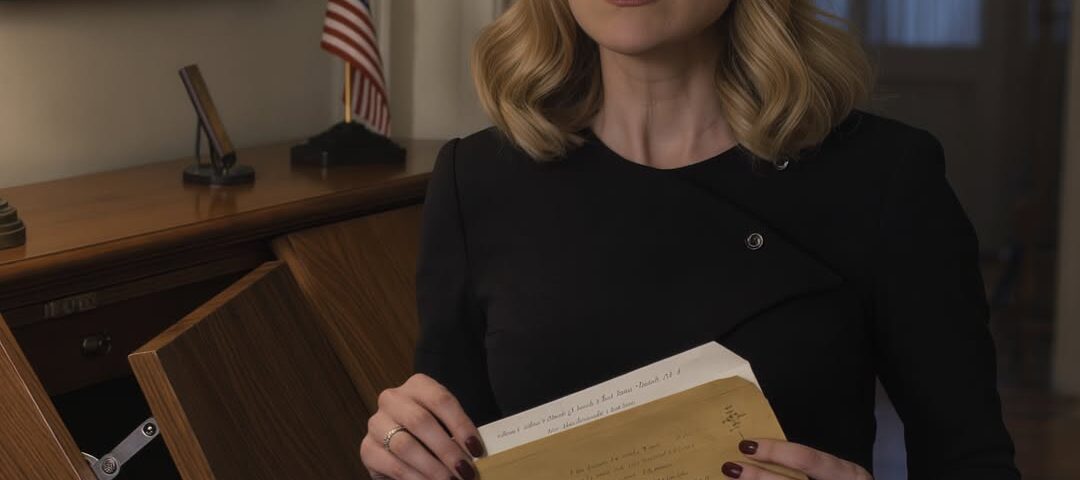
I found a letter hidden in my father’s desk after he died. It was dated the day I was born. The first line read: “I never wanted a second daughter.” I kept reading. By the last page, I understood everything—why my mother always hated me, why my sister got everything, and why my inheritance was one dollar while hers was two-point-four million.
My name is Ingred. I’m thirty-two years old, and three weeks ago I discovered my entire life was a lie—written in my dead father’s own handwriting.
My father died on a Tuesday. I was the one holding his hand when he took his last breath. My sister, Meredith, was in the Hamptons. My mother was in the waiting room, too emotional, she claimed, to be present. And when we gathered for the reading afterward—surrounded by relatives I barely knew, all of them wearing grief like an accessory—a lawyer announced what I would “receive.” One dollar. Meredith received $2.4 million, the house, and everything else.
I told myself it didn’t matter. That money was just money. That love was what I was supposed to be mourning. But three days later, while I was clearing out my father’s study, I found a hidden drawer. Inside was a letter dated the day I was born.
“I never wanted a second daughter.”
Before I take you back, just—stay with me. If you’ve ever been the one who shows up while everyone else stays comfortable, if you’ve ever felt like you were born already losing, you’ll understand why I’m telling this the way I am.
Four weeks ago, the night my father was admitted to the hospital, I was finishing a late shift at work when my phone buzzed. Mom’s name lit up the screen. She never called unless she needed something.
“Your father’s in the hospital,” she said. “Heart attack. You should go.”
No please. No softness. Just a command.
I asked about Meredith.
“Your sister’s in the Hamptons with friends,” my mother said. “She can’t make it back tonight.”
Of course she couldn’t.
“What about you, Mom?” I asked.
A pause. “I’ll be there in the morning. It’s late and I need to make some calls.”
I didn’t argue. I’d learned decades ago that arguing with my mother was like screaming into a void and expecting it to echo back with love.
I grabbed my keys and drove—four hours through the dark, the highway stretching endlessly ahead, the headlights carving a thin tunnel through night. My hands gripped the wheel so tight my knuckles went white. I kept telling myself the same foolish prayer I’d been whispering my whole life: This time will be different. This time, maybe he’ll finally see me.
When I arrived, the hospital’s fluorescent lights buzzed overhead like tired insects. A nurse directed me to the ICU. I walked past rooms full of families—people crying, people praying, people holding hands like they still belonged to one another. My father’s room was quiet except for the rhythmic beeping of machines.
He looked smaller than I remembered. The man who had towered over my childhood, whose approval I’d chased for thirty-two years, now seemed fragile beneath sterile white sheets. I pulled up a chair and sat beside him.
“Hey, Dad,” I said. “It’s me. Ingred.”
His eyelids fluttered but didn’t open. I took his hand—something I hadn’t done since I was a little girl. His skin felt papery, cool, as if warmth was something his body no longer believed it had to hold onto.
“I’m here,” I whispered. “I came.”
The monitors kept their steady song. Outside, the hospital hummed with life, but in that room it was just me and the father who had never once said he loved me. And I stayed.
Three days. That’s how long I sat there.
Meredith called once.
“How’s Dad?” she asked. “Is he conscious?”
“Not yet,” I said. “The doctors say it’s touch and go.”
“Okay,” she replied, like I’d told her the weather. “Keep me updated. I have a charity luncheon tomorrow, but I can try to rearrange if—”
“It’s fine,” I cut in. “I’ve got it.”
She didn’t push back.
Mom visited a few hours each day. She sat in the corner scrolling her phone, occasionally sighing as if the entire situation was exhausting her personally. Not once did she offer to take over so I could sleep.
During those long nights, memories surfaced uninvited, sharp as paper cuts.
My college graduation: me scanning the crowd, heart racing, finally spotting my parents rushing in twenty minutes late because Meredith “needed” a new car that morning and they’d taken her to the dealership first.
My sixteenth birthday: Dad forgetting entirely until I reminded him at dinner, and then he pulled out a crumpled twenty and slid it across the table like a tip. “Buy yourself something nice.” No cake. No song. Just Meredith laughing about her new laptop.
On the second night, a nurse came in to check his vitals. She looked at my dark circles, the same clothes from the day before, and said softly, “You’re a wonderful daughter, staying with him like this.”
I didn’t know what to do with that sentence. Was I wonderful, or was I just desperate?
On the third night, my father stirred. His eyes opened, clouded with confusion, scanning the room until they landed on me.
“Meredith,” he whispered.
I swallowed hard. “No, Dad. It’s Ingred.”
His eyes drifted shut again. And in his sleep, he murmured one name—over and over, like a prayer he trusted more than God.
Meredith.
I held his hand tighter and pretended I didn’t hear.
The next morning he woke lucid, and for the first time in my life he looked at me like he wanted to say something that mattered.
“Ing,” he rasped.
I leaned closer. “I’m here.”
“The desk,” he said. “My study. There’s… something.”
He coughed—a wet, rattling sound that made my stomach clench.
“What is it, Dad?” I whispered. “What’s in the study?”
His hand squeezed mine with surprising strength. “You need… to see… the drawer. The hidden…”
The monitors began to beep faster. A nurse rushed in, then another. Someone called for a doctor.
“Dad,” I pleaded, leaning forward. “Dad, stay with me. Stay.”
His eyes locked onto mine. For one brief moment I saw something there I’d never seen before. Regret. Guilt. Something that looked like it wanted to crawl out of him and become an apology.
“I’m sorry,” he breathed, the words barely making it past his lips. “I’m so—”
The machine screamed.
The room flooded with medical staff. Someone pulled me back from the bed.
“Sir, Mr. Frell, stay with us,” a voice said, urgent and too practiced.
But he was already gone.
At 3:47 a.m., my father died with his hand reaching toward mine and a sentence left unfinished.
I stood frozen while they recorded the time, while they shut off the machines, while silence filled the space where his labored breathing had been. When I finally called my mother, she cried—but her first words were, “Call your sister. Meredith needs to know.”
Not Are you okay? Not I wish I’d been there. Just Meredith.
I called my sister next. She answered on the fourth ring, her voice groggy.
“Meredith,” I said. “Dad’s gone.”
A pause, then: “Why didn’t you call sooner? You know I have a meeting at nine.”
I hung up without answering.
Outside, the sun was rising—bright and indifferent. A new day. A world without my father in it. I should have felt grief. Maybe I did. But mostly I felt that familiar emptiness, the hollow space where his love should have been, and echoing in my head his unfinished words:
The desk. The hidden.
The funeral was a spectacle.
Harold Frell had been a respected businessman. Over a hundred people filled the church—colleagues, golf buddies, distant relatives I’d never met. Everyone had a story about what a great man he was, how generous, how devoted, how wise.
I sat in the second row, behind cousins I saw once a decade, behind my mother’s friends from her book club. Meredith stood at the front with Mom, receiving condolences like royalty greeting subjects. They wore matching black Chanel. I wore a dress I’d bought at a department store five years ago and prayed no one noticed the worn seams.
When it came time for the eulogy, I stood up. I’d prepared something—memories, gratitude, the kind of speech a daughter is supposed to give.
My mother’s hand shot out and clamped onto my wrist. “Let Meredith handle it,” she hissed. “You know how you get nervous in front of crowds.”
I opened my mouth to protest.
“Please, Ingred,” she said, low and sharp. “Not today.”
So I sat back down. And Meredith delivered a beautiful eulogy. She cried at exactly the right moments. She spoke about Dad’s wisdom, his generosity, his unconditional love.
Unconditional.
I stared at my hands and wondered what it felt like to be raised inside that word.
After the service, while people milled around offering hollow comfort, a woman approached me—older, maybe early sixties, sharp-eyed, silver hair pulled back so severely it looked like it hurt.
“You’re Ingred, aren’t you?”
I nodded, trying to place her face.
“I’m Helen,” she said. “Your father’s sister.”
My stomach dropped. “He told me his only sibling died years ago.”
Helen’s mouth tightened. “I see Harold kept up the lie.”
She said he cut her off twenty-five years ago for asking too many questions, and then she pressed a card into my hand.
“Call me after this circus is over,” she said. “There are things you need to know about your father.”
Before I could respond, she disappeared into the crowd. I looked down at the card. A phone number. And three words beneath it, written in quick, decisive ink:
Don’t trust them.
Three days later we gathered in a law office that smelled of leather and old money. My mother sat at the head of a long mahogany table. Meredith sat beside her, her husband Greg on the other side. A handful of relatives filled the remaining chairs—people I recognized from the funeral, all watching with barely concealed interest.
I sat at the far end near the door.
The lawyer, a gray-haired man named Mr. Patterson, adjusted his glasses and began.
“To my beloved wife, Vivian, I leave the summer cottage in Cape Cod and a monthly allowance to be managed by the estate.”
Mom dabbed at her eyes with a handkerchief.
“To my daughter, Meredith Frell Collins, I leave the family residence at 47 Oakwood Drive, valued at one-point-two million. Additionally, I leave my investment portfolio, currently valued at approximately eight hundred thousand, my savings totaling four hundred thousand, my vehicle collection, and all jewelry and personal effects not otherwise specified.”
Meredith squeezed Greg’s hand, her expression carefully neutral, as if she’d expected nothing less.
Mr. Patterson cleared his throat and shuffled his papers.
“To my daughter, Ingred Frell…”
The room went still.
“…I leave the sum of one dollar.”
Someone laughed—a short, sharp sound quickly stifled.
I felt every eye in the room turn toward me. Some pitying. Some amused. Some satisfied. Mom stared straight ahead. Meredith examined her manicure.
“Is that all?” I asked, and my voice came out steadier than I expected.
Mr. Patterson nodded. “That is the entirety of the distribution.”
I stood. My chair scraped against the floor, loud in the silence.
“Thank you for your time,” I said, and walked out without looking back.
But as I reached the elevator, I heard it—one cousin’s whisper meant for another.
“Not surprised. She was never really one of them anyway.”
The doors closed and I finally let myself breathe.
The desk. The hidden drawer.
Maybe it was time to find out what Dad had tried to tell me.
That afternoon, I drove to my parents’ house—no, my mother’s house now. I told myself I was just picking up old belongings. That lie sounded nicer in my head.
Mom answered the door in a bathrobe, looking every bit the grieving widow.
“Ingred,” she said, blinking like I’d interrupted something important. “I didn’t expect you.”
“I need to get some things,” I said.
She stepped aside reluctantly. The house felt different already—emptier, even though nothing had been moved.
I made it halfway to the stairs before I stopped, turned back, and asked the question that had been burning a hole through me for years.
“Why?”
Mom froze. “Why what?”
“Thirty-two years,” I said. “I need to know why. What did I do wrong?”
Her face tightened. “This isn’t the time.”
“Then when is the time?” I demanded. “When will it ever be the time?”
She sighed, suddenly looking older than I’d ever seen her. “Your father had his reasons. You should accept that and move on.”
“What reasons?” I said, my voice shaking now. “I was there every day at the hospital. I held his hand when he died. Meredith didn’t even cancel her luncheon.”
“Your sister has responsibilities,” Mom snapped, and then, colder: “And you don’t.”
Her eyes hardened. “There are things you don’t understand. Things better left alone.”
“So explain them,” I said. “Tell me. For once.”
But she was already turning away. “Get your things and go, Ingred. Some questions don’t have answers you want to hear.”
I watched her disappear into the kitchen. Every instinct screamed at me to follow, to demand the truth, to drag it out of her. But I knew that look—that wall. I’d been slamming into it my entire life.
Instead, my gaze drifted down the hallway to the closed door at the end.
Dad’s study.
The door was slightly ajar. Through the gap I could see the corner of his old oak desk.
The desk. The hidden drawer.
Mom was in the kitchen. The house was quiet. I had maybe ten minutes before she noticed I hadn’t left.
It was enough.
I slipped into the study and closed the door behind me. The room smelled like him—leather, cigars, old paper. I’d rarely been allowed in here as a child. It had been his sanctuary, off-limits to everyone except Mom and, occasionally, Meredith.
The oak desk dominated the center of the room, massive and antique, passed down from my grandfather. I’d always thought it was beautiful.
Now it felt ominous.
I opened the obvious drawers first—paperwork, old photos, stacks of neatly filed life. Pictures of Meredith: graduations, awards, her wedding. Not a single photo of me.
Nothing unusual.
Then I noticed it.
The bottom right drawer was shallower than the others.
I pulled it out completely and felt along the base. Where the wood should’ve been flush, one panel sat slightly raised. My heart hammered. I pressed down on the corner.
Click.
A false bottom.
My hands trembled as I lifted it away. Inside was a yellowed envelope, a leather-bound journal thick with age, and a larger manila envelope sealed with old wax.
The yellowed envelope caught my eye first. On the front, in my father’s careful script, was a date—my birthday. The day I was born, thirty-two years ago.
I opened it. The paper crackled, brittle with time. The first line hit me like a punch.
I never wanted a second daughter.
I couldn’t breathe. I couldn’t move. I could only keep reading.
One heir is enough. One heir is all this family needs.
When Vivian told me she was pregnant again, I wanted to end it. She refused. So I made a decision. If this child must exist, she will not take anything from Meredith. Everything—every opportunity, every dollar, every ounce of love—belongs to my firstborn. The second daughter is merely an accident. I will tolerate her, nothing more.
The words blurred. My throat closed. The room tilted.
And still I read, because something in me needed to see the whole cruelty laid out plainly, as if pain could finally become fact.
I didn’t stop until I heard footsteps in the hallway.
Panic snapped me back into my body. I stuffed the letter, the journal, and the sealed envelope into my bag and slipped out the back door like a thief.
I sat in my apartment until three in the morning reading.
The letter was just the beginning.
The journal—thirty years of entries in my father’s handwriting—told the whole story.
When she was five, the younger one asked why she can’t take ballet like Meredith. I told Vivian to say we can’t afford it. She believed me. Good.
When she was ten, Ingred wanted piano lessons. I told her only serious musicians deserve them, and she isn’t talented enough. She cried. She’ll get over it.
When she was eighteen, she said she wants to study medicine. I told Vivian I’d only pay for accounting—something practical, close to home, where I can keep her in line. She agreed. She always agrees.
When she was twenty-five, she mentioned moving to Seattle for a job. I reminded her that if she leaves, she can expect nothing from what I leave behind. She stayed.
Every major decision in my life—every dream I’d abandoned, every time I’d chosen to shrink—had been guided by an invisible hand that wanted me small, obedient, close.
And my mother… the journal made it unmistakable.
Vivian knows her role. She understands that if she shows the second one too much affection, there will be consequences. I’ve made the terms of our arrangement clear.
I wanted to scream. I wanted to throw the journal against the wall and watch it split open like a wound. I wanted to call my mother and demand how she could have been part of this.
But there was still the sealed envelope.
I broke the wax. Inside was a formal document, old but preserved. At the top it read:
Last will and testament of Robert Frell, Senior.
My grandfather’s will—the one Dad told me had been lost years ago.
I read it once. Then again. And the world rearranged itself.
Grandfather hadn’t left everything to my father. He’d left it to be divided equally among all his grandchildren—every last one.
Including me.
My father hadn’t just cut me out of love. He’d stolen what my grandfather meant for me before I was old enough to know it existed.
And now, in my lap, I had proof.
At seven in the morning I called Helen. She answered on the second ring like she’d been waiting.
“I found it,” I said without preamble. “The will. The journal. Everything.”
A long exhale on the other end. “I knew he kept records,” she said. “Harold was always meticulous about documenting his own cruelty.”
We met at a diner an hour later. Helen looked tired but unsurprised as I spread the documents across the table.
“Your grandfather Robert was a fair man,” she said, touching the old pages gently. “He loved all his grandchildren equally. He made sure his estate would be split among them—even future grandchildren. That included you.”
“But Dad told everyone—”
“He destroyed the original and replaced it,” Helen said, jaw tight. “I was suspicious from the start. When I confronted him, he cut me off completely and told the family I was unstable, greedy, trying to steal from him.”
“Twenty-five years,” I whispered. “You’ve known for twenty-five years.”
“Suspected,” she corrected. “I never had proof.” She tapped the document. “But you do now.”
I stared at my grandfather’s ink mark on the page—steady, real, unafraid. “What do I do with this?”
Helen pulled out her phone. “I know someone. Marcus Webb. He was your grandfather’s lawyer. He drafted this.”
“Dad said he died.”
Helen smiled grimly. “Harold lied about a lot of things.”
That same day Marcus Webb opened the door to a small office on the edge of town, the kind of place people forget exists. He was thin, late sixties, kind eyes behind wire-rimmed glasses.
“You must be Ingred,” he said, shaking my hand warmly. “You have your grandfather’s chin.”
The three of us—Marcus, Helen, and me—sat around a cluttered desk covered in legal books and old files. I handed over the documents.
Marcus studied the original will for a long moment. When he looked up, his eyes were wet.
“This is it,” he said quietly. “The will I drafted.”
He ran a finger along the margins. “I recognize my own notations. I remember writing every word.”
“What happened?” I asked.
After my grandfather died, Marcus removed his glasses and rubbed his eyes.
“Harold called me the day after the funeral,” he said. “Told me he’d found a newer will in Robert’s safe. Said it replaced mine. When I asked to see it, he threatened me—said if I didn’t back off, he’d ruin me. Accuse me of fraud.”
“And you believed him?”
“I had no proof otherwise,” Marcus said, voice heavy with old guilt. “He was Robert’s son. He controlled the house, the records… everything.”
Helen leaned forward. “But now we have proof.”
Marcus nodded slowly. “We can challenge the distribution in court. With this evidence, the case is strong.” His gaze held mine. “But Ingred, you need to understand what this means. You’ll be going up against your mother, your sister, your entire family.”
I thought about thirty-two years of silence. Of being invisible. Of accepting scraps and calling it love.
“I know,” I said. “I’m ready.”
Meredith called three days later. I’d known it would happen. Word travels fast in families like ours.
“Ingred, sweetheart,” she said, voice dripping honey. “I’ve been hearing some troubling things. People are saying you’re asking questions about Dad’s wishes.” A delicate pause. “I understand you’re grieving, but you need to let this go.”
“Why?” I asked.
“Because it’s embarrassing for all of us. Dad made his intentions clear.”
“And did he?” I said. “Did he really?”
Silence.
When she spoke again, the sweetness was gone. “I don’t know what you think you found, little sister, but I have friends—lawyers—people who can make your life very difficult.”
“Is that a threat?”
“It’s advice from someone who cares about you,” she said, and then she laughed—small, dismissive, familiar. “Come on, Ingred. What do you really think you’re going to accomplish? Even if there was some irregularity, who’s going to believe you over me? Over Mom?”
“Thanks for your concern,” I said, keeping my voice steady. “Think about what you’re doing. That’s all I ask.”
She hung up.
I sat there with my phone in my hand, heart racing. Beneath her threats I’d heard something else.
Fear.
Ten minutes later my phone buzzed again.
“Ingred,” Mom said. Her voice was small, shaky. “I need to see you.”
“About what?”
A long pause, then barely a whisper. “About the letter. About what your father made me do.”
My hand tightened around the phone. Whatever I’d expected, it wasn’t that.
“When and where?”
“Tomorrow,” she said. “The café on Fifth Street. Come alone.”
She hung up before I could answer.
My hands trembled. My mother wanted to talk after thirty-two years of silence. Something had shifted, and I couldn’t tell if that was a blessing or a warning.
The café was nearly empty. Mom sat in a corner booth looking smaller than I’d ever seen her—no makeup, no jewelry, just a worn cardigan and hands wrapped around a cold cup of coffee.
I slid into the seat across from her.
“You came,” she said, like she couldn’t believe I would.
“You asked,” I replied.
For a long moment neither of us spoke. Then my mother’s shoulders began to shake.
“I know about the letter, Ingred,” she said. “I’ve always known.”
My throat tightened. “Then why?”
“Because I was a coward.” Tears spilled down her cheeks. “When I married your father, I had nothing. No money, no family, no options. He gave me everything—and he made sure I knew he could take it away.”
“So you went along with it,” I said, voice raw. “Treating me like I didn’t matter.”
“He said,” she choked, “if I showed you too much affection, he’d leave me with nothing. He’d tell everyone I was crazy, like he did with Helen. I was terrified.”
I thought of all those years—the cold looks, the sharp comments, the way she’d flinched whenever I reached for her hand.
“Did you ever love me?” I asked.
The question hung between us.
“Every day,” she whispered, finally meeting my eyes. “Every single day, Ingred. I just… I was too afraid to show it.”
I wanted to rage. To demand the mother I should’ve had. But looking at her now—this broken woman who’d sacrificed her own daughter to survive—what I felt most was exhausted sadness.
“Did you know about Grandpa’s will?” I asked.
She shook her head. “Harold never told me anything about the finances. I just did what I was told.”
My phone buzzed. A message from Daniel at work.
Check Facebook now.
I opened the app and my blood went cold. Meredith had posted in the family group—one long message painting me as unstable, greedy, trying to steal from grieving relatives. Concerned older sister. Troubled sibling. Public pity as a weapon.
The war had officially begun.
Within twenty-four hours, my phone became a battlefield. Messages from relatives I hadn’t spoken to in years, each one sharper than the last.
Aunt Edna: Ingred, I heard what you’re doing. How could you? Your father just died.
Cousin Mark: This is really low, even for you.
Uncle Robert Jr.: Your father had reasons. Respect the dead.
I reread Meredith’s post and watched the comments pour in—support for her, sympathy for her, approval for the lie.
So sorry you’re dealing with this, Mer.
Family drama is the worst. Stay strong.
Some people just can’t handle not being the favorite.
That last one stung more than I wanted to admit.
The next morning Daniel found me at my desk staring at the screen like it might finally blink and change into something kinder.
“Hey,” he said softly, pulling up a chair. “You okay?”
I let out a bitter laugh. “My family thinks I’m crazy. Or greedy. Or both.”
Daniel leaned in. “You know what I think? Innocent people don’t need smear campaigns. If Meredith had nothing to hide, she wouldn’t be working this hard to make you look bad.”
He was right.
That evening a certified letter arrived at my apartment from a law firm I didn’t recognize. It demanded I stop making “claims” about the distribution or face legal action.
They were trying to scare me into silence.
I set the letter down and picked up my phone.
“Marcus,” I said when he answered. “It’s Ingred. We need to move faster.”
Dr. Patricia Huang was one of the most respected forensic document examiners in the state. Marcus called in a favor to get us in within the week. Her office was clinical—white walls, bright lights, a desk covered in magnifying equipment.
She spread out the documents: my grandfather’s original will, the version Harold had filed, and several samples of both men’s handwriting.
“Give me an hour,” she said.
It was the longest hour of my life.
Helen paced the hallway. Marcus sat rigid in his chair. I stared at my hands and tried not to hope too hard, because hope had always been the thing that got me hurt.
When Dr. Huang returned, her expression was unreadable.
She held up my grandfather’s document. “This mark is genuine. The pressure patterns, letter formations, and natural variations match your reference samples of Robert Frell Senior’s handwriting.”
My heart stumbled.
“And the other one?” Marcus asked.
Dr. Huang’s eyes hardened. “The mark on the filed document shows clear indicators of forgery—hesitation marks, inconsistent baseline, unnatural pen lifts. Someone traced it carefully, but not carefully enough.”
“You’re certain?” I asked.
“I would stake my professional reputation on it,” she said, handing me a thick envelope. “My official report. This will hold up.”
Relief nearly knocked me sideways. Proof. Actual proof that my father had lied, forged, and stolen.
But Dr. Huang wasn’t finished.
“There’s more,” she said, pointing to an entry in Dad’s journal. “He references his wife knowing about an arrangement and staying silent. That corroborates intent.”
Helen’s voice cut in, low and sharp. “If Vivian knew… Meredith might have too.”
I thought of my sister’s threats. Her panic. The speed of her smear campaign.
“What else are you hiding?” I murmured to myself.
I had one way to find out. One move that would put everything on the table.
“Marcus,” I said. “I want to call a family meeting.”
The night before the meeting, I sat alone in my apartment with the lights off. Dad’s journal lay open on my lap. I’d read it so many times the pages were wearing thin, but that night I needed to read it again, as if repeating the cruelty could finally burn it out of me.
When I was ten: She asked why Meredith gets a bigger Christmas. I told her Santa knows who deserves more. She cried herself to sleep.
When I was sixteen: Ingred brought home a scholarship application for an art program across the country. I threw it away and told her she isn’t talented. She apologized for wasting my time.
When I was twenty: She’s dating a boy who wants to take her to California. I reminded her if she leaves, she’s on her own. She ended it the next week.
I closed the journal and finally let myself cry—real sobs that shook my ribs, the kind you can’t do quietly, the kind that come from decades of swallowing pain and calling it strength.
Thirty-two years of manipulation.
Every dream I’d let go of. Every choice I’d made to stay small, stay close, stay obedient. None of it had been because I wasn’t good enough.
It had been because I was never allowed to be.
When the tears finally stopped, something new settled in my chest. Not anger. Not grief.
Resolve.
Tomorrow I would face my family. Not with vengeance—with truth. They could accept it or not. But I would no longer be silent.
I sent one last message.
Meeting confirmed. Sunday. 2 p.m. Mom’s house. I’ll be there.
Then I turned off my phone and slept more peacefully than I had in weeks.
The storm was coming.
And for the first time, I was ready.
Mom’s living room felt smaller than I remembered, packed with bodies and tension. Mom sat on the main sofa looking frail and uncertain. Meredith sat beside her, legs crossed, expression cool. Greg stood by the window with his arms folded, refusing to meet anyone’s eyes. Around them were aunts, uncles, cousins—people Meredith had invited as backup, witnesses to what she probably expected would be my public humiliation.
Meredith’s voice cut through the murmur. “Well. We’re all here. What’s so important you dragged everyone out on a Sunday?”
I stood near the fireplace, my bag at my feet.
“Thank you for coming,” I said. “I know Meredith has told you her version of what’s happening. I’m here to tell you the truth.”
Aunt Edna scoffed. “We already know the truth. You’re trying to steal from your sister.”
“No,” I said, keeping my voice steady. “I’m trying to reclaim what was stolen from me.”
The room shifted—glances exchanged, skeptical, uncomfortable, curious.
“This isn’t about money,” I continued. “It’s about our father. About who he really was. About decisions he made thirty-two years ago that none of you know about.”
Meredith laughed, high and sharp. “This is pathetic, Ingred. You’re embarrassing yourself.”
“Am I?” I reached into my bag and pulled out the yellowed envelope. “I found this in Dad’s desk. It’s a letter he wrote the day I was born.”
The room went still.
“Would you like to hear what it says?” I asked.
Meredith’s smile faltered. Mom’s hand flew to her throat.
I unfolded the letter, hands steady, and began.
“I never wanted a second daughter.”
Silence. Absolute silence.
I kept reading, and with each line I watched faces change from skepticism to shock. No one laughed now. When I finished the key passages, I opened the leather-bound journal.
“This is thirty years of entries,” I said, holding it up. “All in Dad’s handwriting. Thirty years documenting exactly how he planned to cut me out of this family.”
Meredith stood abruptly. “This doesn’t prove anything. Anyone could have written that.”
“A forensic examiner verified the writing across every document,” I said, and placed the report on the coffee table. “You’re welcome to read her findings.”
No one moved.
“But that isn’t the most important thing I found,” I said, and pulled out the sealed manila envelope. “This is our grandfather’s will. The real one. The one Dad told everyone was lost.”
Uncle Robert leaned forward. “What do you mean, the real one?”
“I mean Grandpa left his estate to be divided equally among all his grandchildren,” I said, letting my gaze sweep the room. “All of us. Not just Meredith. All of us.”
Murmurs rippled. Aunt Edna’s mouth fell open.
“Dad replaced it,” I said, voice clear. “He hid the original. He stole inheritances from every person in this room.”
Meredith’s face had drained of color. “You’re lying.”
“Am I?” I met her eyes. “Then explain this.”
I pulled out the final piece—an email printout.
“This is correspondence between Dad and Meredith from five years ago,” I said. “He explains everything and asks her to keep it quiet.”
Greg straightened by the window. “What?”
I handed him the paper.
“Your wife has known the truth for five years,” I said. “And she chose to say nothing.”
The room erupted.
Greg stared at Meredith like he’d never seen her before. Relatives shouted questions. Mom sobbed into her hands. Meredith stood frozen—golden child, perfect daughter, suddenly wordless.
I gathered my documents calmly.
“I’m not here for revenge,” I said. “I’m here because everyone in this room deserved to know who Harold Frell really was.”
I headed for the door.
Behind me, Meredith finally found her voice, but it came out as a scream. “You can’t do this to me! This is my family!”
I paused with my hand on the doorknob.
“No,” I said quietly. “It’s ours. And for the first time, I’m claiming my place in it.”
I didn’t leave immediately. Part of me needed to see what happened next, like my body still didn’t believe truth could land and stay.
The living room devolved into chaos. Greg backed away from Meredith, the email crumpled in his fist.
“You knew,” he said, voice shaking. “You knew the whole time.”
“I didn’t—” Meredith reached for him. “It wasn’t—Greg, please—”
“Explain what?” he snapped. “That you let your sister be treated like garbage while you took everything?”
Across the room Aunt Edna cornered my mother. “Vivian, is this true? Did Harold really do all of this?”
Mom couldn’t answer. She just cried, shaking her head, looking twenty years older than she had an hour ago.
Cousin Mark read over Uncle Robert’s shoulder and muttered, “Jesus Christ,” like the words were ripped out of him.
Then Aunt Edna approached me—the same woman who’d sent me a cutting message days earlier.
“Ingred,” she said, voice rough. “I… I didn’t know.”
“I understand,” I said.
“No,” she replied, gripping my hand. “You don’t. We should’ve seen it. We should’ve asked questions.” Her eyes filled. “I’m sorry.”
I nodded. It was all I could manage.
I caught my mother’s gaze across the room. Her expression was unreadable—shame, sorrow, a plea for something I wasn’t sure I could give.
I turned and walked out.
Helen was waiting by my car.
“You okay?” she asked.
I took a breath. The autumn air was crisp and clean, nothing like the suffocating atmosphere I’d just left.
“Yeah,” I said, surprised to hear it. “For the first time in thirty-two years… I think I actually am.”
I was almost at the car when the front door opened behind me.
“Ingred, wait.”
Mom’s voice—small, broken.
I stopped but didn’t turn. I heard her footsteps on the gravel driveway, hesitant and slow.
“Please,” she said. “Just one moment.”
I faced her.
She looked like a ghost of herself—mascara smeared, hands trembling, the perfect widow façade shattered.
“Can you ever forgive me?” she asked.
The question hung in the cold air between us.
Thirty-two years. All those birthdays wondering why I wasn’t enough. All those nights crying in my room while Meredith got everything. All those times I’d reached for my mother’s hand and she pulled away.
“Mom,” I said, and my voice didn’t shake. “For thirty-two years all I wanted was for you to love me. I worked so hard. I did everything right. I tried to be the perfect daughter. And the whole time you knew.”
She sobbed. “I was scared.”
“I was your daughter,” I said. “I was scared too. I was just a child. I needed you.”
She had no answer for that.
“I don’t know if I can forgive you,” I said. “Maybe someday. But right now I know this— I don’t need your approval anymore. I don’t need Dad’s approval. I spent my whole life trying to earn something that was never being offered.”
I took a breath. “I was always worthy of love. I just happened to be born into a family that couldn’t give it.”
Mom’s knees buckled. She sank onto the porch steps, crying too hard to speak.
Helen opened the passenger door for me.
“You did good,” she said quietly.
“I know,” I replied, sliding into the driver’s seat. “For the first time… I actually know.”
We drove away.
I didn’t look back.
Two weeks after the family meeting, Marcus filed our case. The local paper picked up the story: a prominent family facing estate fraud allegations. They printed a photo of my father from a charity gala, smiling that distinguished smile I’d grown up fearing.
Meredith hired a team of expensive lawyers—the kind who charge more per hour than I make in a week. They sent threatening letters, demanded we withdraw, promised to bury us in motions and counterclaims.
Marcus wasn’t intimidated.
“Let them posture,” he said during our strategy meeting. “The evidence is overwhelming. We have the original will, the verified handwriting report, and Harold’s own journal confessing to everything. No amount of legal maneuvering can make that disappear.”
The discovery phase was brutal—depositions, document requests, hours in conference rooms while lawyers asked the same questions fifty different ways.
Meredith testified first. I watched through a video feed as she denied everything, her voice cracking under pressure. But when they showed her the email—the one proving she’d known for five years—she broke down.
“I was just protecting my family,” she sobbed. “I didn’t know it was illegal.”
Helen squeezed my hand. “She’s lying,” she whispered. “She knew exactly what she was doing.”
Maybe. Or maybe Meredith had spent so long living in Dad’s shadow she couldn’t tell the difference between protection and complicity anymore.
Old friends of my parents stopped speaking to us. The country club membership was quietly revoked. The Frell name—once synonymous with success—became something people whispered about at dinner parties.
Then one morning I received an email from Gregory Collins.
Subject: We need to talk.
The message was brief: I have something you need to see. Meet me.
Meredith’s husband wanted to talk to me alone.
Greg looked like he hadn’t slept in days. We met at a coffee shop across town, somewhere neither of our families would think to look. He slid into the booth across from me and rubbed a hand over his face.
“Thank you for coming,” he said.
“Your email was cryptic.”
“I know.” He swallowed. “Since the meeting, I’ve been replaying everything. Ten years of marriage. All the things Meredith said about you. All the times I believed her.”
I waited.
“She told me you were jealous,” he said, voice bitter. “Unstable. That you’d always been difficult and your parents did their best with you.” He laughed without humor. “I never questioned it.”
“What changed?” I asked.
Greg reached into his jacket and pulled out a flash drive.
“After you left that day, I started looking,” he said. “Meredith has a folder on her laptop—password protected—but she used our anniversary.” Another bitter laugh. “Inside were years of emails between her and your father.”
My stomach tightened.
“And this?” he said, pushing the drive toward me. “There are documents. Transfers. Coordination with lawyers. Efforts to shut down any inquiries. She didn’t just know, Ingred. She helped cover it up.”
I stared at the flash drive. Such a small object for something so enormous.
“Why are you giving this to me?” I asked.
Greg met my eyes. “Because I filed for divorce this morning. And because I spent ten years married to someone who watched her own sister suffer and did nothing.” He stood to leave, then paused. “For what it’s worth… I’m sorry. For all of it.”
He walked out.
I sat there for a long time, turning the drive over in my hands. One more nail, and I hadn’t even had to lift the hammer.
Meredith called me three days later. No honey in her voice this time—just desperation.
“We need to talk,” she said. “Please, Ingred. Just ten minutes.”
We met at a park near her apartment—her new apartment, since Greg had kept the house in the divorce filing. She was sitting on a bench when I arrived, and I barely recognized her. No designer clothes. No perfect makeup. Just a wrinkled sweater and dark circles under her eyes.
“Greg left me,” she said flatly. “He took everything he could.”
I sat beside her, leaving space.
“I know,” I said.
She flinched. “So that’s it. You’ve won.”
“This was never about winning,” I said.
“Then what?” She looked at me, and tears gathered. “What do you want? I’ll give you money. Half of everything. More than half. Just drop it. Please. Let this end.”
“You think this is about money,” I said, and my laugh came out sad, not cruel. “No. It was never about the money.”
“Then what?”
“I want you to admit it,” I said, turning to face her fully. “Look me in the eye and tell me the truth. You knew what Dad was doing. You knew for years. And you never said a word.”
Meredith’s face crumpled. For a long moment she didn’t speak. Then, in a voice barely above a whisper:
“I knew,” she said. “I knew everything. And I was too selfish to care.”
The confession hung between us like winter air.
“Why?” I asked. “I’m your sister.”
She wiped her eyes with the back of her hand. “Because I was scared. I was scared if I spoke up, I’d end up like you—the invisible one. The one nobody wanted.”
I let the words sink in. Then I stood.
“When you’re ready to take responsibility—real responsibility—you know where to find me.”
I walked away without looking back.
The courtroom was packed. Reporters lined the back rows. Former friends of my parents sat scattered throughout, pretending they weren’t there to gawk.
I sat beside Marcus with Helen on my other side. Across the aisle Meredith hunched between her lawyers, smaller than I’d ever seen her. Mom didn’t come. I wasn’t surprised.
The proceedings moved faster than I expected. Marcus presented the evidence methodically: the original will, Dr. Huang’s analysis, the journal entries, the emails, Greg’s additional records. Each piece built on the last until denial felt like a child trying to hold back the tide with their hands.
Meredith’s team tried to object, tried to cast doubt, but there was too much proof.
The turning point came when Greg took the stand. He testified calmly, professionally. Yes, Meredith had known. Yes, she had actively helped conceal it. Yes, he had evidence—emails, documents, records.
When he finished, you could have heard a pin drop.
The judge called a brief recess. I stepped outside for air and found myself face to face with Aunt Edna.
“I just want you to know,” she said quietly, “I believe you. I think most of us do now.”
Before I could respond, the bailiff called us back in.
The judge didn’t make us wait. He had reviewed the evidence, consulted experts, considered the arguments.
“It is the ruling of this court,” he said, “that the document filed as Harold Frell’s will was obtained through fraud and misrepresentation. The original will of Robert Frell, Senior is hereby reinstated. The estate will be redistributed according to its authentic terms.”
Relief crashed over me like a wave.
It was over.
After everything—the lies, the manipulation, the decades of being invisible—it was finally over.
Marcus shook my hand. Helen embraced me. Across the room Meredith sat motionless, staring at nothing.
Outside the courthouse, I found my mother on a bench. She hadn’t come inside, but she’d been there the whole time, waiting.
I sat beside her without asking.
“It’s done,” I said.
“I heard,” she whispered. “I listened from the hallway.”
We sat in silence while people passed by, conversations swirling around us like water around stones.
“I don’t expect you to forgive me,” she said. “I know I don’t deserve it.”
“What do you want then?” I asked.
She turned to look at me—really look at me, maybe for the first time in decades.
“I want you to know,” she said, voice trembling, “that I loved you every day. Even when I couldn’t show it.” Her hand shook as she reached toward mine. “I know that doesn’t fix anything. I know I failed you in every way a mother can fail.”
“Then why didn’t you protect me?” I asked.
“Because I was weak,” she said, and the word landed like a confession. “Harold controlled everything—money, the house, our standing. When he threatened to leave me with nothing, I believed him. I was so scared of being alone that I sacrificed my own daughter.”
Tears streamed down her face. “I’m not asking for forgiveness, Ingred. I’m asking… is there any chance? Any chance at all we could start over?”
I thought about it. Really thought.
Could I forgive her? Could I trust her? Could we build something real from the ashes of thirty-two years of lies?
I didn’t have answers. But I knew one thing.
“I can’t promise anything,” I said slowly. “But I’m willing to try—if you are.”
Her hand closed over mine, warm and real, the first genuine touch between us in longer than I could remember.
“I am,” she whispered. “I promise I am.”
It wasn’t resolution. It wasn’t healing.
But it was a start.
Three months after the verdict, Meredith reached out again—not through lawyers, just a text.
Can we meet?
She’d moved into a small apartment on the edge of town. Gone were the designer furnishings, the art collection, the evidence of a privileged life. What remained was sparse and practical: a couch, a table, boxes she hadn’t unpacked.
She opened the door looking like a different person—thinner, quieter, something in her eyes that hadn’t been there before.
“I wasn’t sure you’d come,” she said.
“Neither was I,” I replied.
We sat across from each other at her small kitchen table. She offered coffee. I accepted.
“The divorce is finalized,” she said, wrapping her hands around her mug. “Greg got the house and most of the assets. The prenup… didn’t favor me once everything came out.”
I waited.
“I’ve been seeing a therapist,” she said, almost laughing. “First time in my life. Turns out being the golden child messes you up too—just differently.”
“Is that supposed to make me feel sorry for you?” I asked.
“No.” She met my eyes. “It’s supposed to explain. Not excuse. Just explain.”
She set down her mug. “I knew what Dad was doing. I knew. And I kept quiet because I was terrified of losing my place—of becoming you.” Her voice cracked. “That’s the ugliest truth.”
I watched her—really watched her—and felt something complicated inside me.
“So what now?” I asked.
“Now I try to be someone different,” she said. “I don’t expect you to forgive me. I don’t deserve it. But I needed you to hear me say I’m sorry.”
“I can’t forgive you yet,” I said. “But I’m not going to spend my life hating you either.”
It wasn’t closure.
But it was something.
Six months later, my life looked completely different.
The estate was settled. I received my share. Not the millions Meredith had once held, but enough—enough to pay off my debts, enough for a down payment on a small condo, enough to breathe.
But the money wasn’t what changed me.
I started therapy. Real therapy. Twice a week, honest sessions where I unpacked thirty-two years of being told I wasn’t enough. Some days I left feeling like I’d been turned inside out. But I learned about boundaries, about self-worth, about the difference between earning love and demanding respect.
Mom and I had lunch every other week. It was awkward sometimes, like we were strangers learning a language we should’ve spoken all along. She wasn’t the mother I always wanted, but she was trying to be the mother she should have been.
Meredith sent me a birthday card last month—my first one ever. Inside she wrote: I’m still figuring out who I am without Dad’s shadow. I hope you’ll give me time.
I haven’t written back yet. But I didn’t throw it away either.
Helen became family in the truest sense—the aunt I never knew I needed, the ally I didn’t know I had. We had dinner every Sunday, and she told me stories about my grandfather, about the father my dad could have been if he’d chosen differently.
Daniel asked me one day, “Any regrets?”
I thought about it for a long time.
“No,” I finally said. “For thirty-two years I lived someone else’s story. I followed a script I didn’t know existed.”
Then I smiled, and it felt real.
“Now,” I said, “I’m finally writing my own.”
I’ve spent a lot of time in therapy trying to understand how my family got so broken—not to excuse them, and not even to forgive, though maybe that will come eventually, but to make sense of it so I don’t carry it forward.
Here’s what I learned.
My father was what therapists call a narcissistic controller. He grew up believing the world was a zero-sum game: more for someone else meant less for him. When I was born, I wasn’t a daughter. I was a threat—to resources he’d already decided belonged to Meredith. His response wasn’t hot hatred. It was colder than that. It was calculated dismissal.
My mother lived under coercive control. She married into money from nothing, and my father systematically isolated her from independence—financial, social, emotional. When he told her to treat me coldly, she didn’t have the power or safety to resist. That doesn’t make it okay. But it helped me understand why she couldn’t protect me even when she wanted to.
Meredith was the golden child—raised on a pedestal so high she couldn’t see the ground anymore. She was taught from birth that she deserved everything and I deserved nothing. It wasn’t just cruelty. It was programming. When you’re raised to believe the world revolves around you, watching your sister suffer can start to feel normal.
And me?
I was the scapegoat—the one who absorbed the family’s dysfunction so everyone else could pretend everything was fine. My biggest weakness was hope: the desperate, irrational hope that if I just tried harder, sacrificed more, loved better, I would finally earn my place.
But here’s the thing about earning love.
You can’t.
Love isn’t a wage. It isn’t something you get for performing correctly. It’s supposed to be given freely. And when it isn’t, that’s not your failure.
That’s theirs.
The lesson I want to leave you with is simple: you are not responsible for the dysfunction you were born into, but you are responsible for whether you carry it forward. I chose to break the cycle.
You can too.
This was never about destroying my family or taking everything they had. It was about truth—about thirty-two years of silence finally breaking, about a woman who spent her whole life being invisible choosing to be seen.
My father wrote that letter assuming it would never be found. He kept that journal believing his secrets would die with him. He spent decades building a version of our family where I didn’t count.
But here I am—still standing, still speaking, still refusing to disappear.
If my story taught me anything, it’s this: the people who try to make you feel small are usually the ones most afraid of what you’ll become when you stand up.
So stand up. Even when it’s terrifying. Even when everyone tells you to keep quiet. Even when the people who should love you most are the ones holding you down.
Your worth was never theirs to decide.
Thank you for staying with me until the end.