For a whole year, I had been secretly slipping money to my husband’s old driver, a man Marcus had fired without a cent to his name. Today, he intercepted me outside the grocery store and whispered, “Tomorrow, don’t get in the car with your husband. Take the bus. It is a matter of life and death. You’ll understand everything when you see who is on that bus.” And so, when I stepped onto that bus—before that whisper turned her life upside down—it was just an ordinary Tuesday, an ordinary gray day that smelled of dust and laundry detergent.
Kesha stood at the register of the cozy home store, mechanically straightening a stack of terry cloth towels. She was 38 years old, but in the shop window’s reflection caught in the evening twilight, she saw a woman much older. Her shoulders, used to carrying heavy boxes of merchandise, slumped slightly, and shadows lay in the corners of her eyes that no cream could erase.
“Honey, ring up this tablecloth for me, too.” A regular customer, an elderly lady in a beige raincoat, rasped, “Just check for any snags because last time—of course, Mrs. Patterson.”
Kesha’s voice sounded soft, practiced, and soothing as she unfolded the fabric, running her fingers over the linen. Her fingers were working hands with short nails and dry skin, the hands of a woman who wasn’t afraid of labor, but sometimes felt shy about resting them on the table at a dinner party. She smiled at the customer, but her thoughts were far away.
Today was the 18th, the day she committed her little secret crime against the family budget. When the store closed and the heavy security shutters rattled down, cutting off the bright world of displays from the dark street, Kesha didn’t go straight home. She pulled her coat tighter. It wasn’t new—bought three years ago on clearance—but it was still decent, a sensible gray, and she turned toward the park.
In her pocket, inside an old leather wallet, lay a white envelope. There wasn’t much inside, just forty dollars. For some, that was a single lunch at a nice café. For Kesha, it was the new winter boots she hadn’t bought herself this season. But for the man waiting for her on the bench, it was life.
Mr. Otis—or just Otis, as everyone called him—sat hunched under an old maple tree. He was her husband’s former driver, the man who had driven Marcus for five years until one day Marcus came home angry, threw his keys on the side table, and said, “I fired the old man. He’s become unreliable, forgetful, and the car smells like smoke.”
Kesha knew Mr. Otis hadn’t smoked in ten years. She also knew that Otis’s “unreliability” lay only in the fact that he saw too much and was too honest in his silence. But she hadn’t argued with her husband back then. She rarely argued at all. She simply started setting aside a little bit here and there—from bonuses, from side jobs, saving on lunches.
“Mr. Otis,” she called softly.
The old man started and raised his head under the streetlamp. His brown skin looked like paper, thin and fragile. “Kesha.” He tried to stand, leaning on his cane, but she stopped him with a gesture.
“Why did you come? It’s cold out.”
She quickly looked around and shoved the envelope into his hand. The old man’s hand was ice-cold and trembling.
“Buy that heart medicine you talked about—and fruit. Make sure you get some fruit.”
“Kesha… baby girl, you shouldn’t. If Marcus finds out, he’ll kill me,” he whispered, but his fingers gripped the envelope tightly. The old man’s eyes grew wet. “You are a saint of a woman. He doesn’t deserve you. Lord knows he doesn’t deserve you.”
“Oh, what are you saying?” Kesha waved him off, embarrassed, feeling heat rise in her cheeks. She felt awkward receiving gratitude. She didn’t consider herself a saint. She simply remembered how Mr. Otis had picked her up from the hospital when Marcus was too busy with a meeting, how he had rocked Jasmine’s stroller while Kesha ran into the pharmacy.
“Go on home, Mr. Otis, and take care of yourself.”
She patted him on the shoulder and hurried away toward her house.
At home, it was warm, but somehow stifling. The TV was on in the kitchen. Marcus sat at the table, buried in his phone. In front of him was a plate of cold dinner he hadn’t touched.
Marcus was a handsome man. Even now, at 41, with a hint of a belly and a receding hairline, he retained that polish of a mid-level city official that had once won Kesha over. But today, something about him was off. He jerked when the front door slammed and hastily flipped his phone screen down.
“You’re home?” he asked without looking at her. “Dinner was good, thanks. I’m just not hungry.”
Kesha took off her coat, feeling the familiar ache in her legs. “You look pale, Marcus. Did something happen at work?”
“No,” he answered too sharply, then stopped himself and forced a smile. The smile came out crooked, somewhat guilty. “No, everything’s fine. Just tired. Listen, Kay, I need to go to Fairview tomorrow. There’s a mandatory seminar on regional development.”
Fairview was a small town about forty miles away. Marcus often went on business trips, but usually he grumbled about them. Today, he seemed wired.
“Okay.” Kesha turned on the kettle. “Need me to iron a shirt for you? I’ll do it.”
He jumped up. His phone vibrated quietly on the table again. He grabbed it as if it were a grenade. “I’ll iron it myself. And you know what? Let me drive you to work tomorrow. I have to leave early anyway.”
Kesha froze with a cup in her hand. Marcus hadn’t driven her to work in two years, claiming it wasn’t on his way and the traffic was bad. “You want to give me a ride?” she asked.
“Well, yeah, why not? We’re family.” He walked over and awkwardly pecked her on the cheek. His lips were dry and his shirt smelled of sharp, unfamiliar cologne. Apparently, someone had been smoking near him in the office… or not.
Kesha pushed the thought away. She was used to trusting. Trust was the foundation their marriage stood on, even when the passion had long since quieted down.
“Thanks,” she said quietly. “That would be nice. My feet are killing me.”
That evening, while Marcus went into the bathroom—taking his phone with him—Kesha realized she had forgotten to buy milk for Jasmine. Her daughter, a smart girl, was in her room studying for exams, and Kesha didn’t want to disturb her. She threw her coat over her house dress and ran out to the 24-hour bodega on the corner.
The street met her with a damp wind. The light above the entrance flickered, casting jerky shadows on the asphalt. Kesha bought a carton of milk and a loaf of bread and was stepping off the porch when a figure detached itself from the darkness around the corner of the building.
She screamed, clutching the bag to her chest.
It was Mr. Otis.
But now he looked different than he had an hour ago in the park. His face was gray, his lips trembling—not from cold, but from fear. He was breathing heavily, as if he had run the whole way.
“Mr. Otis, what are you doing here?”
He stepped toward her, grabbing the sleeve of her coat. His grip was iron, desperate. “Kesha, listen to me,” he whispered, looking up at the windows of her apartment where the light was on. “Do not get in that car tomorrow. You hear me? Do not get in.”
“What? Why?” Kesha recoiled in fear. “He offered. He offered to drive me.”
“He offered so he could control you. So he would know exactly where you are.” Otis swallowed hard, his Adam’s apple bobbing convulsively. “Don’t you dare go with him. Tomorrow morning at 7:15, there’s a public bus to Fairview—the one regular folks take.”
“Why would I go to Fairview? I need to go to work.”
“To hell with work.” The old man’s voice cracked into a wheeze. “This is a matter of life and death, Kesha. The life that you, you foolish woman, think is yours.”
Kesha froze. The cold seeped under her coat, shackling her heart. She had never seen the kind, calm Mr. Otis like this. Terror splashed in his eyes.
“Take the bus,” he repeated, letting go of her sleeve and stepping back into the shadows. “Just sit there and watch. You’ll understand everything when you see who is on that bus.”
He dissolved into the darkness as quickly as he had appeared, leaving Kesha alone under the flickering streetlamp. In her hands was a bag of milk, and in her head a ringing, frightening void.
Upstairs in their window, Marcus’s silhouette flashed. He was calling someone again.
Kesha looked at the window, then at the empty street where the old man had vanished. For the first time in many years, she felt the familiar ground—solid and reliable—beginning to slide out from under her feet.
In the morning, Kesha lied. It was the first lie in twenty years of marriage, and it came to her unexpectedly easily, as if her tongue found the right words on its own.
“Jasmine is sick. Her stomach is acting up. I’ll stay home for a bit, call the doctor, and get to work later.”
Marcus, already standing in the hallway with his keys in hand, didn’t even look toward their daughter’s room. He just nodded, quickly kissed the air next to Kesha’s ear, and dashed out the door, mumbling something about being late.
Kesha waited until the sound of the engine faded, and only then did she throw on her coat. Her hands were shaking so badly she missed the sleeve on the first try.
The bus station greeted her with the smell of exhaust fumes and fried food. The bus to Fairview—an old, tired vehicle—was already at the platform, puffing out gray smoke. Kesha boarded, trying not to raise her eyes, and sat in the back seat right by the window. It felt like everyone around knew why she was there, that written on her forehead was wife spying on her husband.
The bus was half empty: a few folks with empty buckets, a student in headphones, and a woman with a girl of about seven sitting two rows ahead. The bus started moving, swaying heavily over the bumps. Kesha looked out the window at the passing gray apartment blocks, but didn’t see them. Otis’s words hammered in her head.
Take the bus. Watch.
The little girl shifted, knelt on the seat, and looked back right at Kesha.
Kesha froze. Her heart skipped a beat, then another, and began to pound somewhere in her throat, making it hard to breathe. The girl had Marcus’s eyes—the same shape, the same slightly downturned outer corners, giving the gaze an eternal, touching sadness—and a chin with a tiny dimple that Kesha had kissed on her husband so many times.
The girl looked at her with childish curiosity, twirling a strand of light brown hair around her finger exactly the same way Marcus did when he was nervous or thinking.
But it wasn’t the face that riveted Kesha’s gaze.
Around the child’s neck, over her pink jacket, hung a silver locket—an antique in the shape of an oval shell.
Kesha remembered that locket.
She had found it in Marcus’s suit pocket six months ago. It’s a gift for Mom’s anniversary, he had said, then quickly hiding the jewelry. Took it in for repair. The clasp broke and then they lost it at the shop. Can you imagine? I made a scene, but what good did it do?
Kesha had comforted him then, saying it was the thought that counted.
Now that “lost” locket gleamed on the neck of a strange child with her husband’s eyes.
Kesha gripped the handrail in front of her until her knuckles turned white. The air in the bus became catastrophically thin. She wanted to scream, Stop the bus. Run away. But she sat paralyzed by the horror of recognition.
“Maya, sit properly,” the woman sitting next to the girl snapped.
Young, beautiful, with her hair done up high.
Shantel.
The name floated up in Kesha’s memory on its own from nowhere. No, she didn’t know her name, but it somehow fit this well-groomed woman in the trendy coat.
The bus entered Fairview. The woman and the girl got up and headed for the exit. Kesha, as if in a dream, stood up and followed. Her legs felt like cotton, like they belonged to someone else.
They got off at a stop in a residential neighborhood. Kesha kept her distance, hiding behind the occasional passerby and utility poles. She felt like a thief, a criminal sneaking after someone else’s happiness. But there was nothing to steal. Her own happiness was crumbling into dust with every step.
The woman and girl turned into a lane lined with neat brick houses. At one of them—with a white picket fence and a manicured front garden—a familiar car was already parked.
Marcus’s silver sedan.
Kesha stopped around the corner of the neighboring house, pressing her back against the cold brickwork. She peeked out just enough to see the gate.
The front door opened. Marcus stepped out onto the porch.
He was wearing a casual sweater—the one with the reindeer pattern Kesha had given him last Christmas, which he claimed he had forgotten in his office closet. In his hands, he held a large mug of steaming tea.
“Daddy! Daddy’s here!” the girl screamed, dropping her little backpack right on the path and rushing toward him.
Marcus set the mug on the railing, spread his arms wide, and scooped the child up. He lifted her high into the air, spinning her around, laughing.
That laugh.
Kesha hadn’t heard him laugh like that in years—sincere, ringing, young.
“My princess, how was the ride?” He kissed the girl on the top of her head, then set her down and stepped toward the woman. He hugged her around the waist familiarly, possessively. The woman said something to him, smiling, and straightened the collar of his sweater.
Marcus leaned in and kissed her—not on the cheek, as he had kissed Kesha that morning, but on the lips, long, tenderly.
Kesha slid down the wall. Her legs refused to hold her. She sat right on the dirty, damp pavement, not caring about her coat.
This wasn’t an affair—not a casual fling on a business trip. This was a life, another full, real life where Marcus was warm and joyful. A life where he was daddy to a girl with his eyes. A life where there was no place for Kesha, and judging by the girl’s age, hadn’t been for about seven years.
Something snapped in her chest, like a tightly stretched string that had held her together all these years.
Kesha covered her mouth with her hand to keep from howling out loud. Her shoulders shook in silent sobbing. Tears flowed down her cheeks, hot and salty, washing away mascara, dripping onto the gray collar of her coat.
She sat on the ground, a small, crushed woman, looking through a veil of tears at the idol behind the white fence. She remembered how she scrimped on meat to buy Marcus good shoes, how she darned his socks, how she believed every word about meetings and business trips.
What a fool she had been. What a blind, pathetic fool.
Marcus picked up the child’s backpack from the ground, hugged his woman with the other arm, and the three of them went into the house. The door closed, cutting Kesha off from their warmth.
She was left alone in a strange town, on dirty asphalt, with a hole in her chest the size of that cursed house. She tried to inhale, but the air stuck in her throat like a prickly lump. Kesha curled into a ball, hugging her knees and burying her face in the wet wool of her coat, finally allowing herself to cry out loud, quietly whimpering like a beaten dog kicked out into the frost.
Kesha didn’t get up from the ground right away. First she leaned her palm against the rough brick, then slowly—like an old woman—straightened her back. Her knees were wet and dirty, but she didn’t care. She brushed off her coat with a mechanical, meaningless motion, and wandered away from the house with the white fence.
The journey back passed in a fog. She didn’t remember how she got on the bus, how she reached her city, how she opened the apartment door. She just sat in the kitchen staring at the cold kettle and waited.
Marcus returned three hours later. He walked in whistling, threw his keys on the side table—the exact sound that always signified his return home.
“Kesha, I’m home,” he shouted from the doorway. “Imagine that, the seminar ended early. I bought a cake.”
He cut himself off as he walked into the kitchen.
Kesha was sitting at the table, motionless. She didn’t even turn her head. Her coat was still lying in a heap on the chair nearby with dirty stains on the hem.
“Kay, what’s wrong?” A note of anxiety flashed in his voice. “Did something happen to Jasmine?”
Kesha slowly raised her eyes to him. There were no tears in them, only endless, leaden fatigue.
“I saw her, Marcus. And the girl, Maya.”
The silence that hung in the kitchen was dense, ringing. Marcus turned pale instantly. The cake box slipped from his hands and hit the floor with a dull thud, but he didn’t even flinch.
“You… you were in Fairview,” he whispered.
“She has your eyes,” Kesha said in a flat, lifeless voice. “And your locket. The one you lost.”
Marcus collapsed onto the chair opposite her. All his confidence, all the polish of a successful official, peeled off him like a husk. He covered his face with his hands.
“Kesha, I’m sorry. I didn’t mean to. I didn’t know how to tell you.” He started crying—not the way a man cries from grief, but pitifully sobbing, smearing tears over his face. “It just happened, really… seven years ago. I just… I didn’t want to hurt anyone. I love you, Kesha, but I couldn’t abandon them either. Maya—she’s a child.”
Kesha looked at him and felt nothing. No pity, no anger—just disgust. She looked at this man with whom she shared a bed, a table, and a life, and saw a coward.
“You didn’t want to hurt anyone?” she asked quietly. “You lied to me for seven years. Every day, every minute.”
At that moment, the front door opened. The sound was authoritative, confident.
Mama Estelle—Marcus’s mother—walked into the hallway. She always had her own keys and came without calling.
“What is going on here?” Her voice sliced through the air like a knife.
She swept her gaze over her crying son, the smashed cake on the floor, and the frozen Kesha. “Marcus, stop blubbering. Stand up.”
Marcus sniffled, but obediently straightened up, wiping his face with his sleeve. Mama Estelle slowly took off her gloves, placed them neatly on the table, and turned to her daughter-in-law. There was not a drop of sympathy in her gaze, only cold calculation.
“So you found out after all,” she pronounced calmly, as if speaking about a broken cup. “Well, it was about time. Hiding it forever was foolish.”
“You knew?” Kesha didn’t ask. She stated it.
“Of course I knew.” Estelle scoffed. “Who do you think helped Marcus buy that house on his salary? Don’t make me laugh.”
She walked to the table, pulled out a chair, and sat down majestically, straightening her back.
“Listen to me, Kesha. You are a good housekeeper. You are a faithful wife. But you couldn’t give my son the main thing—an heir.”
Kesha felt the blood drain from her face. “We have a daughter, Jasmine.”
“A daughter is fine,” Estelle dismissed. “But a man needs a son. Someone to carry on the family name. You couldn’t have any more after Jasmine. And Chantel—Chantel is young, healthy. She already gave him one daughter and will give him more. Maybe a boy.”
“You… you set him up with her.” Kesha couldn’t believe her ears.
“I helped my son find what he needed.” Her mother-in-law cut her off harshly. “And if you were wiser, you would have understood this yourself. You saw how he suffered, how he wanted more children. But you stayed silent. You closed yourself off in your work, in your garden. You stopped being a wife to him, Kesha. You became a convenient roommate.”
Estelle’s words hit the sorest spot. Kesha remembered the evenings when Marcus tried to talk about a second child, and she, tired after a shift, waved him off. We don’t have the money, Marcus. How could we? We need to raise Jasmine. She remembered how she stopped dressing up for him, how she stopped asking what he dreamed about. She thought she was protecting the family—saving energy and money—but it turned out she had opened the door for another woman herself.
“I’m not justifying Marcus,” Estelle continued, seeing her daughter-in-law slump. “But you aren’t a saint either. Now about the main thing: you cannot divorce. Marcus has a career. The election is coming up. He doesn’t need a scandal—and neither do you. Where will you go? To a rental on your sales clerk salary?”
Kesha was silent.
“Everything will stay as it is,” Estelle decreed. “Marcus will live here and go to Chantel’s, let’s say, on weekends. You will save face, your status as a married woman. The apartment. Jasmine will finish school calmly. Everyone is happy.”
“And if I don’t agree…” Kesha’s voice trembled.
“And who is asking you?” Estelle smirked. “The whole town knows who Marcus Vaughn is. And who are you? Think about your daughter. Do you want people pointing fingers at her? The daughter of the woman who was dumped for a younger model.”
That evening, Kesha called Tasha—her old friend. She needed to hear just one voice of support. Just one.
“How awful. You poor thing,” Tasha sighed. “Marcus… he has another family in Fairview.”
A pause hung in the receiver. Too long.
“You knew?” Kesha asked, feeling the cold grip her heart again.
“K… well, rumors were going around.” Tasha’s voice sounded guilty but detached. “It’s a small world. Someone saw his car there. But I thought, why do you need to know? You were happy, weren’t you?”
“Was I happy?” Kesha repeated.
“Well, you lived peacefully. K, don’t do anything rash. Men… they’re all like that. And he provides for you. Doesn’t beat you. Estella’s right, probably. Where would you go alone right now?”
Kesha hung up. The phone felt heavy as a brick.
She walked out onto the balcony. The night city blinked with lights. Somewhere out there in the darkness, people were sleeping who knew everything—the clerks in the neighboring stores, Marcus’s colleagues, even her friends. They all looked at her and saw a fool who noticed nothing.
You became a convenient roommate.
Her mother-in-law’s words burned like a branding iron.
Kesha looked at her hands gripping the balcony railing. Yes, she was guilty—guilty of allowing herself to become convenient, of closing her eyes to his coldness, to his absences, to the missing money. She had been afraid of conflict, afraid to lose this shaky little world, and with her fear she had destroyed it herself.
But now there was no fear, only emptiness and clarity.
She returned to the room. Marcus was sleeping on the couch in the living room, covered with a throw blanket. Even in his sleep, he looked pathetic with his knees pulled up.
Kesha went into the bedroom, opened the closet, and took out an old travel bag. She didn’t know where she would go, didn’t know what she would live on, but she knew one thing for sure: she would no longer be convenient, and she would not live a lie for the sake of status and Mama Estelle’s peace of mind.
She began packing slowly, neatly—T-shirts, underwear, old jeans. Every item went into the bag like a brick in the foundation of a new, unknown, terrifying life.
In the morning, she wouldn’t make breakfast. In the morning, she would take the first step.
In the morning, Kesha didn’t leave. The bag remained standing in the corner of the bedroom as a silent reproach to her indecisiveness.
Jasmine woke up with a fever—pale and coughing—and maternal instinct outweighed pride. Kesha stayed. She made soup, gave out medicine, and every time she passed the living room where a sullen Marcus sat, she felt everything inside her clench into an icy ball.
At lunch, her phone beeped with a message.
Unknown number.
The park, same bench. In 1 hour, it’s important. O
Kesha knew who it was.
She left the house telling her daughter she was going to the pharmacy. Her legs carried her to the familiar maple tree on their own. Mr. Otis was already waiting for her. This time, he wasn’t hiding in the shadows, but sitting upright, hands resting on the handle of his cane. Next to him on the bench lay an old, battered logbook with a faux leather cover. They used to give those out to drivers at the motorpool twenty years ago.
“Mr. Otis.”
Kesha walked up and sat next to him without looking at him. She was ashamed—ashamed that he had warned her and she hadn’t believed him, ashamed that he had witnessed her disgrace.
“Did you see?” he asked hollowly.
“I saw.”
“Good.” The old man nodded as if stamping a document. “That means now you are ready to listen.”
He slid the notebook toward her. “What is this?”
“My conscience, Kesha… or what’s left of it.”
Kesha opened the first page. Mr. Otis’s handwriting was large, angular, with heavy pressure: dates, times, mileage, addresses.
March 12th, Fairview, MLK Blvd 14. Waiting 3 hours. Toy Store, $80.
April 5th, North Bank cash withdrawal, Fairview, MLK Blvd, Belvid 14. Delivered package.
May 20th, Health First Clinic, Fairview, payment for pediatrician appointment.
The pages rustled under her fingers like dry leaves—year after year, five years of meticulous records.
“I wasn’t just driving him for nothing, Kesha,” Mr. Otis began, staring straight ahead. “I saw everything. I was his alibi. Otis, tell Kesha we got held up at the site. Otis, stop by the florist. Buy a bouquet. Say it’s from me. I need to make a call. I stayed silent because I needed the job. Pension is small. Wife is sick. I sold my conscience for a paycheck, Kesha.”
Kesha was silent, turning the pages.
“And then a year ago…” the old man’s voice trembled. “We were driving back from Fairview. He was happy, drunk on happiness. His daughter Maya said her first word or something like that, and I… I went and said, ‘Councilman Vaughn, Jasmine has her music school graduation today. You promised to be there.’”
Mr. Otis chuckled bitterly. “He looked at me then like I was dirt. You, he says, old man, you just drive and don’t stick your nose where it doesn’t belong. Kesha is a strong woman. She’ll manage. But Chantel needs help. She’s alone.”
“And he fired me the next day,” Otis finished. “Said I was unreliable.”
Kesha stopped at one entry.
Date—six months ago. Central Bank withdrawal from education fund, $3,000 transfer to card for roof repair in Fairview.
Education fund.
Kesha went cold. That was their untouchable reserve. Money they had been saving since Jasmine’s birth—for university, for tutors, for her future. Every penny there was soaked in her sweat, her refusals of a new coat, of vacations, of a normal life.
She frantically flipped further.
Withdrawal from education fund, $1,000.
Withdrawal from education fund, $5,000.
Purchase of furniture for nursery.
“He… he emptied the account,” Kesha’s voice broke into a whisper.
“Almost completely,” Otis confirmed. “I drove him to the bank every time. He said he was investing, that money needs to work… and it was working on a roof repair in Fairview and a private kindergarten for Maya.”
Kesha closed the notebook. Her hands were shaking with a fine, nasty tremor.
This was worse than infidelity. Cheating could be explained by passion, a mistake, weakness. But this—this was theft. He wasn’t stealing from her. He was stealing from his own daughter, from Jasmine, who dreamed of getting into architecture school, who sat up at night over blueprints, who believed her dad was proud of her and would help.
Marcus hadn’t just betrayed their family. He had methodically, calculatedly, dollar by dollar, destroyed his first child’s future to build a comfortable nest for his second.
“Why didn’t you tell me sooner?” Kesha asked, not raising her eyes.
“I was afraid,” Otis answered honestly. “Afraid of him. Afraid you wouldn’t believe me. What would you say? The old man has lost his mind, taking revenge for being fired. You loved him, Kesha. You worshiped him.”
He covered her hand with his dry, rough palm. “But now… now I see you have nothing left to lose. Take this book. These aren’t just papers. They’re evidence. If he starts squirming, if he says there’s no money, show him this. Let him know his secret accounting isn’t so secret.”
Kesha squeezed the notebook. It burned her fingers.
“Thank you, Mr. Otis.”
“There is nothing to thank me for, child.” The old man sighed heavily and stood up, leaning on his cane. “I am an accomplice, too. I drove him. I stayed silent. Forgive me if you can.”
He wandered away down the path, stooping even more than usual—a small figure in an old raincoat, carrying the weight of someone else’s sins on his shoulders.
Kesha remained on the bench. The wind fluttered the pages of the notebook, revealing new dates.
Purchase of designer coat, $1,500.
Payment for spa retreat for Mom. Mama Estelle, $1,000.
Kesha remembered how Marcus told her last winter, “Kay, it’s a crisis. My bonus got cut. Let’s go without gifts this year. The main thing is we’re together.”
She had agreed then, pitied him, cooked a holiday dinner from whatever was in the fridge—while at that time he was buying a designer coat for another woman with their daughter’s money.
Something inside Kesha finally burned out: pity, doubt, fear. It all vanished, incinerated in a white flame of rage—quiet, cold, calculating rage.
She stood up. Her movements became sharp, precise. She hid the notebook in her bag, zipping it shut with a harsh sound like a gunshot. She wasn’t crying anymore. There were no tears left. There was only the desire to take back what belonged to her daughter.
Kesha headed home. Now she knew what she would say to Marcus, and this time he wouldn’t get off with tears and pathetic excuses. Now she had a weapon in her hands, and she intended to use it.
Kesha entered the apartment and threw the notebook onto the table in front of Marcus. The dull thud sounded like the strike of a judge’s gavel. Marcus, sitting with the TV remote, jumped. He reached for the book, opened it at random, and his face instantly turned ashen. He flipped the pages, and with every turned sheet, he became smaller, more insignificant.
“Where… where did you get this?” he wheezed, not looking up.
“That doesn’t matter.” Kesha’s voice was hard as steel. “What matters is what’s written in there. You stole Jasmine’s money. Your own daughter’s money.”
Marcus jumped up. He started pacing the room, clutching his head. “Kesha, I’ll return it all. I swear it was temporary. I just—I had debts. Debts for the coat, for the roof repair, and Fairview.”
Kesha didn’t scream. Her calm frightened him more than hysteria.
“You will return every penny.”
“Of course. I’ll sell the car.” He grabbed her hands, looking into her eyes with dog-like devotion. “I’ll put it up for sale first thing tomorrow. I’ll take out a loan. I’ll fix everything. Kesha, honey, do you hear me? Just don’t leave. Don’t tell Jasmine. Don’t ruin me.”
Fear splashed in his eyes—primal animal fear. Fear of losing his comfortable life. Fear of scandal. Fear of what people would say. Kesha saw this fear and mistook it for repentance.
She took out a sheet of paper and a pen. “Write.”
“Write what?”
“A promissory note that you commit to returning a sum equivalent to what you took from the account within a month—and that you are ceasing all contact with that family completely.”
Marcus wrote quickly, hurriedly, breaking the letters. His hand was shaking. When he finished and handed her the paper, Kesha saw he was crying again.
“I’m a fool, Kesha. I’m such a fool. I almost lost everything. Thank you for giving me a chance.”
The next week passed like a strange, sweet dream. Marcus really did change. He came home exactly at six. He brought bags of groceries—expensive, tasty things they used to allow themselves only on holidays. He fixed the faucet in the bathroom himself, the one that had been leaking for six months. In the evenings, he sat with Jasmine over her textbooks.
Kesha, passing her daughter’s room, heard their voices.
“Dad, look. The projection is wrong here.”
“Ah, right, Jazz. Good job. Sharp eyes. Let’s redraw it.”
Jasmine was beaming. She didn’t know the truth. She only saw that Dad had suddenly become attentive and caring. And Kesha, looking at her happy daughter, felt the icy ball in her chest begin to melt.
Maybe people do change. Maybe the fear of losing his family really sobered him up.
Even Mama Estelle switched from anger to mercy. On Saturday, she invited Kesha for tea.
“Come in, honey. Sit down.”
Her mother-in-law poured tea into her best china. Pastries from the bakery were on the table. “I’ve been thinking. We probably got too heated. We’re all human. We all make mistakes.” She slid the sugar bowl toward Kesha. “Marcus told me everything about the car, about the money. He is ready to do anything to keep the family. And I—you know—I support him. Family is the main thing. And those mistakes of youth… well, it happens. The main thing is that he made a choice, and he chose you.”
Kesha drank her tea, listened to her mother-in-law’s measured voice, and felt the tension that had held her in a vice for the last few days letting go. She wanted to believe. Lord, how she wanted to believe that the nightmare was over.
“Do you really think so, Mama Estelle?”
“Of course, child. You are a wise woman. You were able to forgive. That is worth a lot. We’ll fix everything now. We’ll live better than before.”
That evening, the three of them had dinner. Marcus joked, told some stories from work. Jasmine laughed, and that laughter filled the apartment with living warmth. Kesha looked at her husband. He looked tired, but calm. He really had listed the car for sale—she saw the ad online. He stopped hiding his phone, leaving it on the sofa, screen up.
It seemed the storm had passed them by.
Before bed, Marcus hugged her. “Thank you,” he whispered into her hair. “I won’t let you down. Never again.”
Kesha closed her eyes. For the first time in a long while, she fell asleep without heavy thoughts. She thought about tomorrow being Sunday, that they would go for a walk in the park, that Jasmine would get into college soon, and the tuition money would be there, that life—cracked though it was—had glued back together.
She felt like a winner. She had won back her husband, won back her daughter’s future. She had saved her home.
On that Sunday morning, the sun shone especially bright, flooding the kitchen with golden light. Kesha was making pancakes, humming a melody under her breath. Marcus was still asleep. Jasmine had run out for a jog. Kesha felt an amazing lightness, as if she had thrown off a heavy backpack she had been dragging uphill for years.
She believed the worst was behind her. She believed that love and patience could fix anything.
She didn’t know that this was merely the calm before the real storm. She didn’t know that her victory was a house of cards that would collapse from a single stray gust of wind. She simply flipped pancakes and smiled at the sun, enjoying this fragile, deceptive peace.
The pancakes were cooling on the table, and her pen, as if out of spite, stopped writing at the most inconvenient moment. Kesha wanted to make a grocery list. She remembered seeing a spare pen in Marcus’s briefcase, which he had dumped in the hallway.
She opened the worn leather flap, rummaged in the side pocket, and her fingers brushed against a smooth, glossy square of paper. Kesha pulled it out automatically, thinking it was a business card or a receipt.
It was an ultrasound image—a black-and-white grainy picture, a tiny speck of life in the center of a dark circle. At the bottom was the date: May 22nd.
Two days ago—the day Marcus had stayed late at work to prepare the car sale documents.
Kesha stood in the hallway clutching the photo in her hand. The pancakes in the kitchen smelled of vanilla and comfort, but that smell suddenly became nauseating.
She turned the photo over. On the back, in Marcus’s familiar, sprawling handwriting, was written: “My son, my heir, waiting for you.”
At that moment, inside the pocket of Marcus’s coat hanging on the rack, a phone started ringing—not his main one, but the second one he had allegedly thrown in the river as a sign of reconciliation.
Kesha slowly took out the device. The name Mom lit up the screen.
She pressed the answer button, but didn’t put the phone to her ear. She just stood and listened. The volume was high, and Mama Estelle’s voice—sharp and confident—was clearly audible.
“Marcus, honey, why aren’t you picking up? Shantel called. She’s crying. Hormones acting up. You should call her. Calm her down. Tell her everything is going according to plan.”
Kesha was silent.
“Hello, Marcus.” Estelle’s voice became irritated. “What are you doing messing around with that helper of yours? Be patient, son. Just a little longer. Once Chantel births the grandson, we’ll transfer the land title and kick Kesha out. Let her roll on all four sides. The main thing is to get her to sign the documents for the land by tricking her while she’s feeling charitable. The lawyer said once we register it as joint property, we can sell it for the debts.”
Kesha pressed “End call.”
The phone slipped from her fingers and hit the floor with a crash.
The sound of the impact woke Marcus. He walked out of the bedroom, sleepy in pajama pants, scratching his chest.
“Kesha, what fell?” He yawned, squinting from the sun.
Kesha slowly turned to him. In one hand, she clutched the ultrasound. With the other, she pointed at the phone lying on the floor.
Marcus followed her gaze, saw the phone, saw the photo, and sleep flew off him instantly. This time, he didn’t cry. He didn’t fall to his knees. He looked at her with the gaze of a cornered beast who realizes there’s nowhere to run—half ready to bite.
“You were digging through my things,” he said coldly. That wasn’t a question.
“Helper,” Kesha pronounced. The word felt foreign, prickly in her mouth. “I am just a helper to you—someone to be tolerated until the heir is born.”
Marcus walked into the kitchen, poured himself water straight from the pitcher, and drank greedily. “And what did you want to be, Kesha?” He turned to her, his face twisted in an angry grimace. “A wife? What kind of wife are you? Have you looked at yourself in the mirror?”
“You turned into a shadow. A function. Fetch, serve, wash. There’s nothing to talk to you about except the price of potatoes and Jasmine’s grades.”
Kesha recoiled as if he had slapped her. “I worked. I tried for us.”
“You tried so everything would be like normal people,” he interrupted, “so it would be quiet, peaceful. You closed your eyes to everything just to avoid a scandal. You knew I was unhappy. You felt it in your gut, but you stayed silent. It was convenient for you that I was there bringing home a paycheck, that there was status. You built this prison yourself, Kesha.”
“And Chantel—Shantel is alive. She laughs. She looks at me like a man, not like an ATM or a piece of furniture.”
The words hit the mark. Kesha knew there was truth in them—bitter, terrible truth. She really had hidden behind domestic life. She really had been afraid to ask him, Are you happy? because she feared the answer.
“Yes,” she said quietly. “I am guilty. I let our marriage die. I became boring and convenient.”
She raised her head and looked him straight in the eye. “But that didn’t give you the right to steal from your daughter. That didn’t give you the right to plan my life as disposable material. You could have left honestly—told me to my face, I don’t love you. But you are a coward, Marcus. You wanted the young wife and my cooking and Jasmine’s money and Mommy’s praise.”
“The land,” she suddenly remembered. “Grandmama’s lot—the lakehouse land. You wanted to take it?”
Marcus smirked. “How did you think I was going to pay the debts? Shantel is giving birth soon. She needs comfort, and that piece of land is worth a decent amount. We are still married. By law, half is mine.”
“That is personal inheritance,” whispered Kesha. “It isn’t divided.”
“The lawyer will find a way,” he waved her off. “You shouldn’t have dug into this, Kesha. If you sat quietly, lived peacefully until the divorce, I would have even left you something. But now—now it’s war. And yes, war. My mother will run you out of this world. You know her. You have no connections, no money, no backbone. You will lose.”
Kesha looked at the man she had lived with for twenty years and saw before her an absolute stranger—a cynical enemy, an enemy who hadn’t just betrayed her, but planned her destruction. The illusion of victory crumbled to dust. The pancakes on the table, the sunlight, the hope—it was all set decoration in a monstrous play where she was assigned the role of the sacrificial victim.
“Get out,” she said.
“This is my apartment, too,” Marcus snapped. “I’m not going anywhere.”
“Get out,” she repeated louder. “Or I will go out on the balcony right now and start screaming. I will tell the whole courtyard, every neighbor, what you did. I will call your boss. I will cause such a scandal—the kind you are so afraid of. I have nothing to lose, Marcus. Do you?”
He looked at her with apprehension. In her eyes—usually so soft and submissive—burned a wild, desperate fire.
Marcus spat on the floor, grabbed his briefcase and jacket. “Hysterical fool. Let’s see how you sing when Mother gets her hands on you.”
The door slammed.
Kesha was left alone in an apartment that was no longer a home. She sank to the floor in the hallway, right where the phone lay. The ultrasound photo was still clenched in her hand, crumpled into a ball.
Sun. Air.
She didn’t cry. The tears were gone. Inside there was only a scorched desert and cold, ringing clarity. They wanted a war. They would get one. But she wouldn’t fight for her husband or the past. She would fight for the only thing she had left: her dignity.
Kesha didn’t stay in the apartment. The walls pressed in. The air seemed poisoned with lies. She took a hoe, put on old garden gloves, and went to her small plot behind the building—the very land they wanted to take from her. She worked furiously, chopping weeds as if they were the heads of her enemies. Dirt flew in all directions, staining her face and clothes. She didn’t feel fatigue, only a pulsing pain in her temples.
“Kesha.”
She started and turned around.
At the gate stood Pop Franklin—Marcus’s father—a tall, thin old man with permanently slumped shoulders. All his life he had been a shadow of his wife, a silent appendage to Mama Estelle’s steel will. Kesha rarely heard more than a couple of phrases from him at family dinners.
“Please leave, Pop Franklin,” she said, wiping sweat from her forehead with the back of her hand. “I have nothing to talk about with your family.”
But he didn’t leave. He opened the gate and walked in, stepping carefully as if afraid to disturb the earth. In his eyes—usually dull and watery—today there was something new: some strange, desperate determination.
“I didn’t come as an ambassador, Kesha. I came as a man.”
He walked up to the old apple tree and placed a hand on its gnarled trunk. “Forty years,” he said quietly. “Forty years I watched Louise Estelle break people. First me. I wanted to be an artist, Kesha. She said, ‘Not serious. Go to the factory. There’s stability.’ I went. Then she took on Marcus, molding him into something… and sculpted this.”
He looked at Kesha with such pain that her anger momentarily receded.
“I stayed silent when she drove out your predecessor—Marcus’s first girlfriend. Silent when she taught him to lie. I thought, ‘We’ll endure. We’ll love. It’s family after all.’ But today…” Pop Franklin reached into the pocket of his old cardigan and pulled out a small black flash drive. “Today in the morning, when you were at work, they were sitting in the kitchen. Estelle, Marcus, and that lawyer of theirs—a slippery guy. I was in the living room, left the door cracked. They thought the old man was deaf, watching TV, but I turned on my voice recorder.”
He held the flash drive out to Kesha. His hand was trembling, not from weakness, but from anger accumulated over decades.
“Take it. Everything is on here. How they discussed your land. How Estelle said they needed to slip you the papers when you were upset about Jasmine. How Marcus laughed and said you were a gullible fool—that you’d sign anything if he cried a little.”
Kesha took the cold plastic. It burned her palm.
“Why are you doing this? You’re betraying your wife, your son.”
“I am saving what’s left of my soul, Kesha.” The old man chuckled bitterly. “I don’t want to die knowing I allowed them to trample another life. They will eat you alive if you don’t strike first.”
He stepped closer and lowered his voice, though there was no one in the garden.
“And one more thing you need to know. Shantel is at the conservatory right now. There’s a recital. Her students are performing. Marcus went there. He bought her a necklace—gold with rubies. Said it was a gift from his mother for the grandson.”
A necklace with rubies.
Kesha remembered Marcus telling her a month ago, K, we can’t swing new boots for you yet. Hold out until winter.
“At the conservatory,” she repeated.
“Yes, in the main hall. The concert starts in half an hour. Half the town will be there—parents, teachers, administration.” Pop Franklin looked her in the eye. “Estelle fears only one thing, Kesha. Publicity. She spent her whole life building a façade of the ideal family. If that façade collapses in front of everyone, she loses her power. And Marcus—Marcus is a coward. He’s only strong in the dark.”
Kesha squeezed the flash drive in her fist. A clear, sharp plan formed in her head instantly. She didn’t need a court case that would last for years. She didn’t need lawyers she couldn’t afford. She needed the truth—loud, ruthless truth—spoken where it couldn’t be silenced.
She pulled off the dirty gloves and threw them on the ground. “Thank you, Pop.” She said it for the first time, calling him that in all these years.
Franklin nodded, and a tear rolled down his cheek, overgrown with gray stubble. “Go, daughter. Go and don’t pity them. They didn’t pity you.”
Kesha ran into the house. She had twenty minutes to change, find Jasmine’s portable Bluetooth speaker, and get to the conservatory. She felt neither pain nor fear anymore. Steel rang inside her. She wasn’t going to a concert. She was going to the execution of her past life, and the axe was in her hands.
The conservatory was buzzing like a hive. The lobby smelled of perfume, hairspray, and flowers. Dressed-up mothers adjusted bow ties on their sons. Girls in puffy dresses nervously fiddled with sheet music. Kesha moved through the bustle like an icebreaker, gripping the speaker in her hand.
She saw them immediately.
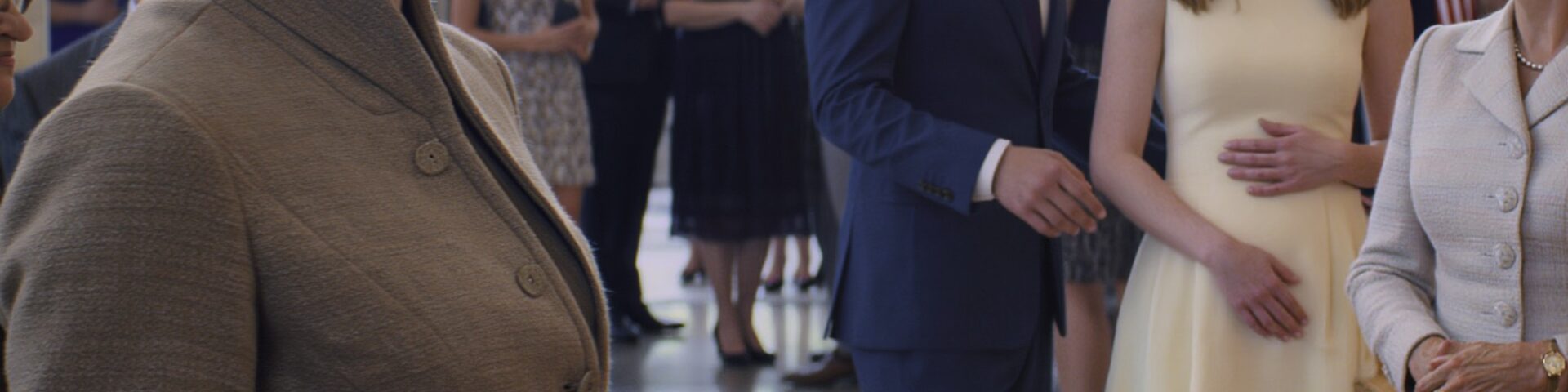
Marcus stood by a pillar, shining in his best suit. Next to him was Chantel—Victoria Vikica Hayes—beautiful in a fitted dress that emphasized her baby bump. And slightly apart, like a queen observing her subjects, towered Mama Estelle.
Marcus held a velvet box in his hands. He was saying something to Chantel. She laughed, throwing her head back. It was the perfect picture of a happy family.
Kesha walked up to them. The sounds of violins from the hall ceased. Intermission had been announced. The lobby became quieter.
“Good evening,” Kesha said loudly.
Marcus turned around. The smile slid off his face like a wet rag. Mama Estelle tensed up, her eyes narrowed.
“Kesha, what are you doing here?” Marcus hissed, looking around. “Go home. Don’t embarrass yourself.”
“I came to offer congratulations.” Kesha placed the speaker on a table with programs on it. Chantel stopped smiling. She shifted her gaze from Kesha to Marcus, sensing the hanging tension.
“Marcus, who is this?” she asked capriciously.
“This is Chantel, the helper herself,” Kesha answered, looking her straight in the eye, “whom one must tolerate until you birth the son.”
She pressed the button on the speaker.
Mama Estelle’s voice, amplified by the speaker, echoed through the lobby, drowning out the hum of the crowd.
“Once Chantel births the grandson, we’ll transfer the land title and kick Kesha out. Let her roll on all four sides.”
People around began to turn. Conversations died down.
“The main thing is to get her to sign the documents for the land by tricking her. The lawyer said, ‘Once we register it as joint property, we can sell it for the debts.’”
Mama Estelle’s face broke out in red blotches. She tried to step toward the table to cut the sound, but her path was blocked by Pop Franklin. He appeared as if from nowhere, standing between his wife and Kesha, arms crossed over his chest.
“Ah, Chantel. Well, tolerate her whims. She’ll give birth and let her sit at home. The main thing is the boy. We’ll see after that. Maybe she’ll get boring, too.”
Now Marcus’s voice boomed from the speaker.
Shantel went pale. She looked at Marcus with horror. “You… you said you loved me, that we were a family.”
“Chantel, it’s an edit. It’s crazy talk,” Marcus squealed, trying to grab her hand, but she recoiled.
“You are paying for my delivery with your daughter’s money?” she asked quietly.
But in the silence, everyone heard her.
“You stole from your own child?”
The recording ended.
A dead silence hung in the lobby. Dozens of eyes looked at the ideal family—looked with judgment, with disgust, with pity. Mama Estelle, who always held her back straight, suddenly hunched over. Her power, held together by the appearance of decency, crumbled into dust. She opened her mouth to say something, but made no sound.
Franklin turned to his wife. “I’m leaving, Estelle. I’m filing for divorce and taking my pension. Live however you want now with your heir.”
He walked over to Kesha and stood beside her.
Shantel, swallowing tears, tore the necklace from her neck—the one with the locket—and threw it at Marcus. “Don’t ever come near me.”
She turned and ran toward the exit, pushing through the crowd.
Marcus remained standing alone in the middle of the hall, a small, pathetic man with a velvet box in his hands that there was no one left to give to. He looked at Kesha, and in his eyes was emptiness.
“You destroyed everything,” he whispered.
“No, Marcus,” Kesha replied calmly. “I just turned on the lights.”
She turned and walked to the exit. She didn’t feel triumph, only a huge, leaden fatigue and a strange ringing emptiness where her heart used to be.
Eight months passed. The winter was snowy this year. Kesha stood by the window of her small shop at the market. The sign—Comforts of Home—glowed with warm yellow light. Behind the glass lay stacks of linen tablecloths, embroidered napkins, soft throws. It was her business—tiny, but hers. She opened it with money from selling part of the harvest, and a small loan that Pop Franklin helped her get.
Her former father-in-law now stopped by often, bringing pastries, helping with the books. He lived in a rented room, painted pictures, and for the first time in forty years, looked alive.
Marcus had disappeared. Rumor had it he moved to another city—Chicago perhaps—running from debts and shame. Mama Estelle lived alone in her large apartment, and neighbors said she stopped going outside.
Kesha straightened a stack of towels. Her hands were still working hands, but now there was no ring on her ring finger. The mark from it still remained, a thin white strip on tanned skin that would probably never disappear.
The door jingled with a bell. Jasmine walked in, rosy from the frost, with a drafting tube behind her back.
“Mom—hey. I passed the final with honors.”
Kesha smiled. They had scraped together the money for the first semester with difficulty, but the court ordered Marcus to pay back the debt, and the first crumbs had begun to trickle in.
“Good girl. Want some tea? Herbal.”
They sat in the back room drinking hot tea from simple mugs. Outside the window, snow fell, covering the city in a white blanket. Kesha looked at her daughter, at the steam rising from the mug, and felt peace. It wasn’t wild happiness. It was a quiet, slightly sad joy of a person who survived a shipwreck and built herself a house on the shore.
She had lost a husband, lost twenty years of life spent on an illusion, lost faith that love is forever. Sometimes at night she still cried into her pillow, remembering the Marcus she once loved, the one who perhaps never existed at all.
But she had found herself. She was no longer a shadow, no longer convenient. She was Kesha Vaughn—a woman who knew how to stand tall even when the ground falls out from under her feet.
In the evening, closing the shop, she saw Mr. Otis. He was walking down the avenue with his wife, supporting her by the arm. The old man noticed Kesha, stopped, and waved to her. Kesha waved back.
She inhaled the frosty air. It smelled of snow, pine needles, and hope. Life continued—different, difficult, lonely, but honest.