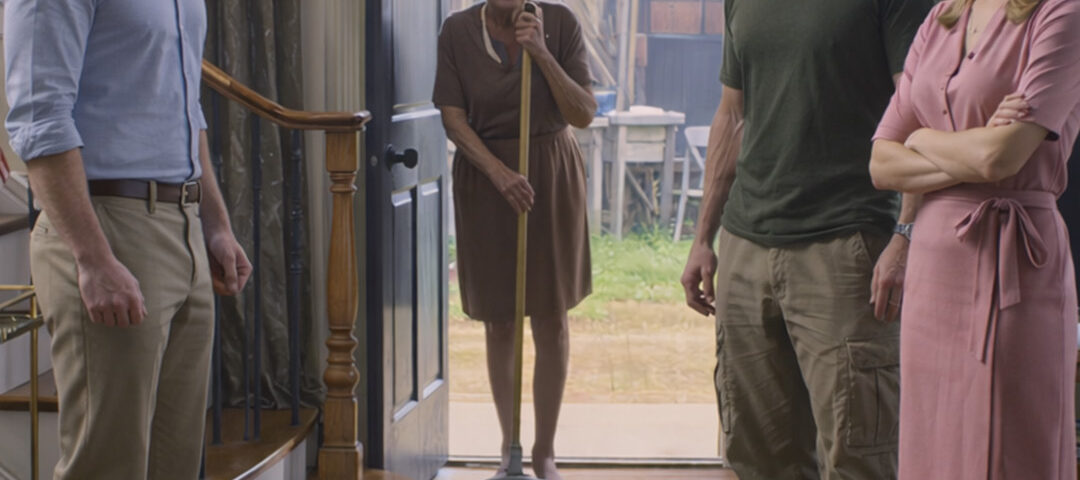
My grandson came by to see me and asked why I was living in a cramped tool shed in the backyard. My son cut him off immediately. He said, “This house belongs to my wife now, and if my mother starts complaining, she’ll find herself out on the street for good.” He had no idea what my grandson had become, or what he was about to do. That single moment changed everything forever.
I was mopping the floor of my little shack in the yard, scrubbing the old linoleum near the bed when I heard the gate creak. I’d know that sound among a thousand others. Twenty years had passed, but the sound was exactly the same—familiar enough to send shivers down my spine, as if time had stood still. I wrung out the rag, tossed it into the bucket, and stood there, leaning on my mop. My knee flared with pain as I straightened up. I was sixty-two years old, and every time I bent down, it felt a little harder than the time before.
Through the tiny window of my shed, all I could see was the back fence and an old outdoor sink that Raymond had promised to fix six months ago. I wiped my hands on my apron and listened. I expected to hear footsteps crossing the yard, heading toward the porch. Then the doorbell rang. My heart skipped a beat. That bell almost never rang. Raymond and Sienna had their own keys. The neighbors had stopped coming by a long time ago. I couldn’t even remember the last time I’d had a guest.
From the living room, I heard Sienna’s voice, irritated as usual. Then a man’s voice answered. It was deep and confident, with an accent that made my heart jump into my throat. I walked out of my shack barefoot, stepping carefully across the cold grass to hear better. As I got closer to the back door, that voice said my name. He said he was my grandson.
My legs nearly gave out.
Xavier.
That mature, steady voice—it was my Xavier, the same little boy who, at seven years old, had left while clutching the hem of my skirt and crying. He was Malia’s son, and I hadn’t seen him in person for twenty years. We only spoke through video calls when the internet wasn’t acting up, and even then it only happened when Raymond wasn’t home. I was afraid to even turn on an extra light when Raymond was around because he’d yell about the electric bill. Sienna often just lied to him, saying, “She’s busy. Call back another time.” Or she wouldn’t tell me someone had called at all.
I had told Raymond last week that Xavier was coming to visit. He just smirked in that way of his and said, “Sure, let him come, Mama. Let him see how well you’re living.” I couldn’t tell back then if he was joking or threatening me.
From the living room, I heard Sienna trying to shut the door, but Xavier wouldn’t back down. He said he’d flown fourteen hours from Los Angeles and wasn’t leaving without seeing his grandmother. My chest tightened so much I had to lean against the wall for support.
Los Angeles.
Malia had moved there to work as a manager for a tech firm and took the boy when he was still small. She promised it wouldn’t be for long, that they’d come back as soon as things got easier, but their lives took off there. The boy grew up, went to school, and Georgia became nothing more than a voice on a screen and sad birthday wishes.
Then Sienna said something I’ll never forget as long as I live. There are new rules in this house now. Grandma Kora lives here out of the kindness of our hearts.
The word kindness hit me like a slap to the face.
Kindness—inside the house I bought when I was thirty years old, working day and night as a seamstress, sewing wedding gowns and suits for every bride and groom in the county. The house I paid for all by myself after their father walked out, leaving me with two kids and a pile of debt. I picked out every tile in this house. Every wall was painted with the pennies I saved, dollar by dollar, just to keep us out of debt. And now I was living here out of kindness.
Xavier asked who she was. Sienna introduced herself as Raymond’s wife, and then she dropped the hammer: this house is mine now.
The silence that followed was heavy, something you could feel in your bones. I knew I should walk out there—just go and hug my grandson—but my feet felt glued to the floor. A wave of shame washed over me. I was ashamed for him to see me like this, to see that I was tucked away in a tool shed, mopping my own floors and eating whatever leftovers Raymond remembered to leave me in the fridge. I was ashamed of my tattered clothes, my swollen feet, and that six-by-ten-foot room they’d turned into my world.
Sienna called out, “Raymond, get down here.”
Heavy footsteps thudded from upstairs. My son came down the stairs in his flip-flops, shirtless, his beer belly shaking with every step. When he saw Xavier in the doorway, his face went through a dozen emotions—surprise, then irritation, then a flash of fear he tried to hide. They exchanged those fake greetings. How you doing? Look how big you got. It was all forced, no real warmth. To be honest, that warmth had vanished twenty years ago.
Xavier got straight to the point. Where’s my grandmother?
Mama’s out back, Raymond said, waving a hand dismissively. She lives in the garden suite now. We renovated the house and she asked to go out there. She likes the peace and quiet.
A lie. A bold-faced lie, and it came from my own son’s mouth. I never asked for that. They simply locked the three front rooms. Sienna turned my master bedroom into her walk-in closet and shoved me into that shack where the shovels and rakes used to be—six feet by ten feet, a twin bed, an old wardrobe, and a tiny window where the sun barely reached.
Xavier didn’t believe it. I could feel it. He started cornering Raymond with questions. That’s when my son’s voice changed. It became gruff and sharp. You’ve been gone for twenty years and now you’re going to come here and teach us how to take care of our mother. We give her a roof and food. We give her everything.
Giving me a roof in my own damn house.
Then Raymond pulled out his ultimate card. The house is actually in my wife’s name. Mama signed it all over to us. It’s all legal and settled.
My blood ran cold.
Signed it over? What papers?
I never gave away my house. I always knew it was in my name—or at least I thought I did. My head started spinning. I remembered how many times Raymond had brought me papers to sign. It’s just a power of attorney, Mama. I’ll handle the bank stuff for you. This is for the property taxes. Just a form for the county.
I signed them.
Lord, help me. I signed them without reading because I trusted him, because he was my son.
Xavier demanded to see the documents. Raymond snapped, cussing and stepping forward, ready for a fight. That’s when I finally found my voice.
“That’s enough,” I said.
I walked out of the hallway, gripping the door frame to keep from falling. Three pairs of eyes turned to me. Sienna had her usual look of disgust. Raymond was tense, his jaw clenched, and Xavier—my boy—stood there.
He was a man now, over six feet tall with broad shoulders and a sharp gray suit. He had Malia’s eyes, and those eyes were wide open now, filled with shock and rage. I saw him really looking at me for the first time. He saw my thin frame, my faded clothes, my swollen bare feet, and my white hair that I’d trimmed myself with kitchen scissors. He saw the calluses on my hands from constant cleaning.
“Grandma,” he whispered, his voice cracking.
In that moment, as I watched horror wash over his face, as he looked from me to the house that used to be clean and cozy but was now cluttered with Sienna’s things, I realized something.
Raymond had just made the biggest mistake of his life.
The man standing in our living room wasn’t the little boy who used to cry into my skirt. He was someone else entirely, and things were never going to be the same.
Before I go on, let me ask you something straight—like we’re sitting in the kitchen together. Do you believe a son could really do this to his mother? What would you do if you found out this was happening in your own family?
The living room went so quiet, I could hear my heart missing beats. Xavier wouldn’t take his eyes off me. He noticed every detail—the bulging veins in my legs, the yellow and blue bruises on my arms that appeared from the slightest bump and wouldn’t fade for weeks because my skin was so thin. He saw the bleach stains on my apron that would never wash out.
Raymond broke the silence first with a nervous laugh. He always laughed like that when he was caught. Mama, you scared me. I thought you were resting. Look, Xavier—Grandma’s doing just fine. We take good care of her.
Xavier didn’t say a word. He just kept looking at me, then took a step toward me. That was enough to make Sienna jump and grab his arm. I think it’s better if you come back another day. Mrs. Kora needs her rest. Her blood pressure is up.
My blood pressure was just fine. That was all made up. Sienna invented illnesses for me as easily as she made up excuses to avoid going to work. She told the neighbors I had Alzheimer’s if I forgot the smallest thing. She told anyone who asked why I didn’t leave the house that my heart was weak and I couldn’t handle any stress. It was all just to explain why nobody ever saw or heard from me.
Grandma, are you okay? Xavier’s voice was husky. He brushed Sienna’s hand off him and took two more steps toward me. Now I could see his face clearly—the faint wrinkles around his eyes, the neatly trimmed beard. He was a man I barely knew, yet he was painfully familiar.
Everything’s fine, baby. I lied. I always did that. I always said everything was okay, that I was managing. I lied because I was too ashamed to admit my own son had brought me to this.
“You don’t look fine,” Xavier said. It wasn’t a question. It was a fact.
He looked around again—the black leather sofa that took up half the room, the massive television on the wall, the shiny bar with expensive bottles, the heavy velvet curtain Sienna had ordered for a fortune—and somewhere in the back of the same house was my little shack with a saggy mattress, an old blanket, and a thin sheet with holes that no one bothered to replace.
“Xavier, you must be tired from the trip,” Raymond chimed in, using that patronizing tone he used with me. The flight, the jet lag, all that. Why don’t you and Grandma talk tomorrow? I’ll take you to a nice hotel today. On me.
Not on you, Xavier said calmly. I want to talk to my grandmother alone.
Sienna gave a short, nervous laugh. Alone? Seriously, honey, we don’t leave her alone with strangers. She gets confused, she talks nonsense. You’ll just get yourself upset for nothing.
I am not confused.
The words burst out of me. A hot wave of anger rose in my throat. I have never been confused. Stop making up diseases for me, Sienna.
Her face froze instantly. The fake smile vanished, replaced by pure venom. You hear that? She hissed, being rude already. We’re out here working ourselves to the bone, taking care of her, and she’s embarrassing us in front of guests.
Taking care of me? The words flew out of my mouth. “Is that what you call this?”
Raymond took a step toward me, and I saw that familiar glint in his eyes, the one that appeared whenever I asked too many questions, or when I wondered where my social security checks went, or why I was sleeping in a shed instead of my own room. I instinctively backed away, and Xavier saw it. He saw me flinching from my own son. He saw the fear on my face, and something in him changed.
He stood up straighter, his shoulders broadening, his jaw tightening. “Everyone out,” he said quietly, but in a way that sent a chill down my spine.
Raymond laughed. “You’re something else, nephew. You don’t call the shots here. This is my house. Understand?”
“It’s not yours. It’s my grandmother’s house,” Xavier replied, his voice just as steady. “And I want to talk to her in private. So both of you are going to leave this room right now, or I’m going to have to ask less politely.”
“Raymond, kick him out,” Sienna spat. “Who does he think he is?”
But Raymond was looking at Xavier differently now, sizing him up. My grandson was about six inches taller than him, younger, and much stronger. And in his calmness, there wasn’t arrogance. There was authority. It was the way people speak when they’re used to being listened to.
Fine. Raymond suddenly gave in, putting his hands up. Fine, no big deal. Talk to her, but we’re going to need to discuss a few things afterward about the house, the papers, everything. You’ll see for yourself that we did everything by the book.
Xavier didn’t say a word. He just watched them until they moved toward the stairs. Sienna huffed loudly, muttering something about disrespect, but she went up. Raymond followed, but before he disappeared, he turned and gave me that look.
I knew that look.
It meant, “You’ll regret this later.”
He’d looked at me like that when he cut off my internet for a week, or when he locked the pantry, claiming I was eating too much and wasting food, or when he took my phone and deleted Malia’s number, telling me she didn’t call anyway.
When their footsteps faded upstairs and the door slammed, Xavier turned to me, and for the first time in twenty years, I saw my grandson cry. He didn’t sob out loud. Quiet tears just rolled down his cheeks as he tried his best to hold it together.
“Grandma, what did they do to you?” he asked.
A lump formed in my throat. I couldn’t answer because I knew that if I started, I’d break down. I’d stayed silent for so many years, holding it all in, that I’d forgotten how to speak the truth. Xavier crossed the room in three steps and pulled me into a tight hug. He held me as if he wanted to fix everything with one embrace. He smelled like expensive cologne, like a long flight and something else—something familiar, like Malia.
My whole body started shaking, and I finally couldn’t take it anymore. I sobbed into his shoulder, crying in a way I hadn’t cried in years—quiet gasps that made my chest ache, the way someone cries when they’ve held everything in for too long. I don’t know how long we stood there. He stroked my hair just like I used to stroke his when he was little and woke up from a nightmare.
When I finally pulled away, I wiped my face and looked at him. His jaw was so tight I could see the muscles twitching.
Sit down, Grandma, he said. Sit with me and tell me everything from the very beginning.
We sat on that black leather sofa I hated, the one bought with my own money, and from the moment I opened my mouth, I couldn’t stop.
Raymond had come back home five years ago. Back then, it didn’t seem so bad. He showed up with a beat-up suitcase, looking angry and worn out. He said he’d divorced his first wife, lost his job, and had nowhere to go. Mama, can I just crash here for a few days until I get things sorted? he asked. How could I say no? He’s my son, my own flesh and blood. Of course he could stay.
A few days turned into weeks, and weeks turned into months. He eventually found a job as a salesman, but he never once offered to help with the bills. “I’m saving up to move out, Mama,” he’d say. “I can’t stay on your neck forever.” But he was saving at the bars and at barbecues with his friends, coming home tipsy every night.
Then Sienna showed up. She was one of his customers, fifteen years younger than him—pretty, polished—but with a certain glint in her eyes. It wasn’t kindness. It was the way she looked at everything, calculating what it was worth and what she could get out of it. Things moved fast. Three months later, Raymond just brought her into my house with her suitcases. Mama, this is temporary until we get on our feet. I hope you don’t mind.
They didn’t care if I minded. They just put their things in the guest room and that was that.
Sienna walked through the house like it was a showroom. This is a nice neighborhood, Mrs. Kora, she’d smile. Good, spacious house. Must be worth a fortune at today’s prices.
Raymond started agreeing, saying the house was expensive and it was too much for one old woman to live in alone. They started talking more and more about how a two-bedroom apartment would be enough for me—something smaller, simpler—and how it would be better to sell this place.
I stood my ground. No. This is my house. I earned it. I’m living here as long as my legs can carry me.
Raymond grumbled, but seemed to drop it for a while. Life fell into a crooked sort of balance. They lived in the guest room. I lived in my master bedroom. And we somehow managed in the kitchen. Sienna was always dissatisfied with something, but I tried to ignore it.
Then the pandemic hit. Both Raymond and Sienna lost their jobs. They sat at home all day. The money ran out, and all that was left was my social security check. At first, I didn’t mind. Times were tough. Family stays together. I’d help as long as I could.
But things shifted very quickly.
Sienna smoothly took over the kitchen. Mrs. Kora, let me do the cooking. It’s easier and more efficient, she’d say. But she’d heap plates high for herself and Raymond while giving me tiny portions like I was a child. When I finally spoke up and said I wasn’t getting enough to eat, she calmly replied, “You don’t need much. It’s good for you to lose weight. Your blood pressure will spike.”
What blood pressure? I was perfectly fine back then, just tired. But from that day on, I started eating by their rules.
One day, Raymond took my bank card. Mama, your back is hurting. You shouldn’t be walking to the ATM. Let me withdraw the check, pay the electric and water bills, and I’ll give you the rest. He asked for my PIN so he wouldn’t have to drag me along every time. Like an old fool, I gave it to him. He started taking my check every month. He’d say he was paying the bills, buying groceries, and getting my medicine.
I barely saw a dime.
When I asked for money for over-the-counter meds that the clinic didn’t cover, he’d sigh. Mama, medicine is expensive. Just wait for the free samples. The budget is tight.
On the weekends, they started having parties. Raymond and Sienna’s friends would come over in groups. They’d grill meat in the backyard and drink. They’d blast music until late at night, screaming. And when everyone left, the cleaning—the dishes, the floors, the trash in the yard—was left to me.
When I said I couldn’t handle it, Sienna just smirked. Nobody keeps servants these days. Everyone does their part. If you want to live here, do your share.
Then the papers started coming. Raymond would show up with documents. Sign here, Mama. It’s for the property tax. This is a power of attorney, so I can go to the bank for you. We need to update the info with the utility company. I signed them without even reading because he was my son, and I never thought in a million years that my own child would pull something like that against me.
One morning, I woke up to find someone walking around in my bedroom. I opened my eyes and saw Sienna with a tape measure, measuring everything.
“What are you doing?” I asked.
“We decided this will be my walk-in closet,” she said calmly. The room is huge and we’re cramped in the guest room. You’re going to move to the backyard suite temporarily while we get things done, and then we’ll see.
I’m not moving anywhere, I said. This is my room.
Raymond flared up instantly. You’re being selfish, Mama. We helped you, took you in, we’re taking care of you, and you won’t even cooperate. If things are so bad here, you can go to a nursing home. You can’t live alone at your age anyway.
The words nursing home paralyzed me. I imagined sitting there with other seniors who had been dumped and forgotten. A cold sweat broke over me.
I gave in.
I packed my underwear, a few dresses, and my pillow and moved into that tool shed in the yard—six feet by ten feet, a bed, an old wardrobe, a tiny window. Raymond said, “It’s temporary, Ma, just until the renovation is done.”
They locked my old bedroom and started tearing down walls, laying new floors, putting up expensive wallpaper, and installing built-in closets. All with my money—my social security. The temporary never ended. The shack in the yard became my permanent home.
There was no fan. It wastes electricity. And no TV. Raymond had simply sold my television. You only watch junk anyway, he’d snapped.
Then they cut off the landline. Too expensive. Why keep it? I was left without any connection except for rare calls on Raymond’s cell phone, and only when he was present.
Sienna finally cemented her place in the kitchen. She cooked for everyone, serving herself and Raymond first, and leaving me with whatever was left. Sometimes there was practically nothing in the fridge. When I complained I was hungry, Raymond would say, “You’re exaggerating. We feed you. There was soup. There was pasta. There’s bread. What else do you want? Food doesn’t fall from the sky. You should be grateful.”
Over time, they started locking me in. When they went out, they’d lock the gate with a heavy padlock and take the keys. It’s for your own safety, Mama, Raymond would say. “You get confused. You might wander off and get lost. Then we’d have to search the whole city for you.”
I wasn’t confused. I would just sit in my shed and listen to the gate clicking shut.
Once I felt ill—sharp pain in my chest, hard to breathe. My arms felt like lead. I somehow managed to reach Raymond’s phone and called him. He didn’t come home for five hours. He looked at me and grimaced. It’s just a panic attack, Mama. You’re too nervous. Stop making scenes or I’ll stop responding altogether.
He didn’t take me to the hospital. The pain faded by nightfall, but the feeling that I was unwanted never left.
The real blow came during a heavy rainstorm. A massive wind picked up and the rain was a wall. I was sitting in my shed when I heard drip, drip. Then again and again. I turned my head and water was leaking from the ceiling right onto my mattress. Within ten minutes, the whole bed was soaked.
I went to the house. Raymond, the roof is leaking, I said. My bed is all wet.
Fine, I’ll look at it. He brushed me off, not even looking up from his computer.
He never looked.
That night, I spread an old towel on the floor, put a thin blanket over it, and lay down on the cold linoleum. I put a basin in the corner to catch the endless drip, drip, drip. I lay there staring at the black ceiling, wondering how it came to this—how in the house I bought and paid for, I was sleeping on the floor under a leaking roof, and afraid of my own son.
I thought that night on the floor was the bottom. It turned out I was only just getting there.
After that night, I stopped looking in the mirror. I didn’t want to see what I’d become. I was too thin. There was barely anything to eat. My hair was white and messy. I had nowhere to get a haircut and no money for it anyway. I used to go to the salon every couple of months, but now I hacked at it myself with scissors by feel.
My clothes were old, faded, and stretched out. Nobody bought me anything new. I couldn’t do it myself anymore. By evening, my legs would swell, blue veins showing through the skin like ropes. All day on my feet—dishes, floors, laundry, whatever else. The house that was once my pride felt like a stranger’s place.
Malia somehow managed to call on Raymond’s phone once. He put it on speaker and sat right there to listen to every word.
“Mama, how are you?” she asked.
“Everything’s good, sweetie,” I replied.
Is Raymond being good to you? He’s not bothering you.
Oh, what are you talking about? I laughed. He’s a golden son. Does everything. Helps with everything.
Do you need anything? Money, meds, clothes.
No, honey. I’ve got everything I need. Living like a queen.
I could hear myself lying in that moment, but telling the truth meant admitting my own son had brought me to this. It meant dragging my daughter away from her life where she was working her tail off to build a future for herself and her son. I chose to stay silent.
When Malia hung up, Raymond smirked with satisfaction. See, you’re saying all the right things. Why worry her for no reason?
And so it went, day after day, year after year. For five years, I was slowly erased like a pattern on an old rag.
Sienna started taking my things. First, the old hutch that had belonged to my grandmother disappeared. Then, my porcelain wedding tea set. I saw an ad online by accident. I knew it was mine from the photo.
Sienna, where’s the hutch? Where are the dishes? I asked.
We sold them, she replied calmly. They take up space and collect dust. We needed the money for food and bills. You don’t want us to get evicted for debt, do you?
I never saw a cent from those sales, but a new sofa appeared in the living room— that big black leather one. A huge TV covered half the wall, a sound system, a bar with bottles. Sienna posted photos of the new living room online, captioning them things like, “Updated our little nest,” collecting likes and compliments. Nobody saw that in the yard behind a locked gate, I was sleeping on an old mattress with a leak over my head.
Raymond eventually stopped going to work altogether. He sat at home saying he had freelance gigs online. All I saw was him staring at a screen and playing games for twenty-four hours a day. Sienna got a job as a receptionist, worked there for three months, and quit. The boss is an idiot, she said. Since then, she sat at home again fussing with her makeup and nails while my social security check funded their lives.
They started fighting more often. I could hear it even in my shack—screaming, door slamming.
I’m leaving you, Sienna would shriek. I’m not living in a house that doesn’t belong to me.
Don’t say that, baby, Raymond would plead. Where would you go? Stay.
I’ll only stay if the house is in my name, she declared. I’m not living here as a guest. As long as the house is in your mother’s name, I’m nobody.
After those arguments, Raymond would come to me with a stony face and new papers. This is in case something happens to you, Mama, he’d say. Just a formality. Inheritance paperwork. So Malia and I don’t have to struggle with documents later.
He said the word inheritance so calmly, as if he were talking about a distant relative and not me. Once you die, he said almost casually, to avoid going to court, it’s better to settle everything now. What difference does it make to you? You’re leaving it to the kids anyway.
I sat there gripping the edge of my chair. I was ashamed—ashamed that I was even sitting there listening to this, ashamed that I didn’t have the heart to stand up and say no. But over those years, I was so tired. Tired of the constant screaming, the threats of a nursing home, the feeling that I was a burden. At some point, something in me just gave up.
“Do what you want,” I said quietly. “Just leave me alone.”
He slid the papers over and showed me where to sign. The text was small, and my eyes weren’t what they used to be, and he’d somehow forgotten to buy me new glasses.
Here, here, and right here, he rushed me. It’s all the same thing, just copies.
I took the pen and signed several times. With every signature, it felt like I was cutting off a piece of myself. Afterward, I sat on my bed in the shed for a long time, whispering, “Lord, forgive me. I don’t know what I’m doing.”
I thought that if I agreed, they’d finally leave me be. They’d stop scaring me with the nursing home and stop looking at me like I was a nuisance. I just wanted peace. I wanted to live out my days quietly without hearing that I was in the way.
About two weeks passed.
One evening, Sienna walked into the house in a new dress with bright nails and a bottle of champagne in her hand. Her cheeks were flushed, her eyes sparkling.
“Well,” she announced before even crossing the threshold, “we can celebrate. The house is officially mine. Everything’s registered. The stamps are on it.”
The way she looked at me, I knew right then that everything was really about to change—and definitely not in my favor.
After that night with the champagne, things did turn upside down, but not the way they imagined. I officially had zero say in that house. I couldn’t choose what to watch on TV because I didn’t have a TV. It stood in the living room like a museum piece and it was theirs. The kitchen became Sienna’s territory. I only went in there to wash dishes and clean up. I was afraid to even boil the kettle without her permission. It would immediately lead to talk about the electric bill and how the budget wasn’t endless.
Leaving the house was out of the question. The gate was almost always locked. Only they had keys. For your safety, Raymond repeated. You’ll go out, fall somewhere, and then we’ll be the ones blamed.
The connection with Malia was slowly severed. First, they cut the landline. Useless, just waste money. Then my old cell phone “accidentally” disappeared.
“You probably lost it, Mama,” Raymond said. “At your age, that’s normal.”
A few days later, he brought me a cheap senior phone—big, heavy, with giant buttons.
“This will be easier for you,” he smiled.
There was only one number saved in the memory: his. He didn’t even let me enter any others.
Scammers everywhere these days, he explained. They’ll call pretending to be Malia trying to get your info. You’re too trusting. Better not to talk to anyone. Need something? Call me.
Malia still tried to get through for a while. Sometimes she managed to call the landline before it was cut. Once I answered in secret. Raymond was in the yard. Sienna was in the shower. The phone rang— a strange international number.
Hello, I whispered.
Mama, it’s me.
I heard Malia’s voice. My legs buckled. I leaned against the wall.
Mama, why can’t I get through to you? What’s going on over there?
And in that moment, I chose them over myself again. Everything’s fine, I said, living quietly. Raymond’s helping out. Don’t need a thing.
She kept asking questions, sounding worried, but I just kept repeating that everything was okay. Then I heard footsteps. I hung up and put the receiver down as if talking to my daughter was a crime.
After that, the neighbors almost stopped coming by. If someone did ring the bell, Sienna was the first one out. Mrs. Kora is sleeping, she’d say, or, “She’s not feeling well. Her blood pressure is acting up.” She told some people my memory was completely gone and I didn’t recognize anyone. She told others my heart was failing and I couldn’t go out.
People believed her and slowly drifted away. Step by step, I was erased—not just from the house, but from the yard, the street, and life itself.
Sienna finally started talking to me like I was the help. Wash the dishes, launder this, mop the floor, iron the shirts. I did it because I had nowhere else to go. Every time I tried to object, Raymond played his trump card.
“You want to go to the nursing home?” he’d ask in a cold voice. They’ll be happy to have you there.
And I would fall silent again.
It went on like that until one day everything swung the other way.
It happened the week Xavier called.
I was scrubbing the kitchen sink, getting off dried grease when Raymond’s phone rang. He was in the shower and the water was running. At first, I was going to leave it, but it wouldn’t stop ringing. My heart fluttered. What if it was something serious? His health wasn’t great either, even if he pretended to be made of iron.
I wiped my hands on my apron and picked up. The screen showed a long number with a plus sign. International.
“Hello,” I said cautiously.
“Grandma,” the voice came through the line.
My world stopped.
“Who is this?” I could barely get the words out, though I already knew.
“It’s Xavier,” the voice replied. Your grandson.
I leaned against the wall so I wouldn’t fall. His voice was grown up now, deep, but in his tone I heard that same little boy who used to fall asleep in my arms.
“Baby,” was all I could say before I started crying.
“Grandma, don’t cry,” he said, still using those little terms of endearment. “I missed you so much. I want to come see you.”
He asked for the address. I quickly whispered the street, the house number—everything in one breath—glancing at the bathroom door.
“I’m flying into Georgia on Thursday,” he said. “I want to surprise everyone. Don’t tell anybody, okay? I’ll just show up at the house.”
“Okay,” I whispered.
But when he hung up, I did the exact opposite.
Raymond came out of the bathroom, drying his head with a towel. “Who called?” he asked without even looking.
It was Xavier, I said. He said he’s coming on Thursday. Wants to see me.
I was a fool. I thought he’d be happy. After all, it was his nephew, his sister’s son. They hadn’t seen each other in twenty years.
He froze in the middle of the kitchen.
What did you tell him? His voice went sharp.
Nothing—just the address. He said he was coming. I justified myself.
Raymond narrowed his eyes. Did you complain about us? Did you tell him about the house? The papers?
No. I shook my head. I just gave him the address, that’s all.
He exhaled, seemingly calmed, but the tension remained. All week, he was on edge. He’d either sit staring at his phone in silence, or mumble to himself, or snap at the smallest thing.
When Sienna found out, she went off like a firecracker. Great. First the house is in my name, and now this hot shot from America is coming to start claiming rights.
He has no right to the house, Raymond assured her. It’s all in the documents.
Documents, documents. She paced the living room nervously. I don’t like this. We need to make sure he doesn’t start getting ideas, and make sure she doesn’t start telling him fairy tales.
From that day on, I lived under a microscope. Listen here, Mrs. Kora, Sienna cornered me in the hallway one day. Her voice was quiet but poisonous.
On Thursday, when he gets here, you stay quiet. Let Raymond do the talking. No scenes, no complaints, no… Oh, I’m so miserable. Got it?
I stayed silent.
I’m talking to you nicely. Her face was inches from mine. Because if you start turning him against us, if you start making up stories about how we’re supposedly mistreating you, I will personally make sure you’re in a nursing home the very next day. Do you understand me?
I understand, I whispered.
And remember, we don’t owe you anything. You live here because of us, not the other way around, she threw in at the end.
I just kept nodding, but inside I was trembling—both from fear and from how much I was looking forward to Thursday. Because no matter how scary it was, the thought of seeing Xavier warmed me. At least someone from my own blood would enter this house without being filtered through Raymond and Sienna.
I promised I’d be quiet, but I made another promise to myself. If my grandson asked me directly, I wouldn’t lie anymore.
And then that day came.
On Thursday afternoon, while I was mopping the floor in my shack and could hear Raymond and Sienna shuffling in the house as if they were preparing for an exam, the gate creaked again. A minute later, that same doorbell rang—the one my story began with. Only back then, I didn’t know that sound would be the beginning of the end for everything they’d built on my back.
When I finished telling the whole story, my hands were shaking. Xavier hadn’t interrupted me much. The more I told him, the quieter he became. Now he sat with his elbows on his knees, his face buried in his palms. His shoulders were trembling slightly. He was crying—not out loud, not sobbing—but in that quiet, grown-up way a man does when he’s trying his hardest to hold it together, but the tears come anyway.
“Why didn’t you call Mama?” he asked hoarsely, not looking up. “Why didn’t you ask for help?”
I sighed, my fingers whitening as I gripped them. I was ashamed, I said honestly—ashamed to admit my own son treated me this way, ashamed to pull Malia out of her life, her work. She was already working herself to the bone there to raise you. And I… I was like a fool, signing everything, putting up with everything. I was ashamed of my own stupidity.
He looked up suddenly.
“You are not stupid, Grandma,” he said sharply. “You are a victim. You were exploited and deceived for years. That’s not stupidity. That’s abuse of trust.”
He jumped up, paced the room back and forth, then stopped by the window, took a deep breath, and turned back to me. There was a look of rage in his eyes unlike anything I’d ever seen.
“Tell me, do you remember exactly when you signed those papers?” he asked, more focused now.
About two years ago—a year, six months, two or three weeks before Sienna came in with the champagne—I remembered. They were fighting about the house not being in her name. Then he brought those papers. I signed them, and a couple of weeks later, she was celebrating.
“Do you have copies?” he asked.
No. Everything is in his dresser upstairs, I think, or in Sienna’s closet. I’m not allowed to touch a thing.
What about the original house documents? He narrowed his eyes. The deed, the old property records—where are they?
In my shack, under the mattress, I said without thinking. That’s the only thing I never gave to anyone. When Raymond asked to see them, I only gave him copies. I never let the originals out of my sight.
Xavier’s face changed instantly, like a light had been switched on.
“You mean you have the original deed of ownership in your hands?”
Yes. Ever since I bought the house, it’s been under that mattress. I never let it go.
He walked over to me, knelt down, and took my hands in his.
“Then, Grandma, legally, the house is still yours,” he said quietly. But every word sounded like a final sentence. “Whatever they filed without you—if the signature was forged, or if you didn’t understand what you were signing—that’s fraud, document forgery, a crime.”
My heart jumped.
But Raymond is my son, I whispered. I don’t want him to go to jail. No matter what, he’s still my son.
“Grandma.” He looked me straight in the eyes. “He didn’t just make a mistake. He humiliated you for five years, kept you locked up, stole your checks, made up illnesses for you, and forged documents for your house. That’s not an accident. That’s a series of conscious choices. And in a civilized country, you answer for that.”
He clenched his teeth for a second, then went on.
“You said it yourself. He threatened you with a nursing home, locked you in, wouldn’t let you call. That’s not just family business anymore. That’s a felony—abuse of the elderly, financial exploitation, unlawful imprisonment.”
But the police, I started timidly. They’ll just say it’s a family matter. Figure it out yourselves.
“First of all, I’m not just your grandson,” he interrupted calmly but firmly. “Do you know what I do for a living?”
I shook my head.
“I’m an attorney, Grandma,” he said. “A lawyer. I work at a major firm in Los Angeles. I specialize in family law and elderly protection. I see stories like yours every single day—the exact same schemes, children taking houses, checks, isolating parents—and every day I help those people get it all back.”
I stared at him in disbelief. Standing before me was that same boy who had once left with a stuffed animal in his backpack, but now he was speaking seriously, confidently, like a man who knew exactly what he was doing.
“And that’s not all,” he added. “I didn’t come alone. Two of my colleagues are with me. They work in the same field. They’re at the hotel right now. We handle these kinds of property fraud cases together. Tomorrow morning, the three of us are going to the county clerk’s office and the property records office. We’ll pull every document on this house. We’ll see exactly what they pulled, and we’re going to tear it all down. Then we’re going to the police to file a report on everything, and I’m taking you out of here today to a safe place before they can do anything to hurt you.”
I have nowhere to go, I whispered. Raymond said if I left, I’d have nowhere to come back to, that I’d be lost without them.
“You’re coming to the hotel with me,” he replied, as if it were the most obvious thing in the world. “I have a two-bedroom suite. You’ll live there until we settle everything. You don’t need a nursing home. You need decent conditions and people who are on your side.”
Tears started rolling down my cheeks again. This time they were different. It wasn’t from helplessness. It was because something long-forgotten stirred in the corner of my soul.
Hope.
And Malia, I asked, does she know?
Not yet, he sighed. I didn’t want to scare her until I saw what was happening for myself. But I’m telling her everything tonight, and yeah, she’s probably going to want to fly here immediately.
She shouldn’t, I said instinctively. She has work, a life. I don’t want to get in her way.
Grandma, he smiled gently. You’re her mother. It’s not getting in the way. It’s her right to know the truth and decide what to do, but that’s between me and her. Right now, it’s about you.
He sat next to me again and took my hand. Tell me—the original deed is in your room right now?
Yes, under the mattress. I put it there years ago. It’s still there, I replied.
Okay, here’s the plan. Xavier was speaking in that calm, business-like tone that somehow made me feel lighter inside.
Tonight you act like normal. Eat, stay quiet, don’t get into anything with them. During the night, pack a small bag—the deed, some clothes, the essentials. At 4:30 in the morning, wake up and get ready quietly. At 5:00, I’ll be waiting at the gate in a car. We’ll get in and go to the hotel.
But they… I was terrified. Raymond will wake up, see I’m gone, and he’ll go crazy.
By the time he wakes up, my grandson replied calmly, you’ll be long gone. And by the time he figures it out, we’ll have already filed the police report and a request to freeze any actions on the house. By the time he realizes what’s happening, it’ll be too late.
He’s still my son, I repeated in a weak voice.
He is your son. But that doesn’t change the fact that he committed a crime, Xavier said firmly. Understand, it’s not just about the house. He spent five years breaking your life. You can’t just let that go. And if he isn’t stopped now, he’ll do the same thing to someone else. He and Sienna are already living off what they can squeeze out of you. Tomorrow it won’t be enough, and they’ll find another victim.
He leaned in closer.
What matters right now is you—your safety, your freedom, your life. Grandma, we’ll deal with the rest later, step by step. But first, we have to get you out of here.
Footsteps sounded from upstairs. A floorboard creaked. A door slammed. Raymond and Sienna were moving about.
Xavier squeezed my fingers. Can you hold on for one more night? he whispered. Can you pack your things, get the papers, and sneak out without them hearing you?
I took a deep breath. All those years flashed before my eyes—the leak over my bed, the empty fridge, the locked gate, the constant threat of the nursing home.
I can, I said. If you tell me tomorrow everything will change, I can hold on.
He nodded. Then it’s a deal, Grandma, he said. Tomorrow at 5:00 in the morning, your old life ends.
And for the first time in many years, my hand in his didn’t tremble from fear, but because somewhere ahead, a faint light—something like a new beginning—was finally breaking through.
When Xavier and I finished our plan, the floorboards creaked upstairs again. A few minutes later, they came down.
“What were you two talking about for so long?” Sienna asked from the doorway, her eyes fixed on me and then him.
I rubbed my hands on my apron and put on that tired face that had become my mask. Just a little talk, I sighed. I’m already worn out. Age, you know.
We weren’t talking long, Xavier added in a calm voice. Grandma needs her rest. I’ll come by again tomorrow.
Raymond narrowed his eyes. Well, that’s great. Mama always gets exhausted after guests, right, Ma?
Yes, I picked up. I need to lie down. I’m going to my little room.
I could feel him staring at my face, trying to see if I’d said too much, but I kept my eyes down, acting like the world was on my shoulders.
“Fine,” he said, deciding he hadn’t lost control. “Go get some rest, Mama.”
I nodded and went into the yard, feeling Sienna’s eyes on my back. She whispered something to Raymond, but I didn’t listen.
In my shed, I closed the door and sat on the edge of the bed. My heart was pounding so loud it felt like the whole house could hear it.
5:00 tomorrow, I kept repeating to myself.
I pulled the envelope with the house deed from under the mattress. I looked at the old pages—my name, my signature, the stamps I had once been so proud of. I touched them with my fingers, folded them back up, and wrapped them in a plastic bag.
Then I got out an old tote bag and packed the papers, some underwear, a warm sweater, a scarf, and a comb. I looked at it all and realized my entire life now fit into one worn-out bag. I hid it behind the wardrobe so no one would see it if they came in.
I barely slept that night. I lay there listening to the house. First, they moved around upstairs—slamming doors, running water. Then everything went quiet. Only the rare car passing by broke the silence.
Please don’t let the alarm fail, I thought.
I set that old flip phone to vibrate so there wouldn’t be any sound. I set it for 4:30. When the vibration started, I was already wide awake.
I got up slowly, leaning on the nightstand so my knees wouldn’t pop. I found the clothes I’d set out—loose pants, a dark long-sleeved shirt to hide the bruises on my arms, and a light jacket. I put on my only pair of sneakers.
I took the bag and stood in the middle of that cramped shack for a second, looking at the damp stains on the wall, my bed, the nightstand.
If this works, I thought, I’m never coming back here.
I opened the door quietly. The hinges creaked slightly. I froze, holding my breath. The house was silent.
The hallway was dark, except for a sliver of light from under Raymond’s door. He’d left a nightlight on, or his computer monitor was glowing. I could hear his snoring—loud and confident, like a man who had everything under control.
I knew every creaky board in that hallway. Over the years, I’d learned to avoid the spots that made noise. I stepped where it was quiet, then again slowly, as if my life depended on it.
I passed the kitchen and glanced in. Crumbs and mugs were on the table. I instinctively thought about how I hadn’t cleaned up that evening, then caught myself. I was leaving, and I was still worried about their dishes.
In the living room, the blue light of the TV standby glowed. That black sofa was still there. I reached the front door. My hand shook as I grabbed the handle.
If the lock clicks too loud, they’ll wake up, flashed through my mind. If they wake up, it’s over.
I turned the key very slowly. The lock clicked, but not as loud as I’d feared. I opened the door slightly, letting in the cold night air. It was still pitch black outside— that hour when the night is almost over, but the morning hasn’t yet arrived.
I slipped onto the porch and quietly closed the door behind me.
The yard was empty and damp. The pavement sparkled from the night mist. I reached the gate. It was locked with that heavy padlock. My heart sank.
What if he hadn’t opened it?
I felt the keyhole with my fingers and pushed. The lock was already open.
He’d prepared it.
I cautiously pushed the gate open. A black car was parked a little further down the street, its headlights off. As soon as I stepped out, Xavier hopped out. He crossed the road and ran to me.
Did you make it? he whispered.
I just nodded. My voice was stuck in my throat.
He took the bag from my hands and held my elbow. “Let’s go, Grandma,” he said softly. “You’re out. The worst is over.”
We crossed the road. I looked back at the house one last time. In the dark, it looked like a stranger’s place. The windows were black except for that one faint glow.
Goodbye, I thought—but not for good. I’ll be back just as someone else.
We got into the car. The interior smelled expensive and fresh, nothing like our house, which smelled like frying oil and tobacco. The seat was soft. My back sank into it. Xavier started the engine. He drove away slowly at first without turning on the lights. Only when we were a hundred yards away did the lights flicker on.
I watched through the window as our house shrank and disappeared around the bend. With every yard, it felt like another heavy stone was falling off my chest.
Twenty minutes later, we were driving into a neighborhood I’d never been to—tall buildings, lit-up signs. Everything was different. The car stopped in front of a large, bright building with a lit-up porch. A security guard in a uniform stood at the entrance. The doors were glass.
“This is the hotel where I’m staying,” Xavier explained. “It’s safe here.”
He helped me out and handed me my bag. The guard nodded to him and silently opened the door. The lobby was quiet and warm, smelling of coffee and fresh laundry. There was a carpet on the floor. Everything was soft, and the light was dimmed.
It felt like I’d entered another world where no one yelled at me or looked at me like a burden.
We took the elevator to the tenth floor. In my sixty-some years, I’d rarely been in an elevator, and this one was glass with the city in the window. Xavier opened the door to the suite.
“Here,” he said, “we’ll stay here for now.”
The suite was larger than my whole shack—and half the house combined—a small living room with a sofa, a table, and a TV on the wall. Two doors led to different rooms. He opened one. Inside was a large bed with clean white sheets. It was neatly made with a soft throw, curtains, and a rug.
“This is yours, Grandma,” he said. “Mine is next door. You can lie down and sleep now. Around seven, we’ll go down and have breakfast. Then we’ll get to work.”
I stood in the middle of the room, clutching the handle of my bag like a lifeline.
“I’m allowed in here?” I asked, as if I were afraid someone would say, You can’t be here. This isn’t yours. You don’t belong here.
Xavier smiled. This is your room now—at least for the next few days.
He stepped out, leaving me alone. I walked over to the bed and touched the comforter. It was so soft and smooth, nothing like my old sheet with the hole in it. Without even undressing, I lay down on top—just stretching out, a pillow under my head, not a board. My body suddenly remembered what it felt like to lie down without feeling every spring in my back.
I don’t remember falling asleep. My eyes just closed and that was it.
I woke up to a light knock on the door.
Grandma, I heard Xavier’s voice. It’s almost seven. Let’s go down for breakfast. Then we’re heading out.
I sat up and rubbed my face. Inside, I felt a strange mix of anxiety and peace. The bathroom had white towels and soap that smelled like citrus. I washed my face and looked in the mirror. Same me—wrinkles, tired eyes—but something in my expression was different. It was like I had something to lean on now.
When I walked into the living room, three men were sitting at the table—Xavier and two others in suits with folders.
“Grandma, meet my colleagues, Michael and Alexander,” Xavier said, standing up. “We’re going to handle your case together.”
They stood up. Each one shook my hand—not like an old woman who needed to be patted on the head, but as an equal adult.
Very nice to meet you, one said. We’ve heard all about you from Xavier, and we’re serious about this, the other added. We’re going to get back everything that’s yours.
We went down to the restaurant on the first floor. There were tables with food, people in business suits—some in a rush, some quietly drinking coffee. Xavier carefully put a little of everything on my plate—some oatmeal, a slice of cheese, bread, a little fruit.
“Eat slowly,” he said. “It’s going to be a long day.”
At first, I was afraid to take it. My hand remembered how they’d grimace at home if I took an extra bite. Eating again? But here, no one rushed me or counted my bites. I ate slowly, savoring it, having long forgotten what it was like to just have a quiet breakfast.
After breakfast, we went back to the suite. The men quickly checked the papers and the schedule. First, the county clerk’s office and the property records. Alexander said, “We’ll pull the filings and see how the deed transfer was handled, then the police to file everything officially.”
“Grandma,” Xavier turned to me, “this won’t be easy. You’ll have to tell the story again, but I’ll be right there. I won’t leave you for a minute.”
I nodded. I understood there was no going back. Either I went with them and broke what Raymond and Sienna had built on my back, or I went back to my shack forever.
An hour later, when we walked into the county office and the clerk typed my address into the computer, her eyebrows shot up. She looked at the screen, then at me, then back at the screen.
“That’s strange,” she muttered.
My stomach knotted. “What is it?” Xavier asked calmly, leaning toward the window.
The woman clicked something else. For a long time, the property was in Mrs. Kora Pendleton’s name. She checked my ID and verified it. But about eight months ago, there was a transfer of ownership to another individual, but the filing is… well, it’s messy, to say the least.
In what way? Michael chimed in.
Look here. She turned the monitor slightly toward us. The deed looks like it was signed here in the county on a certain date, but the signature was notarized in another state entirely, and the notarization date is after the deed date. That doesn’t happen. You sign, the notary verifies it that same day or later, and then the transaction is filed. Here, it’s backward—plus a few other discrepancies.
She added firmly, “For us, that’s a red flag. Honestly, it looks like a forgery.”
Michael and Alexander looked at each other. Michael was already getting out a notebook, jotting down names and dates.
“We need copies of every document on this house,” Alexander said. “The deeds, the filings, everything you have—and an official statement on these discrepancies.”
“I can give you copies today,” the clerk nodded. “But for the formal statement, we need to file a request and process it. That’ll take a couple of days.”
That works for us, Xavier said. And one more thing—we want to file a notice of lis pendens to freeze any actions on this property until the investigation is over, so no one can sell it or take a loan against it.
That’s possible, she replied. Fill out the form, state the grounds—suspicion of fraud and forgery. We’ll put a block on any registration until a court order is issued.
While she was printing, I was reeling. On one hand, it was terrifying. So it was true—they’d filed something behind my back. On the other hand, for the first time, I heard it from a stranger. It looks like a forgery—not from a neighbor on a porch, but from someone whose job it was.
When we left the office, Alexander already had a folder with the first copies and the freeze notice. They’re deep, he said quietly, with such satisfaction that I actually felt a little better. Courts throw these deals out in a heartbeat.
Now, the police, Michael reminded us.
To be honest, I was most afraid of the police station. I kept thinking they’d say it was a family matter, that it was my own fault for signing, but there was no turning back.
In the precinct, it smelled like paper and stale coffee. We were taken into an investigator’s office—a woman in her forties, stern but not unkind. I was sat in a chair. Xavier sat next to me, his hand on mine.
“Tell me everything,” she said, turning on a recorder.
And I started again—about Raymond coming back, staying for a few days but staying for years. About Sienna, the kitchen, the checks they took under the guise of I’ll handle it better. About the locked gates, the threats of a nursing home, the leak in my shack, the sold belongings, the papers I signed without reading.
Sometimes my voice caught and I’d stop to swallow the lump in my throat. Xavier would squeeze my hand to let me know he was there. The investigator kept clarifying: How often were you locked in? You didn’t have keys to the house. Did you ever withdraw your own check? How did they cut off contact with your daughter?
She wrote it all down, nodding. She grimaced at the mention of the nursing home.
“All right,” she summarized when I finished. I felt like a wrung-out rag. “We’re logging everything. Preliminary charges— theft, property fraud, unlawful imprisonment, and psychological abuse of an elder, plus forgery if the handwriting expert confirms it.”
She turned to me. Do you want to file for a protective order so they can’t come near you, call you, or see you?
I looked at Xavier. He nodded silently.
I do, I said. I’m afraid of them.
And another thing, she continued. Where will you be staying while the investigation is ongoing? You can’t go back to them.
“She’s staying with me,” Xavier said immediately. “In a hotel suite, two separate rooms, all officially paid for. We can provide the reservation if needed.”
“Fine,” she nodded. “Then we’ll simultaneously file a motion in court for a temporary eviction order and a stay-away order.”
I kept nodding, but inside a small old part of me was whispering, But he’s your son. He’s family. But it couldn’t be stopped now.
When we left the station, the sun was at its peak. Honestly, I could barely stand. Alexander called a car to the hotel. We got in and left.
During that time, my phone had blown up—over twenty missed calls, all from Raymond.
Give it here, Xavier said, reaching out. I handed it over.
The phone vibrated again. Raymond was calling for the umpteenth time. Xavier hit accept and put it on speaker.
“Hello,” he said calmly.
A familiar voice screamed from the other end. “Who the hell do you think you are? Where’s Mama? What did you do with her? If anything happens to her—”
Xavier waited for him to finish cussing and run out of breath. Then, steadily and without raising his voice, he said, “Your mother is safe. From this moment on, you are not to go near her, call her, or attempt to see her without an attorney. Charges have already been filed against you for fraud, theft, unlawful imprisonment, and forgery. I suggest you find yourself a very good lawyer as quickly as possible. A very good one. You’re going to need it.”
There was silence on the other end. Then Raymond screamed again. You don’t tell me what to do. This is my house, my mother. I’ll—
Xavier just hit end, silenced the incoming calls again, and put the phone on do not disturb.
Let him stew, he said. It’s time he felt a little of what you felt all those years.
At the hotel, he ordered lunch to the room. Plates of hot food were set on the table by the window. We ate and talked. He told me how he and Malia lived out of suitcases when they first moved, how she worked two jobs to rent a place and get him into a good school, how he studied the language in the evenings and later got into college, studying through the night for exams.
“Did you help Malia?” I asked.
“Of course,” he replied. “As soon as I had extra money, we started sending you wire transfers to your account. Mama said you were getting them and were very thankful.”
I froze with my fork in the air.
What wire transfers? I asked quietly.
Regularly, he thought for a moment. Once a month, sometimes more. At first a little, then more. She said everything was reaching you and that you told her it made things easier.
I swallowed hard.
I never got a thing, I whispered. Other than my social security check, I didn’t have a cent, and even that I never saw in my hand. Raymond withdrew it himself. This is the first I’m hearing of any wire transfers.
Xavier closed his eyes for a second, took a deep breath, and then very calmly asked, Do you understand what that means?
What? Though I already knew deep down.
Everything we sent, he kept for himself, too, he said. And we can pull those records, too. That’s not just your check. That’s stolen funds. The amounts are different there.
I felt sick—not from the food, but from the realization. For five years, I lived like a beggar, ashamed to ask for an extra pill, while somewhere out there my own children were sending me money thinking they were helping me, and I never saw it.
“Don’t worry,” Xavier added, looking out the window. “We’ll add that to the case, too.”
The rest of the day was a blur. I lay down for a while, watching TV. The choice of channels was so vast my head spun. For the first time in forever, I was clicking the remote myself—not looking over my shoulder, not afraid of someone saying angrily, You’re watching that junk again.
Xavier and his colleagues barely left their laptops—calling, writing, coordinating.
The next day, we went back to the county office. They were waiting for us with the formal report. The document was dry and official, but even I, not being a lawyer, understood it. Signature does not match samples. Notarization date does not align with transaction date. Information entered in violation of procedure. In short: forgery.
That’s all we need, Michael said, carefully putting the report in his folder. Time for court.
Then began the work I’d only ever heard of on TV. Michael and Alexander put together a whole package of documents: a lawsuit to void the deed transfer and cancel the registration; a request for a temporary injunction to stop Raymond and Sienna from doing anything with the house; a motion for their temporary eviction until the dispute was settled; a separate claim to recover all the money they took—the checks and the wire transfers from Malia and Xavier; a demand for compensation for emotional distress.
We’re going after them from every angle, Alexander explained. Criminal and civil. They need to understand they won’t just walk away from this.
I listened and didn’t even fully understand it all, but I felt one thing: the weight that had been crushing my shoulders for years was finally being carried by someone strong.
The papers were filed that same day. Now comes the hard part. Waiting, Michael sighed. We’re asking for emergency relief, but a judge still has to decide.
That night, I barely slept again. I lay in the soft hotel bed and thought, What if the judge says no? What if I’m sent back to that house with those people?
On the morning of the third day, as I stepped into the hallway to head to the elevator, Xavier’s door flew open. He stood there with his phone in his hand. His face was so serious my heart jumped.
“Grandma,” he said. “The court just called. They issued a ruling on our motion.”
He took a step toward me, holding out the papers, and I looked at him, unable to tell from his face if it was good news or bad. Xavier handed me the documents. I took them with trembling hands.
Well, I asked, “What is it, baby?”
For the first time in days, he truly smiled—a tired but warm smile.
“It says right here, Grandma, that you won the first round.”
He said the court stayed the deed registration, temporarily returned the house to me, and gave them forty-eight hours to vacate the property—plus a stay-away order—and their bank accounts were frozen until they figured out where the money went.
My vision blurred.
“What do you mean returned?” I whispered.
“Just that.” He pointed to a line that said, in black and white—my name, my surname, the word owner.
Officially, the house was mine again, and the court gave them two days to pack their things and leave.
I pressed those papers to my chest as if I were afraid someone would snatch them away. Then I cried—not quietly, but for real, with pure relief.
I thought it was all over, was all I could say.
Not all of it. He shook his head. It’s just the beginning. But the main thing is you’re never going back to them. Never.
On the day of the eviction, he didn’t want to take me at first. You don’t need to see this, he’d say. It’s too much stress. We’ll handle it. But I stood my ground.
No. I said, “I have to. It’s my house. I have to walk in there, take the keys, and come out as the owner—not a prisoner.”
In the end, we all went together—me, Xavier, Michael, and Alexander.
A police car was already at the house. A sheriff’s deputy stood at the gate with a folder. Raymond and Sienna were standing by the gate with suitcases and boxes. Both looked worn out and swollen, as if they hadn’t slept. As soon as they saw me, Sienna lost it.
“You ungrateful old woman!” she screamed, lunging toward me. We let you into our home, gave you a roof over your head, and you sue us—
The deputy instantly stepped between us. “Ma’am, one more step, and you’re going to the station for obstructing a court order,” he said calmly. “And watch your mouth. This isn’t a street brawl.”
She slumped, but kept whispering and sobbing.
Raymond stood nearby, pale, looking at the ground. He wouldn’t even lift his eyes to me.
The deputy checked the IDs and documents, read the court order out loud, then turned to me and handed me a set of keys.
Mrs. Kora Pendleton, from this moment on, the house is back under your control. They are to leave immediately.
I took the keys. My hands shook, but not from fear—from the feeling that I was finally taking back what had been quietly stolen from me.
I walked up to the porch, put the key in the lock, and turned it. The door gave way.
Inside, everything was a mess—boxes, scattered belongings, trash. It was clear they’d packed in a panicked rush. I walked slowly through the house. The living room was dirty with bags in the corners and crumbs on the floor—stains. In my old bedroom, which Sienna had turned into a closet, her dresses were hanging. Boxes of shoes and bags were everywhere. Everything expensive. Everything bought with my money.
“We’ll account for all of this, too,” Xavier said quietly behind me. “Every purchase, every cent.”
I walked out to my shack in the yard. I went in and looked around—the same saggy bed, the wardrobe with the crooked door, the damp stain in the corner.
“Never again,” I said out loud. “Never again will I live here.”
The words sounded firmer than I expected.
Alexander came up to us. We’ve already arranged for a cleaning crew, he reported. They’ll be here tomorrow morning to scrub everything, and new furniture is on its way. Xavier ordered the essentials.
I turned to my grandson. Why furniture? I was lost. There’s some old stuff left.
Grandma. He looked a bit embarrassed. I can’t let you sleep on that again. You need a proper bed, a proper mattress, a wardrobe, a table, a real kitchen. We’ll order the rest gradually to your taste.
I couldn’t help it. Right there in the yard next to that shack, I hugged my grandson as tight as I hadn’t hugged anyone in years. I cried—not from pain, but because everything that had built up in me over those years—the fear, the shame, the anger, the gratitude—came out at once.
That day flew by like one long breath. We filed the key transfer, took meter readings, and checked to make sure they hadn’t taken anything of mine. By evening, a cleaning crew arrived and did a deep clean. Later, they brought a new bed, mattress, sofa, table, and some kitchen appliances.
When it got dark, I lay down on my new bed in my old room. Clean sheets, a warm comforter, and a window through which I saw the sky—not a peeling shed wall. I woke up to sunlight, not water dripping into a basin.
I opened my eyes, looked around, and it finally sank in.
I was back home—in my house—not a shed, but the room I had once made my own.
The criminal cases dragged on for a long time. Nothing happens fast. Raymond tried to wiggle out of it. During questioning, he said I wanted everything this way—that I supposedly asked him to put the house in Sienna’s name, that they were just helping and didn’t know it was wrong. Sienna played the victim, talking about how much they’d done for me and how I’d changed under the influence of Xavier and Malia.
It didn’t work.
The signature was ruled a forgery. The wire transfers from abroad were found in the bank records. My condition over those five years was confirmed by neighbors, the doctors I’d managed to see once or twice, and even a local officer who had come by once and seen I was being kept inside.
In the end, the court sorted it out. Raymond was sentenced to three years in a minimum security facility for property fraud, theft, and forgery. Sienna got two years probation for her involvement, plus community service, and a ban on handling others’ finances. Additionally, the court ordered them both to repay every cent they’d taken over the years—about $18,000.
That was my social security and the wire transfers from Malia and Xavier, plus $5,000 for emotional distress. Of course, they didn’t have that kind of money, so liens were placed on them. The court began garnishing their wages once they found work.
Sienna ended up as a cashier at a grocery store on the outskirts of town. Raymond went back to sales, lugging a bag around the city, selling cheap merchandise. They lived in a tiny one-bedroom apartment in a rough area, riding the crowded bus and counting pennies.
In short, they got a taste of what it was like to live on someone else’s kindness.
Two weeks after I finally moved back in, Malia flew in. She walked into the house, saw me—not in a stained robe or with dark circles under my eyes, but looking fed and wearing decent clothes—and she just broke down.
“Mama,” she kept saying, hugging me. “Mama, Mama.”
We sat in the kitchen for a long time drinking tea, and I told her everything without softening it. No excuses. The threats, the hunger, the lock on the gate. She spent the whole time either clenching her fists or holding her head.
“Why didn’t you tell me?” she asked.
“Because I was ashamed,” I said. Ashamed to admit my own son could do that. I didn’t want to ruin your life. You were working for both of us out there.
We lived together for two weeks like old times—but different. She was a grown woman, and I wasn’t the mom who could carry everything anymore. I was human with my own boundaries.
Then Malia went back. She has her own life, work, and responsibilities there. But now we talk regularly—every week, sometimes more. I have a new phone, a real one with video calls. Xavier patiently showed me where to press and what to do. Slowly, the things I thought were gone for good came back.
I repainted the house inside and out. I invited the neighbors, who were sure I’d lost my mind, over for tea and explained everything calmly. Some apologized for believing Sienna. Others said they felt something was wrong, but didn’t know how to step in.
I put in a new gate—not a rusty iron one, but a neat one with a good lock. Not to keep people out, but just so I could decide who comes in and who doesn’t.
I turned that little shack in the yard into a storage shed, put in shelves, and neatly organized my jars, tools, and old things. I closed the door, but not with a lock out of fear—just to keep the cats out.
I sleep in my room now, and I know it’s my right, not someone’s kindness.
Raymond tried to contact me a couple of times, calling and writing letters from prison. In the letters, he asked for forgiveness, swearing he didn’t understand what he was doing and that Sienna had pressured him. I read those pages, put them back in the envelope, and tucked them away in the cupboard. I didn’t tear them up or burn them, but I didn’t answer either.
You see, forgiveness is one thing, but letting someone back into your life is something else entirely. I don’t know if I’ll ever truly forgive him. Maybe when the wound fully heals, maybe not. And that’s okay, too.
One thing I know for sure: I will never again let anyone—under the guise of family—take away my voice, my home, or my dignity.
Xavier flies out to see me every three or four months now. He stays for a week. We cook together and talk late into the night. He helps me with the paperwork, the phone, the internet. Malia calls on video, showing me where she lives, how her little garden is blooming in front of her house, telling me about work.
I joined a seniors’ club at our local community center. They have exercises, dancing, theater trips, some kind of crafts. For the first time in years, I have my own friends to talk to—not just about blood pressure, but to laugh and gossip and even cry with if I need to.
I go to the store myself again—standing in line, picking out my own groceries, sitting on the porch swing without hiding my eyes. I planted new roses in the yard. The old ones died while I was locked up, but these ones grew. Every morning, I go out with a mug of coffee. I sit on the fixed-up bench and watch them bloom.
Sometimes people come up to me—neighbors, or friends of friends—and quietly ask, “Mrs. Kora, is it true that your son did that to you? How did you even survive?”
I sit them down at the table, pour them some tea, and tell them honestly: you know, I don’t fully understand it myself. When someone is broken slowly over the years, they don’t realize they’re almost shattered until they’re gone. But as long as you’re alive, you can always stand up. The main thing is to find at least one person who will see you and say, “That’s enough. Let’s get you out of here.”
For me, that person was Xavier. For someone else, it might be a neighbor, a social worker, a doctor, a granddaughter, or even a voice on a helpline.
One thing is important: don’t stay silent.
If you’re listening to me right now and you recognize your grandmother, your mother, or yourself in my story, remember this is not normal. This isn’t just how families work. It’s abuse. People mistreat the elderly, too—taking their checks, their houses, their freedom—and there is accountability for that.
Don’t be afraid to ask for help. You can call the police, social services, or an elder abuse center. Tell your neighbors, your family, anyone who can listen. Don’t believe those who say it’s a family matter. Deal with it yourselves. There are laws that protect people like us and people who are ready to step in.
And if you’re watching this not because you’re in trouble, but just because you like these stories, know that with your attention, your words, and the comments, you can support someone, too. Sometimes a person just needs to hear: it’s not your fault. They’re doing you wrong. And that’s the first step.
My name is Kora and I’m sixty-two years old. This is the story of how I first lost my home, my voice, and myself—and then managed to get it all back. Not in a fairy tale, but in real life through the police, the courts, tears, fear, and working on myself. I didn’t get younger, richer, or the happiest person in the world. I’m just living in my house again—drinking tea on my porch, planting my roses, and looking in the mirror without shame.
And if I managed to stand up after five years in a damp backyard shed, then you have a chance to get out of your corner, too—whatever it may be. Not all at once, not easily, but it’s possible.