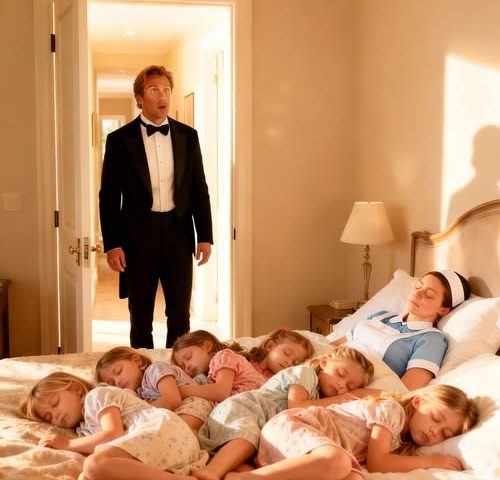
For nearly three weeks, the Whitaker estate in the hills above San Diego had been quietly blacklisted. Domestic agencies did not say the house was dangerous, not officially, but every woman who entered it left changed. Some cried. Some shouted. One locked herself in the laundry room until security escorted her out. The last caregiver ran barefoot through the driveway at dawn, green paint dripping from her hair, screaming that the children were possessed and the walls listened when you slept.
From the glass doors of his home office, Jonathan Whitaker, thirty seven, watched the gate close behind her taxi. He was the founder of a cybersecurity firm now traded on the stock exchange, a man interviewed weekly by business magazines, yet none of that mattered when he turned back to the house and heard the sound of something shattering upstairs.
On the wall hung a family photograph taken four years earlier. His wife Maribel, radiant and laughing, knelt in the sand while their six daughters clung to her dress, sunburned and happy. Jonathan touched the frame with his fingertips.
“I am failing them,” he said softly to the empty room.
His phone rang. His operations manager Steven Lowell spoke carefully. “Sir, no licensed nanny will accept the position. Legal advised me to stop calling.”
Jonathan exhaled slowly. “Then we do not hire a nanny.”
“There is one option left,” Steven replied. “A residential cleaner. No childcare duties on record.”
Jonathan looked through the window at the backyard, where toys lay broken among dead plants and overturned chairs. “Hire whoever says yes.”
Across town, in a narrow apartment near National City, Nora Delgado, twenty six, tightened her worn sneakers and shoved her psychology textbooks into a backpack. She cleaned homes six days a week and studied child trauma at night, driven by a past she rarely spoke about. When she was seventeen, her younger brother had died in a house fire. Since then, fear no longer startled her. Silence did not frighten her. Pain felt familiar.
Her phone buzzed. The agency supervisor sounded rushed. “Emergency placement. Private estate. Immediate start. Triple pay.”
Nora looked at the tuition bill taped to her refrigerator. “Send me the address.”
The Whitaker house was beautiful in the way money always was. Clean lines, ocean views, manicured hedges. Inside, it felt abandoned. The guard opened the gate and murmured, “Good luck.”
Jonathan met her with dark circles under his eyes. “The job is cleaning only,” he said quickly. “My daughters are grieving. I cannot promise calm.”
A crash echoed overhead, followed by laughter sharp enough to cut.
Nora nodded. “I am not afraid of grief.”
Six girls stood watching from the stairs. Hazel, twelve, her posture rigid. Brooke, ten, pulling at her sleeves. Ivy, nine, eyes darting. June, eight, pale and quiet. The twins Cora and Mae, six, smiling with too much intention. And Lena, three, clutching a torn stuffed rabbit.
“I am Nora,” she said evenly. “I am here to clean.”
Hazel stepped forward. “You are number thirty eight.”
Nora smiled without flinching. “Then I will start with the kitchen.”
She noticed the photographs on the refrigerator. Maribel cooking. Maribel asleep in a hospital bed holding Lena. Grief was not hidden here. It lived openly…👇
For nearly three weeks, the Whitaker estate in the hills above San Diego had been quietly blacklisted. Domestic agencies did not say the house was dangerous, not officially, but every woman who entered it left changed. Some cried. Some shouted. One locked herself in the laundry room until security escorted her out. The last caregiver ran barefoot through the driveway at dawn, green paint dripping from her hair, screaming that the children were possessed and the walls listened when you slept.
From the glass doors of his home office, Jonathan Whitaker, thirty seven, watched the gate close behind her taxi. He was the founder of a cybersecurity firm now traded on the stock exchange, a man interviewed weekly by business magazines, yet none of that mattered when he turned back to the house and heard the sound of something shattering upstairs.
On the wall hung a family photograph taken four years earlier. His wife Maribel, radiant and laughing, knelt in the sand while their six daughters clung to her dress, sunburned and happy. Jonathan touched the frame with his fingertips.
“I am failing them,” he said softly to the empty room.
His phone rang. His operations manager Steven Lowell spoke carefully. “Sir, no licensed nanny will accept the position. Legal advised me to stop calling.”
Jonathan exhaled slowly. “Then we do not hire a nanny.”
“There is one option left,” Steven replied. “A residential cleaner. No childcare duties on record.”
Jonathan looked through the window at the backyard, where toys lay broken among dead plants and overturned chairs. “Hire whoever says yes.”
Across town, in a narrow apartment near National City, Nora Delgado, twenty six, tightened her worn sneakers and shoved her psychology textbooks into a backpack. She cleaned homes six days a week and studied child trauma at night, driven by a past she rarely spoke about. When she was seventeen, her younger brother had died in a house fire. Since then, fear no longer startled her. Silence did not frighten her. Pain felt familiar.
Her phone buzzed. The agency supervisor sounded rushed. “Emergency placement. Private estate. Immediate start. Triple pay.”
Nora looked at the tuition bill taped to her refrigerator. “Send me the address.”
The Whitaker house was beautiful in the way money always was. Clean lines, ocean views, manicured hedges. Inside, it felt abandoned. The guard opened the gate and murmured, “Good luck.”
Jonathan met her with dark circles under his eyes. “The job is cleaning only,” he said quickly. “My daughters are grieving. I cannot promise calm.”
A crash echoed overhead, followed by laughter sharp enough to cut.
Nora nodded. “I am not afraid of grief.”
Six girls stood watching from the stairs. Hazel, twelve, her posture rigid. Brooke, ten, pulling at her sleeves. Ivy, nine, eyes darting. June, eight, pale and quiet. The twins Cora and Mae, six, smiling with too much intention. And Lena, three, clutching a torn stuffed rabbit.
“I am Nora,” she said evenly. “I am here to clean.”
Hazel stepped forward. “You are number thirty eight.”
Nora smiled without flinching. “Then I will start with the kitchen.”
She noticed the photographs on the refrigerator. Maribel cooking. Maribel asleep in a hospital bed holding Lena. Grief was not hidden here. It lived openly.
Nora cooked banana pancakes shaped like animals, following a handwritten note taped inside a drawer. She placed a plate on the table and walked away. When she returned, Lena was eating silently, eyes wide with surprise.
The twins struck first. A rubber scorpion appeared in the mop bucket. Nora examined it closely. “Impressive detail,” she said, returning it. “But fear needs context. You will have to work harder.”
They stared at her, unsettled. When June wet the bed, Nora said nothing except, “Fear confuses the body. We will clean quietly.” June nodded, tears pooling but not falling.
She sat with Ivy through a panic episode, grounding her with soft instructions until her breathing slowed. Ivy whispered, “How do you know this?”
“Because someone once helped me,” Nora replied.
Weeks passed. The house softened. The twins stopped trying to destroy things and began trying to impress her. Brooke played piano again, one careful note at a time. Hazel watched from a distance, carrying responsibility too heavy for her age.
Jonathan began coming home early, standing in the doorway while his daughters ate dinner together.
One night he asked, “What did you do that I could not?”
“I stayed,” Nora said. “I did not ask them to heal.”
The illusion broke the night Hazel tried to overdose. Ambulances. Hospital lights. Jonathan finally cried, bent over in a plastic chair while Nora sat beside him, silent and present.
Healing began there.
Months later, Nora graduated with honors. The Whitaker family filled the front row. They opened a counseling center for grieving children in Maribel’s memory.
Under the flowering jacaranda tree, Jonathan took Nora’s hand.
Hazel spoke quietly. “You did not replace her. You helped us survive her absence.”
Nora cried openly. “That is enough.”
The house that once chased everyone away became a home again. Grief remained, but love stayed longer.