The day before my sister’s wedding, she smiled and said, “You know what would be the perfect gift? You disappearing from our lives forever.”
So I granted her wish.
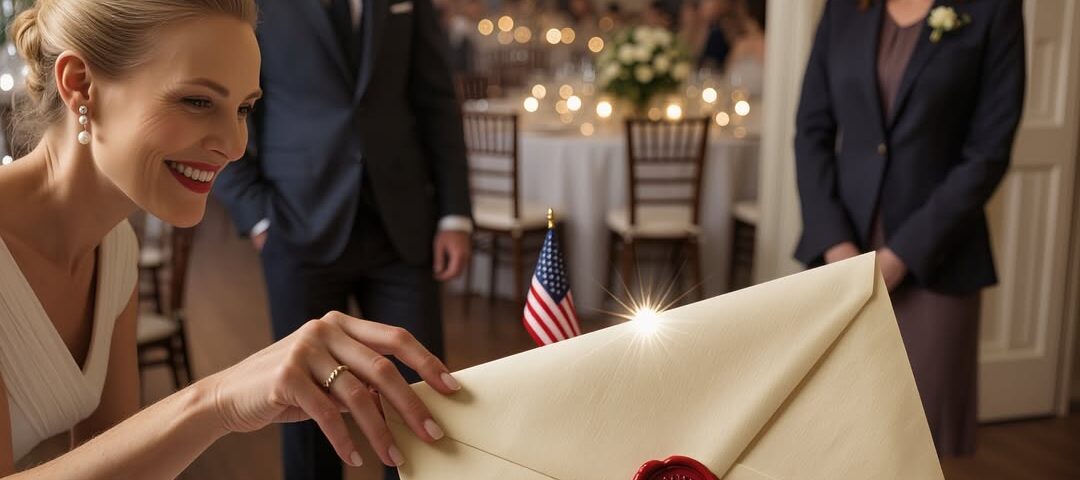
I sold the condo she thought was her wedding gift and left an envelope at every guest’s table. What was inside, she’ll never forget.
I pulled into my sister’s driveway on a cool late-September afternoon—the kind where the air feels still and expectant, like it’s holding its breath for whatever comes next. I’d driven over straight from work in downtown Milwaukee, still in my blazer, my laptop bag on the back seat, telling myself this visit would be simple. One day before Evelyn’s wedding, one quick check-in, one last sister moment before everything in her life shifted.
It was strange how hopeful I still was.
Even after all these years of drifting apart, I stepped inside without knocking because that was how we used to be—back when we were two girls clinging to each other after losing our parents in a winter accident that shattered everything. Back then, Evelyn was all I had left. I used to tell myself I was all she had left, too.
Her living room was filled with garment bags, fresh flowers, and the faint smell of hairspray. Evelyn stood in front of a long mirror in her guest room, still in jeans but wearing the bodice of her wedding gown, her hair pinned into a loose updo. She looked radiant in that effortless way she always had, the kind that made people naturally fall in line behind her.
Yet when she saw me in the doorway, her shoulders tightened—just a little.
I moved closer, offering to help smooth the fabric where it wrinkled near her hip. It had once been natural for me to slip into the role of helper, fixer, the little sister who made everything easier. I’d spent my whole life doing that for her, long after most people stopped needing help from anyone.
She let me tug gently on the skirt to adjust the hem. I knelt to straighten the layers, and as I did, she looked down at me with a smile so calm and cold it made the back of my neck prickle.
She said it in a bright, almost playful tone that didn’t match her eyes: the greatest gift I could give her—her perfect wedding gift—would be me disappearing from our family.
For a moment, I thought I’d misheard.
My hands froze on the fabric. The room felt smaller, the air suddenly too thin.
Behind her, Gavin stepped into view. Thirty-five, handsome in that perfectly groomed, athletic way, wearing a fitted button-down and the same customer-service grin he gave everyone. Even now it looked practiced, like something he kept in his pocket and clipped on whenever he needed to charm someone. He rested a hand on Evelyn’s shoulder with casual ownership.
He told me not to take it personally. He said big life events bring out tensions and expectations, and I often misread things.
He said it the way you speak to a child who needs to calm down before she embarrasses herself.
I rose slowly from the floor. My heart was thudding, but not hurt the way it used to be. Something else was moving inside me—something quiet and sharp.
I told Evelyn I didn’t understand.
She laughed softly under her breath, as if the question itself annoyed her, then said I had a way of clouding her energy, that I always brought complications to events that were supposed to be joyful. She said it was her time now, her turn to build a life that was hers alone, not one tied to old grief or obligations.
Obligations.
That word landed harder than her earlier jab, because I remembered another time she’d said she didn’t want obligations.
I remembered standing in a tiny condo in Racine—the condo that had belonged to our mom. The condo I had spent two years renovating after college with money I saved from every freelance job I could get. Evelyn had cried when I gave it to her, telling me she wanted her own space but still wanted to feel close to family.
I had been twenty-nine then, overworked but proud, thinking starting fresh together was the right thing.
I held that memory in my mind as I looked at her now. She had wanted that condo so badly. She had promised to take care of it, to treat it like a stepping stone toward a better future for both of us.
Then Gavin came along, and everything started shifting.
I asked her quietly if she truly wanted me gone, if she truly believed I was standing in the way of her happiness.
Gavin spoke before she could answer.
He stepped forward just enough to block a portion of her reflection in the wall mirror. He said Evelyn deserved peace on her big day, and sometimes family members caused problems without meaning to. He said I tended to stir things up. He even mentioned a time years ago when I suggested Evelyn take a job she hated, framing it like proof I always complicated her life.
Evelyn nodded along to every word.
And that was when I realized the sister I loved wasn’t standing in front of me anymore… or maybe she was, but buried under layers of insecurity and influence I’d never noticed creeping in.
I whispered that if she truly wanted me out of her life, she should say it herself instead of letting Gavin translate her feelings.
She finally looked at me with impatience and said that if I really loved her, I would give her the one gift she asked for and step away quietly.
Something in me hardened.
I walked out of the room without slamming the door, without crying, without pleading. It was the first time in my life I chose silence instead of apology.
As I moved down the hallway, I heard Gavin’s low voice telling her he knew this would happen, that I always made things about me. Evelyn murmured something I couldn’t hear.
Outside, the sun was sinking behind the houses, turning the street gold. I stood by my car for a long moment, letting the chill settle into my skin.
I thought about how many times I’d forgiven her—thoughtless words, being taken for granted, being pushed aside whenever someone new entered her life.
Not this time.
If she wanted me gone, I would give her exactly what she asked for.
As I pulled away from her house, the sun slipping behind the rooftops, I felt that same hollow ache I used to feel on the nights I pretended everything was fine just to keep our little family from breaking apart. Maybe that’s why I remember every second of that drive home so clearly.
What were you doing the last time someone made you feel small, or unwanted, or invisible in your own family?
When it happened to me, I was gripping the steering wheel on I-94, trying to steady my breath and make sense of how a sister could slice you open with one sentence. If you’re listening to this right now, I truly want to know where you are and what you’re doing, because stories like ours always seem to find people at the exact moment they need them.
Back home, I kicked off my heels and sat at my dining table, still in my work clothes. My laptop was already open from that morning.
A new email notification blinked on the screen—my attorney confirming the annual property record summary for the condo I had once “given” Evelyn.
I stared at it for a full minute before clicking it open.
The document listed me as the sole owner. Not joint. Not transferred. Not pending. Exactly as it had been years ago, before I handed her the keys and told her it was hers.
My chest tightened, but not with sadness.
With clarity.
I whispered to the empty room that if the gift I gave them was such a problem, then I would take it back in a way they would never forget. And that was the moment everything began to shift—the moment a kind of revenge I never thought I was capable of started taking shape without me even realizing it.
I closed the laptop slowly and sat there in my quiet dining room. The only sound was the faint hum of the refrigerator.
A part of me wanted to get up and run a hot shower, wash away the whole evening, scrub off Evelyn’s words until my skin burned. But another part of me—the deeper part—kept me still. It felt like something inside me was turning, revealing pieces of myself I’d ignored for too many years.
Maybe that’s why the memories came back so quickly. They rose up like they’d been waiting for me to stop pretending.
I was seventeen when our parents died, a February morning—one of those bitter Wisconsin days when the sky looks pressed down too close to the earth. I remember standing outside the emergency room at St. Luke’s Hospital with numb fingers while a police officer tried to explain what had happened.
I remember the way Evelyn walked in minutes later, snow still in her hair, and pulled me into her coat before anyone even told her a thing. She was twenty then, barely an adult herself, but she said she would take care of everything.
Everyone praised her for being strong, for stepping up, for keeping our family together.
No one saw the other side.
In private, she would look at me with tightness around her mouth, like I was something she’d been forced to carry up a hill that never stopped climbing. She never said I ruined her life—not out loud—but the message came through in all the small ways. The sigh when she had to sign my school forms. The way she tossed her keys onto the table and said she couldn’t go out with her classmates because she had to check on me. The nights she reminded me she had dreams, too—dreams she’d put aside for me.
Back then, I tried so hard not to be a burden. I cooked dinners, helped clean, studied until my eyes hurt, and worked part-time at a coffee shop even though my grades were the only thing I thought might ever make her proud. I kept waiting for the moment she would look at me and see someone worth loving, not someone who needed managing.
When I got accepted into a good college on scholarship, Evelyn congratulated me in front of everyone. She told our aunts and neighbors how proud she was, how she always knew I would shine.
Then later that night, she accused me of leaving her behind—of moving on without her, of making her the one who would be all alone. She cried in a way that made me feel guilty for wanting air that was just mine.
I carried that guilt for years.
Even after graduation, even after getting my first job as an IT project coordinator, I kept trying to make things easier for her. She always found ways to remind me how much she had sacrificed, how much she had given up for me.
And I believed her.
Maybe that’s why I started renovating the condo Mom left behind. I found the old key tucked in a shoebox of her things when I was packing for college. It was a small place in Racine, a little outdated, but Mom’s handwriting was on the deed.
I fixed it up slowly over two years—ripping up carpets, painting walls on weekends, sanding cabinets until my arms shook. I wanted it to be a place where Evelyn and I could start fresh, where the pain of losing our parents could soften if we lived inside those walls long enough.
And for a while, it worked.
When I brought her there after finishing the kitchen, she stood in the doorway looking stunned. She hugged me tight and told me no one had ever loved her like I did.
I held on to that sentence like it was the last warm thing in the world.
When Gavin came along a year later, everything shifted again.
I barely noticed at first. He seemed charming, attentive—the kind of man who liked being seen as a rescuer. Evelyn fell for him fast, and I was happy for her. Truly. She deserved joy after everything she’d carried.
But somewhere along the way she began talking about independence, about wanting a home that was solely hers. She said the condo made her feel tied down to old memories, that she needed space to grow with Gavin.
I told her to take it, to make it whatever she needed, to build a new life in it. At the time, it felt like the right thing.
It took me too long to realize she had never given me a place in that new life.
I was someone she thanked politely in front of others, but kept at arm’s length when it mattered. She cancelled plans because Gavin didn’t like certain restaurants. She asked me to keep quiet about my promotions because Gavin felt insecure about his career path. She told me I was lucky not to have “real responsibilities.”
Even though I was leading teams, managing projects, and working overtime during system launches, Evelyn always made my accomplishments feel like something I should hide.
That night after her “gift” comment, I leaned back in my chair and rubbed my eyes, trying to steady the ache behind them. Maybe that was why it hurt less than it should have. It wasn’t a knife out of nowhere. It was a blade pressed in slowly over years, so deep that when it finally cut through, all I felt was a strange, clean clarity.
Still, something about her words bothered me more than just the cruelty—something smaller, more subtle.
I opened my phone and scrolled through old messages. Months ago, Evelyn used to text me pictures of wedding ideas: venues, color palettes. She asked me whether she should choose blush roses or ivory ones.
Then the messages shifted.
She started asking if she could borrow money for deposits, always promising she’d return it once “final payments” came through. She said planning a wedding was overwhelming, that she and Gavin were juggling accounts, that it was temporary.
But earlier this week when I mentioned the rising cost of weddings, she went pale and shut down the conversation. She said everything was handled and she didn’t want to talk numbers.
Evelyn had always been a little dramatic about money, but this felt different. This felt like someone hiding something.
Maybe the condo was part of it. Maybe she was using it in ways she’d never told me about. Maybe Gavin had something to do with the nervous way she kept glancing at him, like she was waiting for him to approve her words.
I shook my head. I needed a clear mind, not spirals.
Outside, the street was quiet—the kind of quiet that settles over a suburban neighborhood after ten p.m., porch lights glowing while everyone else’s life looks peaceful from the outside. My life had never felt peaceful, but tonight it felt like it was bracing for impact.
I walked to the window and looked out over the yard. My reflection in the glass looked older than thirty-three. Not tired exactly—aware.
Finally aware.
Something was wrong with Evelyn. Something was wrong with the way she reacted to money. Something was wrong with the way she leaned into Gavin like he was thinking for both of them.
And if there was one thing I knew after surviving the chaotic years after our parents died, it was that trouble never arrived quietly. It always started with shadows under a door, whispers in a hallway, the sound of something cracking long before it broke.
I stepped away from the window and opened the email again. The condo was still legally mine.
If Evelyn had been using it for something she shouldn’t, tomorrow would reveal it.
I brushed my fingers over my phone, thinking about texting her, demanding answers, forcing a conversation—but I’d done that too many times, only to be told I was overthinking, overreacting, exaggerating.
Not this time.
This time I wanted truth, not reassurance. And truth has a way of showing up when you stop chasing it.
I closed the laptop again, this time with purpose.
The night felt heavy. And yet there was a strange steadiness in my chest. I could feel the old guilt slipping away, layer by layer, leaving space for something stronger.
Tomorrow, I told myself, I would find out what Evelyn was hiding.
I didn’t know how far the truth would reach, only that the quiet warning signs were finally too loud to ignore.
I went to bed that night with my mind running in restless circles. When morning came, I knew I wasn’t going to find clarity sitting alone in my house, staring at unanswered questions.
Evelyn’s rehearsal dinner was scheduled for that evening at a lakeside restaurant in Cedar Grove. Even though the thought of seeing her again made my stomach twist, I knew I needed to be there. If something bigger was happening behind the scenes, I would catch a glimpse of it among the smiles and champagne toasts.
Secrets always find a way of slipping out at gatherings—especially ones wrapped in celebration.
All day at work I kept getting distracted. I was supposed to finish preparing a project outline for a system update our team was deploying the following week, but my thoughts drifted constantly to Evelyn and Gavin.
Around two in the afternoon I stepped away from my desk to refill my water bottle. As I walked past the elevator, I overheard two coworkers chatting about relationships and money. One of them laughed and said her husband handles all their accounts and she never sees the bills.
It was meant as a light joke, but it hit me wrong.
I thought of Gavin at the bridal shop last month, hovering around Evelyn when she tried to pay for her alterations. He nudged her hand away from her purse and told the clerk he would handle it. Evelyn laughed, but there was no joy in it.
The more I replayed recent memories, the more uneasy I became.
Gavin always grabbed his phone the second it buzzed, even mid-sentence. He never left it face down on the table. He kept it in his hand, screen angled away from everyone—especially Evelyn. She once told me he added a complicated passcode because he traveled for work and needed extra security.
At the time it seemed normal. Now it felt suspicious.
And there was that afternoon three months ago when a woman I’d never seen before showed up at my office reception asking for me. She said she needed to ask a question about someone named Gavin Rhodes. I remember blinking, surprised—she looked anxious, almost frantic. But before I could get her name, she received a call and hurried out.
Back then I assumed she’d come to the wrong place.
It didn’t feel like a misunderstanding anymore.
I usually tried to stay out of Evelyn’s romantic life, but as I gathered my things to leave work early and head to the rehearsal dinner, I felt an urgency I couldn’t ignore. Something was wrong, and if Evelyn wouldn’t tell me, I would have to look for the cracks myself.
The restaurant sat right on the water with large windows facing the lake. The early evening sun glowed orange over the surface. People mingled on the patio while staff moved briskly between tables. It should have been beautiful—and maybe it was for everyone else—but my nerves made the whole place feel slightly off-balance, like a painting hung crooked.
I spotted Evelyn near the bar surrounded by her bridesmaids. She was smiling, but it was the hollow kind that never touched her eyes. When she saw me, she gave the smallest nod—the kind you give a distant acquaintance, not a sister.
Gavin was across the room talking loudly with two groomsmen. When he caught sight of me, he walked over with that polished grin and asked if I was ready to take on my “role” tomorrow, his tone dripping with the same condescension he’d used the day before.
I told him I knew exactly what my role was.
He chuckled like I was being dramatic and said I had a habit of making simple things more complicated than they needed to be.
I wanted to ask him why he snatched his phone so quickly when it buzzed. I wanted to ask where he’d been the night Evelyn called me crying two weeks ago, saying she felt alone in her own relationship. I wanted to ask who the woman at my office was and why she’d known his full name.
But I kept my mouth shut, because Evelyn was walking toward us.
She touched Gavin’s elbow lightly and asked about seating. He turned to her and his entire demeanor softened instantly, like he was slipping into a costume he wore only for certain people.
Dinner passed in a blur of toasts and laughter, but beneath it all an undercurrent kept tugging at my attention. Evelyn avoided being near me. When I approached, she excused herself to talk to someone else or check something with the coordinator. She kept one hand resting lightly against her lower stomach like she was bracing herself.
Halfway through the evening, while guests moved to the dessert table, I stepped into the hallway to catch my breath. The noise inside was overwhelming. I leaned against the wall and pressed my fingers to my temples, fighting the pounding behind my eyes.
That’s when I heard two bridesmaids whispering a few feet away. They weren’t trying to be quiet; they were too caught up in their own conversation to notice me.
One of them said that if Evelyn ever found out what Gavin had done to Kathy in Michigan, she would call off the wedding instantly.
The other whispered that she’d seen the messages months ago when Gavin left his phone on a table by accident, that Kathy had begged him to return the money he promised to invest for her. She wondered aloud if he was doing the same thing here—if maybe that explained why Evelyn always looked so stressed.
My breath caught.
A server walked by and they changed the subject quickly, drifting back into the dining room with their laughter pasted back on.
I stayed frozen in the hallway.
Kathy. Michigan. Money.
Evelyn’s sudden requests to borrow from me. The woman at my office. Gavin’s tight grip on their shared accounts.
The pieces weren’t fitting together yet, but I could feel the outline of something ugly forming in the background.
I went outside for air. The night breeze off the lake was cool and carried the faint scent of pine from surrounding woods. The laughter from inside drifted out behind me, but none of it felt real anymore.
I walked toward the dock, stopped at the railing, and rested my hands on the wood. My fingers trembled.
I felt stupid for not seeing it sooner—for trusting Gavin just because Evelyn loved him, for believing she’d finally found someone who would take care of her.
Maybe that was the problem. Maybe neither of us had ever learned what real care looked like. Not after the mess we grew up in.
I stayed out there until the coordinator announced they were wrapping up. People filtered toward the parking lot. Evelyn gave me a quick hug, barely more than her shoulder brushing mine. Gavin nodded stiffly. I didn’t say a word.
During the drive home, headlights streaked across my windshield, and I felt the familiar pull of old habits telling me not to pry, not to assume the worst, not to create trouble where none might exist.
But the steady whisper inside me—stronger than it had ever been—told me the opposite.
I needed answers.
And not from Evelyn. She would never admit something was wrong if it proved she made a mistake.
I pulled into my driveway, turned off the engine, and sat gripping the steering wheel. My porch light flickered once before settling into a steady glow. I took a deep breath and reached for my phone.
There was one person I could call who didn’t sugarcoat things, who never cared about sparing feelings when truth mattered. I’d worked with him during a messy internal investigation at my company years ago, and he had a reputation for uncovering what people desperately wanted to keep hidden.
His name was Ethan Walden.
Tonight, for the first time in my life, I was ready to uncover the whole truth, no matter how far it reached.
When I said it out loud in my parked car, something settled in my chest—like finally deciding to walk into a storm instead of standing on the porch hoping the clouds would change their mind.
I went inside, locked the door, and sat at the kitchen table with my phone in my hand for a long minute. Part of me was afraid he wouldn’t remember me. The rest of me was afraid he would—and that he would confirm every dark suspicion creeping into my thoughts.
In the end, I dialed.
He picked up on the third ring, his voice steady and exactly as I remembered. He listened without interrupting, asked me to start from the beginning, and I did—Evelyn, Gavin, the way things had shifted, the sentence about my disappearance, the nervous glances, the bridesmaids whispering about Kathy in Michigan, the woman at my office.
There was a brief pause when I finished. Then Ethan said he was glad I called. He told me he’d run a preliminary check on Gavin late last night after our call—just to see if there was anything obvious.
“There is,” he said simply.
He asked to meet early the next morning before his other appointments. We settled on a small café near downtown, an old brick corner place with strong coffee.
I barely slept.
When I walked into the café, the air smelled like roasted beans and sugar, and the soft murmur of early conversations wrapped around me. Ethan was already there at a corner table, a folder next to his cup.
He looked the same as I remembered—late forties, slightly rumpled but observant, kind eyes that saw too much and kept it all filed away behind a calm expression. He stood briefly when he saw me, then motioned for me to sit.
I ordered a coffee I knew I wouldn’t drink and folded my hands together to keep them from shaking.
Ethan asked me to start from the beginning again, slower. I did.
When I finished, he nodded and tapped the folder. He said that after we’d worked together, my name had stuck with him because I was one of the few people who asked about the people behind the numbers, not just the damage.
Then he opened the folder.
He told me Gavin had used two different last names in the past decade. The first was the one we knew—the one on wedding invitations and social posts. The second was attached to a handful of addresses in Ohio and Michigan along with several civil court filings.
It wasn’t enough by itself to prove a crime, Ethan said, but it was enough to show a pattern: hopping from place to place, leaving loose ends behind.
He slid printed pages toward me.
There was Gavin’s face in a grainy image from an Ohio property record site—same smug expression, slightly shorter hair. Another listing from Michigan attached to an address outside Grand Rapids. Different last name. Same eyes.
Ethan went on quietly.
In Ohio, a woman named Linda Pharaoh had filed a complaint against Gavin for borrowing a large sum for what he called a startup investment, then disappearing. The case was dropped when he couldn’t be located and Linda didn’t have enough documentation to push it further.
In Michigan, a man named Daniel Rhodess reported Gavin for defrauding him in a supposed joint venture. Daniel claimed Gavin convinced him to hand over savings, promised high returns, then stopped answering calls and left the state. That case was logged, investigated briefly, then closed when Daniel couldn’t afford to keep pushing.
It was like watching a pattern draw itself on paper: wronged people, incomplete paperwork, a man who slipped away just as consequences started to surface.
I asked Ethan why no one had stopped him.
He shrugged and said financial predators thrive in gray areas. They stay just under the threshold that gets major units involved, taking advantage of trust, shame, and how many victims don’t want to drag private pain into public courtrooms.
Then Ethan turned to the last section of the folder—this one with my name on it, along with Evelyn’s and Gavin’s.
He told me he’d pulled a property lien search on the condo. There were no official liens in my name, which was what I assumed—but there were concerning documents tied to a proposed line of credit. Paperwork started but never fully executed.
He’d found a draft agreement at a local bank. Gavin had begun the process to use the condo as security for a renovation loan.
The interesting part was the signature block.
My name was listed as owner.
Then a second block intended for a co-signer listed Evelyn’s name— not mine.
Most of the form was incomplete, but Ethan said the bank’s internal notes indicated Gavin had been pushing to get Evelyn added as a responsible party, talking about how his fiancée would be “taking over” the property soon.
I stared until the words blurred.
The idea that he’d even tried to leverage the condo—the place tied to our mom, the one I’d given Evelyn as a symbol of love and stability—made my hands curl into fists.
I told Ethan I never authorized any of it.
He believed me.
He said the good news was nothing had been finalized. No loan was fully approved. No line officially recorded. But he also said that if Evelyn ended up on paperwork with Gavin after they married, she could become responsible for obligations he incurred using that property—or anything else she shared with him.
He looked at me carefully and spoke very clearly.
“If your sister marries this man and signs anything he puts in front of her, she will be on the hook for whatever he has done—and whatever he plans to do.”
The words sat between us like a stone.
I thought of Evelyn chewing her lip whenever money came up, the way she changed the subject when I asked about budgets. I thought of vague answers about deposits and vendors and checks that needed “a few more days” to clear. I thought of her borrowing “small” amounts often enough to feel wrong.
A sick feeling crawled up my spine.
I asked Ethan if he thought Gavin had already taken money from Evelyn.
Ethan said he couldn’t be certain without access to their accounts, but based on the pattern, he’d be surprised if Gavin hadn’t already started funneling her resources into his plans. That might be why she was so tense. Part of her had to know something was off, even if she didn’t want to face it.
Ethan hesitated, then pulled out a small silver USB drive and placed it gently on the table.
On that drive, he said, were digital copies of everything he’d shown me, plus additional records he hadn’t printed—complaint summaries, public filings, bankruptcy mentions, communication logs, and notes about a woman named Kathy who could match the one the bridesmaids had gossiped about.
He told me I would need it if I wanted to stop the wedding—or at least force the truth into the open.
He said it wasn’t his place to tell me what to do with it, only that he’d seen too many families destroyed because no one had the courage to push through denial and admit something was wrong.
I picked up the USB with careful fingers. It felt too light for what it contained, like all the damage and betrayal it represented should weigh more.
For a second I imagined walking straight to Evelyn’s house, slamming the drive down in front of her, demanding she look at every file.
I imagined her face hardening. I imagined her saying I always chose the worst interpretation of things, that I never trusted her judgment. I imagined Gavin spinning it as an attack, as jealousy, as proof I was the problem.
And I realized showing Evelyn anything before the wedding might not change her mind. It might only push her further away.
She had always defended the people she loved, even when they didn’t deserve it—fierce loyalty applied in all the wrong directions.
I slipped the USB into my purse.
Ethan told me to act quickly. If Gavin had tried to use the condo once, he would try again. And once Evelyn was married to him, every piece of paper placed in front of her would be ten times more dangerous.
I thanked Ethan, paid for both coffees before he could argue, and walked out into the morning light.
The sky was pale blue. People moved along the sidewalk into their regular days—dogs on leashes, parents with strollers, a man carrying a donut box balanced on one arm. Normal life threaded around me, completely unaware that a few miles away a wedding was about to become something else entirely.
I stood there a moment, the USB in my bag, Gavin’s file in my hand, and a strange calm spread through me.
For the first time in a long time, I felt like I wasn’t just reacting to Evelyn’s choices. I was standing in front of a door with my hand on the knob, fully aware that once I opened it, nothing would ever be the same.
Then a thought hit me so hard I nearly staggered.
If Gavin had been willing to start loan paperwork on the condo without my knowledge, how far had he already gone behind our backs? What exactly was he planning to walk away with once he had a ring on my sister’s finger?
That question followed me to my car, pressing into my ribs until I felt almost hollow.
I didn’t start the engine right away. I set the folder on the passenger seat and stared at it, feeling the world tilt slightly as the truth settled deeper into my bones.
For years I’d believed Evelyn needed protection from external things—stress, grief, uncertainty. I never imagined she might need protection from the very man she chose to build a life with.
Traffic hummed in the distance. Sparrows hopped along the pavement near a tree. Ordinary sounds, a strange contrast to the storm inside me.
I forced myself to breathe until the pounding in my chest eased.
Then I started the engine and drove home with one steady thought rising in my mind:
Enough.
At home, I dropped my purse on the counter and opened the folder again, even though I’d already seen the documents. I needed to feel the reality of them—typed lines and names proving the doubts I’d tried to push away.
Two different last names.
Complaints in Ohio.
Accusations in Michigan.
Draft loan documents with Evelyn’s name printed in all caps where a co-signer signature would go.
I touched the space above her name and felt something sharp move through me—anger braided with grief.
Evelyn had spent her whole life trying to look strong. She chose men who made her feel admired in public and small in private. She had always mistaken control for care.
And now she was on the edge of tying herself to someone who would drain everything she had and disappear like smoke.
I closed the folder gently.
My hands were steady.
I made tea and sat at the dining table, watching steam rise in soft spirals. For years I’d looked at the condo as the last warm piece of our mom that Evelyn and I still shared—the hardwood floors she always wanted to refinish, the tiny balcony with the rusted railing.
But instead of a refuge, it had become the one thing Gavin could sink his claws into.
Something in me hardened. Something final.
I opened my laptop and clicked reply on my attorney’s email. I typed a short message asking him to call me immediately about a quick sale of the condo. I explained only that circumstances had changed and I needed to move fast.
He called within fifteen minutes. Efficient as always, but even he sounded surprised.
He asked if I was certain.
I told him I was.
I didn’t explain the details. Some things were too tangled and personal to unravel for anyone else.
After we hung up, I stared at the blinds as light shifted across the wall. A small part of me whispered that selling the condo was drastic, that maybe I should wait, that maybe Evelyn would finally see Gavin for who he was.
But another voice—the one that had been quiet too long—spoke clearer.
She wanted me gone. She said it out loud. She let Gavin speak for her. She chose him over every flickering warning sign.
If she didn’t want the gift I’d given her, then I had every right to take it back before he turned it into a weapon against her—or against me.
The decision brought a strange calm, a stillness I hadn’t felt since before our parents died.
I walked to my bedroom closet and pulled down a box of old items I hadn’t touched in years. Inside were renovation photos, a small bag of spare hardware, and a key ring with two shiny silver keys.
I closed my hand around them and felt resolve settle in my chest.
Later that afternoon I drove to the condo for the first time in almost two months. The building looked the same—quiet, a few tenants on balconies, someone walking a dog near the entrance. The fall air was crisp, and the breeze rustled through the last of the summer flowers near the walkway.
When I unlocked the door, the smell of fresh paint greeted me. Evelyn must have been doing small updates… or prepping for something she never told me.
My footsteps echoed on the hardwood floors. The place looked clean, organized, but strangely bare, as if Evelyn had begun removing pieces of herself bit by bit.
I walked through each room slowly. The living room with soft gray walls I’d painted myself. The kitchen tile backsplash I’d installed by hand, praying I wouldn’t ruin the pattern. The small bedroom that once held our mom’s quilt.
Standing there, I felt sadness I didn’t expect—not grief for the condo itself, but for the years I’d spent trying to hold on to a version of my sister that no longer existed.
I whispered into the empty air that I had done my part, that loving someone didn’t mean destroying yourself for them, and sometimes letting go was the only way to save what little remained.
Then I got to work.
I took new photographs for the listing, checked the utilities, noted quick repairs. As I moved through the hallway, I felt lighter—not happy, but certain.
Certainty has a weight of its own, but it was a weight I could carry.
On my way downstairs I ran into a neighbor, Mrs. Jensen, an older woman with kind eyes who’d lived in the building for years. She smiled and said she’d missed seeing me around, asked if I was moving back in.
I told her I was finalizing a sale.
Her face fell and she said she used to love seeing me and Evelyn working together on weekends, that we reminded her of her own daughters.
I gave her a small smile and said life had taken us in different directions.
She nodded, gentle, not pushing.
Back in my car, I let the breeze cool my face. On the drive home, the sun dipped low, and it felt like I was moving through the final steps of a past life.
That evening, after sending photos and confirming the listing price, I sat at the dining table again with my hands wrapped around a glass of water.
Everything was in motion now—the sale, the truth, the fracture between me and Evelyn.
And yet one thing remained undone.
Gavin.
I opened my purse and pulled out the USB Ethan had given me. I held it in my palm, feeling its cool surface press into my skin. It amazed me how something so small could hold the kind of wreckage that could tear through someone’s life.
The wedding was only a day away.
Whatever I chose to do next would change everything.
I lay awake that night staring at the dim outline of the ceiling fan, making more decisions in a few hours than I had in years.
By morning, I was done waiting for Evelyn to choose me.
The condo sale moved faster than I thought possible. My attorney called just after seven with a cash offer from an investment buyer he’d worked with before. The price was fair—more than fair. He sounded almost apologetic, like he expected me to hesitate.
I didn’t.
I authorized everything electronically from my kitchen table, fingers steady as I completed each digital signature.
He told me that with a rush closing, title work could be finalized in a very short window and once funding hit, the property would no longer be mine—which also meant it would never belong to Gavin, or to whatever scheme he’d been trying to set up.
When I closed the laptop, something inside me clicked into place, like a lock turning.
By late morning I was on the road to Minnesota, following the interstate north and then west, the landscape shifting from city edges to wide fields and clusters of trees starting to turn orange and red.
The resort Evelyn chose sat on the edge of a clear lake, a lodge-style building with balconies facing the water. Cars filled the parking lot. Guests walked toward the entrance in nice casual clothes, some already holding small gift bags.
The sky was sharp blue—the kind of day people always remember in wedding albums.
I stepped out of my car and stood still for a moment, letting the sight sink in. I had thought about not coming, about staying in Wisconsin and letting the whole thing collapse without me.
But that would’ve been the old version of me—the one who avoided conflict until it swallowed her whole.
I adjusted the strap of my overnight bag and walked inside.
The lobby was busy. People laughed near the check-in desk. Kids ran around the stone fireplace. Somewhere deeper, music drifted from a rehearsal room.
I followed the signs to the bridal suite, my heart beating faster with every step.
Outside the suite, I could hear high tones of excited chatter—makeup artists, bridesmaids, Evelyn giving instructions. I paused with my hand on the door for half a second, then pushed it open.
Bright windows looked out over the lake. Garment racks lined one wall. A long table held curling irons, brushes, open compacts, lipstick tubes.
Evelyn stood near the center in a pale robe, hair partially done, veil pinned loosely for a trial look.
For a split second, I saw her as she’d been when we were little—my big sister standing in front of a mirror, trying on our mom’s old costume jewelry, laughing as she twisted her hair into messy versions of adult styles.
Then the present pushed in.
She saw me in the reflection and stiffened. Her eyes moved over me quickly—dress, shoes, face—like she was trying to gauge whether I’d cause trouble.
I forced myself to give a small nod.
She returned it barely, then turned away to talk to her maid of honor.
No one here knew the condo was no longer part of her future. No one knew Gavin had tried to leverage it. No one knew I had sold the one thing that tied us together in a tangible way.
A bridesmaid named Tessa—someone I’d met only briefly—caught my eyes from across the room. Her expression softened with a kind of pity that made my stomach tighten. She walked over holding a small makeup bag and leaned in just enough that only I could hear.
She said quietly she wished Evelyn had seen things more clearly sooner, that she wished my sister understood what she was walking into.
My throat tightened.
I asked what she meant.
Her eyes darted toward Evelyn, then back to me. Her cheeks flushed. She muttered it wasn’t her place and she shouldn’t have said anything, then moved away, busying herself with arranging jewelry.
After that, the room felt smaller.
I sat near the window and watched the lake shimmer behind the bridal chaos. Evelyn’s stylist tried to tame a loose strand of hair that kept falling forward. Evelyn swatted at it impatiently, then apologized, then apologized again. Her hands wouldn’t stay still. She smoothed her veil, then adjusted it, then lifted it off and set it aside.
It was the same restless movement I’d seen before—when a bill arrived she couldn’t pay, when a job application sat half-finished on the table. She talked fast to cover the cracks, but if you watched closely, you could see panic simmering under the surface.
I grabbed a water bottle from the refreshments table and walked to her slowly. Up close, I could see the faint sheen of sweat near her hairline, her breathing slightly shallow, eyes too bright.
I told her gently she should drink something, that nerves can make people lightheaded, and the day would go smoother if she stayed hydrated.
I held the bottle out.
She didn’t look me in the eyes. She glanced at the water and her mouth tightened. She flicked her hand, knocking my wrist just enough that a few drops spilled onto the floor.
She said sharply she didn’t need anything from me, and the best way I could help was by staying out of the way.
A few bridesmaids glanced over, then away. No one stepped in.
I swallowed and stepped back.
The sting was familiar by now, but it still cut.
I bent to pick up a napkin and wiped the drops from the floor, more to have something to do with my hands than because it really needed cleaning.
Part of me wanted to grab her shoulders and tell her that while she was pushing me away, the man she was about to marry was quietly lining up ways to gut her financially. That while she accused me of ruining her energy, he was out there borrowing other people’s savings and disappearing.
Instead, I walked back to my chair and sat down, feeling the USB in my purse press against my hip like a physical reminder.
We moved into the final hour before the ceremony. Guests began arriving in earnest. Music outside grew louder as the crew did final checks. The coordinator popped in and out with updates. The photographer arrived and started capturing the dresses, the bouquets, the details Evelyn had chosen months ago.
At one point I stepped into the hallway for a moment alone. My chest felt tight. The corridor was quieter, carpet soft under my feet, and I walked toward a small alcove near a back staircase that looked out onto the parking lot.
As I stood there, I heard a familiar voice around the corner.
Gavin.
He wasn’t using the charming public voice he used with guests. This was lower, sharper—private.
I hesitated, then moved closer and stopped just before I’d be visible. He was on the phone. His words were low but clear in the stillness.
He said all he needed was to get through the ceremony and then everything would belong to them. He said once the papers were signed and accounts were merged, they could finally move forward with their plans.
He chuckled softly and said Evelyn wouldn’t question anything because she’d be too wrapped up in being a wife to pay attention to numbers.
My stomach turned.
He ended the call with a brief promise to touch base after the reception and stepped back toward the main hallway.
I moved quickly into the alcove, out of sight, my heart racing so hard I could hear it in my ears. Gavin walked past moments later, whistling under his breath, suit freshly pressed, face relaxed.
Anyone watching would’ve thought he was just a happy groom.
When I exhaled, I realized my hands were shaking.
Back in the bridal suite, Evelyn sat in front of the mirror now in her full dress, veil properly attached, lipstick reapplied. From a distance she looked like every other bride trying to look perfect for photos.
But up close I saw how rigid her shoulders were, how she kept taking shallow breaths, lifting a hand to her chest like she was adjusting an invisible necklace. The stylist reminded her to drop her shoulders; she did, then tensed again.
Her reflection showed wide eyes—not dreamy softness, but something tighter. No one else seemed to notice, or if they did, they called it normal jitters.
Out of habit I started to move toward her again, words already forming—offering a quiet moment, a walk down the hall, anything to give her space to breathe.
Then I remembered the water bottle, her dismissal.
I stopped.
I just watched her instead.
My sister—the girl who crawled into bed with me during thunderstorms, the woman who carried guardianship papers in her purse for years like a twisted badge of honor, the person who told me the greatest gift I could give was to disappear.
Maybe the only way to protect her now wasn’t comfort.
Maybe it was letting the truth hit hard enough to shatter the illusion she clung to.
My phone buzzed in my purse. Once, then again.
I stepped into the hallway before pulling it out.
A message from Ethan. Short. Precise.
Everything was ready.
I stared at the words, the bridal suite noise muffled behind me. In the distance, guests were taking seats outside by the lake.
Ready.
My thumb hovered over the screen while my heart counted down quietly to whatever was coming.
I slid the phone back into my purse and walked toward the main ballroom where the reception would be held.
The ceremony on the lawn had already finished because I had not stopped it. I stood through the vows, through the carefully written promises, through the moment when Evelyn said yes with tears in her eyes and Gavin slid the ring onto her finger with a practiced smile.
The whole time, the folder of truth sat like a ghost in my mind.
I didn’t speak at the altar because I knew the real storm would come inside—not where everyone expects sentiment, but at a table set with linen and champagne flutes, where people let their guard down and assume the hardest part is over.
When I stepped into the ballroom, light poured in through windows facing the lake, reflecting off glassware and silverware, making everything sparkle in that soft filtered way that looks beautiful in photographs.
Ivory cloths. Eucalyptus runners. Candles in clear holders. Small name cards at each setting.
Near the back, I saw Ethan in a dark suit blending in like event staff. He spoke with the banquet manager, calm and professional. On a nearby side table sat a stack of small white envelopes, each labeled with a table number.
My throat went dry.
That morning, after his message, I’d met him briefly in the parking lot while guests were busy getting dressed. We’d gone over the plan again. Copies of documents had been trimmed down, summarized, organized by name.
Gavin’s history. Complaints from Ohio and Michigan. Linda Pharaoh. Daniel Rhodess. Public records. Everything compiled into something regular people could understand in one reading.
Ethan had also quietly contacted people Gavin had hurt. Not all could come, but a few had driven or flown in on short notice, angry and determined—Linda and Daniel among them. They were seated now among the guests, their pain disguised under formal clothes.
Two detectives were there too, not in uniform. They sat near the bar like relatives from out of town, jackets slightly heavier, eyes slightly sharper. They had reviewed Ethan’s files and told him they needed victims on-site willing to make statements—and they needed Gavin present with identification, somewhere he couldn’t vanish the moment he was confronted.
The ballroom filled. People complimented the ceremony, the view, Evelyn’s dress. A few approached me and said polite things about how proud I must be.
I smiled and nodded when required, but inside I felt like I was standing on a fault line minutes from breaking open.
Evelyn and Gavin entered last to applause and whistles. Evelyn clutched her bouquet, smiling too hard. Gavin’s hand rested possessively at the small of her back as he soaked up the attention.
When his eyes met mine across the room, a small satisfied curve tugged at his mouth.
He thought he had won.
The coordinator signaled the staff. Servers moved between tables, placing one white envelope at each seat. To most guests it looked like another wedding detail—a personal note from the couple, a favor card.
No one questioned it.
Ethan shifted subtly to where he could see both the head table and the doors. One detective drifted closer to an exit. The other sat near Gavin’s groomsman.
Dinner began. People chatted over salads and bread, clinking forks, pouring wine.
The envelopes sat untouched for a few minutes—small time bombs waiting for a spark.
It came sooner than I expected.
Near the middle tables, a chair scraped back loudly. A woman’s voice cut through the hum—sharp with shock and fury.
She shouted that the bride had married a con artist.
Every head turned. Conversation stopped mid-sentence. The ballroom held its breath.
The woman standing was older, late fifties, auburn hair pulled back, dark dress. I recognized her from Ethan’s photograph.
Linda Pharaoh.
She held an opened envelope in one hand, the printed sheet trembling, her other hand pointing straight at Gavin. She said loudly he had stolen money from her in Ohio—promised to invest it, promised to double it, told her it would help her after her divorce.
Then he disappeared.
Her voice broke as she said she’d had to explain to her children why their college funds were gone.
Gavin froze for a fraction of a second, then tried to laugh it off, saying something about a mix-up.
But the room had already shifted.
Other guests started opening their own envelopes, the sound of paper tearing filling the ballroom—a strangely soft noise under the rising tension.
I watched faces change: surprise, confusion, then horror. Skin went pale. Jaw muscles tightened. Hands covered mouths.
Whispers slid from table to table.
Then a man stood from another table, holding his envelope contents up like evidence. His name tag said Daniel. I knew from Ethan that his full name was Daniel Rhodess.
He called across the room that he had filed a complaint in Michigan years ago, that Gavin took his savings under a fake business plan, then slipped away before action could be taken. He said he’d spent years paying off debt alone, believing he would never see justice.
Gavin started protesting, voice rising. He said they were liars, that it was an attack, that someone was trying to destroy his special day.
His eyes darted around, searching for an exit.
Evelyn sat frozen at the head table, bouquet limp in her hands. Her eyes bounced from Linda to Daniel to the papers in front of her that she hadn’t opened yet.
One detective stood slowly and identified himself in a calm, firm voice. He said multiple complaints had been received and recent evidence suggested a pattern of fraud using interpersonal relationships and false identities. He said the information in the envelopes had been shared with their department earlier and they were there to take formal statements.
Gavin’s face changed instantly.
The charm fell away, jaw clenched, eyes narrowed, veins standing out in his neck. He took a sharp step back from the head table, then another, as if distance could make the accusations less real.
Then he turned toward a side exit.
The room erupted—gasps, shouts, chairs scraping as people stood.
He pushed past a groomsman and took three long strides before the second detective—waiting near that side—moved in and caught him near the edge of the dance floor. The detective grabbed Gavin’s arm firmly. Gavin jerked away, voice cracking with panic, swearing.
The detective didn’t let go.
He said Gavin needed to stop moving, and he was being detained based on active complaints and probable cause.
Resort staff hurried to clear guests away from the immediate area.
I stood near the back wall, watching a life built on lies begin to crumble in one loud, ugly moment.
Evelyn snapped back into her body like a startled animal. She stood so fast her chair tipped backward and hit the floor. The sound made people jump. She stumbled in her dress but forced her way down from the head table, gripping the edge for balance.
She called out to Gavin, voice shaking, demanding he say something—anything—tell her it wasn’t what it looked like.
Gavin twisted in the detective’s hold and shouted that none of it was true, that these were bitter people blaming him for their own bad choices.
Then his eyes landed on me.
His expression sharpened into something vicious.
He spat that this was my doing. He called me crazy. He said I had always been jealous, that I set him up because I couldn’t stand seeing my sister happy.
Dozens of eyes turned toward me.
The room seemed to tilt as if everyone moved at once.
For the first time in a long time, I didn’t flinch under Evelyn’s gaze.
She turned to me slowly, veil slipping to one side. I saw the exact moment her heart broke in her face. Tears filled her eyes, but behind them was desperate hope—like she was still searching for an angle that would make it hurt less.
She asked me in a raw voice if I knew about any of this, if I had known and kept it from her. Her words wobbled, but the accusation was there.
I took a breath.
The air was thick with the scent of food no one was eating and flowers suddenly too sweet.
I told her calmly that I’d learned the full extent of it recently. I said the information in those envelopes came from people Gavin had already hurt and records he left behind. I told her I’d wrestled with how to protect her without tearing her world apart.
My voice surprised me with its steadiness.
Then I reminded her—gently, clearly—of the night before, when she said the greatest gift I could give her wedding was to disappear.
I told her I listened.
I stepped back.
I let her choose.
And what I wanted now was for her to finally see who had actually been stripping her life away piece by piece—because it was never me.
The detective began formally reading out what they were holding Gavin on, careful language that carried weight—fraud, theft, deliberate misrepresentation. He referenced complaints in Ohio and Michigan by name.
He said Linda’s name.
He said Daniel’s.
He described a pattern of financial targeting through romantic manipulation.
Each word hit Evelyn like another blow.
Her face crumpled as the man she married less than an hour ago struggled against the officers, shouting it was blown out of proportion and he would sue everyone.
No one believed him anymore.
I saw Evelyn sway once in her heels. A bridesmaid moved to steady her. Evelyn brushed her off, eyes locked on Gavin as if force of will might transform him back into the charming fiancé she chose.
Then, as the detectives guided him toward the doors, reality landed.
Her knees buckled.
The bouquet slipped from her fingers and hit the floor. Petals scattered across the polished wood.
A bridesmaid and the coordinator rushed to lower her gently. People spoke at once—chairs scraping, a fork clattering, a glass tipping and spilling. The band stopped mid-song.
The air felt thick and hot, even though moments earlier it had been just another pretty reception room with candles and polite laughter.
I remember stepping forward, then stopping—an old habit, that half-step toward my sister and the immediate pull back.
For so many years I rushed in when she fell, when she cried, when she called in the middle of the night.
This time my feet stayed planted.
Resort staff moved with brisk professionalism, clearing space, bringing water and cold packs. A guest who happened to be a nurse checked Evelyn’s breathing. The detectives stayed close enough to keep an eye on Gavin while giving space.
He kept shouting about lies and setups and jealous sisters.
Across the room, I caught Ethan’s eye. He gave a small, almost imperceptible nod—the kind you give when there are no pretty words, but you want someone to know they’re not alone.
Before long, Gavin was escorted out.
I watched through the glass doors as the officers guided him toward a waiting car, late afternoon light catching on his cufflinks. For the first time since I met him, he looked less like a charming professional and more like what he was: cornered.
That night felt endless and strangely fast.
People left early, carrying gifts back to their cars, whispering in clusters. Some guests came up to me with wide stunned eyes, asking if I was okay, what would happen to Evelyn, how long I’d known.
I gave short honest answers, then stepped away.
Eventually I found myself in my hotel room, sitting on the edge of a bed that didn’t feel like mine, staring at a lamp that was too bright and yet not bright enough.
My phone buzzed with unknown numbers, local Minnesota numbers, mutual friends.
I let most go to voicemail.
Sleep came in jagged pieces.
Within days, the story spread. Some guests had filmed parts of it on their phones, which I hated but understood. That meant it hit social media before official channels.
Then local news picked it up.
The headlines didn’t use our names, but the phrasing was dramatic enough that everyone in our circles knew.
A bride whose groom was detained at the reception.
A small Midwestern gathering finding out a man had been running financial scams across state lines and almost got away with it again.
I saw a news clip while waiting in line at the pharmacy, the television replaying blurry footage on a loop—shots of the resort, the lake, a reporter talking about the bride leaving early while the groom was taken for questioning. A diagram illustrating cross-state fraud. A legal expert discussing how romance and money collide in destructive ways.
I stood there holding shampoo and granola bars while strangers reacted—sympathy, cynicism, whispered comments about men and money.
No one knew the younger woman in the background of one grainy photo—half turned away—was me.
By the time I drove back to Wisconsin, the condo sale had fully closed. Final documents arrived in my email with confirmation from the title company. The money hit my account in one clean transfer.
It was more than I’d ever seen at once.
And yet it didn’t feel like a lottery win.
It felt like a boundary given numerical form.
I went back to the condo one last time with a small box, not as an owner but as someone retrieving the last pieces of a past life. The new buyers weren’t moving in for another week, and my attorney arranged access.
The building looked the same, but it felt different.
The rooms were empty now, walls bare, echo sharper.
I collected old tools from a hall closet and a framed photo I’d forgotten in a cabinet—me and Evelyn sanding floors side by side, hair tied back with bandanas, dust streaking our cheeks.
I held it a moment and slid it into the box.
On my way out, I locked the door carefully and rested my palm against the cool wood.
I whispered to our mom that I’d done the best I could, that I loved what the place represented, but I refused to let it become a trap for us.
Back home, I put part of the sale money into a separate high-yield savings account. I made practical choices. I paid off the remainder of my car loan. I cleared the last stubborn bit of student debt. Then I met with a financial adviser who explained how to protect the rest in simple, clear language.
I chose safe options. I didn’t want risk. I wanted security.
Work helped. Returning to my job gave me structure to hold on to. Coworkers who’d heard versions of the story treated me with a mix of curiosity and kindness. I accepted the kindness and ignored the curiosity.
But even with work and numbers filling my days, the emotional debris didn’t dissolve on its own.
Years of guilt and responsibility had worn grooves into my thinking, and my mind kept sliding down them.
Did I wait too long?
Did I blow everything up in a way that was more dramatic than necessary?
Did I betray my sister even while trying to save her?
After one too many sleepless nights replaying scenes, I made a phone call I’d put off too long.
I found a therapist who specialized in family dynamics and trauma, someone a coworker had recommended quietly months earlier when I admitted how complicated my relationship with my sister was.
The first session felt strange—a small office, soft chairs, framed diplomas, a basket of tissues on a side table. I told the story haltingly at first, then with more detail. The therapist listened with focused attention, didn’t rush me, asked questions that didn’t accuse, only illuminated.
We talked about being cast as the fixer since I was a teenager—how cleaning up messes can feel like purpose and also like a cage. We talked about the difference between helping someone and enabling them.
She asked what it felt like to be the one who pulled the pin at the reception.
I told her honestly: it felt both cruel and necessary, like cutting someone free from a burning building while they scream to stay inside.
Over the next weeks, I kept going. We explored patterns that stretched back long before Gavin—the nights after our parents died, the promises I made without realizing I was making them, the way I let Evelyn’s moods define my worth.
There were no neat epiphanies.
But bit by bit, guilt loosened.
I began to understand that saving someone doesn’t always look like swooping in with comfort. Sometimes it looks like stepping back while truth does its painful work.
All the while, my phone kept lighting up with calls from Evelyn.
At first they were frequent and frantic. Sometimes she left messages. Sometimes it was missed call after missed call.
The messages swung from angry to broken—accusing me of ruining her life, asking how long I’d known about Gavin, sobbing that she had nowhere to turn.
I listened to a few. I deleted others unopened.
For the first time, I didn’t call back immediately.
My therapist suggested giving myself space before responding—reminding me that I was allowed to protect my own mental health. Saying no to immediate contact wasn’t cruelty. It was self-preservation.
So I waited.
I let calls go unanswered.
Through quiet updates from Ethan and whatever drifted through the grapevine, I learned more about the fallout. Gavin faced formal charges. More victims stepped forward beyond Linda and Daniel.
Some of the obligations he tried to saddle Evelyn with went under review. Remember the draft loan attempt involving the condo? Because the property had been sold legitimately before any fraudulent documents were finalized—and because my name had never been properly attached—investigators flagged his actions as potential criminal misrepresentation.
The bank launched an internal review. Several related credit lines Gavin pushed Evelyn to open were placed under dispute.
In his rush to bind her finances to his, he’d cut enough corners to leave openings for lawyers and auditors.
With help from legal aid and patient financial counseling, Evelyn managed to get several questionable obligations suspended and eventually voided. She wasn’t completely free of consequences, but she wasn’t crushed under the mountain he planned either.
Knowing that made it easier to sleep.
One gray Saturday morning about a month after the wedding disaster, I was in my kitchen making coffee and folding a small basket of laundry at the scentless table. The house was quiet except for the refrigerator hum and a neighbor’s leaf blower in the distance.
I’d just set my mug down when I heard a car door close outside—background noise, barely registering.
Then footsteps on the front walk.
The doorbell rang.
It wasn’t the time of night when you brace for bad news, but my chest tightened anyway. I wiped my hands on a dish towel and walked down the hallway, each step measured.
When I opened the door, she was standing there.
Evelyn.
No gown, no veil, no careful makeup—just my sister on my front step, shoulders slightly hunched, an overnight bag at her feet, and a look I couldn’t read yet.
Her hair was pulled back in a loose knot. Her face was bare. Something in her posture reminded me of a younger version of her—the one trying so hard to be strong after our parents died.
I stepped aside and told her she could come in.
She hesitated, then crossed the threshold like someone entering a place they aren’t sure they’re welcome.
We walked to the kitchen in silence. The laundry basket sat half-folded on the table. I pushed it aside and asked if she wanted coffee or water.
She shook her head.
She sat gripping the edge of the table, eyes fixed on the wood grain.
For a long moment she said nothing.
Then she breathed out shakily and told me she’d rehearsed her words the entire drive, but every sentence vanished when she got here.
I sat across from her and said she could start anywhere.
She stared at her hands like they were unfamiliar.
She told me Gavin manipulated her for months. The small ways he chipped at her confidence—complimenting her in public and picking at her in private, pushing her to sign things quickly, telling her she was holding them back. Making her feel chosen one day and insufficient the next.
Then she said something that tightened my chest.
She told me she knew she hurt me too, long before Gavin arrived. She said the worst part of the collapse wasn’t the headlines or the humiliation, but that when everything crumbled, the first person she wanted to call was the same person she told to disappear.
Her voice cracked on the word disappeared. She wiped her eyes with the back of her hand.
She said she treated me badly not because I’d done anything wrong, but because she was jealous—jealous that while she struggled to look strong, I quietly built a life, paid my bills, didn’t crumble.
She said that after our parents died, everyone praised her for taking guardianship and called her strong, but at the same time they whispered about my potential and my future. She felt cast as the responsible one who gave up everything while I got to be the one with promise.
I listened, feeling softness and old pain stirring together.
She said Gavin saw her insecurity immediately and fed it. He suggested I looked down on her. He pointed out how financially stable I was and how she wasn’t. He told her I was always judging her.
She spoke so quietly I had to lean forward.
When she stopped, I told her I’d felt that jealousy for years, even before I had words for it—the comments about me being too ambitious, the times she turned my successes into reflections of her failures.
I told her that in my early twenties, I shrank myself to make her comfortable. I downplayed promotions, hid raises, pretended I was less stable than I was.
That made her flinch.
Then I told her I hadn’t saved her.
She looked up sharply.
I said it again.
Exposing Gavin and selling the condo wasn’t about rescuing her. It was about refusing to let her hurt me anymore to avoid facing her own pain. It was about finally understanding that letting her sink or swim was the only path left that didn’t destroy me in the process.
She stared at me with wet eyes and admitted she was terrified I would never speak to her again.
I told her I’d thought about it. That it would’ve been easier to build a quiet life without late-night calls or the weight of her disappointment.
But I also told her the thought of having no sister at all created its own hollow ache.
We talked a long time about childhood—the nights we curled on the old couch listening to rain, the way she tried to sign adult paperwork at twenty while I studied for exams at seventeen. We acknowledged we were both too young, too overwhelmed, and we made mistakes that calcified into habits.
Then I shifted the conversation to now.
I told her gently but firmly that if we rebuilt anything, it couldn’t be by slipping back into old patterns. I needed real boundaries. I would support her, but not carry her. I would listen, but not absorb blame meant for others. I would walk beside her while she rebuilt, but I wouldn’t let her drag me into emotional quicksand again.
She sat very still, then nodded once—slowly.
She said she accepted she had a long road ahead with lawyers and credit counselors. She said she knew she’d signed things she shouldn’t and ignored things she should have questioned. She said she was ready to walk into those offices and own her part.
Her voice held a quiet strength I hadn’t heard in a long time.
I stood and went to my small desk. I took out the white envelope I’d prepared earlier and placed it between us.
She looked at it like it might break.
I told her it was the last envelope I wanted either of us to ever center our lives around.
Inside were the final sale papers for the condo—the complete record, proof the property was free of Gavin’s interference, free of liens, free of hidden obligations. I also included a one-page letter I wrote by hand.
She opened the envelope and read in silence.
Her breathing hitched when she reached the handwritten page.
In the note, I told her she didn’t owe me a cent for the condo. I wrote that by selling it before Gavin could touch it, I closed the most dangerous trap he’d set. I told her I was using the money to stabilize my own future, and that wasn’t up for negotiation.
Then I wrote the line that mattered most.
I wrote that she didn’t owe me guardianship anymore, and I didn’t owe her for survival. All debts between us were finished.
When she lowered the note, her hands trembled. She lifted her eyes and asked if I was truly sure.
I told her I was more sure than anything.
Silence moved through the kitchen like a soft wind.
For several seconds, neither of us moved.
Then she reached across the table, tentative, careful, like she expected me to pull away. Her fingers touched the back of my hand, then curled around it with a shaky grip.
Her hand was cold, but the touch was real—honest, not desperate, not manipulative.
Something new… or maybe something old, finally stripped of fear.
I wrapped my fingers around hers, not tightly, just enough to let her know I felt it.
For the first time in years, I didn’t feel like the ground between us was about to break open again. It felt like a small, fragile bridge—one we might actually be able to build on.
We sat like that until her breathing evened out. Then she let go gently, almost reluctantly, as if afraid the air between us might turn brittle if she moved too fast.
She stayed a little longer—long enough for a cup of water, long enough to sit without words.
Before she left, she asked if she could call me in a few days. Not tomorrow, not tonight—just a few days.
She asked it softly, like a question she was prepared to accept a no to.
I told her yes.
She nodded and stepped out into the fading afternoon light.
When I closed the door behind her, I leaned my back against it and let out a breath I’d been holding for years.
Six months slipped by in a way that surprised me—not fast, not slow, just steady, like a tide that recedes and returns without rushing.
I moved through those months with more clarity than I expected, building something I’d never really had before: a life chosen on my own terms.
I found a townhouse on a quiet street in Madison, tucked between maple trees and a small park that stayed full of kids on scooters through warmer seasons. It wasn’t large or fancy, but it felt like mine in a way nothing had felt mine in a long time.
Sunlight spilled across the living room in the mornings, warming hardwood floors and making the place smell faintly of the lavender candle I kept near the window. I bought furniture slowly—things that felt comfortable instead of impressive. Soft blankets. Warm lamps. A kitchen table big enough for friends but not big enough for anyone to pile their problems onto and expect me to fix them.
I joined a hiking group through a coworker. Every Saturday at 7:30 we met near the edge of a state forest outside town. The first morning I went, I stood beside my car listening to strangers chatter and almost turned around.
Then someone tapped my shoulder— a woman with silver hair in a ponytail. She asked if it was my first hike with them. When I nodded, she grinned and said they were a gentle bunch unless someone brought terrible trail mix, so I’d be safe.
They became my people in an organic way—people who didn’t know my family history, who didn’t look at me with old expectations, who talked about bird sightings and weather and good boots instead of the past.
Work settled into rhythm too.
I kept seeing the therapist. Every session peeled away another layer of guilt I’d mistaken for loyalty. I felt lighter—not carefree, but grounded.
And in the middle of all that newness, there was someone else.
Aaron—a colleague from a department I used to collaborate with before everything in my personal life exploded. We met for coffee one afternoon to discuss a small project, and the conversation drifted beyond work without either of us forcing it. He was patient, quiet, warm in a steady way.
When he asked if I wanted to grab dinner sometime, something in me answered yes before the old fear could say no.
We kept it simple. Nothing rushed. Walks. Late lunches. A movie night where we both fell asleep halfway through.
Something gentle. Something honest.
Evelyn’s life changed too—not in cinematic leaps, but in measured steps. She started therapy twice a week. She found a job at a small insurance office near her apartment. She took evening classes on budgeting and personal finance—something she once would’ve been too proud to admit she needed.
She never asked me for money. She never tried to shift her pain onto me.
We spoke every few days, sometimes briefly, sometimes longer. The conversations were softer, more careful, but not fragile. Boundaries held like the frame of a house—rebuilt stronger than before.
One morning, I sat at my kitchen table with cinnamon coffee and my journal open. Outside, leaves the color of marigold drifted down into the yard, settling on the sidewalk like a thin golden blanket.
I’d been writing a list of what changed in the past half year: a heart that no longer braced itself every time my phone buzzed with my sister’s name, a mind that didn’t automatically reach for guilt first.
My pen paused as a memory rose—uninvited but clear.
Evelyn in her dressing room, smiling with that cold edge that didn’t reach her eyes, telling me the greatest gift I could give her wedding was to disappear from our family.
I looked at the page and felt a small, genuine smile form.
I whispered to myself that I had disappeared—just not in the way she meant.
I disappeared from the role I played my entire life: the fixer, the emotional garbage bin, the silent buffer between her choices and their consequences. I stepped out of a role that had been choking me for years.
And stepping out of it saved both of us.
I closed the journal and leaned back in my chair. Sunlight warmed my face. For the first time in years, the silence in my house felt like peace instead of loneliness.
For so long, I thought loving your family meant giving until it hurt.
But sitting there in soft morning light, I understood something different.
Family love is knowing when to step away before the hurt becomes your entire identity.
Sometimes the bravest love is the kind with boundaries.
I walked to the window and opened it slightly, letting autumn air drift in. A couple kids rode their bikes down the sidewalk, laughing as their jackets flapped behind them.
Life moved on—simple and ordinary and beautiful.
I whispered softly that I hadn’t disappeared from my family at all.
I had disappeared from being the victim.
And that was the greatest gift I ever gave myself.
If you have ever been told that you were too much or not enough for your own family, remember…