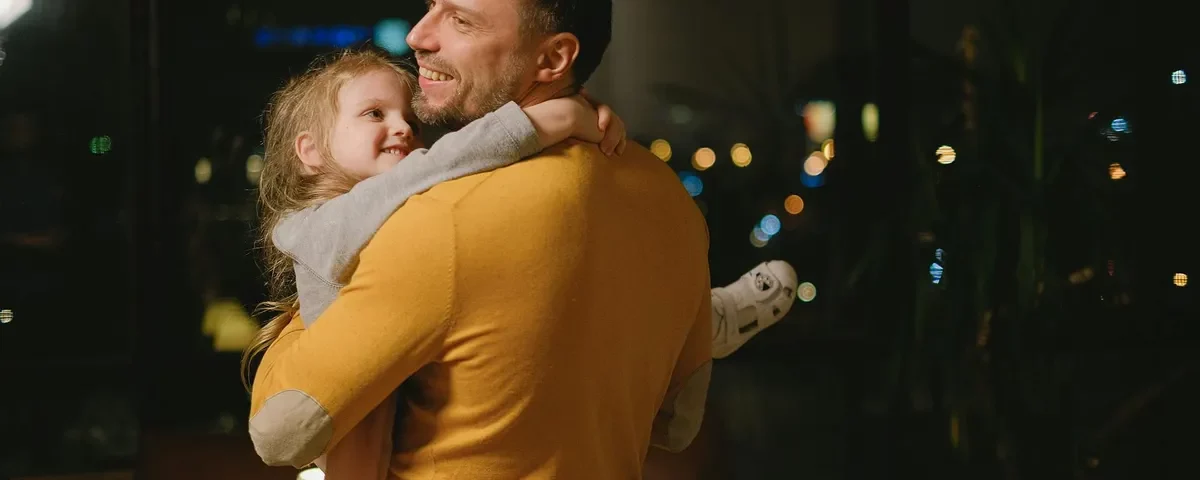
Being a single dad wasn’t my dream. But it was the only thing I had left after everything else in my life felt pointless, and I was going to fight for it if I had to.
I work two jobs to keep a cramped apartment that always smells like someone else’s dinner. I mop. I scrub. I open the windows. But it still smells like curry, onions, or burnt toast.
Most nights, it feels barely held together.
By day, I ride a garbage truck or climb into muddy holes with the city sanitation crew.
Broken mains, overflowing dumpsters, burst pipes, we get it all.

At night, I clean quiet downtown offices that smell like lemon cleaner and other people’s success, pushing a broom while screensavers bounce across giant, empty monitors.
The money shows up, hangs around for a day, then disappears again.
But my six-year-old daughter, Lily, makes all of that feel almost worth it.
She’s the reason my alarm goes off and I actually get up.
My mom lives with us. Her movement is limited, and she relies on a cane, but she still braids Lily’s hair and makes oatmeal like it’s some five-star hotel breakfast buffet.
She remembers everything my tired brain keeps dropping lately.
She knows which stuffed animal is canceled this week, which classmate “made a face,” which new ballet move has taken over our living room.
Because ballet isn’t just Lily’s hobby. It’s her language.
When she’s nervous, her toes point.
When she’s happy, she spins until she staggers sideways, laughing like she reinvented joy.
Watching her dance feels like walking out in the fresh air.
Last spring, she saw a flyer at the laundromat, taped crooked above the busted change machine.
Little pink silhouettes, sparkles, “Beginner Ballet” in big looping letters.
She stared so hard the dryers could’ve caught fire, and she wouldn’t have noticed.
Then she looked up at me like she’d just seen a golden nugget.
“Daddy, please,” she whispered.
I read the price and felt my stomach knot.
Those numbers might as well have been written in another language.
But she was still staring, fingers sticky from vending-machine Skittles, eyes huge.
“Daddy,” she said again, softer, like she was scared to wake up, “that’s my class.”
I heard myself answer before thinking.
“Okay,” I said. “We’ll do it.”
Somehow.
I went home, pulled an old envelope from a drawer, and wrote “LILY – BALLET” on the front in fat Sharpie letters.
Every shift, every crumpled bill or handful of change that survived the laundry went inside.
I skipped lunches, drank burnt coffee from our dying machine, told my stomach to stop complaining.
Dreams were louder than growling, most days.
The studio itself looked like the inside of a cupcake.
Pink walls, sparkly decals, inspirational quotes in curly vinyl: “Dance with your heart,” “Leap and the net will appear.”
The lobby was full of moms in leggings and dads with neat haircuts, all smelling like good soap and not like garbage trucks.
I sat small in the corner, pretending I was invisible.
I’d come straight from my route, still faintly scented like banana peels and disinfectant.
Nobody said anything, but a few parents gave me the sideways glance people save for broken vending machines and guys asking for change.
I kept my eyes on Lily, who marched into that studio like she’d been born there.
If she fit in, I could handle it.
For months, every evening after work, our living room turned into her personal stage.
I’d push the wobbly coffee table against the wall while my mom sat on the couch, cane leaning beside her, clapping on the offbeat.
Lily would stand in the center, sock feet sliding, face serious enough to scare me.
“Dad, watch my arms,” she’d command.
I’d been awake since four, my legs humming from hauling bags, but I’d lock my eyes on her.
“I’m watching,” I’d say, even when the room blurred around the edges.
My mom would nudge my ankle with her cane if my head dipped.
“You can sleep when she’s done,” she’d mutter.
So I watched like it was my job.
The recital date was pinned up everywhere.
Circled on the calendar, written on a sticky note on the fridge, jammed into my phone with three alarms.
6:30 p.m. Friday.
No overtime, no shift, no busted pipe was supposed to touch that time slot.
Lily carried her tiny garment bag around the apartment for a week, like it was full of delicate magic.
The morning of, she stood in the doorway with that bag and her serious little face.
Hair already slicked back, socks sliding on the tile.
“Promise you’ll be there,” she said, like she was checking my soul for cracks.
I knelt down so we were eye level and made it official.
“I promise,” I said. “Front row, cheering loudest.”
She grinned, finally, that gap-toothed, unstoppable grin.
“Good,” she said, and left for school half walking, half twirling.
I went to work floating for once instead of dragging.
By two, though, the sky turned that heavy, angry gray weathermen pretend to be surprised by even though everybody else can feel it coming.
Around 4:30, the dispatcher’s radio crackled bad news.
Water main break near some construction site, half the block flooding, traffic losing its mind.
We rolled up with the truck, and it was instant chaos—brown water boiling from the street, horns blaring, somebody already filming instead of moving their car.
I waded in, boots filling, pants soaking, thinking about 6:30 the whole time.
Each minute tightened around my chest.
Five-thirty came and went while we wrestled hoses and cursed at rusted valves.
At 5:50, I climbed out of the hole, soaked and shaking.
“I gotta go,” I yelled to my supervisor, grabbing my bag.
He frowned like I’d just suggested we leave the water running forever and open a swimming pool.
“My kid’s recital,” I said, throat tight.
He stared for a heartbeat, then jerked his chin.
“Go,” he said. “You’re no good here anyway if your brain’s already gone.”
That was as close to kindness as he got.
I ran.
No time to change, no time to shower, just soaked boots slapping concrete and my heart trying to escape.
I made the subway as doors were closing.
People edged away from me on the train, noses wrinkling.
I couldn’t blame them; I smelled like a flooded basement.
I stared at the time on my phone the whole ride, bargaining with every stop.
When I finally hit the school, I sprinted down the hallway, lungs burning worse than my legs.
The auditorium doors swallowed me in perfumed air.
Inside, everything felt soft and polished.
Moms with perfect curls, dads in pressed shirts, little kids in crisp outfits.
I slid into a seat in the back, still breathing like I’d run a marathon through a swamp.
Onstage, tiny dancers lined up, pink tutus like flowers.
Lily stepped into the light, blinking hard.
Her eyes searched rows like emergency lights.
For a second, she couldn’t find me.
I watched panic flicker across her face, that tight little line her mouth makes when she’s holding tears hostage.
Then her gaze jumped to the back row and locked on mine.
I raised my hand, filthy sleeve and all.
Her whole body loosened like she could finally exhale.
She danced like the stage was hers.
Was she perfect?
No.
She wobbled, turned the wrong way once, stared at the girl next to her for a cue.
But her smile grew every time she spun, and I swear I could feel my heart trying to clap its way out of my chest.
When they bowed, I was already half crying.
I pretended it was dust, obviously.
Afterward, I waited in the hallway with the other parents.
Glitter everywhere, tiny shoes slapping against tile.
When Lily spotted me, she barreled forward, tutu bouncing, bun slightly crooked.
“You came!” she shouted, like that had honestly been in doubt.
She hit my chest full force, almost knocking the breath straight out.
“I told you,” I said, voice shaking hard.
“I looked and looked,” she whispered into my shirt.
“I thought maybe you got stuck in the garbage.”
I laughed, which came out more like a choke.
“They’d have to send an army,” I told her. “Nothing’s keeping me from your show.”
She leaned back, studied my face, then finally let herself relax.
We took the cheap way home, subway.
On the train, she talked nonstop for two stops, then crashed, costume and all, curling against my chest.
Her recital program crinkled in her fist, little shoes dangling off my knee.
The reflection in the dark window showed a beat-up guy holding the safest thing in his world.
I couldn’t stop staring.
That’s when I noticed the man a few seats down, watching.
He was maybe mid-forties, good coat, quiet watch, hair that had clearly met a real barber.
He didn’t look flashy, just… finished.
Put together in a way I’ve never felt.
He kept glancing at us, then away, like he was arguing with himself.
Then he lifted his phone and pointed it our direction.
Anger snapped me awake faster than caffeine.
“Hey,” I said, keeping my voice low but sharp.
“Did you just take a picture of my kid?”
The man froze, thumb hovering over the screen.
His eyes went wide.
“I’m sorry,” he blurted. “I shouldn’t have done that.”
No defensiveness, no attitude, just guilt so obvious even half-asleep me could see it.
“Delete it,” I said. “Right now.”
He started tapping like his fingers were on fire.
He opened the photos, showed me the picture, then deleted it.
Opened the trash, deleted it again.
Turned the screen so I could see the empty gallery.
“There,” he said softly. “Gone.”
I stared another few seconds, arms tight around Lily, pulse still racing.
“You got to her,” he said. “Matters.”
I didn’t answer.
I just held Lily closer until our stop.
When we got off, I watched the doors close on him and told myself that was that.
Random rich guy, weird interaction, end of story.
Morning light in our kitchen always makes everything look a little kinder than it really is.
The next day, it didn’t help much.
I was half awake, drinking terrible coffee, while Lily colored on the floor and my mom shuffled around humming.
The knock on the door was hard enough to rattle the cheap frame.
The next knock came sharper, harder.
“You expecting anybody?” my mom called, voice tightening.
“No,” I said, already on my feet.
The third round of knocks hit like somebody owed them money.
I opened the door with the chain still on.
Two men in dark coats, one broad with that earpiece look, and behind them, the guy from the train.
He said my name, careful, rehearsed.
“Mr. Anthony?” he asked.
“Pack Lily’s things.”
The world tilted.
“What?” I managed.
The big guy stepped forward.
“Sir, you and your daughter need to come with us.”
Lily’s fingers dug into the back of my leg.
My mom appeared at my shoulder, cane planted.
“Is this CPS? Police? What’s happening?”
My heart tried to punch through my ribs.
“No,” the man from the subway said quickly, hands up. “It’s not that. I phrased it wrong.”
My mom glared like she could knock him over with one good stare.
“You think?” she snapped.
He looked past me at Lily, and something in his face cracked open, all the polished calm sliding off.
“My name is Graham,” he said.
He reached into his coat and pulled out a thick envelope, the fancy kind with a logo stamped in silver.
“I need you to read what’s inside. Because Lily is the reason I’m here.”
I didn’t move.
“Slide it through” I told him.
I wasn’t opening the door any further.
The envelope slipped through the crack in the doorway.
I opened it just enough to pull the papers out.
Heavy letterhead, my name printed at the top.
Words like “scholarship,” “residency,” “full support” jumped off the page.
Then a photo slipped free.
A girl, maybe eleven, frozen mid-leap in a white costume, legs a perfect split, face fierce and joyful all at once.
She had his same haunted eyes.
On the back, in looping handwriting, it said:
“For Dad, next time be there.”
My throat closed.
Graham saw my face and nodded like he already knew exactly where I’d paused.
“Her name was Emma,” he said quietly.
“My daughter. She danced before she could talk. I spent years missing recitals for meetings.”
Business trips, conference calls, always something else.
His jaw worked.
“She got sick,” he said. “Fast. Aggressive. Suddenly, every doctor was talking about options that weren’t really options.”
He took a shaky breath.
“I missed her second-to-last recital because I was in Tokyo closing a deal. I told myself I’d make the next one up to her somehow.”
There wasn’t a next one.
Cancer doesn’t negotiate calendars.
He looked at Lily again.
“The night before she died,” he said, “I promised her I’d show up for someone else’s kid if their dad was fighting to be there. She said, ‘Find the ones who smell like work but still clap loud.’”
He huffed a broken laugh.
“You hit every checkbox last night.”
I didn’t know whether to cry.
“So what is this?” I asked, holding up the papers. “You show up, feel guilty, throw money at us, disappear?”
He shook his head.
“No disappearing,” he said.
“This is the Emma Foundation. Full scholarship for Lily at our school. A better apartment, closer. A facilities manager job for you, day shift, benefits.”
Words that belonged to other people’s lives.
My mom narrowed her eyes.
“What’s the catch?” she demanded.
Graham met her stare like he had been practicing for this exact question.
“The only catch is that she gets to stop worrying about money long enough to dance,” he said.
“You still work. She still works. We just move some weight off your shoulders.”
Lily tugged my sleeve.
“Daddy,” she whispered, “do they have bigger mirrors?”
That got me.
Graham smiled carefully.
“Huge mirrors,” he said. “Real dancing floors. Teachers who know how to keep kids safe.”
She nodded like she was considering a serious business proposal.
“I want to see,” she said. “But only if Dad’s there.”
I felt a decision forming with surety.
We spent the day touring the school and the building where I’d work.
Studios full of light, kids stretching at barres, teachers actually smiling.
The job wasn’t glamorous, but it was steady, one place instead of two.
That night, after Lily fell asleep, my mom and I read every line of those contracts.
Waiting for tricks that never actually appeared.
That was a year ago.
I still wake up early, smell like cleaning supplies, but I make it to every class, every recital.
Lily dances harder than ever.
Sometimes, watching her, I swear I can feel Emma clapping for us.