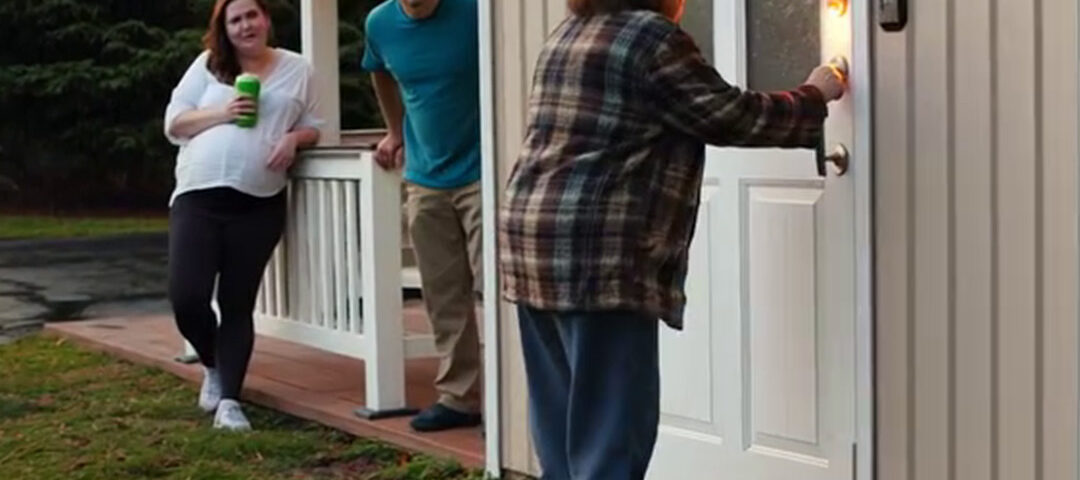
I came home to find my life’s work locked away. My daughter-in-law stood there, five months pregnant and smug, telling me my workshop was now her nursery. She thought because I was 70 years old that I was weak. She thought because I drove an old Ford truck that I was poor. She was about to find out that you never lock a master carpenter out of her own building, especially when she owns the deed to the land you’re standing on.
My name is Shirley Stone. I’m 70 years old, and I’ve spent 50 of those years building houses in the rainy suburbs of Seattle. I know every neighborhood, every zoning law, and exactly how much weight a load-bearing wall can take before it snaps. But nothing prepared me for the snap I felt inside my chest last Tuesday. I’d been gone for two weeks, driving my beat-up RV down the coast to visit my husband Robert’s grave in Portland, Oregon. It was a trip I took every year to clear my head and talk to him about the state of the world. He died two years ago from lung cancer, and sometimes the silence in our house gets so loud I can’t stand it. Driving back into Seattle, the rain was coming down in sheets, that cold gray wash that soaks right into your bones. All I wanted was to park the rig, pour a black coffee, and head out to my workshop.
That shop is my sanctuary. It’s a detached garage I built with my own hands 40 years ago. It stands separate from the main house, solid and reliable. It smells of cedar and sawdust and peace. It’s where I go when the world gets too loud. But when I pulled my truck into the driveway, my headlights caught something shiny on the workshop door. I blinked, wiping my tired eyes. It was a padlock. Not just any lock, but one of those high-tech digital ones with a glowing keypad, the kind that costs $200 and screams, “Keep out.”
I sat there in my truck, the wipers slapping back and forth, staring at that piece of metal. I’d never locked that shop. Never. My neighbors knew they could borrow a tool whenever they needed. That was the whole point: to share what you know, help where you can. I stepped out into the rain. My Redwing boots crunched on the gravel. I walked up to the door and rattled the handle. Locked tight. I felt a surge of heat rise up my neck, hotter than any furnace. I hammered my fist against the wood.
“Open up!” I yelled.
The sound was swallowed by the rain. That’s when the back door of the main house opened. Jessica, my daughter-in-law, stepped onto the porch. She was under the awning, dry and comfortable, holding one of those green smoothies she’s always drinking. Her other hand rubbed her belly, five months pregnant with my first grandchild. She uses that baby like a shield and a weapon all at once.
“Oh, you’re back early,” she said.
Her voice was casual, like we were discussing the weather, not why she’d barricaded my property. She took a sip of her drink. I pointed a shaking finger at the lock.
“What is this, Jessica? Why is there a code on my door?”
She shrugged, adjusting her expensive Lululemon cardigan.
“We changed it, Shirley. Frank and I decided it was time. That place is full of toxic dust and sharp blades. It’s a death trap. We’re turning it into the nursery.”
The nursery. My blood went cold. She was talking about my workshop. Inside those walls sat $80,000 worth of precision machinery. My Powermatic table saw that weighed 500 lb. My Festool collection that I’d spent decades acquiring. Hand planes that had belonged to my father. Those weren’t hobbies. They were my legacy. They were the tools that paid for the house she was standing in, and she was talking about them like they were garbage in a dumpster.
“Open it,” I growled. “Now.”
Jessica sighed, rolling her eyes like she was dealing with a toddler having a tantrum.
“Mom, listen to me. We hired a cleaning crew. It’s already done. We need the space for the baby. You don’t need all that junk anymore. You’re retired. Your hands shake. It’s dangerous.”
“Junk,” she called it. Forty years of mastery, junk. I started walking toward the porch, disregarding the rain soaking through my flannel shirt. That’s when my son Frank came running out. He looked pale, thinner than the last time I’d seen him. He was wearing that nervous smile he always had when he was trying to sell a bad deal in his real estate job.
“Mom. Hey, Mom. Hold on,” Frank stammered, stepping in front of his wife. “Let’s just go inside and have some tea. It’s freezing out here. We can talk about this calmly.”
I stopped and looked my son in the eye. I remembered the day he married Jessica. I’d paid off his student loans as a wedding gift, $60,000. I’d let them live in the upstairs of my house rent-free so they could save money to buy their own place. I’d given him everything I never had. And this is how he repays me, by locking me out of my own life while I’m visiting his father’s grave.
“I’m not drinking tea, Frank,” I said, my voice low and dangerous. “I’m going into my workshop. Give me the code.”
Frank looked at Jessica, his eyes pleading for permission. She just shook her head, crossing her arms over her chest.
“No, Frank. We discussed this. She’s not going in there. It’s for the safety of the family. She needs to let go of the past.”
I looked at them, really looked at them. I saw the contempt in Jessica’s eyes. She didn’t see a woman who built this estate. She saw a dusty old relic taking up space. And I saw the weakness in Frank’s spine. He wouldn’t stand up for me. He wouldn’t even stand up for himself. They thought because I was 70, I was finished. They were wrong.
I didn’t say another word. I turned my back on them and walked to the rear of my RV. The rain was coming down harder now, mixing with the rage in my veins. I opened the exterior storage compartment and pulled out my heavy-duty bolt cutters, 24 in of solid steel, the kind that doesn’t lie to you. I walked back to the workshop door, rain dripping off the brim of my baseball cap. I clamped the jaws of the cutter around the shank of their fancy digital lock.
“Mom, wait. What are you doing?” Frank yelled, panic finally rising in his voice.
He started running down the stairs. I looked over my shoulder, the muscles in my forearm, still strong from 50 years of construction work, tightened as I squeezed the handles.
“You open this door, too,” I said, my voice cutting through the rain. “You open it, and if I have to cut it, I’m not stopping at the lock. I’ll take this door off its hinges if I have to.”
Jessica screamed from the porch.
“You’re insane! That lock cost $200!”
I squeezed the handles. There was a loud pop that sounded like a gunshot. The lock snapped and fell onto the wet concrete with a metallic clang. I kicked the door open and stepped into the darkness, flipping the light switch. The overhead bulb flickered for a second before humming to life, and that’s when the real war began.
I stepped across the threshold and felt the blood drain from my face. My workshop, the sanctuary I’d built beam by beam four decades ago, was gone. I don’t mean it was messy. I don’t mean it was rearranged. I mean it was gutted, stripped bare, a hollow shell. The 800 square ft of space that had once been packed with the finest woodworking machinery money could buy was now nothing but cold gray concrete and empty drywall. The silence in the room was heavy, oppressive, like the air inside a tomb. I walked forward slowly, my boots scuffing against the floor. The sound echoed. It never used to echo. It used to be absorbed by stacks of lumber, by bags of sawdust, by the solid mass of iron and steel that anchored my life. Now there was nothing to catch the sound.
I stopped in the center of the room and looked down. There on the concrete slab were four distinct rustcolored squares. They outlined the footprint of my Powermatic table saw. That machine weighed over 500 lb. It was a cast iron beast that I’d bought in 1995. I’d saved for three years to buy that saw. It was the heart of this shop. I’d cut the timber for the addition on the main house with that saw. I’d built the crib Frank slept in with that saw. Now all that was left of it were four stains on the floor and a phantom outline in the dust.
My hands started to shake, not from age, but from a rage so pure and white-hot that I was afraid I might black out. I turned to the north wall. For 30 years, a custom-built French cleat system had hung there. It held my collection of hand tools, my Lie Nielsen block planes, my Japanese pull saws, and, most importantly, the set of Sheffield steel chisels that had belonged to my father. He’d given them to me when I started my apprenticeship at 18. They were polished to a mirror finish, their handles worn smooth by the sweat of two generations of craftsmen. The wall was bare. They’d ripped the cleats right out of the studs. The drywall was torn where they’d been careless, leaving jagged white scars against the painted wood. It wasn’t just that the tools were gone. It was the violence of their removal. It looked like the room had been stripped by locusts.
I felt a trembling start in my hands. I turned around slowly. Jessica was standing in the doorway, still holding her green smoothie like a shield. Frank was behind her, looking at his shoes. My voice was barely a whisper, but in that empty acoustic chamber, it sounded like a thunderclap.
“Where is it?” I asked. “Where is my life?”
Jessica took a sip of her drink and shrugged as if we were discussing a missing pair of socks.
“I told you, Shirley, we got rid of it. We sold it. It was just old junk collecting dust. You haven’t used half of those machines in years. We cleared it out to make room for the nursery.”
She gestured around the empty space with her free hand.
“Look at all this room. Once we put down some hardwood flooring and paint these walls a nice calming sage green, it’ll be perfect for the baby. Maybe a yoga corner for me in the back.”
I stared at her. She honestly believed what she was saying. She looked at a cabinet saw that could slice through 3-in oak like it was butter and saw a piece of scrap metal. She looked at hand tools that were worth more than her car and saw old junk.
“You sold it,” I repeated, taking a step toward them. “You sold my shop?”
“Yes,” she said, sounding annoyed that she had to explain this again. “And honestly, you should be thanking us. It was a hassle. We had to hire a guy with a truck to haul it all away, but we managed to get $5,000 for the whole lot.”
She smiled as if proud of herself.
“That’s going to cover the painting and the new crib. We’re putting the money right back into the house, so really it’s a win-win.”
Five thousand dollars. The number hung in the damp air like a death sentence. I felt like someone had punched me in the gut. Five thousand. The Festool sanders alone cost $4,000. The table saw was worth five. The jointer, the planer, the band saw, the dust collection system, the hand tools, my father’s chisels. I did the math in my head instantly, the way a contractor does when estimating a job. There was easily $80,000 worth of equipment in this room, $80,000 of assets that I’d curated, maintained, and oiled for 40 years, and she’d traded it all for $5,000 and a coat of sage green paint. It wasn’t just theft. It was an insult. It was a declaration that my life, my work, my passion was worth pennies on the dollar to them. They’d liquidated my legacy for the price of a used sedan.
I looked at Frank, my son, the boy I’d taught to hold a hammer before he could write his name. He knew. He had to know. He knew how much that equipment cost. He knew you couldn’t buy a vintage Stanley plane for five bucks at a yard sale.
“Frank,” I said. I didn’t yell. I spoke his name like a judge passing sentence. “You let her sell my shop for $5,000.”
Frank finally looked up, but his eyes skittered away from mine, fixing on a water stain on the ceiling.
“Mom, look. It’s done, okay? We needed the cash. The baby is coming. Expenses are adding up. Jessica wanted the space, and we just thought… we thought since you were gone it was a good time to transition.”
He swallowed hard.
“You’re 70, Mom. You should be relaxing, not breathing in sawdust.”
Relaxing. Transition. Corporate words. Salesman words. He was trying to sell me on my own obsolescence. I felt something crack inside my chest, something that had been holding me together for the last two years since Robert died.
“You’re telling me,” I said, my voice rising, “that you took $80,000 of industrial machinery and sold it for five grand.”
I took a step closer.
“You’re telling me you’re that stupid? Is that what you’re telling me, son? That you’re a fool?”
Jessica bristled.
“Hey, don’t talk to him like that. We got a good deal. The guy said most of that stuff was outdated anyway. No safety stops, old motors. He did us a favor taking it off our hands.”
The guy. I looked back at the empty floor. I looked at the scratches near the door where they dragged the heavy cast iron bases across the concrete. A professional rigger wouldn’t have dragged them. A professional would have used a pallet jack. Whoever took my tools didn’t care about them. They just wanted them gone fast.
And then I looked at Frank again. He was sweating. It was 50° and raining, and there was a line of sweat running down his temple. Five thousand didn’t make sense. Something was wrong.
I didn’t say another word to them. I pushed past Frank, out into the rain, and climbed into my truck. As I turned the key in the ignition, I saw Frank pull out his phone. He started typing furiously. He wasn’t calling a liquidator. He was warning someone. I backed out of the driveway, leaving them standing in the rain, and drove toward the bad part of town, toward the industrial district where the street lights were broken and the businesses had bars on the windows.
You don’t work in construction for 50 years without knowing where stolen tools end up. I checked three reputable dealers first. The men who ran those shops knew me. They shook their heads when I described my equipment. They told me they hadn’t seen anything like that come through. That’s what I expected. A legitimate dealer asks for identification. A legitimate dealer cuts a check that takes three days to clear. Frank didn’t have three days. He had desperation written all over him.
I pulled up to a place called Big Al’s Pawn and Loan. It was a concrete block building with bars on the windows and a neon sign that buzzed like an angry hornet. I’d done work on Al’s roof 10 years ago. He was a crook, but he was an honest crook. He didn’t lie about being a thief.
I pushed open the heavy steel door. A bell jingled a cheerful sound that clashed with the smell of stale cigarette smoke and old dust. The shelves were cluttered with the debris of broken dreams: musical instruments, televisions, power drills with the serial numbers filed off. I walked past a row of bicycles and stopped dead. There it was, sitting in the middle of the aisle like a thoroughbred horse in a donkey stable, my Grizzly industrial planer. It was a massive machine painted green and white. I walked up to it and ran my hand over the cast iron bed. I’d waxed that bed just before I left for my trip. It was still smooth as glass. I looked at the power cord. I’d replaced the plug cap with a heavy-duty yellow one two years ago after the original cracked. There it was, the yellow plug, and my heart hammered against my ribs.
It was one thing to suspect it. It was another thing entirely to see my machine sitting here in this graveyard of possessions.
Big Al came out from the back room wiping his hands on a rag. He squinted at me, then his eyes widened.
“Shirley Stone. I haven’t seen you in a decade. What brings a woman like you to the bottom of the barrel?”
I pointed at the planer.
“That’s mine, Al.”
Al looked at the machine, then back at me. He stopped wiping his hands.
“Yeah. I had a feeling it might be. The kid who brought it in had your nose, but he didn’t have your hands. His hands were soft, like he’d never held a hammer in his life.”
Frank. My son had dragged my planer here.
“Did he sell it to you?” I asked.
My voice was steady, but my fists were clenched at my sides. Al shook his head. He spat into a cup behind the counter.
“Nope. He didn’t sell it. He pawned it. Brought in a whole truckload of stuff. Saw, sanders, those fancy German drills you like. He unloaded it all right here on the floor. Said he needed cash, not a check.”
Cash. I felt a wave of dizziness. Pawned. That meant he intended to get it back, or at least he pretended he did.
“How much, Al?” I asked.
Al hesitated. He scratched his chin.
“Look, Shirley, client confidentiality and all that, but I like you. You fixed my roof when it was leaking buckets.”
He pulled out a ledger from under the counter.
“He took 15,000. Standard high-risk loan. 20% interest compounded monthly. If he misses a payment, I keep the tools.”
And Shirley, Al looked at me with something like pity.
“He was desperate, sweating like a pig in a butcher shop. He kept checking his phone. He told me he needed that money to save his life.”
Save his life. The words hung in the air between us.
Frank and Jessica lived like royalty. They drove leased luxury cars. They went on vacations to Cabo and drank $12 cocktails. They posted pictures on Instagram of expensive dinners and designer clothes. Why would a man living that life need $15,000 in cash from a pawn shop at 20% interest to save his life?
You don’t borrow money like that to renovate a nursery. You borrow money like that because you’re in deep, dark trouble.
I drove back toward the house as the sun was setting. The rain had stopped, leaving the streets slick and black, reflecting the street lights like oil. My mind was racing. What kind of trouble costs $15,000 immediately? Gambling, drugs, bad investments? I didn’t know, but I knew that Jessica was walking around rubbing her belly and talking about paint colors while her husband was selling his mother’s legacy to pay off a loan shark.
I turned onto my street. It was a quiet cul-de-sac lined with manicured lawns and respectable houses, the kind of place where nothing bad ever happened. I slowed down as I approached my driveway. There was a vehicle parked in front of my gate. It wasn’t Frank’s sedan, and it wasn’t Jessica’s SUV. It was a black Range Rover, sleek and menacing, with tinted windows so dark they looked like ink. The engine was idling, the low rumble of the exhaust vibrating in the night air.
I pulled my truck to the curb a few houses down and killed the lights. I watched.
The front door of my house opened. Frank stepped out onto the porch. He wasn’t wearing a jacket, even though the air was cold and damp. He looked small. His shoulders were hunched, his head down. He walked down the driveway toward the Range Rover. The driver’s side door of the rover opened. A man stepped out. He was big. He wore a leather jacket that looked too tight across the shoulders. Even from this distance, I could see the ink creeping up his neck, dark tribal tattoos that disappeared into his hairline.
Frank stopped a few feet away from him. I rolled down my window, straining to hear.
“You said you’d have it,” the man said.
His voice was a deep, gravelly baritone that carried easily in the quiet street.
“I do. I do,” Frank stammered.
His voice was high, frantic.
“I got the first installment. I just need a few more days for the rest. The bank needs to clear the check.”
The man stepped closer. He reached out and grabbed Frank by the front of his shirt, bunching the fabric in his fist. He pulled my son close, so close their noses were almost touching. Frank didn’t fight back. He went limp like a rag doll.
“We don’t do checks, Frank,” the man said. “We talked about this. Cash. You have until the end of the week, or we start taking things that you can’t buy back.”
The man shoved Frank backward. My son stumbled and fell onto the wet asphalt of the driveway. He scrambled backward, looking up at the man with terrified eyes. The tattooed man looked up at the house. He looked at the windows where Jessica was probably sleeping, dreaming of her nursery. Then he looked directly at where my truck was parked in the shadows. For a second, I thought he saw me. Then he turned, got back into the Range Rover, and peeled away. The tires screeched on the pavement.
I sat there in the darkness, gripping the steering wheel until my knuckles turned white. My son was on his knees in the driveway, weeping into his hands. He hadn’t sold my tools for a nursery. He’d sold them to pay a thug. And whatever hole he was in, $15,000 was just the down payment.
I didn’t go in there that night. Not yet. I drove to the motel out by the highway. I needed to think. I needed a plan, because if I went in there now, I’d probably say things I couldn’t take back.
But the next morning, I had to face them.
I walked into the kitchen feeling like a ghost haunting my own house. The air smelled of burnt toast and tension. Jessica was sitting at the island counter scrolling through her phone. She didn’t look up when I entered. Frank was standing by the coffee maker, his back to me. I could see the tension in his shoulders.
“Morning,” I said.
Frank jumped. He turned around, forcing a smile that looked painful.
“Morning, Mom. You were out late last night.”
“I was driving,” I said simply. “Thinking.”
Jessica finally put her phone down. She spun her stool around to face me. Her face was set in that hard, determined look she gets when she wants something.
“We need to talk, Shirley,” she said.
I poured myself a cup of coffee.
“I’m listening.”
“The contractor is coming in an hour to start framing the nursery in the garage,” she said.
“Workshop,” I corrected.
“And while he’s here,” she said, “Frank and I decided it would be efficient to make some other changes.”
She paused for dramatic effect.
“We think it’s time you move downstairs to the basement.”
I paused with the mug halfway to my mouth.
“The basement?”
“Yes,” she continued, her voice brisk and business-like. “Your bedroom on the first floor is the biggest. It has that beautiful bay window that lets in all the natural light. It’s perfect for the baby. We need that light for the nursery photos. Plus, it’s right next to our room, so it’s easier for feeding.”
My room. The room I’d shared with Robert for 40 years. The room where I’d held his hand while he took his last breath. Jessica wanted it for photos. I looked at Frank. He was studying the floor tiles intently.
“Frank,” I said, “you can’t be serious. You want your mother to sleep on concrete next to the furnace.”
And that’s when I realized something. If I wanted to find out what they were really planning, I needed to be inside. I needed access. I needed to play along. I let my shoulders slump. I let my face go slack, mimicking the tired, defeated old woman they wanted me to be.
“Okay,” I said softly.
The silence in the kitchen was deafening. Jessica stopped tapping her nails on the counter. Frank’s mouth fell open.
“What?” Jessica asked, suspicious.
“I said okay,” I repeated. “You’re right. I do cough at night. I don’t want to wake the baby. And a new TV sounds nice, Frank. My eyes aren’t what they used to be. A big screen would help.”
Jessica blinked. She looked like she’d swung a bat and hit nothing but air. She recovered quickly, though. A smug smile spread across her face.
“Well, good. I’m glad you’re finally being reasonable, Shirley. It’s about time you prioritize this family.”
“I’ll start moving my things today,” I said, “before the contractor gets here.”
“That would be best,” she said, standing up. “I want to start painting your room by the weekend. Sage green, I think, to match the yoga space.”
She breezed out of the room, victory in every step. Frank lingered for a moment. He looked at me with a mixture of relief and guilt that made him look sick.
“Thanks, Mom,” he mumbled. “It really is for the best. I promise I’ll get that TV set up tonight. I’ll run a cable line down there and everything.”
“Sure, son,” I said. “Just help me carry the bed frame.”
We spent the next two hours moving my life underground. It was humiliating, carrying my clothes, my books, my few personal treasures down those creaky wooden stairs into the gloom. The basement smelled of mildew and cold earth. The single window was a narrow slit high up on the wall, crusted with dirt, letting in a thin gray light that barely reached the floor. We set up my bed in the corner near the water heater. The pilot light hissed like a snake. Frank brought down an old rug from the hallway, tossing it over the concrete. It did nothing to stop the chill radiating up through the soles of my shoes.
“There,” Frank said, dusting his hands off.
He didn’t look me in the eye. He turned and practically ran back up the stairs.
But I didn’t sit down to cry. I waited.
I waited until I heard Jessica’s car leave the driveway. I waited until I heard Frank go into the living room to watch football. Then I moved.
I unpacked one box. Not clothes, not books. It was a box of tools I’d kept in my bedroom closet, the ones I kept close for household repairs: screwdrivers, pliers, a small pry bar. I walked softly up the basement stairs. I listened at the door. Silence in the hallway. I crept out. I went straight to Frank’s home office. It was the room at the end of the hall, the one he always kept locked. He said it was because of client confidentiality. I knew now it was because he was hiding his disaster of a life.
I tried the handle. Locked, of course.
I knelt down. The lock on this door was a simple interior privacy lock, a joke compared to the deadbolts I’d installed for a living. I pulled a thin wire tool from my pocket. It took me three seconds to pop it. I opened the door and stepped inside.
The room was a mess. Papers everywhere, takeout containers. It smelled of stale fear. I went to the desk. I wasn’t interested in the mess. I was interested in the file cabinet. I needed to find the deed. I needed to see exactly what I’d signed.
But I couldn’t do it now. Too risky. The game was on. Frank could get up for a beer any second. So I did one thing. I unlocked the mechanism from the inside so it would look like it was latched but wouldn’t actually catch. Tonight, when they were sleeping, I would come back.
I slipped back into the hallway, back down the basement stairs, back to my bed. I sat there in the cold darkness looking at the water heater. They thought they’d put me in a hole to rot. They didn’t realize they’d just given me a base of operations. I wasn’t the prisoner in the basement. I was the wolf waiting under the floorboards.
I pulled out my phone and opened my notes app. I started making a list. One: find the deed. What did I really sign? Two: track the money. Where is Frank’s debt? Three: document everything. I need proof. Four: contact Arthur. My attorney needs to know. Five: Monday, the baby shower.
That last one stuck in my mind. Monday, Jessica had mentioned it yesterday. A big baby shower. Fifty guests, all her influencer friends, a public event with witnesses. I smiled in the darkness of my basement prison. Let them have their party. Let them celebrate, because I was going to give them a show they’d never forget.
That night, I lay on my basement bed listening to the house settle above me, waiting for the sounds of their routine: the TV in the living room flickering off at 10:30, the creaking of floorboards as Frank and Jessica made their way to bed. By midnight, the house was silent. I counted to 1,000. Then I counted again.
At two in the morning, I moved. Fifty years of walking scaffolding 20 stories high taught me how to move without sound. I placed my weight on each step, carefully testing before shifting forward. The old wooden stairs didn’t make a single creak. I reached Frank’s office door. My hand touched the knob, and it turned smoothly. The unlocked mechanism worked perfectly.
Inside, I used my phone’s flashlight, keeping the beam narrow and low. The file cabinet was locked, but this lock was even easier than the door. My wire tool had it open in five seconds. I pulled out the folder marked financial and sat on the floor, my back against the wall, spreading papers across the carpet.
What I found made my hands shake.
Bank statements showed Frank’s personal account hemorrhaging money. $42,000 in March, down to 3,000 by August, now overdrawn by nearly 3,000. Then I found the printout from something called crypto exchange 2022.com. A portfolio value chart showed a peak of $340,000 in February. Current value: $1,847.
My son had gambled away nearly $340,000 on cryptocurrency.
I found a handwritten note in Frank’s shaky scrawl.
“Tony need 50k by end of September. They said if I don’t… smudged, can’t tell Jess. Can’t lose the house. Have to find a way.”
Tony. The loan shark’s name was Tony.
Then I found the loan application. It was from a company called online equityloans.com. The property listed was my address, 4,738 Maple Street. The applicant was Frank Stone. The loan amount made me dizzy: $800,000. My son was trying to borrow $800,000 against my house. Status: pending title verification.
But it was the next document that made my blood freeze, a document titled quit claim deed.
I knew what a quit claim deed was. It’s a legal document that transfers all rights and ownership of property from one person to another. It’s not a loan. It’s a surrender. It’s giving away the keys to the kingdom.
The grantor, the person giving up ownership, was listed as Shirley Stone. The grantee, the person receiving ownership, was Frank Stone. The date was three days ago.
And at the bottom of the page was my signature.
I pulled my reading glasses from my pocket and leaned closer, shining the flashlight directly on the signature. It looked exactly like mine, the loop on the S, the sharp cross on the T. But I had never seen this document in my life. When an old person signs their name, there are natural variations: a little tremor here, lighter pressure there. After 70 years, after decades of using power tools that vibrate your bones, your hand has a rhythm, a shaky cadence. This signature was smooth, confident, static.
This was a tracing.
And then I remembered last month, Frank’s birthday. I’d given him a card. I’d signed it with a heavy felt tip pen. Love mom Shirley Stone. He’d taken that card, put it on a light box or against a window, and traced my name onto a document that stole my home. He didn’t just steal my property. He stole my name. He used my love for him, a birthday card for God’s sake, as the instrument of his theft.
I photographed every page with my phone: the bank statements, the crypto losses, the loan application, the forged deed. My hands were shaking so badly, I had to brace the phone against my knee to keep the images clear. But I wasn’t done yet. At the bottom of the folder, I found one more piece of paper, a glossy flyer folded in half. I unfolded it slowly.
Sunny Meadows Care Facility, the headline read in cheerful large font. Dignified living for seniors with memory issues. There was a photo of a smiling elderly woman in a wheelchair surrounded by fake plants and fluorescent lighting.
But it was the handwriting in the margins that made my vision blur. Jessica’s handwriting, sharp angular letters in blue ink.
“Takes Medicare  Immediate vacancy Secure ward Can drop off Monday morning. Cost $1,200 per month.”
Affordable drop off, like I was a bag of old clothes at a donation center, like I was a stray dog they’d grown tired of feeding. The secure ward meant the lockdown unit, the unit for dementia patients who wander, the unit where you can’t leave.
They weren’t just stealing my house. They were planning to imprison me.
Monday morning. Today was Thursday. They’d given me four days.
I understood the plan now, clear as day. First, forge the deed to transfer the house to Frank’s name. Second, apply for the massive loan. Third, commit me to the nursing home. Fourth, tell the neighbors I’d lost my mind and needed professional care. Fifth, collect the money and erase me completely.
Once I was in the system with a dementia diagnosis, no one would listen to a word I said about forged deeds or stolen tools. I’d just be a crazy old woman rambling about conspiracies.
I carefully photographed the nursing home flyer from every angle. Then I put everything back exactly as I’d found it. Locked the file cabinet, left the office, made sure the door looked locked from the outside. I went back down to the basement and sat on my bed in the darkness. I pulled out the flyer and smoothed it against my knee, reading Jessica’s notes again by the light of my phone.
Drop off Monday morning.
They thought they had it all planned out. They had no idea what was coming.
The next morning, Friday, I told Frank I was going to the pharmacy to pick up my blood pressure medication. Instead, I drove three towns over to a diner called the Rusty Spoon. It was the kind of place with vinyl booths patched with duct tape and a waitress who’d been working the counter since the Nixon administration, the kind of place Jessica would never set foot in.
I walked to the back booth. Arthur Blackwood was already there, nursing a black coffee and reading the sports section. He was 75 with gray hair and a suit that was 10 years out of style, but his eyes were sharp as razors. We’d worked together back in the ’90s when I was building commercial properties. He’d handled contracts and disputes. We’d been friends ever since.
“Shirley,” he said, standing to greet me. “You sounded urgent on the phone. What’s going on?”
I didn’t waste time with pleasantries. I slid into the booth and pulled out my phone, opening the photos I’d taken.
“Arthur, I need your help. A big favor.”
I showed him everything: the empty workshop photos, the pawn shop receipt, the forged quit claim deed, the nursing home flyer with Jessica’s handwriting. Arthur went through each image slowly, his expression getting darker with every swipe. When he finished, he took off his reading glasses and rubbed his eyes.
“Shirley,” he said quietly. “This is a felony. Multiple felonies. Forgery, real estate fraud, elder abuse. If we take this to the district attorney, your son is looking at five to ten years in state prison. Minimum.”
The word hung in the air between us. Prison. My son in a cage. The thought made my stomach turn, but then I remembered the basement, the cold concrete, the plan to drug me and drag me to a state-run facility where I’d be locked away until I died.
“There’s something else, Arthur,” I said. “Something Frank doesn’t know, something I never told him because I wanted him to make his own way in the world.”
Arthur raised an eyebrow.
“What’s that?”
I leaned forward.
“Frank thinks he stole the house from me. He thinks that by forging my signature on that deed, he transferred the title from Shirley Stone to Frank Stone.”
“And he didn’t?” Arthur asked.
“No,” I said, “because Shirley Stone doesn’t own that house.”
A slow smile spread across Arthur’s face.
“The trust.”
“The trust,” I confirmed.
Ten years ago, after Frank got arrested for that DUI and tried to sue the police department, I realized he had no sense of responsibility. Robert and I sat down in your office and we moved everything, the house, the land, the savings accounts. We moved it all into the Stone family irrevocable trust.
“I remember,” Arthur said. “I drew up the papers myself.”
“Exactly,” I said. “I’m not the owner. I’m just the primary beneficiary during my lifetime. The legal owner of the property is the trust, and the trustee is you.”
Arthur chuckled, a dry rasping sound.
“So this quit claim deed, this document he risked his freedom to forge, is toilet paper.”
I finished for him.
“Legally void. You can’t transfer property you don’t personally own.”
Arthur took a sip of his coffee, shaking his head.
“So the bank loan he’s applying for, the one secured by the property, will never fund.”
“I said the moment the title company does a deep dive, they’ll see the trust holds the deed. But I’ve got a friend at the bank who’s stalling them, making Frank think it’s just a paperwork delay. He thinks the money is coming next week.”
“This is beautiful,” Arthur said, “in a tragic Shakespearean sort of way. So what’s the play, Shirley? We can file an injunction today. We can have the police at your door in an hour. We can stop this right now.”
I shook my head.
“No. Not today.”
“Why?” Arthur asked. “You’re sleeping in a basement. Shirley, every day you stay there is a risk.”
“Because if we stop it now, they’ll spin it,” I said. “Jessica is an influencer. She lives her life online. If I call the cops now, she’ll post a video crying about her senile mother-in-law who’s confused and aggressive. She’ll twist the narrative. She’ll say, ‘I signed the deed and forgot.’ She’ll make me the villain.”
I leaned forward.
“I need witnesses, Arthur. I need an audience. I need to strip them bare in front of the very people they’re trying to impress.”
“When?” Arthur asked.
“Monday,” I said. “Monday at noon, the baby shower.”
Arthur whistled low.
“That’s cold, Shirley.”
“They’re planning to commit me to an asylum Monday night,” I said, my voice hard as iron. “The ambulance is scheduled, so I’m going to throw the first punch.”
I pulled out a notepad and started writing.
“I want you to draw up the eviction papers, not just for Frank, for both of them. Immediate removal from the premises for violation of the trust bylaws regarding abuse of the beneficiary.”
Arthur pulled out his own notepad.
“I can do that. I’ll have the papers ready by Monday morning.”
“Good,” I said. “Come to the party at 1:00. Pretend you’re a guest. Bring the papers. Bring the original trust documents.”
I looked him in the eye.
“I want to see their faces, Arthur. I want to look my son in the eye when he realizes he didn’t just lose a house. He lost his mother, and he did it for nothing.”
Arthur nodded slowly, writing down the date and time.
“I’ll be there, Shirley, with bells on.”
We sat in silence for a moment. The waitress refilled our coffee cups.
“There’s one more thing I need to do,” I said. “I need equipment, cameras, recording devices, because if they’re going to plot my destruction in my own living room, I want it in 4K resolution.”
Arthur reached into his jacket pocket and pulled out a business card.
“Go see this guy. Tell him I sent you. He’s a retired private investigator, runs a shop called Secure Home Solutions. He’ll set you up with everything you need.”
I took the card and slipped it into my purse.
“Thank you, Arthur. For everything.”
“Don’t thank me yet,” he said. “We haven’t won anything, but Shirley, yes. What you’re doing takes courage. Most people in your position would just call the police and be done with it. But you’re giving them a chance to see themselves, to understand what they’ve become. That’s brave.”
I thought about that as I drove away from the diner. Was it brave, or was it just an old woman’s pride demanding that she not go quietly into the night? I didn’t know, but I knew one thing for certain. Monday was going to be a reckoning.
That afternoon, I told Jessica I was going to the hardware store to look for a specific type of hinge for the basement door. It was a lie. Of course, I didn’t need a hinge. I needed the truth.
I drove to a strip mall three towns over and found the address on Arthur’s card. Secure Home Solutions was wedged between a nail salon and a tax preparation office. The front window was covered with tinted film. A small sign on the door said, “By appointment only.”
I knocked. A man in his early 50s opened the door. He had the build of someone who’d spent years staying in shape, and the eyes of someone who’d seen too much.
“Can I help you?”
“Arthur Blackwood sent me,” I said. “I’m Shirley Stone.”
Recognition flickered across his face.
“Ah,” he called ahead. “Come in.”
The interior of the shop was nothing like I’d expected. No dusty shelves or outdated equipment. Instead, it looked like something out of a spy movie: clean, modern, with glass display cases showing tiny cameras and recording devices.
“I’m Greg,” the man said, extending his hand. “Arthur told me you’re having some family issues.”
“That’s putting it mildly,” I said.
He said, I explained what I needed. Not everything, just enough. My son and daughter-in-law were planning something. I suspected they were trying to take advantage of me financially. I needed evidence. Greg listened without interrupting. When I finished, he nodded.
“I understand. And since it’s your house, you have every legal right to monitor what happens inside it. Let me show you what we have.”
He led me to a display case and pulled out three small black boxes, each no bigger than a matchbox.
“These are motion activated with built-in microphones. They transmit directly to the cloud, so even if someone finds them and destroys them, you’ll still have the footage. Battery life is about two weeks.”
“How much?” I asked.
“Six hundred for the set of three.”
I didn’t hesitate. I pulled out my credit card.
Greg also showed me a voice activated recorder small enough to tape under a table.
“This one’s 150. It’s got a range of about 20 ft, and it can record for up to 48 hours on a single charge.”
I bought that, too.
Then Greg spent 30 minutes showing me how to use the equipment: how to position the cameras for the best angles, how to access the cloud storage from my phone, how to download and save footage.
“For the living room,” he said, “I’d recommend placing it behind some books on a shelf. Angle it toward the sofa where people usually sit. For the kitchen, top of the refrigerator is ideal, pushed back against the wall. Gives you a perfect view of the table.”
“What about a workshop?” I asked. “A large open space.”
“High corner is best,” he said. “Or if there’s a loft or elevated storage area, that’s perfect. Bird’s eye view of everything.”
I paid in cash and thanked him.
“Mrs. Stone,” Greg said as I was leaving, “I don’t know the details of your situation, but be careful. If someone’s desperate enough to forge documents and plan nursing home commitments, they’re dangerous. Don’t underestimate them.”
“I won’t,” I promised.
As I drove home, the small bag of surveillance equipment felt heavy on the passenger seat. I thought about what I was about to do, recording my own son, spying on my own family. But then I thought about the empty workshop, the forged deed, the nursing home flyer with drop off written in Jessica’s handwriting. They’d made their choice. Now I was making mine.
That weekend, I had to sell my performance. I had to make them believe I was losing my mind.
Saturday morning, I shuffled into the kitchen, wearing my bathrobe inside out. I’d messed up my hair deliberately, pulling it into uneven clumps. Frank and Jessica were having breakfast. I looked around the kitchen with manufactured confusion.
“Robert,” I called out. “Honey, did you make the coffee already?”
Jessica’s head snapped up. Frank froze, his fork halfway to his mouth. Robert was my dead husband.
“Mom,” Frank said carefully, setting down his fork. “It’s Frank, your son. Dad’s… Dad’s been gone for two years.”
I blinked at him slowly, letting my eyes go vacant.
“Frank, you’re so tall. When did you get so tall?”
I walked to the counter and picked up the coffee pot, then just stood there holding it, staring at it like I’d forgotten what to do with it.
“Mom, are you okay?” Frank asked, standing up.
Jessica was watching me with laser focus. I could see the wheels turning behind her eyes.
“I… I don’t know where the cups are,” I said, my voice quavering. “This kitchen, it’s different. Did we move?”
Jessica stood up and took the coffee pot from my hands.
“Shirley, the cups are where they’ve always been. In the cabinet right there.”
She pointed, speaking slowly and loudly like I was hard of hearing. I looked at the cabinet, then back at her.
“Oh, right. I knew that.”
I shuffled to a chair and sat down heavily. Frank and Jessica exchanged a look, a look that said, She’s really losing it. Perfect.
That evening, I pushed it further. Dinner was roasted chicken. Jessica set a bowl of canned tomato soup in front of me while she and Frank ate the good food. I picked up my spoon with a deliberately loose grip. I lifted it to my mouth, brought it halfway there, then let my hand jerk. Red soup splashed across the white tablecloth. It dripped onto my lap.
“For God’s sake, Shirley,” Jessica snapped, dropping her fork. “Look what you did.”
I stared at the mess. I let my lower lip tremble.
“I’m sorry, Martha,” I whispered, my voice breaking. “I’m so sorry, honey. I didn’t mean to ruin the tablecloth.”
The room went dead silent. Jessica’s eyes went wide. Not with sympathy, with excitement.
“She called me Martha,” she whispered to Frank. “She thinks I’m her dead husband.”
Frank looked at me, his face pale.
“Mom, that’s Jessica, your daughter-in-law. Dad is… Mom’s been gone for two years.”
I looked around the room, mimicking confusion.
“Gone? No. He was just here. He was making coffee. Two sugars.”
I put my head in my hands and let out a sob. It was acting, but the tears were real. I was crying for the disrespect. I was crying because I had to use my dead husband’s name as a weapon to save my own life.
Jessica stood up. She walked over to Frank and squeezed his shoulder. She leaned down, but she didn’t whisper low enough.
“See?” she hissed. “I told you she’s gone. She’s completely losing it. It’s dangerous, Frank. What if she leaves the stove on? What if she thinks the baby is, I don’t know, a cat? We can’t have this.”
“Yeah,” Frank said, looking at the soup on the table. “Yeah, you’re right. She’s getting worse fast.”
They thought they’d won. They had no idea the wolf in the basement was wide awake.
That night, Saturday, at 2:00 a.m., I made my move. I waited until the house was silent, until I was certain Frank and Jessica were deep asleep. Then I crept up the basement stairs with my bag of equipment.
First stop was the living room. I’d spent the afternoon memorizing the layout. The built-in bookshelves on the north wall had a perfect angle toward the sofa where Frank and Jessica sat every evening. I pulled out one of the cameras. It looked like a small black rectangle, no bigger than a book of matches. I positioned it behind a row of old hard covers on the second shelf, angling it down toward the seating area. The camera blended perfectly with the shadows. Unless you knew exactly where to look, you’d never see it.
Next, the kitchen. I used a chair to climb up and place the second camera on top of the refrigerator, pushing it back against the wall. From down below, it was invisible, but it had a perfect view of the kitchen table and the back door.
The third camera was the trickiest. I had to go outside into the yard to reach the workshop. The rain had started again, a light drizzle that would cover any sounds I made. I slipped out the side door, moving through the shadows.
The workshop door was unlocked. They were so arrogant now they didn’t even bother to secure it anymore. Inside, the smell of fresh paint and stupidity was overwhelming. The walls were half painted that nauseating shade of sage green. My beautiful workbench was gone, replaced by stacks of laminate flooring still in their boxes. But the loft, the small storage area I’d built years ago, was still there. I climbed the ladder, my 70-year-old knees protesting with every rung. At the top, I nestled the third camera into a pile of old insulation, angling it down. From this position, it had a bird’s eye view of the entire workshop floor. Perfect.
I climbed back down and returned to the house, locking the side door behind me. Back in the basement, I pulled out my phone and opened the app Greg had installed for me. Three green lights appeared on the screen. Three active camera feeds. I tapped the first one. The living room appeared, grainy but clear, empty and dark. I tapped the second. The kitchen bathed in the glow of the microwave clock. I tapped the third. The workshop, my former sanctuary, now a hollow shell. I saved the app to my home screen and set it to send me notifications whenever motion was detected.
Then I lay back on my basement bed, fully clothed, staring at the ceiling. Monday was two days away. Two days until the baby shower. Two days until I burned their world to the ground.
Sunday evening at 8:00, my phone buzzed. Motion detected: kitchen. I grabbed my earbuds and opened the app. The kitchen camera feed filled my screen. Frank and Jessica were walking in laughing. Frank was carrying a bottle of champagne. I plugged in my earbuds. The audio was crystal clear.
“To the future,” Frank said, popping the cork.
“To the Stone estate,” Jessica replied.
They clinked glasses. My hand tightened around the phone. Jessica hopped up onto the kitchen counter, her legs swinging. Her eyes had that gleam I’d come to recognize: malice mixed with triumph.
“Okay, so here’s the plan,” she said.
I hit the record button on my phone, capturing the screen. Every word, every detail.
“Monday is the baby shower,” Jessica continued. “We have all the influencers coming, the caterer, the photographer. It has to be perfect. We keep her in the basement all day. Tell the guests she’s away on a cruise or that she’s sick and contagious. Whatever. Just keep her hidden.”
“And then?” Frank asked.
Jessica took a sip of champagne.
“Then, when the last guest leaves around 6:00 p.m., we call 911.”
Frank paused, his glass halfway to his lips.
“911?”
“Yes,” Jessica said, her voice matter-of-fact. “We tell them she became violent. We tell them she started smashing things. We say she threatened the baby, that she’s having a psychotic break. The ambulance comes. They sedate her. They take her to the ER for a psychiatric hold.”
I felt my breath catch in my throat.
“From there,” Jessica continued, “the social worker transfers her directly to the secure ward at Sunny Meadows. I already talked to them. They have a bed ready.”
Frank set his champagne down. He looked uncomfortable.
“That’s… that’s intense, Brit. A psychotic break, threatening the baby. That’s serious stuff.”
“It’s the only way to bypass the waiting list,” Jessica said coldly. “If she’s a danger to herself or others, they have to take her immediately. And once she’s in the system with a dementia diagnosis, nobody’s going to listen to a word she says about forged deeds or stolen tools.”
She smiled. Actually smiled.
“She’ll just be another crazy old woman rambling about conspiracies.”
Frank picked up his glass again, staring into the golden liquid.
“I guess you’re right. It’s the only way.”
“And the loan?” Jessica asked.
Frank’s face brightened.
“Oh, I got the call from the bank today. They said it’s preliminarily approved. The money hits the account Tuesday. $800,000, babe.”
He looked around the kitchen, his eyes wild with desperation and greed.
“We’re going to be rich. I mean comfortable. I’ll pay off Tony. Buy you that new Range Rover you wanted. Maybe we can even take a vacation before the baby comes. Hawaii, maybe.”
He was spending money he didn’t have, based on a crime he’d already committed, secured by a house he didn’t own. It would have been funny if it wasn’t so pathetic.
Jessica slid off the counter and wrapped her arms around Frank’s neck.
“I’m proud of you,” she said. “I know this was hard, but you did the right thing. Your mom was never going to let go of that house on her own. She would have held on to it until she died. And then what? We’d be stuck dealing with estate lawyers and probate for years. This way is cleaner.”
“Frank said, trying to convince himself. She gets professional care. We get financial security. The baby gets a stable home.”
“Exactly,” Jessica said. She kissed him. “We’re doing this for our family, for our future.”
They stood there in my kitchen holding each other, celebrating my destruction. Frank pulled back slightly.
“You really think she won’t remember any of this? The workshop, the tools, the deed?”
Jessica laughed.
“Frank, she called me Martha yesterday. She thinks I’m your dead father. She can barely remember where the coffee cups are. By the time she’s at Sunny Meadows, she’ll be so confused and medicated that even if she tries to tell someone, they’ll just think it’s dementia talking.”
“And the baby shower?” Frank asked. “You don’t think having her in the basement during the party is risky?”
“Please,” Jessica scoffed. “I’ll lock the basement door. She’s weak. She’s old. Even if she tried to come up, she couldn’t get through a locked door. And everyone will be outside in the yard anyway by the workshop. I mean, the nursery space. No one will hear anything.”
“When does the ambulance come?” Frank asked.
“6:15,” Jessica said. “I already arranged it with the crisis line. I’ll call at 6 and tell them we have an emergency. Violent elderly person, danger to infant. They’ll have a team here within 15 minutes.”
“And the commitment papers already filled out,” Jessica said. “They’re in my desk drawer. All we have to do is sign them when the social worker arrives.”
She picked up her champagne glass and raised it.
“To Monday,” she said, “the day we finally take control of our lives.”
Frank clinked his glass against hers.
“To Monday,” he said, “the day we say goodbye to Mom.”
I watched them drink. I watched them laugh. I watched them plan my imprisonment in my own home. And I smiled in the darkness of my basement cell, because I had every word, every detail, every cold, calculated step of their conspiracy in 4K resolution.
I lay awake the rest of that night replaying the recording over and over, not because I needed to memorize it. The video was saved to the cloud, backed up three times, but because I needed to understand something. How had I raised a son capable of this? I thought back to Frank as a little boy, sweet, gentle Frank, who used to bring me dandelions from the yard. Frank, who cried when he accidentally stepped on an anthill because he didn’t want to hurt the ants. Somewhere along the way, that little boy had become a man who could look his mother in the eye and plan her destruction. Was it my fault? Had I spoiled him, protected him too much, given him too much? Or was it Jessica’s influence, the constant pressure to maintain an image, to live a lifestyle they couldn’t afford? Maybe it was both. Maybe it was neither. Maybe some people just break when the pressure gets too high.
Sunday morning, I played my role perfectly. I wandered upstairs in my bathrobe, my hair messy, and asked Jessica if she’d seen my shoes.
“They’re on your feet, Shirley,” she said, barely looking up from her phone.
I looked down at my slippers and blinked.
“Oh, right. I knew that.”
At lunch, I forgot to use a napkin, letting soup dribble down my chin. Frank had to wipe my face like I was a child. I saw the look that passed between them: relief, satisfaction, certainty. They were certain I was gone, certain I was helpless. They had no idea I was the most dangerous I’d ever been.
That afternoon, while they were out buying last minute party supplies, I made one final trip. I drove to a print shop and printed out screenshots from the video, high-resolution color images of Frank and Jessica toasting their conspiracy, of Jessica’s notes about the nursing home, of the timeline for my psychiatric emergency. I printed 20 copies of each image. Then I went to an office supply store and bought a small projector and a portable screen. When Frank had mentioned the baby shower, Jessica had talked about setting up a gift opening station with a camera for her live stream. I was going to give her followers a show they’d never forget.
Back in the basement, I laid out my evidence on the bed: the forged deed, the nursing home flyer, the bank statements, the video file on my phone, the printed screenshots, everything I needed to destroy them. I thought about Robert. What would he say if he could see me now? I think he’d tell me to be careful, to be smart, but he’d also tell me to fight. So that’s what I was going to do. Tomorrow was Monday. Tomorrow was war.
I woke up at dawn on Monday morning, not because I’d slept—I hadn’t—but because the first rays of pale Seattle sunlight were filtering through the grimy basement window, and I could hear movement upstairs. Today was the day.
I got dressed carefully. Not in my work clothes, not in the outfit they expected. I put on my best black pants and a crisp white blouse, the outfit I’d worn to Robert’s funeral, the outfit that made me feel strong and dignified. Then I covered it with the stained coveralls and the crushed straw hat that Jessica had given me, the gardener costume.
I looked at myself in the small mirror hanging on the basement wall. I looked like two different people, the broken old woman they saw and the warrior underneath. Perfect.
Upstairs, I could hear the chaos beginning, trucks arriving, Jessica barking orders, Frank running around like a chicken with its head cut off. I checked my phone one more time. The video file was uploaded to the cloud. The screenshots were in my bag. Arthur had texted me at 6:00 a.m.
“Papers are ready. See you at 1:00 p.m.”
Everything was in place. I just had to get through the next few hours without breaking character.
I took a deep breath, whispered a prayer to Robert, and climbed the basement stairs.
The kitchen was a war zone. Catering staff rushed in and out carrying trays and boxes. A florist was arranging massive bouquets of white hydrangeas. Someone was setting up a champagne tower on the kitchen island. Jessica stood in the center of it all, wearing a flowing pink dress that probably cost more than my monthly grocery bill. Her hair was done in elaborate curls. Her makeup was flawless. She looked like a princess. She didn’t look like someone planning to have her mother-in-law committed to a psychiatric ward in seven hours.
“Shirley,” she called when she saw me. “Perfect timing.”
She thrust a plastic trash bag into my hands. I already knew what was inside: the coveralls, the hat.
“We’ve been through this,” Jessica said, her voice tight with stress. “You’re the gardener today, the help. You stand by the front gate. You make sure nobody parks on the grass. You trim the hedges. You do not come inside. You do not talk to the guests. If anyone asks who you are, you smile and nod. That’s it. Understand?”
I let my eyes go vacant. I nodded slowly.
“Understand?” she repeated.
“Understand,” I repeated, my voice flat.
Jessica studied my face for a moment, looking for any sign of rebellion or awareness. She saw none.
“Good,” she said. “Now go change in the garage—the nursery—and get outside. The first guests will be here in an hour.”
I shuffled toward the workshop, clutching the bag. Inside, I put the coveralls on over my good clothes. I jammed the straw hat on my head, pulling it low. I looked at the empty space where my table saw used to be, where my father’s chisels used to hang.
“For you, Dad,” I whispered. “And for Robert, and for every woman who was ever told she was too old, too weak, too invisible to matter.”
I picked up the hedge trimmers from the pile of tools Frank hadn’t bothered to pawn—they weren’t worth enough—and walked to my post at the front gate.
The first car arrived at 11:30, a gleaming white Tesla. A woman in her 30s stepped out wearing designer sunglasses and carrying a gift bag that probably cost more than the gift inside. She walked right past me without a glance. Then came a BMW, then a Range Rover, then a Mercedes. Fifty thousand worth of cars lining my street, and not one of them saw the 70-year-old woman standing by the gate in coveralls. I was invisible, a prop, part of the landscaping.
One man wearing a pink polo shirt and loafers without socks actually stopped and pointed at me.
“Nice touch with the authentic gardener,” he said to his wife. “Very Downton Abbey.”
They laughed and walked past.
I stood there, my hands gripping the hedge trimmers, listening through my earbud as Jessica greeted guests in the backyard.
“Oh, thank you so much. Yes, we did all the renovations ourselves. Frank has such an eye for design. The nursery used to be a garage, but we completely transformed it. Sage green walls, hardwood floors, the cutest little yoga corner. Frank’s mother? Oh, she’s traveling in Europe right now. South of France, I think. She’s quite the adventurer for her age.”
Lies. All lies. But not for much longer.
At 12:45, I saw what I’d been waiting for. A pristine black Lincoln Town Car turned onto the street, moving slowly like a shark circling prey. Arthur Blackwood had arrived.
Arthur parked directly in front of the gate, blocking the driveway. He stepped out of the car wearing a three-piece charcoal suit that looked like it belonged in a 1950s courtroom. He carried a leather briefcase in one hand and his mahogany cane in the other. He didn’t look like a party guest. He looked like the wrath of God in pinstripes.
He walked up to where I stood and stopped. His eyes traveled from the straw hat to the stained coveralls to the cheap hedge trimmers in my hands. For a moment, neither of us spoke. Then Arthur’s jaw tightened. Fury flashed behind his spectacles, not at me, but for me. He tipped his hat, a gesture of respect from one professional to another. Then he walked past me up the driveway toward the backyard where the party was in full swing.
I set down the hedge trimmers. They clattered onto the pavement. I took off the straw hat and tossed it onto the grass. I unzipped the coveralls and stepped out of them. Underneath, I was wearing my funeral suit, my dignity suit. I straightened my collar, smoothed my hair. I reached into my pocket and pulled out the Bluetooth earbud. I didn’t need to listen anymore. I was done being the audience. It was time to take the stage.
I followed Arthur up the driveway, walking with my head high, walking like the woman who owned the concrete beneath my feet.
Frank saw Arthur first. He was standing on the back patio with a group of men smoking cigars. His smile faltered. Confusion crossed his face. Then he saw me walking behind the lawyer, not shuffling, not confused, not the senile old woman from this morning. His eyes went wide. The cigar fell from his fingers and rolled across the patio.
“Mom,” he stammered. “What? What are you doing?”
I didn’t stop. I didn’t answer. I walked right past him through the open French doors into my living room, where 50 people were gathered sipping champagne and admiring Jessica’s decorating taste. Jessica was in the center of a circle of women holding up a tiny onesie, laughing at something someone had said.
I marched straight to the entertainment center in the corner where she’d set up her live stream station, a professional camera on a tripod, a ring light, a laptop connected to a large projector screen. The screen currently showed a slideshow of ultrasound photos set to soft piano music.
I walked up to the laptop and yanked the power cord out of the wall. The music died with an electronic screech.
The room went silent. Fifty heads turned to look at me. Jessica dropped the onesie.
“Shirley,” she hissed, her face flushing red. “What do you think you’re doing? Get back outside. You’re embarrassing yourself.”
I looked at her. Then I looked at the crowd of influencers, investors, and people who matter. I picked up the microphone that Jessica had set up for her gift opening segment. It was heavy in my hand, professional quality, wireless. They’d spared no expense. With my money.
I tapped the microphone twice. The sound thumped through the speakers, making several guests jump.
“Good afternoon,” I said.
My voice filled the room, strong and clear, not the quavering voice of a confused old woman, the voice of someone who’d spent 50 years making herself heard on construction sites full of men who didn’t want to listen.
Jessica started toward me, but Arthur stepped into her path.
“I wouldn’t,” he said quietly.
She stopped.
“For those of you who don’t know me,” I continued, scanning the room, “my name is Shirley Stone. I’m not the gardener. I’m not the help. And I’m definitely not a wine tycoon living in the south of France.”
I saw the man in the pink polo shirt, the one who’d made the Downton Abbey comment, shrink back into the crowd. He looked embarrassed. Good.
“I’m a carpenter,” I said. “I built the floor you’re standing on. I framed these walls. I shingled this roof. This is my home.”
I looked at Frank. He was leaning against the wall, holding his head in his hands.
“My son and his wife told you I was away. They told you I was traveling. They told you I was someone I’m not. They did this because it’s easier to steal from a ghost than it is to steal from a woman who’s standing right in front of you.”
“Shirley, stop it!” Jessica shouted.
She was crying now, tears of pure rage, ruining her perfect makeup.
“Someone call an ambulance. She’s having an episode. She’s confused. She doesn’t know what she’s saying.”
I raised my hand. The light from the chandelier caught my wedding ring.
“I know exactly what I’m saying,” I said. “And I know exactly what day it is. It’s the day you decided to throw me away.”
I pulled my phone from my pocket and walked over to the laptop. The cable connecting it to the projector was still there, an HDMI cord. I unplugged Jessica’s laptop.
“You wanted to unbox some gifts,” I said to Jessica. “You wanted to show the world what you have. Well, I have a gift for you, too.”
Jessica’s eyes went wide. She suddenly understood what was happening.
“Frank, stop her,” she screamed. “She’s going to ruin us.”
Frank pushed off the wall. He took a step toward me, his face twisted in panic.
“Mom, don’t. Whatever it is, please don’t.”
Arthur stepped forward. He slammed the heavy end of his cane onto the floor. It sounded like a gavel.
“Sit down, son,” Arthur rumbled. “Unless you want to add assault to your list of felonies.”
Frank froze.
I plugged the cable into my phone.
“I have a home movie for you all,” I said into the microphone. “It’s very candid, very illuminating.”
I tapped my screen. The projector flickered to life behind me. The video filled the massive screen. Grainy security camera footage. The date stamp in the corner read Sunday 8:47 p.m. Jessica’s recorded voice boomed through the speakers.
“So, here’s the plan. Monday is the baby shower. We keep her in the basement all day.”
The room erupted in gasps. A woman in the front row covered her mouth with her hand.
On screen, Jessica continued.
“Tell the guests she’s away on a cruise or that she’s sick and contagious. Whatever. Just keep her hidden.”
Frank’s voice.
“And then… then when the last guest leaves around 6 p.m., we call 911.”
I watched the faces in the crowd. I watched confusion turn to shock, turn to horror. They were watching a conspiracy. They were watching a young, beautiful couple plot to dispose of an old woman like she was trash.
“We tell them she became violent,” the recording continued. “We say she’s having a psychotic break. The ambulance comes. They sedate her. They take her to the ER for a psychiatric hold.”
On screen, Jessica laughed. The sound echoed through my living room, cold and ugly.
“Once she’s in the system with a dementia diagnosis, nobody’s going to listen to a word she says about forged deeds or stolen tools. She’ll just be another crazy old woman rambling about conspiracies.”
I paused the video right there. I froze the image on Jessica’s smiling, triumphant face. The silence in the room was absolute, the kind of silence that happens when a mask is ripped off and the monster underneath is revealed.
I turned to look at Jessica. She wasn’t crying anymore. She was pale, shaking, looking around the room for an ally, for someone to tell her this wasn’t happening. But no one would meet her eyes. Her friends, her followers, the people she’d tried so hard to impress. They were all looking at me.
“There is no nursery renovation,” I said softly into the microphone. “There is no budget. There is only a son who stole his mother’s tools to pay a gambling debt and a daughter-in-law who forged a deed to steal a house she didn’t earn.”
I pointed to the screen behind me.
“This video doesn’t lie. Your plan was to lock me in a psychiatric ward so I couldn’t tell anyone what you’d done. To erase me. To make me disappear.”
I pulled the nursing home flyer from my pocket and held it up.
“Can drop off Monday morning.”
I read from Jessica’s handwriting.
“Like I’m a bag of old clothes. Like I’m garbage.”
The crowd started murmuring. Phones were out now. People were recording. Jessica’s live stream camera was still running, capturing every moment. This was going out to her 5,000 followers in real time.
Jessica lunged forward, reaching for my phone, for the laptop, for anything that could stop this.
“Turn it off!” she shrieked. “Turn it off right now, you old—”
Arthur caught her wrist midair. He held it firmly but didn’t hurt her.
“I would not do that, Mrs. Stone,” Arthur said. “Tampering with evidence is another charge you really can’t afford right now.”
I pulled an envelope from my other pocket, the one Arthur had given me this morning.
“You wanted this house, Frank,” I said, looking at my son. “You were willing to forge my signature to get it. You were willing to lock me away to keep it.”
I tossed the envelope onto the floor in front of him. It landed with a heavy slap.
“But here’s the punchline, son. Here’s the joke.”
Frank picked up the envelope with shaking hands. He pulled out the papers inside.
“You forged a signature on a quit claim deed,” I said. “You transferred the title from Shirley Stone to Frank Stone. Or you thought you did.”
I walked closer to him.
“But Shirley Stone doesn’t own this house.”
Frank blinked.
“What?”
The crowd leaned in, sensing another revelation.
“Ten years ago,” I said, “after you got arrested for that DUI and tried to sue the police department, I realized something. I realized you had no sense of responsibility, no understanding of consequences.”
I gestured to Arthur.
“So Robert and I sat down with Mr. Blackwood here, and we moved everything, the house, the land, the savings accounts. We moved it all into the Stone family irrevocable trust.”
Arthur stepped forward, pulling documents from his briefcase.
“The legal owner of this property,” Arthur said, his voice carrying across the silent room, “is the Stone family irrevocable trust. Mrs. Stone is the primary beneficiary. I am the trustee.”
He looked at Frank.
“When you forged your mother’s signature, you forged the signature of a beneficiary, not the owner. That deed you filed with the county, it’s worthless, legally void. You cannot transfer property you don’t personally own.”
Frank’s face went white. The papers fell from his hands.
“You mean the loan?”
“The loan was never going to fund, Frank,” I said. “The title company would have discovered the trust during their review. The bank knows. They’ve known for days. They were just giving you rope to hang yourself with.”
Jessica was staring at Frank now, her mouth open.
“You said the money was coming Tuesday,” she whispered. “You said it was approved.”
“I thought it was,” Frank said, his voice breaking.
“The bank lied,” Arthur said simply. “At Mrs. Stone’s request. We wanted to see exactly how far you would go.”
I looked at Frank, really looked at him.
“You tried to steal a house you didn’t own using money you’d never get to pay a debt you created by gambling away your future, and you were willing to destroy your own mother to do it.”
Frank sank to his knees.
“Mom, I’m sorry. I’m so sorry. I was desperate. Tony was going to—”
“I don’t care what Tony was going to do,” I said. “You had choices, Frank. You could have asked for help. You could have been honest. Instead, you chose to betray the woman who gave you everything.”
Jessica stepped toward me, her face a mask of fury.
“So what?” she spat. “So the deed is fake. Fine. We live here. We have tenant rights. You can’t just kick a pregnant woman out on the street. We’ll fight you. We’ll stay right here until—”
“No,” Arthur interrupted. “You won’t.”
He pulled another document from his briefcase.
“Clause 14, section B of the trust bylaws,” he read. “Any act of physical, emotional, or financial abuse directed toward the primary beneficiary by any resident of the trust property constitutes an immediate breach of the residency agreement.”
He looked at Jessica over his glasses.
“Such breach triggers an automatic and immediate revocation of all living privileges.”
In plain English, Mrs. Stone, you forfeited your right to be here the moment you plotted to have Mrs. Stone committed under false pretenses.
Jessica’s face drained of color.
“You can’t do this,” she whispered. “I have a baby coming.”
“Then you should have thought about that,” I said, “before you tried to destroy the woman who put the roof over that baby’s head.”
That’s when I heard it, sirens. They started low and distant, then grew louder, wailing up the quiet suburban street. Blue and red lights flashed against the living room windows, washing the pastel decorations in harsh strobing colors.
Frank scrambled to his feet. He looked at the window, then at me.
“Mom,” he said, his voice trembling. “Mom, tell me you didn’t.”
“I didn’t call them, Frank,” I said softly. “The bank did. When you submitted a fraudulent loan application using a forged deed, you committed federal bank fraud. They’re required to report it.”
The front door burst open. Three police officers walked in. They looked serious, like men who’d seen the evidence and knew exactly who they were looking for. One of them stepped forward. He spotted Frank immediately.
“Frank Stone.”
Frank stepped back, bumping into the wall.
“Yes?”
“Frank Stone, you’re under arrest for bank fraud, forgery of illegal instrument, and elder abuse. Put your hands behind your back.”
Jessica screamed. It was a raw, primal sound.
“No, you can’t take him. We have plans. We have money coming. We have—”
The officer ignored her. He spun Frank around and slapped handcuffs on him. The metal clicked shut with that final, decisive sound, the sound of a door closing on a future that never existed.
Frank looked over his shoulder at me as they marched him toward the door. He was crying openly now.
“Mom, help me,” he sobbed. “Please, I’m your son.”
I felt my heart crack, because despite everything, he was still my son, the little boy who used to bring me dandelions, the child I’d rocked to sleep a thousand times. But he was also the man who tried to erase me.
I stepped closer to him. I leaned in so only he could hear.
“You were my son, Frank,” I whispered. “Now you’re just a man who learned that the price of betrayal is higher than any loan you can get.”
They took him out the door into the flashing lights.
A female officer approached Jessica.
“Ma’am, we need you to come down to the station for questioning regarding your role in the conspiracy to commit elder abuse and your participation in asset liquidation.”
Jessica was screaming now, pointing at me.
“This is all her. She’s crazy. She’s confused. You can’t believe anything she says. She has dementia.”
Arthur stepped forward with another document.
“Officer, Mrs. Jessica Stone admitted on a recorded video, which we have multiple copies of, to planning a false police report regarding a mental health crisis. We’ll be pressing charges for conspiracy and fraud.”
The officer nodded.
“Ma’am, you’re not under arrest at this time, but you need to come with us.”
As they led Jessica out, she turned back to me, her face twisted with hate.
“You ruined my life,” she screamed. “You ruined everything.”
“No,” I said quietly. “You ruined your own life. I just made sure everyone could see it.”
The door closed behind them.
The guests were already fleeing. They rushed out the back door, the side door, anywhere to escape the scandal. Their phones were out. They were texting, tweeting, posting. Jessica’s perfect party was now viral for all the wrong reasons.
Within an hour, the house was empty. The champagne tower sat half finished on the counter. The white hydrangeas were already wilting. The baby Stone banner hung crooked from one corner. I stood alone in the center of the ruin.
Arthur walked over and placed a hand on my shoulder.
“It’s done, Shirley,” he said quietly. “I’ll handle the arraignment tomorrow. I’ll handle the formal eviction. You won’t have to see them again until the trial.”
“Thank you, Arthur,” I said. “For everything.”
He nodded and walked out to his Lincoln, leaving me alone in my house. My real house, not the basement, not a cell. Mine.
The air was crisp and clean. The rain had stopped, and pale November sunlight filtered through the trees in the backyard. I stood in the doorway of my workshop. It looked different now. The smell of Jessica’s cheap lavender air freshener was gone, scrubbed away with bleach and hard work. The sage green paint was covered by a fresh coat of bright, clean white. The laminate flooring she’d stacked in the corner was in a dumpster.
But most importantly, the workshop wasn’t silent anymore.
A delivery truck was backing up the driveway, its reverse alarm beeping a steady rhythm. Two men in blue uniforms jumped out and opened the back gate.
“Delivery for Shirley Stone,” the driver called out.
“That’s me,” I said, stepping forward.
They unloaded the first crate. It was heavy. It took both of them and a dolly to move it. They wheeled it into the shop and set it down exactly where the old rust stains used to be. I stripped away the cardboard packaging. Underneath was cast iron and gleaming steel.
A new Powermatic table saw, bigger than the old one, better motor, safety stop technology. Next came the band saw, then the planer, then the jointer. I spent the morning directing them, watching my shop fill up again. It wasn’t just metal and motors. It was possibility. It was the future returning to the present.
When the delivery men left, I stood in the center of the room. It smelled of packing grease and new rubber. It was a good smell, but it needed one more thing.
I walked over to the new workbench I’d built over the last three days, solid maple, thick and heavy. I opened a small wooden box that sat on the surface. Inside were my father’s chisels. I’d found them in the trunk of Frank’s car before the tow truck took it away. He hadn’t pawned them. He’d forgotten about them, probably because he didn’t know what they were worth. To him, they were just old, rusty tools. To me, they were the holy grail.
I took out the widest chisel. I felt the weight of it in my hand. The handle was familiar, welcoming. I picked up a piece of white oak I’d selected from the lumberyard yesterday. I clamped it to the bench. I put on my leather apron, tied the strings behind my back, adjusted my safety glasses. I placed the edge of the chisel against the wood. I pushed.
The steel sliced through the grain with a whispering sound, curling a long, perfect shaving of wood. The smell of cut oak rose up sharp and sweet. It filled the room, chasing away the ghosts of the last few months. I took a deep breath, filling my lungs with the scent of sawdust.
I was 70 years old. My son was in jail, awaiting trial. My daughter-in-law was facing charges. My bank account was bruised, though the trust was safe. But as I looked at the curl of wood on the bench, I realized something.
I wasn’t poor. I wasn’t broken. I was a maker. I was a builder. And I still had work to do.
Frank’s trial was set for February. Arthur told me the district attorney was offering a plea deal: three years in prison with possibility of parole if Frank testified against the loan shark, Tony. Jessica’s charges were less severe since she hadn’t actually forged anything herself. She was likely looking at probation and community service, but her influencer career was over. The video had gone viral, 12 million views and counting. Every sponsor had dropped her. Every brand deal canceled. She’d moved back in with her parents in Arizona, taking her shame and her unborn baby with her.
I didn’t feel good about any of it. There’s no joy in watching your own child face prison. No satisfaction in knowing your grandchild would be born while their father was behind bars. But I didn’t regret what I’d done either, because the alternative was worse. The alternative was me locked in Sunny Meadows, drugged and forgotten, while they lived in my house and spent money they’d stolen from me. The alternative was silence. Acceptance. Letting them erase me because fighting back was too hard, too messy, too uncomfortable.
I’d spent 50 years in a male-dominated industry proving I was strong enough, skilled enough, good enough. I’d faced down foremen who said women couldn’t handle construction. I’d outworked men half my age. I’d built a reputation on being tougher than I looked. I wasn’t about to let my own family make me disappear.
One afternoon, about two weeks after the baby shower, I got a visitor. I was in the workshop working on a small rocking horse I was building for the children’s shelter downtown when I heard a knock on the door. I looked up. It was Frank. He was out on bail wearing an ankle monitor under his jeans. He looked thin, haunted, 10 years older than he had a month ago.
“Mom,” he said. “Can we talk?”
I set down my chisel.
“You have five minutes.”
He stepped inside, looking around at the new equipment, the clean walls, the smell of fresh sawdust.
“It looks good,” he said. “Like it used to.”
“What do you want, Frank?”
He took a deep breath.
“I wanted to say I’m sorry. Really sorry. Not because I got caught. Not because I’m going to prison. But because I hurt you. Because I betrayed you. Because I became someone I never thought I could be.”
I looked at him, searched his face for sincerity. I found it. But I also found something else: self-pity, the belief that he was the real victim in all this.
“I accept your apology,” I said, as he did. “But I don’t forgive you. Not yet. Maybe not ever. You have to earn that, Frank, and it’s going to take more than words.”
He nodded, tears running down his face.
“I know. I just… I just wanted you to know that I see it now. What I did, what I became.”
“Good,” I said. “Because that’s the first step.”
Three months later, on a cold February morning, I got a phone call from Arizona, Jessica’s mother.
“Shirley, the baby’s here. A boy. Seven lb 4 oz. Jessica, she wanted you to know.”
My hands shook as I held the phone.
“What’s his name?”
“Robert,” she said. “She named him Robert. After his grandfather.”
I had to sit down. They’d named him after my husband, after the man who taught Frank to be kind, to be honest, to be strong. The irony wasn’t lost on me.
“Is she… is Jessica okay? Physically?”
“Yes. Emotionally?” The woman paused. “She’s struggling. She has no job, no income, no prospects. The baby deserves better than this.”
I knew what she was asking, what she was hoping for: money, support, forgiveness.
“Tell Jessica,” I said slowly, “that I will set up a trust fund for Robert. $500 a month until he’s 18 for diapers, food, clothes, necessities, nothing more. She won’t have access to it directly. It will be managed by a third party.”
“Shirley, that’s… that’s incredibly generous.”
“It’s not for her,” I said. “It’s for Robert. He didn’t choose his parents. He didn’t ask to be born into this mess. He deserves a chance.”
“Would you… Would you like to come meet him?”
I thought about that, about holding my grandson, about looking into the eyes of a brand new person who carried my blood, my name.
“Not yet,” I said. “But someday, when Frank’s paid his debt, when Jessica’s proved she can be a real mother, when they’ve both earned the right to ask that of me.”
“I understand.”
“Tell Robert’s mother that I hope she uses this time to become the woman her son needs her to be,” I said. “Tell her that money can’t buy character, but consequences can teach it.”
“I will.”
After I hung up, I sat in my workshop for a long time. A grandson named Robert. Maybe there was hope after all. Maybe this story didn’t have to end with nothing but bitterness and broken relationships. Maybe someday we could be a family again. But that day wasn’t today. Today I had work to do.
I picked up the rocking horse I’d been building. It was nearly finished, smooth curves, a gentle smile carved into the wooden face, a mane made of soft rope. I ran sandpaper over the edges, making sure there were no splinters, nothing that could hurt small hands. This one was for the children’s shelter, but I was already planning another one, a special one, one I’d keep in my workshop, waiting for the day when I could give it to a little boy named Robert, if that day ever came.
I thought about everything that had happened, the betrayal, the fight, the victory. People had asked me if I’d been too harsh, if I should have just forgiven Frank and Jessica, let them live in the house, help them out of their financial hole. But here’s what I learned in 70 years on this earth. Sometimes love means saying no. Sometimes love means letting people face the consequences of their choices. Sometimes love means standing your ground even when your heart is breaking.
If I’d rescued Frank from his gambling debts, he never would have learned. He would have done it again and again until there was nothing left to steal. If I’d let Jessica get away with her plan, she would have learned that the weak can be erased, that the old don’t matter, that manipulation works. By fighting back, I taught them both a lesson they’ll never forget.
You don’t get to disappear people just because they’re inconvenient. You don’t get to steal someone’s life just because you think they’re too old or too weak to fight back. And you don’t get to use love as a weapon.
I finished sanding the rocking horse and set it on the workbench. Tomorrow I’d deliver it to the shelter. Then I’d start on a toy chest, then a dollhouse. I’d fill my days with creation, not destruction. I’d build things for children who needed joy, who needed to know that someone cared. And maybe someday I’d build something for Robert. But not yet. First, his parents had to learn what I already knew.
The best inheritance you can give a child isn’t money. It’s character.
Six months later, I got a letter. It was from Frank, written from prison.
“Dear Mom, I’ve had a lot of time to think about what I did, about who I became, about the man Dad tried to raise me to be and how far I fell from that. I’m not writing to ask for forgiveness. I don’t deserve it. I’m writing to tell you that you were right. I needed to hit bottom. I needed to lose everything because until I did, I couldn’t see how sick I’d become, how twisted my priorities were. I’m working with a counselor here, dealing with the gambling addiction, learning about the patterns that led me here. It’s hard. It hurts, but it’s necessary. Jessica and I are getting divorced. We both know we were toxic together. She’s getting help, too. Working on being a better mother to Robert. I heard about the trust fund you set up for him. Thank you. Not for me. I know it’s not for me, but for him. He deserves better than what we gave him. I don’t know if you’ll ever want to see me again. I wouldn’t blame you if you didn’t. But I want you to know that I’m trying. Really trying to become someone worthy of being called your son again. I love you, Mom. I’m sorry I forgot what that meant. Frank.”
I read the letter three times. Then I folded it carefully and put it in the drawer of my workbench next to the photo of Robert, my Robert, from our wedding day. Forgiveness isn’t instant. It’s not a switch you flip. It’s something you build piece by piece, like a house, like a life, like a legacy. And maybe, just maybe, we were starting to lay the foundation.