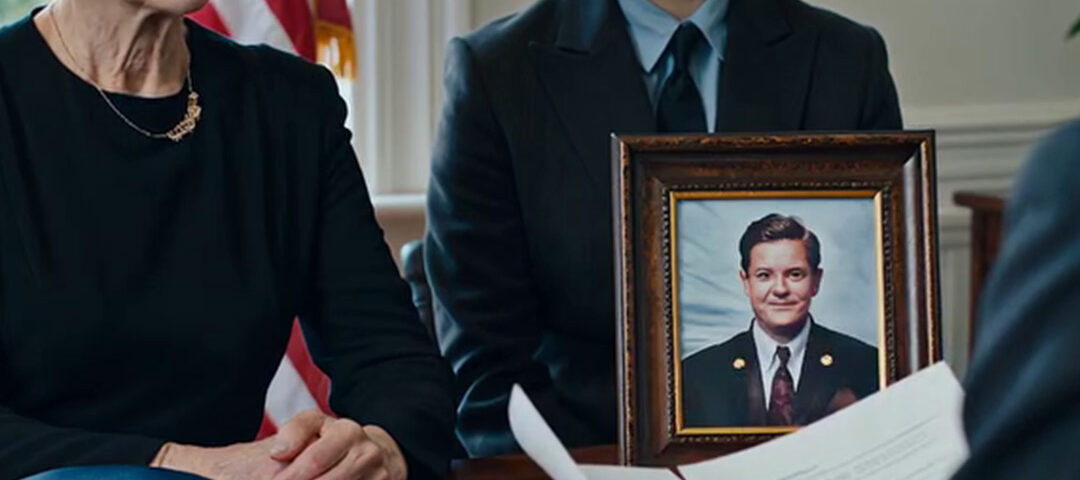
Right in the middle of my son’s funeral, with incense still thick in the air and the wreaths not yet wilted in that Dallas funeral home chapel, my daughter-in-law Brianna looked me straight in the eye and said coldly:
“Tomorrow you need to get out of this house. This isn’t your place anymore.”
In front of relatives, church friends, and neighbors from the old subdivision, I swallowed my tears, bit my lip, and chose silence. I didn’t want to turn my only son’s farewell into a humiliating scene. I only wanted Nathan to rest in peace, at least on his final day.
Yet, at the will reading afterward, Brianna smirked and sneered:
“Hope you enjoy being homeless, because you’re not getting anything.”
But the moment the lawyer opened the envelope was when karma finally caught up with her.
My name is Genevieve Hartley, I’m sixty‑eight years old, an American mother who’s known a lot of loss, but I never imagined grief would hit this hard.
My husband died more than ten years ago from lung cancer, in a hospital room in Dallas that still haunts my dreams sometimes. He left me and our only son, Nathan, to figure out life without him. After he passed, I sold our old house in the suburbs and put $40,000 toward the down payment to help Nathan and his wife, Brianna, buy the home we ended up living in together.
Nathan had said back then, standing in front of a new build in a master‑planned community just outside Dallas:
“Mom, think of it as a boost. When you want a smaller place later, I’ll help. We’ll find you a condo downtown or maybe near the lake.”
I trusted my son, and honestly, I didn’t worry much about paperwork or whose name was actually on the deed. I’d grown up in a time and place where a handshake and your child’s word still meant something.
When I moved in with them, I tried my best not to be a burden. I cooked dinner most nights in that big granite‑counter kitchen, worked in the yard under the Texas sun, and picked up my grandchild from the elementary school down the road. I cleaned, covered small household expenses whenever I could, and saw it all as my way to keep the family close and help my son live a little easier than I had.
But slowly, quietly, all of that became an excuse for Brianna to find my weaknesses. She began to treat everything I did as an intrusion, and little by little, she turned me into an outsider in the very house I had helped build.
Standing before my son’s casket that day, my heart hurt so much I thought I might collapse. Nathan died suddenly of a heart attack at forty‑six, with so many plans unfinished—road trips we’d talked about, home repairs he’d never get to, Christmases we’d never celebrate together again.
I wanted to pour all my strength into grieving my son and sending him off in peace. Instead of a family’s embrace, I got a cold sentence from my own daughter‑in‑law.
Brianna’s words cut straight through me, shattering any illusion that I could rely on this family in my old age. I remember every detail.
As guests left the funeral home, the scent of flowers—lilies, roses, those heavy funeral sprays—still filled the room. Used tissues, wet with Brianna’s stage tears, were scattered across the tables. She wiped her eyes skillfully, always turning toward an audience for maximum effect. But once no one was watching, her gaze went flat and hard, so cold it made me shiver.
I glanced at the wreaths from my late husband’s relatives, sent as gestures of support from all over Texas—Houston, Austin, San Antonio. I knew if they heard what Brianna had just said to me, they’d be furious. But I kept quiet. I bit my lip until it bled to preserve the last bit of dignity for the family. I wouldn’t turn my son’s farewell into an open display of hatred.
I went back to the house and climbed the stairs to the small guest room Nathan once told me to make my own.
“Stay as long as you like, Mom. Treat it as your home,” he had said years earlier, standing in that doorway with a gentle smile.
I sat on the edge of the bed, tears falling, yet my mind oddly clear. I opened the drawer and took out the small silver key Nathan had given me a few weeks before he died. He’d said only:
“Keep this. Don’t tell anyone. You’ll understand later.”
I’d wondered what he meant, but I didn’t ask. And now, after hearing Brianna throw me out like trash, I began to realize this key might be my only hope.
I didn’t sleep that night. Under the humming ceiling fan and the dim glow of a cheap bedside lamp from Walmart, I packed my things into four large suitcases and two cardboard boxes. Each time I folded a shirt, I remembered all the laundry I’d done for the family without a single thank you.
Every time I looked at Nathan’s bright smile in a photo, my heart broke all over again. I wrapped the remaining pictures in a dish towel and whispered:
“Son, I won’t let anyone smear what I’ve done for you or the love I have for you.”
Brianna didn’t come to see if I needed anything or offer to help me pack. Instead, at exactly 10:00 p.m., she stood in the doorway, arms crossed, tapping her manicured nails against the frame, and said with contempt:
“Don’t expect me to change my mind. By ten tomorrow morning, I want you gone. I’ve put up with you long enough.”
I looked her in the eye and said nothing. I just nodded. For the first time in my life, I saw such brazen contempt directed at me. And for the first time, I resolved never to let anyone trample my dignity again.
I left that house before dawn. The Texas sky was still dark, a faint purple line on the horizon as I rolled my suitcases silently down the driveway. I took only those four suitcases in the trunk, a box on the back seat, and Nathan’s silver key in my coat pocket.
I drove out of the quiet subdivision while everyone slept. No one knew the woman who’d cared for so many of their children—neighbors’ kids I’d babysat, teenagers I’d helped with homework—was slipping away like a homeless stranger.
I stopped at a roadside motel off the interstate, one of those budget chains with a flickering neon Vacancy sign casting a cold glow over the parking lot. The room was small, smelled of bleach and stale cigarettes, and the sheets were wrinkled, but I knew this was only temporary.
From my purse, I pulled out the envelope Nathan had bundled with the key. Inside was attorney Harold Pierce’s business card and a handwritten note in my son’s familiar scrawl:
“Mom, if I’m gone one day, go see Mr. Harold. I’ve arranged everything.”
I cried again, but not only from pain this time. They were a mother’s tears on realizing her son had seen it all coming.
Nathan knew his wife’s true nature and quietly laid out a path for me to survive.
I sat by the motel window, watching headlights streak past on the highway. A small fire lit in my chest. I wasn’t a trembling mother waiting to be thrown out anymore. I was the one holding the key, and I knew the real game had only just begun.
The next morning, I drove back to the funeral home where Brianna had arranged everything with the sort of precision she usually reserved for holiday parties. Nathan’s service was large. White flowers blanketed the room, recorded hymns played steadily from hidden speakers, and hundreds of well‑dressed guests filed through—co‑workers from his architecture firm downtown, neighbors, people from our old church.
Everyone praised how solemn and well‑organized it was, looking at Brianna with sympathy, seeing her as the young widow who’d lost her husband too soon.
I stood off to the side, feeling like a faint shadow at my own son’s farewell.
I noticed every detail: enlarged photos of Nathan on the walls from childhood in Texas Little League to college graduation at UT Austin, then the wedding to Brianna in a fancy Dallas banquet hall, then family vacations to Florida and Colorado. But not a single recent photo of Nathan with me.
The pictures I remembered in the living room—me hugging Nathan at his college graduation, the two of us at Thanksgiving with my late husband’s relatives—were gone. In their place were perfectly curated “family of three” shots: Nathan, Brianna, and my grandchild smiling for the camera like an ad for a bank.
I stood still, as if erased from my own son’s memories.
Brianna entered in a long black dress, makeup flawless, but seemingly blurred by tears. Her sobs were loud enough for everyone to hear. Whenever someone came to comfort her, she clung to them and cried harder, making people believe grief was crushing her soul.
Outsiders would think she was a devoted, faithful widow.
But I knew those tears weren’t for Nathan. I still remembered the cold look the night before, the contempt in her voice as she threw me out of the house I’d helped pay for.
A few hours apart, yet the images were impossibly different. One Brianna in public, the grieving wife, poster child for loyalty. The other Brianna behind closed doors, ice cold, unafraid to toss out a mother who’d just lost her only son.
I walked the hallway, trying to fulfill my duties as the bereaved mother. I greeted Nathan’s old friends, neighbors, and co‑workers from his architecture firm in downtown Dallas. They offered the usual comfort:
“Life is so unfair.”
“He was so young.”
“You have to stay strong.”
I nodded and managed weak smiles. But deep down, I felt like I was playing a different role—the quiet, patient mother—while the main stage belonged entirely to Brianna.
What made my throat tighten was standing in the receiving line when I heard Brianna whisper to her brother Trent behind a wall of white flowers.
Her voice was low, but I heard it clearly.
“The life insurance will cover the debt for two years. After that, I can manage. And the old woman”—a short, harsh laugh—”will get the hint. I’m not obligated to support anyone else.”
I froze. My hands shook and my heart pounded like it would burst. For a moment, I felt like a throwaway, a weight to be dumped.
In the middle of the funeral, with my son not yet buried, Brianna was calculating money and cutting me out of her life.
No more feigned sympathy, no more family unity. The mask slipped in a few sentences. I gripped my purse to hide my trembling hands. I told myself not to make a scene. Not here. Not now.
Nathan deserved a dignified farewell, not his mother and wife tearing each other apart in front of everyone.
I lifted my head, swallowed the lump in my throat, stepped out of the receiving line, and quietly found a seat off to the side.
Under the funeral home’s soft yellow lights, I watched Brianna step up and read a few remembrance lines in a trembling voice. She spoke about a wonderful husband, about future plans cut short, and a pain that would never fade. Guests teared up, patted each other’s shoulders, some even praised her strength.
I watched, feeling a strange mix of emotions: pain, anger, and an odd calm. Calm because only I understood how fake it was, and calm because, in my purse, I had Nathan’s key—proof he wasn’t as blind as people thought.
The service ended with hugs and “Take care of yourself” murmured into my ear. I caught pitying looks from some of my late husband’s relatives, as if I were just an old, lonely mother living on her daughter‑in‑law’s goodwill.
They didn’t know she’d just taken my home.
I forced a small smile, thanked them, and left quickly before the tears returned.
Leaving the room, I saw Brianna in the hallway with Trent. They stood close, whispering, occasionally glancing my way. When she noticed me, Brianna pretended to wipe her eyes and leaned on her brother’s shoulder. Trent patted her and smirked.
In that instant, I understood more clearly than ever: they saw me as a cost, an obstacle to keeping the house and the insurance money.
I stepped outside and took a deep breath. The late afternoon sky was gloomy with a March chill unusual for Texas. I pulled my coat tight, my hand still closed around the key in my pocket. The cold outside was nothing compared to the cold inside me.
But in that deepest sorrow, I felt a glimmer of light. I knew I no longer had a place in this family—not in Brianna’s eyes. But I also knew Nathan hadn’t abandoned me. He’d prepared something for me. And this key was proof.
That night, I didn’t go “home”—the house I thought would be my final place. I drove straight back to the small highway motel I’d rented. Sitting on the worn bedspread, I replayed Brianna’s whisper:
“The insurance will cover the debt. The old woman will get the hint.”
The words kept looping like a blade across my mind.
I cried, but not just from loss. It was humiliation, being despised while my son wasn’t even in the ground yet.
When the tears ran out, I sat up straight and faced the foggy mirror on the wall. I whispered to my reflection:
“Son, I won’t let them trample me like this. You wanted me strong, and I will be.”
I touched the pocket where the key rested. In that moment, I knew the counterattack would come. And when it did, I wouldn’t be the weak old mother they imagined.
Two days after the funeral, my phone rang. Brianna’s name lit up the screen. I hesitated, then answered, already certain nothing good would follow.
Sure enough, her voice oozed false sweetness.
“Genevieve, can you come by the house? I have a few of Nathan’s things… keepsakes that I think you should have.”
Hearing “keepsakes,” my chest tightened. I thought of watches Nathan wore, or old photo albums he kept in his nightstand.
Suspicious, but still a mother desperate to cling to anything of her son, I agreed—partly to hold on to something of Nathan, partly because I knew I’d be facing Brianna many more times.
When I arrived, the house looked exactly as it did after the funeral. White flowers drooped in vases, and the air was heavy with dampness and leftover candle scent. It had once been Nathan’s warm home. Now it felt like a cold stage.
Brianna opened the door, her face expressionless, no tears left.
“Come in,” she said, turning away. “Straight to the living room.”
I paused at the threshold, then followed.
The oak table in the center was cleared, except for a stack of papers and a pen. There wasn’t a single keepsake of my son in sight.
I knew instantly this wasn’t about returning mementos. It was a trap.
Brianna sat and pointed at the stack.
“This is an agreement,” she said. “If you sign, there won’t be any legal disputes over the house. I want things clear. The house is in Nathan’s name, which means it’s mine. You need to confirm you’re leaving voluntarily. No claims, no demands. That way everything stays smooth.”
I stared at the pages. The language was icy, carefully drafted, even leaving space for notarization later. I felt both pain and anger burn through me.
I knew I had sold my own house to put in $40,000 so Nathan could buy this one. Yet here I was being treated like a stranger, told to sign a promise not to cause trouble.
I looked up, my voice trembling slightly.
“Brianna, I just lost my son. I haven’t even gathered my thoughts. How can you ask me to sign this?”
She showed no sympathy.
“Because I don’t want problems. I’m young. I need to move on. I can’t keep dragging an old woman like you around my house. Nathan wouldn’t want that either.”
Her words felt like a blade twisting in my heart.
But right then, an idea flashed.
I suddenly remembered the mini voice recorder I kept in my purse, the one I used years ago to save lectures when I was still teaching part‑time at the community college. There was a gap under this oak table, just enough to hide it.
I took a deep breath and nodded.
“Fine. Hand me the pen.”
I pretended to tremble as I held it. My finger “slipped” slightly, and I intentionally made a small mistake in my signature. To anyone else, I looked panicked, but I knew this: a wrong signature would invalidate the document.
Across from me, Brianna’s face relaxed, convinced she’d won.
“See? This will make things easier for everyone,” she said, satisfied.
While she was busy putting the papers away, I smoothly bent down to pick up a dropped handkerchief and, at the same time, attached the recorder under the table. I switched it to auto, its tiny light blinking a faint green.
My heart pounded, but I kept the same weary, compliant expression.
“All done. I’ll go now,” I said, standing up, my voice unsteady.
Brianna gave a thin smile, folding her arms on the chair.
“Yes, you should go. I’m tired of supporting someone who can’t do anything. She’s a parasite and belongs on the street. I’m not a charity to carry extra weight.”
I turned away, hiding the tear rolling down my cheek, but inside me, something else flared—clarity and resolve.
The mini recorder had captured every cruel word. That was my first piece of evidence, and I would guard it like a treasure.
Leaving the house, I drew a deep breath on the porch. The late March sky was gray, the wind strong enough to make the front yard trees sway. I pulled my coat tight and hurried to the car.
When the door slammed shut, I exhaled long, like I had just escaped a predator’s den.
I drove back to the motel, heavy‑hearted, but with a new fire lit inside me. I knew I had nothing left to lose, but I had something Brianna couldn’t imagine: the truth. And I would let that truth be the rope that bound her.
That night, I sat alone in the small motel room. I took out the recorder and hit play. Brianna’s voice rang out clear in the stillness:
“She’s a parasite and belongs on the street. I’m not a charity to carry extra weight.”
I listened three times, each time feeling both hurt and more determined.
I whispered to the thin air:
“Nathan, did you hear that? Your wife’s true face is showing, but I won’t keep crying. I will stand up, and I’ll let the world know you were right to trust me.”
I put the recorder in the drawer and locked it. The first piece of evidence was in my hands, and I knew this was only the beginning of my counterattack.
I returned to the roadside motel room late at night. The red neon Vacancy sign outside flickered cold light through the thin curtain. Inside, the harsh bleach smell clung to the faded sheets, stinging my nose.
The small room was bare. A single yellow bulb hung from the ceiling, casting a dim, dreary glow.
I sat on the edge of the bed, clutching my bag to my chest. Brianna’s words from that afternoon still pounded in my head.
“She’s a parasite and belongs on the street.”
I didn’t need to replay the recording. Every syllable felt carved into my bones. Each time I remembered, it hurt and also sparked a flame.
It wasn’t just an insult. It was a cold confirmation that she considered me disposable.
I leaned back against the wall, eyes half‑closed. Semis thundered along the highway outside, mixing with the old air conditioner’s rattling hum.
In that moment, I told myself:
I lost my husband and now my son. But I will not lose my dignity too.
Nathan, my only child, saw all of this coming. Proof of that was the silver key and the note he left me. And I knew that was my only path out of Brianna’s trap.
The next morning, sunlight slipped through the thin curtain, painting blotchy streaks across the mildewed wall. I woke from a nearly sleepless night. My body was exhausted, but my mind was strangely clear.
I washed my face with icy water from a rusty tap, then made instant coffee from the vending machine in the lobby. It burned bitter in my throat, but at least it woke me up.
I sat at the wobbly wooden table and took out the envelope from Nathan. His familiar handwriting on the note made my hands shake.
“Mom, please go see Mr. Harold Pierce.”
Below were the phone number and the law office address in downtown Dallas.
I traced the letters as if touching Nathan’s hand.
I sat still the entire morning, a finger resting on the numbers. I didn’t call yet. Partly because I needed to calm down. And partly because I knew this call would open a new chapter, and once it began, there’d be no going back.
I had to be ready—not a weeping, fragile mother, but a woman prepared to fight for the right to exist.
By late afternoon, my phone rang. An unknown number.
I answered, and a steady low male voice said:
“Hello, I’m Harold Pierce, the attorney handling Nathan Hartley’s legal matters. First, please accept my condolences for your loss.”
I gripped the phone, my throat tight. After a moment, I answered:
“Thank you, Mr. Pierce. Nathan… my son mentioned you. He trusted you.”
Harold’s voice softened, a steadying anchor.
“Yes. Nathan worked with me for some time. Before he passed, he left certain documents and instructed me to contact you. We should set up a meeting to clarify issues related to an addendum to the will. Could you come to my office next Tuesday at 2 p.m.?”
I nodded, knowing he couldn’t see me.
“Yes. I’ll be there. Thank you.”
When the call ended, I set the phone down and stared ahead. Fear fluttered in my chest, but so did hope.
Nathan hadn’t abandoned me. My son had prepared something—left me a path Brianna never expected.
I looked up at the smoke‑stained ceiling and it suddenly seemed brighter, as if Nathan’s eyes were watching over me.
That night, I opened an old spiral notebook and began to write like I was speaking to my son.
“Nathan, today I got a call from Attorney Pierce. You prepared more for me than I ever imagined. I promise I won’t let you down. I’ll keep my dignity, and I’ll let the world see you were right to believe in me.”
I folded the notebook and tucked it under my pillow.
Outside, cars tore down the highway like racing heartbeats. I knew the day of reckoning was close.
Two days later, my phone rang again. This time, Brianna’s name flashed on the screen.
I hesitated, then answered.
Her voice was sugary and strained.
“Genevieve, I just want to make sure you’re not planning to make trouble for me. We’re still family, right? I think you should let things be. Staying quiet is best for everyone. Otherwise, no one will believe you anyway.”
I drew a long breath, holding back anger.
“Brianna, I don’t want drama. I only want Nathan to rest in peace. But remember this—I won’t let anyone walk over me ever again.”
A short, mocking laugh crackled through the line.
“And what do you think you can do? No one’s on your side. People will just see a bitter old woman. You should disappear like you should have from the start.”
I closed my eyes and said nothing. I let her finish and quietly hung up.
Then I opened the drawer and looked at the recorder resting inside. I knew that if needed, I had what I needed to protect myself.
In the days that followed, I lived hour by hour.
Each morning, I put on my old coat and went out for a hot coffee from the convenience store near the motel. I sat in the corner, near the dusty window, and watched sunlight move across the room.
My shaking eased, replaced by steady anticipation. I knew that by next Tuesday, everything would be different.
In those quiet moments, I thought of Brianna. She was surely scheming, surely relieved, thinking she’d forced me to sign that agreement. She didn’t know the signature was invalid. She didn’t know her cruel words were recorded. And most of all, she had no idea what Nathan had left for me.
I looked at the silver key in my hand and squeezed it gently.
A new game had begun, and this time, I wouldn’t be the passive one.
The meeting with attorney Harold Pierce came faster than I expected. All that morning, my heart thudded like a drum.
I wore a neat old navy dress and a gray cardigan. I wanted to look put together—not to show off, but to make sure Brianna saw I was still Genevieve Hartley, a woman with dignity, not the “parasite” she’d called me.
The law office was in a three‑story red‑brick building downtown, with an American flag fluttering in front and a row of parking spaces filled with sedans and pickup trucks.
When I arrived, the clock on the dashboard read 1:45 p.m.
I sat in my car a few minutes, breathing deeply to steady myself. Through the windshield, I saw a silver BMW pull in. It was easy to recognize the woman who stepped out.
Brianna, in a fitted black dress, blonde hair neatly curled, heels too high for comfort but perfect for appearance. Next to her was Trent, her brother, in a crisp suit.
I got out. Brianna’s eyes met mine and briefly flickered, then hardened. She turned away without a hello. Trent leaned in to whisper to her, and they went inside quickly.
I followed with my head high and my hands tight on my purse strap.
The receptionist, a young woman with a Texas twang, smiled and led us to a carpeted waiting room. It was still and quiet except for the ticking clock on the wall.
Brianna sat across from me, legs crossed, fists tight on her designer bag. Every time she glanced up, her eyes slashed at me like knives. I stayed calm and even gave a faint smile, which only irritated her more.
At exactly 2:00 p.m., the door opened and Harold Pierce walked in.
He was in his sixties, silver‑haired, tall and lean, with kind eyes behind silver frames. He wore a navy suit that had seen many courtrooms, and carried a leather folder under his arm.
He greeted each of us, his voice low and steady.
“Thank you all for coming. I know this is a difficult time, but Nathan left very specific wishes. I’ll read the will exactly as written.”
We entered his office, a wide room with a polished mahogany desk and shelves full of files and heavy law books. A framed photo of the Dallas skyline at dusk hung behind him.
I sat across from Brianna and Trent, so tense I could barely breathe.
Harold began reading.
The first part was what I expected. The house, the car, retirement accounts, and the life insurance—everything left to Brianna.
She nodded repeatedly, lips curving into a smug smile. Each time Harold said “assets left to the wife,” she shot me a look full of challenge, as if to say: See? You’re nothing.
I sat with my hands folded, silent. I wasn’t reacting. I knew the surprise hadn’t come yet.
Then Harold paused. His tone shifted, slower.
“However, three months before he passed, Nathan added an addendum to the will. I’ll read it word for word.”
The air changed.
Brianna stopped nodding and leaned forward, eyes locked on the papers. Trent lowered his pen and stared.
My breath grew heavy.
Harold continued:
“I, Nathan Hartley, leave the entire contents of safe deposit box K412 at First National Bank, along with all related documents and accounts inside, to my mother, Genevieve Hartley, in full and exclusive ownership.”
A dead quiet moment followed. I could hear my own heartbeat.
Brianna slammed her hand on the table.
“What? No way. Nathan never mentioned any safe deposit box.”
Mr. Harold calmly looked up.
“Ma’am, I personally witnessed him sign this addendum. He was fully competent. I have medical verification attached. Nothing improper happened here.”
Trent cut in, his voice tight.
“We demand verification. This could be forged.”
The attorney didn’t flinch.
“You’re entitled to request it. But remember, this document is lawful and already filed with the county court. If you want to contest it, the process will be lengthy, public, and the outcome uncertain. I advise respecting the decedent’s wishes.”
Brianna’s face flushed. She bit her lip. I saw her hand tremble, though she tried to stay composed.
She turned to me, eyes blazing.
“You knew about this, didn’t you? You put Nathan up to it.”
I shook my head, speaking slowly.
“No. I’m as surprised as you are. Nathan never told me about a safe deposit box. But maybe my son knew better than anyone that his mother needed protection.”
Brianna let out a short, brittle laugh.
Trent placed a hand on her shoulder, whispered something, and both fell silent.
“Mrs. Hartley,” Harold said gently, taking out a sealed envelope and handing it to me, “these are the box key and the authorization. The bank will proceed once they have the death certificate. You have full access to the contents.”
I took it, my hand heavy yet oddly warm. Inside, I told Nathan:
Son, I understand now. You never abandoned me.
Brianna’s eyes locked on the envelope like she might snatch it. I saw fear there, not just anger. Maybe she knew the box held more than money. Maybe instinct made her panic, because she understood Nathan had seen her true nature.
The meeting ended as tight as a drawn wire.
Brianna shot to her feet, her chair scraping back with a bang. She yanked Trent’s arm and stormed out. But before leaving, she turned, stared me down, and said each word:
“Don’t think you’ve won. I won’t let this go.”
The door slammed.
Only Harold and I remained.
He looked at me with a faint, kind smile.
“Mrs. Genevieve, your son was very thorough. He planned for every scenario. Trust that he wanted you protected.”
I nodded, my throat tight. Tears welled up. But this time, they weren’t from despair. They were the tears of new strength and faith.
Leaving the office, I stepped into the street. The late afternoon was chilly, wind tugging my cardigan. I held the envelope close and walked slowly. People rushed by with briefcases and coffee cups, traffic flowed, the city roared on.
Yet I felt oddly comforted.
In all this loss, I still had something precious: my son’s quiet protection.
And now it was the flame guiding me through whatever came next with Brianna.
I knew this was only the beginning. A small bomb had gone off, and the aftershocks would last. Brianna wouldn’t sit still, but I wasn’t the compliant mother anymore. I had evidence, a silver key, and most importantly, a reason to fight.
Nathan, my son, had given me that faith, and I swore I wouldn’t waste it.
Three days after the will reading, I was at First National Bank on a cold morning. The sky was slate gray, the April wind damp and gusty, whipping my hair as I crossed the downtown sidewalk.
I wore a dark brown heavy coat, the envelope and silver key from Mr. Harold in hand. My heart pounded, not from fear, but because I knew the truth Nathan had prepared for me lay beyond that steel door.
The bank lobby was busy, heels tapping on the polished marble floor, soft country music playing over hidden speakers. I went to the desk and showed my documents.
The banker, a middle‑aged woman named Peterson, looked up with kind sympathy.
“Are you Mrs. Genevieve Hartley? We were expecting you. Please, follow me.”
I nodded and followed her through several security doors.
We stopped at a thick gray vault door with an electronic lock. Ms. Peterson scanned her card and used a master key. My hands shook as I pulled the silver key from my pocket and turned the second lock.
A click.
The door swung open, and we stepped into a large, cold room under fluorescent light. Metal boxes lined the walls in neat rows.
Box K412 sat on the third rack, long and heavy. I needed both hands to pull it.
When the cold metal box settled on the small table in the private room, I hesitated. Ms. Peterson offered a small, respectful smile.
“Take as much time as you need. I’ll wait outside.”
The door closed.
It was just me and the box.
I sat, took a deep breath, and turned the key.
Inside, the first thing I saw was a brown envelope labeled in Nathan’s familiar messy handwriting: For Mom.
I opened it with shaking hands.
Nathan’s voice seemed to speak as I read:
“Mom, if you’re holding this, the thing I feared has happened. I’m sorry I can’t protect you by being there, but I’ve prepared so you’ll never be abandoned. You deserve a peaceful life. No one has the right to throw you out on the street.”
I cried. Tears fell onto the letter, blurring the lines. I quickly wiped them away. I couldn’t lose a single word he left me.
Beneath the letter was a thick stack of documents organized neatly in clear folders.
I opened them.
Bank statements. Investment agreements. Stock sheets.
It took a few seconds to understand the numbers.
Nearly $200,000, all in my name.
Nathan had taken the $40,000 I gave years ago, invested it over time—slowly, carefully, using tips from co‑workers and financial advisors—and turned it into this.
And there was more.
In the corner sat a separate file marked in red: Documentation.
I opened it and almost lost my breath.
Inside were printed emails, text messages, even screenshots.
The first line hit like a slap.
“She just needs to hurry up and die and leave the pension. I’ll find a legal way to get it.”
That text came from Brianna’s number to Trent more than a year ago.
I shook, but kept reading.
There were sections where Brianna discussed manipulating Nathan, making him believe I was a burden, pushing me to pay more, even though the mortgage came straight from his salary.
There were luxury purchase receipts matching the days she claimed she couldn’t afford groceries. Spa days in Scottsdale, a weekend in New York, designer clothes picked up in high‑end Dallas malls.
Each page twisted my stomach—pain and a rising anger.
Nathan had known. He’d seen it all and quietly gathered proof so one day I could protect myself.
At the bottom was an old family photo. Me and Nathan on his college graduation day, his face bright with pride, me clutching his arm in my Sunday best.
On the back he’d written:
“Mom, you’re the reason I got here. Never forget that.”
I pressed the photo to my chest, choked up. For years, I’d thought my son had been pulled away by his wife’s control. But deep down, Nathan had always stood with me. He’d just been preparing for the worst.
When I left the bank, the envelope and files were secure in my purse.
Ms. Peterson walked me out, her eyes gentle.
“Mrs. Hartley, I met Nathan a few times when he came in. He always mentioned you. I believe he loved you more than you know.”
I nodded, eyes wet, and whispered my thanks.
Outside, the midday light made me squint. The wind was cold, but I felt warm inside.
On the drive back to the motel, my phone rang.
Brianna.
For a second, I wanted to ignore it, but I answered.
Her voice was sickly sweet.
“Genevieve, are you busy today? I think maybe we should sit down and talk about everything. I don’t want the family to fall apart. I made roast chicken—your favorite.”
I tightened my grip on the wheel and gave a thin smile she couldn’t see.
“Sure. I’ll come.”
I knew she wasn’t inviting me out of kindness. She’d heard about the box. News traveled fast in families. Now, she wanted to pry out whatever Nathan left.
But this time, I wasn’t coming empty‑handed.
I had truth. Evidence. Money.
I had my son’s quiet protection.
That meeting would be our first face‑off since the will reading. And this time, I wouldn’t just defend. I’d test her, so she’d see I was no longer the compliant mother‑in‑law.
I drove slowly, sunlight flashing off the windshield as I merged back into the suburbs, my lips pressed tight.
Inside, I spoke to Nathan.
“Thank you, son. I found my weapon, and I’ll use it at the right moment so you can rest and the truth can see daylight.”
The lunch date with Brianna fell on a clear noon. Sunlight sliced through my windshield so bright I had to pull the visor down.
I drove my old sedan past manicured lawns and mailboxes decorated for spring, emotions roiling.
From the moment I left the bank, I knew her invitation wasn’t about family. It was just another trap. But this time, I was ready.
Brianna’s house sat on a quiet cul‑de‑sac, identical ranch‑style homes lined up neatly, flags fluttering on porches.
It was still the place I’d lived for two years, but now it felt unsettlingly foreign.
When I parked, the door opened.
Brianna stood there in a pristine white dress, smiling warmly as if nothing had ever happened.
“Genevieve, you’re here. I’m really glad,” she chirped, honey‑sweet voice, eyes cold as ice.
I nodded slightly, carrying a small gift bag. Inside was the gift I’d chosen on purpose: a framed photo of Nathan on his graduation day. I was sure Brianna had never seen it, because back then she hadn’t yet entered my son’s life.
Inside, I hesitated, taking in the living room.
The dining room gleamed. A white cloth covered the table. A neat vase of red roses sat in the center. Fine gold‑rimmed china was set like a banquet. Roast chicken, salad, white wine—everything staged perfectly like props for a performance.
“Please, sit, Mom,” Brianna said, pulling out a chair like the devoted daughter‑in‑law.
If I hadn’t known her true face, I might have believed she wanted to make peace.
I set the gift bag on the table and smiled.
“I brought you something small. Thought you should have it.”
Brianna tore the wrapping open. Seeing Nathan in his cap and gown, face glowing with pride, her expression softened only for a moment. The fake smile snapped back into place.
“Beautiful picture. Thank you, Mom,” she said, setting the frame aside.
I noticed she didn’t handle it gently, just brushed it off like a prop she didn’t need.
We sat.
Brianna poured wine and handed me a glass.
“To Nathan,” she said with staged emotion.
I clinked lightly and took a small sip. Inside, I reminded myself: Stay calm. Observe. Don’t rush.
Lunch slid by in small talk. Brianna talked about repairs the house needed and rising expenses—higher property taxes, the mortgage, the cost of raising a child.
I knew she was setting the stage.
I stayed quiet and let her weave her story, let her think the hook was sinking deeper into me.
Finally, after a few fluffy stories, Brianna set down her utensils, propped her chin on her hand, and smirked.
“Genevieve, I know you went to the bank. I’m not stupid. So… what did you find in the box?”
I looked up, playing dumb.
“Oh, nothing much. Just a few old photos, some keepsakes. Nathan was sentimental like that.”
Brianna narrowed her eyes. I saw suspicion flicker. Then she gave a thin smile.
“Really? I think there must be something more valuable. Nathan wouldn’t keep a whole safe deposit box for a few pictures.”
I shrugged, feigning indifference.
Meanwhile, my hand quietly placed a black pen on the table next to my water glass. It wasn’t a normal pen. It was the mini recorder I’d bought after the first time I captured her cruel words.
A light press at the top and the entire conversation would be saved—and I had just pressed it.
Brianna poured herself more wine, took a long sip, then lowered her voice.
“Genevieve, we’re both adults. I’ll be blunt. If you cooperate, I’ll give you a cut. We both know Nathan left something, and it’s better for everyone if we make a private deal. You’ll have money to rent a place, and I won’t have to drag this into court. Win‑win.”
I sat still, looking straight into those glossy fake eyes. For a moment, I saw the real face peeking out from under the makeup.
That offer wasn’t just greed. It was open contempt.
I nodded slightly, my voice shaky, pretending to think.
“You really believe Nathan would want me to hide what he left?”
Brianna jumped in immediately.
“Don’t bring up Nathan. He’s dead. We have to be practical. If you’re smart, you’ll work with me. If not, you’ll get nothing but a few meaningless photos.”
I bit my lip, bent to pick up my napkin, and hid a bitter smile.
In the center of the table, the pen recorder was capturing everything.
“If you cooperate, I’ll give you a cut” was the second noose tightening around Brianna’s neck.
Lunch dragged on a few more minutes under a quiet tension. Brianna kept painting a picture of mutual cooperation, and I just nodded, letting her talk. Now and then, I tossed in a clueless line, playing the out‑of‑touch mother‑in‑law who’s easy to steer.
I knew the more she thought she was winning, the more she’d reveal herself.
When the meal ended, Brianna walked me to the door, still smiling.
“I hope you’ll think this over seriously. I don’t want tension with you. Family needs to stick together.”
I gripped her hand and looked her in the eye.
“Exactly. Family needs to stick together. And don’t worry, I won’t forget what you said today.”
I turned and left, my pocket heavy with the pen recorder.
In my head, Brianna’s syrupy but calculating voice echoed:
“If you cooperate, I’ll give you a cut.”
Another piece of evidence. Another puzzle piece in the picture I was quietly assembling.
When the door closed behind me, I stepped into the sunlight, the breeze brushing my cheek. I took a deep breath.
With every step now, I didn’t feel alone. I had Nathan behind me, the truth in hand, and bit by bit, I was turning the table.
After that staged lunch, I didn’t rush to distance myself from Brianna. I knew that to corner her, I needed one more face‑to‑face, one sharp blow to knock off the mask.
I didn’t have to wait long.
Three days later, Brianna called first, trying to sound warm.
“Genevieve, could you stop by the house? I want to show you some papers Nathan left. Maybe we’ll understand each other better.”
Her voice was sugary, but I smelled the scheme.
I agreed immediately.
I had my own plan.
Brianna’s living room gleamed. Fresh flowers on the table, leather sofas polished, candles lit, as if she were staging a model home for a real estate showing.
She wore a red dress, makeup carefully done, like she was prepping for a high‑profile meeting.
I sat, set my purse beside me, folded my hands, and kept my expression calm.
“Thank you for coming,” Brianna began with a half‑smile. “I think we need transparency to avoid misunderstandings. I don’t want family tension.”
I waited a few seconds, then pulled a printed screenshot from my pocket.
I set it gently on the coffee table and slid it toward her.
Brianna’s eyes shifted from curious to stunned as she read the clear words:
“Parasite. If Nathan dies, I’m turning her room into a home gym like I promised.”
The text was sent from her phone to Trent.
Her face went pale. Her lips quivered.
“This… this isn’t mine. Someone faked it.”
I smirked slightly, my tone even.
“Really? Because I have the originals on a drive. Nathan kept timestamps, phone numbers, and images. Who do you think a court will believe? An elderly mother with no reason to fabricate, or a widow with plenty of motive and gain?”
The room grew heavy.
Brianna’s hand trembled as she reached to snatch the page, but I pulled it back.
I stared straight at her without blinking.
“And there’s more,” I said, taking out a thick clipped stack. I dropped it on the table with a thud that made her jump.
“I planned to hold this back, but maybe you need a reminder. These are your credit card statements. Fifteen thousand dollars spent the month Nathan died. High‑end spa, New York hotel, designer clothes. And here—” I flipped pages and pointed to a line. “This is the day you asked me to help cook for the funeral reception. The same day your card ran nearly three grand for a dress. And this is what you call financial hardship?”
Brianna froze. Her eyes went wide, lips shaking, but no words came out.
I leaned back, my voice lower but sharp.
“Nathan saw it all. My son didn’t say much, but he quietly kept records. Every bill, every text, every snide remark you made behind my back. And now it’s all here.”
Brianna clutched her chest, her face ashen like her mask had been ripped off.
She stammered:
“Genevieve… I… I was just… I was overwhelmed. I needed to blow off steam.”
I let out a dry laugh.
“Blow off steam with Nathan’s money? With lies? By turning a widowed mother into a joke among your friends?”
I didn’t raise my voice, but each word hit the table like a hammer, driving her further down.
Her fingers dug into her palms. I knew she was spiraling, and that’s exactly what I wanted.
I leaned in and lowered my voice.
“The most interesting part is—I still haven’t shown the heaviest evidence. What you’ve seen is only the surface. Nathan left plenty more, enough to shred your reputation if I choose. But I’m not rushing. I want you to sit with it and understand the ledge you’re standing on.”
The silence was so complete, I could hear the clock ticking on the wall.
Brianna looked up, fear and hate tangled in her eyes.
But I wasn’t shaking anymore. I’d come too far to back down.
I stood, straightened my coat, and spoke calmly.
“Thanks for lunch the other day. And thanks for proving Nathan was right to believe his mother needed to prepare.
Remember this, Brianna: I haven’t made any of this public, but if you keep thinking about tossing me out, these papers will speak for me.”
I gathered everything into my bag and walked to the door.
Before closing it, I turned back.
“Oh, and remember—everything you said yesterday and today didn’t disappear. It’s in my hands. You decide how you want to be remembered.”
The door shut, leaving Brianna slumped in her fancy living room, face ashen.
Outside, I drew in the cool air.
The documents in my purse felt heavy, like living proof.
I knew the fight wasn’t over, but with each step, I was flipping the script.
Most of all, for the first time in years, I didn’t feel cornered.
A week later, an invitation from Brianna arrived in my motel mailbox.
She called it “a gathering to honor Nathan”—just a small get‑together for family and close friends.
I held the card, feeling something off.
The same woman who coldly kicked her mother‑in‑law out right after the funeral now wanted a memorial party.
I knew immediately this wasn’t about Nathan. It was a stage for Brianna to keep playing the perfect widow.
I decided to go, but this time, not empty‑handed.
In my purse, the documents and the pen recorder—quiet weapons Nathan left me—were ready.
I knew the stage Brianna built would be the perfect place to strip off her mask.
That evening, I arrived early.
The house glowed with lights. White flowers lined the walkway. Scented candles filled the living room with vanilla and sandalwood.
On the long lace‑covered table were framed photos of Nathan, almost all chosen by Brianna. Wedding shots, vacations, the two of them smiling on beaches and in ski resorts.
I noticed not a single photo of Nathan with me.
Guests trickled in—relatives from out of town, co‑workers, neighbors wearing somber colors. I sat quietly in a corner, watching.
Brianna wore a long black dress, hair in a sleek bun, makeup immaculate. She floated around the room with a wine glass, chatting up everyone.
Her eyes watered, her voice trembled.
“Life is so empty without Nathan. He was my whole world.”
Family members nodded. Some wiped tears. Others patted her shoulder.
I stayed silent—an outsider in the room.
But inside, my heartbeat slowed, waiting for the right moment.
Midway through, Brianna stood in the center and raised her glass. Her voice shook like she was holding back sobs.
“Thank you all for being here to remember my husband. Nathan was a wonderful man, and I only hope to live in a way worthy of his love.”
Applause filled the room. A few relatives whispered praise about her strength.
I shivered, but I knew that in seconds, that admiration would turn to shock.
I stood and spoke evenly.
“Excuse me. I have something to share.”
All eyes swung to me.
Brianna stiffened, then quickly smiled, her tone generous.
“Oh, Genevieve, of course you should say a few words. Everyone knows how much you loved Nathan.”
I walked slowly to the center, my hand on the pen recorder already switched on in my pocket.
I scanned the room, then met Brianna’s eyes. She gave a small nod to proceed.
I set the pen on the table.
A soft click sounded as I hit play.
Brianna’s voice filled the room—clear, cold, nothing like the weeping woman standing in front of them.
“She’s just an extra expense. Once the funeral’s done, I’m turning her room into a home gym. Don’t worry, Nathan’s too soft. He’ll never push back.”
The room went dead silent.
Relatives and friends froze. A few mouths fell open. Others stared at Brianna in disbelief.
I heard the whispers ripple:
“My God, did she really say that during the funeral?”
“While Genevieve was grieving her son?”
“Heartless.”
I stood still, saying nothing more. Their eyes said it all for me.
Brianna’s face flushed. Her lips trembled. She forced a laugh, hands up.
“This… this must be edited. Someone’s trying to set me up. You have to believe me. I would never—”
But the family’s eyes delivered the blow.
An older aunt stepped forward, voice firm.
“Brianna, that’s your voice. No one can fake that little bitter laugh. We heard it plain as day.”
A cousin shook his head and sighed.
“I always thought you were cold, but this… Nathan deserved better.”
Brianna looked around, trying to smile, but it shattered. She reached for her glass, but her hand shook so hard wine sloshed onto the table.
I didn’t add any more harsh words. I just looked at her for a long time, then turned to the family.
“I don’t need to prove much. I just want everyone to know Nathan was never blind. He saw the truth, and he protected his mother in his own way. Today, I let Brianna’s own voice expose her.”
The whole room went silent. People no longer looked at Brianna the same way. The praise was gone, replaced by cold, scrutinizing stares.
Brianna tried to stand tall, but I clearly saw her shoulders shaking, her face drained of color. She was lost inside her own performance before an audience that no longer believed.
I went back to my seat and set my hand on the purse, heavy with documents. I knew I still had stronger blows to land.
But right now, one strike was enough to make Brianna’s perfect mask fall off in front of the whole family.
That night, as I left the house, I heard the whispers behind me.
“Unbelievable. Someone like that had the nerve to fake crying.”
“Now I understand why Nathan changed the will.”
I walked into the night wind, feeling lighter. For the first time in months, the pain of losing my son wasn’t smothered by humiliation.
Instead, I felt a quiet strength—the strength Nathan left me—so I could keep going and let the truth finally be seen.
After that evening, the whole family atmosphere changed.
Relatives and friends all looked at Brianna with caution and doubt. I knew her mask had fallen, but someone used to living by deceit wouldn’t quit easily.
And sure enough, two days later, on a drizzly evening, Brianna showed up at the door of the motel where I was staying.
She wore a long coat, hair wet and clinging to her cheeks, still trying to look polished.
When I opened the door, she stepped in immediately and sat down like she owned the place. Her eyes were tired, but her voice was honey sweet.
“Genevieve, we need to talk. I don’t want a war anymore. I know you have evidence. I won’t deny it. But we all want peace. I’m proposing a deal.”
I looked at her without answering, sat on the bed, and waited to see how the show would go on.
Brianna leaned toward me and lowered her voice.
“Let’s split what’s in the box. Half and half. I don’t need all of it. You keep your share, I keep mine. In return, you stay quiet. No more evidence. No making a scene with the family. Everything goes back to normal. That’s the only way we both win.”
Hearing that, I wanted to laugh.
Normal? After everything she’d done?
But I didn’t show it. I just nodded slightly, my voice trembling on purpose.
“Maybe you’re right. I’m exhausted. But how do I know you’ll keep your word?”
Right then, I took a neat stack of papers from the drawer.
On top, it said: Investment Cooperation Agreement.
I placed it on the small motel table and slid it toward Brianna.
“I don’t need much,” I said softly. “We just sign this. Harold drafted it so both sides commit. That way, no one can claim they were forced later.”
Brianna frowned and glanced over the papers. I knew she was suspicious, but greed won.
Her eyes skimmed lines and relaxed when she saw vague phrases:
“Investment. Cooperation. Commitment to shared responsibility. No claims.”
She looked up with a bitter little smile.
“You’re not that naive after all. Fine, I’ll sign. I want this over.”
Her hand shook holding the pen, but she signed in the end—a straight, bold signature.
And the moment the ink dried, I knew the game was over.
Because in that “cooperation agreement,” every line was a trap. Harold had carefully woven in legal clauses.
Brianna admitted spending $15,000 from the life insurance on personal use, acknowledged her insults and humiliation toward me, and agreed to withdraw any claims against Nathan’s assets.
In other words, it was a disguised confession, and Brianna had just signed it herself.
I stayed quiet for a few seconds, watching her fold the papers like she had just bought a ticket to safety.
Then I said softly:
“You know, Nathan always thought ahead. He planned for everything. And maybe today, you proved he wasn’t wrong.”
Brianna froze, eyes wide, as she realized she’d been cornered completely.
But there was nothing she could do. It was all on paper, in her own handwriting.
She jumped up, face white, voice cracking.
“You… you tricked me.”
I answered calmly:
“No, Brianna. Your greed and contempt tricked you. I only handed you a pen. The rest, you chose.”
Rain tapped the motel window.
Brianna stood there a moment, then suddenly turned and left. The door slammed, leaving an oddly peaceful quiet behind.
I stayed seated, running my hand over the freshly signed papers. Tears fell, but not from helplessness.
They were the tears of a mother who had suffered loss and humiliation and finally found her dignity again.
That night, I opened the window and let the night air in. I looked up at the murky Texas sky and whispered:
“Nathan, you did it. You’re still protecting me even when you’re not here. And I promise, from now on, I’ll live without bowing my head.”
I knew it wasn’t entirely over with Brianna, but with her written confession and the evidence I held, she couldn’t touch me anymore.
The game was finished.
And for the first time, I was the one who had won the match.
After the night Brianna put her name on that fateful paper, I knew something in me had finally closed.
But with someone who lives by schemes, I could never be careless. I needed a new start. A place where each morning I woke up wasn’t haunted by my former daughter‑in‑law’s cold stare.
I started looking for a home.
Nothing fancy, nothing flashy. Just a small apartment with enough light and quiet so my footsteps wouldn’t be treated like noise.
In the end, I found it—a third‑floor unit in a modest building on the edge of town, with windows facing the community park. Wide glass panes brought sunlight into the living room, where I set an old moss‑green armchair I’d bought secondhand from a thrift store.
From there, every morning, I could watch other seniors walking their dogs, kids playing on the swings, teenagers tossing a football, and I could feel like I still belonged to a community.
On moving day, I stood in the empty apartment holding a small box of Nathan’s keepsakes.
I placed his graduation photo on the wooden shelf beside a little lavender plant I’d grabbed from the shop downstairs.
That alone warmed the room.
I whispered:
“Nathan, see? I have a new home. It’s not big, but it’s full of light. And this time, no one can take it from me.”
In the first week, I joined the seniors’ women’s group at the church near the park. They met regularly in the fellowship hall—sometimes to read books, sometimes just to chat and knit while a coffee urn burbled in the corner.
I listened to their stories, and one day I shared mine.
I didn’t reveal every detail, but enough for them to understand.
“Don’t keep your eyes shut when you’re humiliated,” I told them. “And don’t believe patience will change someone cruel.”
My story, though painful, was a warning to women like me.
Don’t let yourself be erased in the name of family.
Harold, the loyal attorney Nathan trusted, visited one afternoon. He brought the original paper Brianna signed.
Setting it on my small kitchen table, he looked at me and said:
“If she bothers you again, we have a weapon. This document is strong enough for any court to shut Brianna down. You don’t need to worry anymore.”
I smiled for the first time in a long while, feeling a weight lift off my shoulders.
For weeks, I’d been bracing for a nasty call or another threat.
But my phone stayed quiet.
No calls, no messages.
She vanished into the shadows where people who’ve lost their credibility hide behind silence.
Still, I stayed careful.
One morning, I sat at my small desk, opened my old laptop, and plugged in a new USB drive.
I transferred every copy of the evidence, recordings, screenshots of messages, and the credit card statements Harold had helped pull.
I sealed the USB in a thick envelope and mailed it to a backup law office—Harold’s close friend in Boston.
If anything happened to me, everything would be released automatically.
That was my justice insurance.
The final trap, so Brianna could never crawl back up.
That evening, I sat alone on my balcony, watching the streetlights cast gold over the trees. No more fake sobbing, no more whispered contempt, just a cool breeze, the smell of grass from the park, and kids’ bright laughter drifting up from below.
I took a long breath, closed my eyes, and let my heart rest after the storms.
Nathan was gone, but what he left me wasn’t just money or legal papers.
It was faith that justice—slow as it may be—can still show up.
And as long as we stand our ground and hold on to our dignity, no one can turn us into trash.
I poured a hot cup of tea and raised it like touching an invisible promise.
From now on, I’d live for myself. Not as someone else’s shadow. Not as a burden in anyone’s eyes.
I’d live as a free woman, with a small sunlit home and the belief that justice had been sown.
Some mornings, I wake in my little apartment and open the window to let the sun flood the room. On the table, Nathan’s framed photo sits straight, his gentle smile reminding me:
“Mom, you’re never alone.”
I pour coffee, listen to sparrows chirp outside, and realize that finally, I can breathe like a normal person again.
Justice doesn’t always come from courtrooms or loud verdicts. Sometimes it happens quietly, through evidence, signatures, and the persistence of a heart that refuses to break.
I didn’t need to publicly destroy Brianna.
I just needed her to fall into her own trap.
And she did.
Sometimes I wonder, if Nathan were still here, what would he think?
Maybe he’d hug me tight and say:
“Mom, you’re stronger than I thought.”
I know the pain of losing him will never fully fade. But within that pain, I found strength. I stood up. I refused to let anyone define my worth or turn me into a shadow with their insults.
Sometimes I stroll in the park and chat with a few ladies from the group. They listen wide‑eyed, then nod.
“You did what many of us wouldn’t dare,” one of them told me.
I don’t see myself as a hero. I’m a mother, a widow, an older woman who knows silence can be more dangerous than confrontation.
Every night before bed, I still check the backup USB, thinking of the neatly stored files. I don’t need to use them, but knowing they exist lets me sleep.
It’s not just justice insurance for me. It’s a reminder that truth is stronger than lies, if we hold it steady.
Writing down this story, I’m not seeking pity. I want to leave a message for anyone who’s felt belittled or trampled.
Don’t ever think age or loneliness makes you weak. Don’t be afraid to stand up. Sometimes a single piece of paper, a pen, or a tiny recorder is enough to turn your life around.
I lost my son, but I didn’t lose myself.
That’s why I can sit here and tell you this with calm conviction.
Justice always finds its way.
Before I end, I want to thank everyone who stayed with me to the very end of this story. Your presence, wherever you are—whether it’s a small town in Texas, a big city like New York or Los Angeles, or somewhere far across the ocean—makes me feel less alone.
Where are you listening from? Please share your city or country in the comments. I’d love to know how far my story has traveled.
If this touched your heart, please like the video, share it with someone you care about, and don’t forget to subscribe so we can keep walking together through the next stories.
Every comment, every view, every bit of empathy you’ve given is the greatest gift to me at my age.
Wherever you are, may each of us find light, find justice, and most of all, find peace in our hearts.