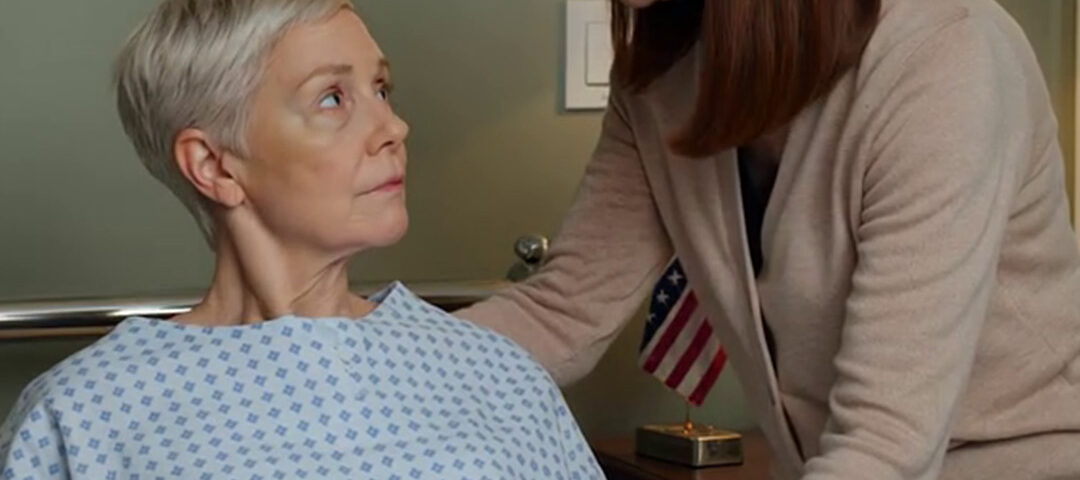
“I’m so glad they’re finally gone,” she said. “And I’m even more glad you’re here.”
My name is Lorine. I’m sixty-four years old, I live alone in a small apartment in Riverside, California, and until this week I believed three things were always true: that my son was distant but decent, that his wife was dramatic but devoted, and that some part of America still rewarded people who quietly did the right thing.
I was wrong on all three counts.
Grant had always kept me a step away from his real life. Even as a boy growing up in our little tract house off Magnolia Avenue, he’d been the kid who closed his bedroom door, turned his music up, and rolled his eyes when I asked how his day went. I told myself he was just private. Some kids aren’t naturally affectionate, I’d say to my heart when it complained too loudly.
Then he married Emily three years ago, and distance turned into something colder. Their wedding was held at a vineyard in Temecula—string lights, live band, rented joy. I watched him spin his new bride under the California stars and told myself he was building a better life, not just a fancier one that no longer had room for me.
Last Tuesday morning, my phone rang while I was microwaving oatmeal in my small kitchen that overlooks the parking lot. His name lit up the screen with that clinical gray font iPhones use.
“Mom,” he said, skipping hello like it was a luxury he couldn’t afford, “Emily and I need to take an emergency trip to Seattle. Her mother’s had another episode. We can’t leave her alone.”
Maryanne—the mother-in-law I’d only met twice at big holiday dinners—had been in what the doctors called a vegetative state for six months. A pileup on I-5 near Portland had given her severe brain trauma, and ever since, she’d been laid out in a hospital bed they’d installed in Grant’s guest room. Machines, monitors, tubes. The whole tragic picture.
“Of course, sweetheart,” I heard myself say, even as something in his tone made my stomach knot. “How long will you be gone?”
“Four days, maybe five.”
There was a pause. I pictured him in his modern home office, standing in front of his big monitor that always seemed to glow with spreadsheets and emails whenever I visited.
“The nurse will come by twice a day,” he went on. “Nine a.m. and six p.m. She’ll check vitals, adjust medications. You just need to be there in case of emergencies. It’s all set up. We can’t get anybody else on such short notice.”
I should have asked why they couldn’t hire a full-time live-in caregiver if Maryanne needed constant supervision. I should have asked why I, a sixty-four-year-old woman with arthritis in her right knee and a monthly bus pass, was their only option in a house full of money.
Instead, I heard myself say, a little too eagerly, “I’ll do it. Just text me the address again.”
Because my son finally needed me for something. And when you’ve spent years standing politely on the edges of your child’s life, you grab any invitation, even if it comes wrapped in sirens your heart pretends not to hear.
On Thursday morning, I pulled up in front of their house in Riverside with one small suitcase and a grocery bag full of snacks. The gated community they’d chosen looked like a movie set version of suburbia—perfect lawns, palm trees trimmed within an inch of their lives, American flags hanging from front porches, and SUVs shining in driveways like trophies.
Their two-story house had white columns, a navy-blue front door, and a spotless flag mounted near the garage that fluttered lazily in the soft California breeze. It was all so tasteful and so calculated that my chest ached just looking at it.
Emily opened the front door before I could knock. She was still in yoga pants and a cream-colored sweater, her caramel hair twisted into a messy bun that probably took a stylist forty-five minutes to make look “effortless.”
“Lorine, thank you so much for doing this,” she said, pulling me into a hug that felt more like she was motioning me into position. “We couldn’t have left without knowing someone we trust was here with Mother.”
Her gratitude felt like it had been rehearsed in the bathroom mirror.
“She’s been so peaceful lately,” Emily added, lowering her voice as if the house itself might hear. “The doctors say she’s stable, but we could never forgive ourselves if something happened while we were gone.”
“Of course,” I murmured, stepping into the cool, scented air of the foyer. The place smelled like expensive candles and a cleaning service. Marble floors, neutral walls, framed professional family photos in matching black frames—Grant in a dark suit, Emily in a perfectly fitted dress, both of them smiling like they’d just signed a contract with happiness.
Grant appeared at the top of the staircase, checking his watch.
“Mom,” he said, coming down two steps at a time. “We’ve got about three hours before we have to head to LAX. The nurse, Mrs. Patterson, will be here at nine and six, like I told you. All of Maryanne’s medications are labeled in the kitchen cabinet above the coffee maker. Wi-Fi password is still on the fridge.”
He kissed my cheek quickly, like it was a box on his checklist.
“Let me show you her room,” Emily said, already leading the way down the hall.
The guest room had been transformed into something between a hospital ward and a carefully curated Instagram post. A hospital bed sat against the wall, rails up, the linens crisp and snow-white. Machines beeped softly, casting green and blue glows on the room. The blinds were half open, letting in a thin slice of California sun that made dust motes drift lazily in the air.
Maryanne lay perfectly still on the bed. Her silver hair had been brushed and arranged neatly on the pillow. A faint pink tint colored her lips, as if someone had dabbed on lipstick more for the visitors than for her. Her eyes were closed, lashes resting on pale cheeks.
If I hadn’t known what had happened to her, I might have thought she was simply a woman sleeping late on a weekday morning.
“She hasn’t shown any signs of consciousness in months,” Emily whispered, standing beside the bed, voice soft and carefully broken. “Sometimes I talk to her, just in case she can hear me—but the doctors say there’s probably no awareness left.”
Her hand rested on the bed rail, fingers curled just so, like she’d practiced that posture.
Something in the way her eyes lingered on Maryanne’s face didn’t match her tone. There was no warmth there. No grief. Just a cool assessment, like she was checking on a long-term project.
I pushed that thought away.
Grant poked his head into the room a few minutes later.
“We should go,” he said. “Traffic to LAX is already bad. We’ll call tonight to check in. Emergency numbers are on the fridge, like I said.”
He gave me a quick nod, already half turned away.
Then they were rolling their designer luggage across the marble floor, the front door closing with a soft, final click that seemed to echo down the hallway.
The house settled into a heavy quiet, broken only by the steady beep of the heart monitor and the hum of the air conditioner. Outside, I could hear a leaf blower somewhere down the street and a dog barking behind a fence. Life going on, unaware that inside this picture-perfect California home, something was terribly wrong.
I walked back to Maryanne’s bedside, forcing myself to breathe normally.
“Hi,” I said softly, smoothing the blanket over her. “It’s Lorine. I’ll be here the next few days.”
Her skin was cool under my fingertips. I brushed a strand of hair from her forehead, the way I used to do with Grant when he was a little boy burning with fever on the faded couch in our old living room.
That’s when it happened.
The moment my fingers touched her forehead, her eyes flew open.
I stumbled back, hand flying to my chest. The beep of the heart monitor sped up, echoing my own racing pulse. Her eyes—clear, blue, and absolutely present—locked onto mine with an intensity that made the air in the room feel too thin.
“Thank God,” she whispered, her voice rough but unmistakably awake. “I was beginning to think they’d never leave.”
For a few seconds, everything froze—the machines, the dust motes, even the sunlight. The whole world seemed to narrow down to those blue eyes and that impossible sentence.
“Maryanne,” I gasped. “You… you’re awake.”
She tried to push herself up, winced, and settled for shifting her shoulders.
“Help me,” she said. “Please. I’ve been lying still so long my muscles feel like stone.”
My hands were shaking as I raised the head of the bed and adjusted her pillows. Every sensible thought in my mind was screaming that this was impossible. The doctors said vegetative state. The words “no awareness” echoed in my head, each one suddenly suspect.
“But… they said…” I stammered. “The doctors… Grant and Emily… they told me you were in a coma. That you don’t respond. That you—”
Maryanne let out a bitter, broken sound that might once have been a laugh.
“Oh, my dear,” she said. “There’s so much you don’t know.”
She grabbed my wrist with more strength than I expected, fingers digging into my skin.
“They think I’m in a coma because that’s what they want everyone to believe,” she said. “It’s what they need everyone to believe.”
I sank into the chair beside her bed, my knees suddenly weak.
“I don’t understand,” I whispered.
Maryanne’s eyes filled with tears, but there was steel in her voice.
“They’re drugging me, Lorine,” she said. “Every day. Sometimes twice a day. Emily gives me injections that knock me out. She tells everyone it’s medication from my doctor, but it’s not. At least not all of it.”
My vision tunneled for a second.
“That… that’s impossible,” I said. “Why would they do that? Why would your own daughter—”
“Because,” Maryanne cut in, her voice dropping to a rasp, “they’re stealing everything I own. Every dollar. Every asset. Every bit of security I spent my life building. And they need me unconscious so I can’t stop them.”
The words landed like punches. I stared at her, trying to wrap my mind around what she was saying.
“What do you mean, ‘stealing everything’?” I asked.
“My accounts,” she said, breathing carefully. “My investments. My house in Portland. They’ve been moving money, changing titles, using paperwork I never agreed to. They’re pretending I gave them legal control while I was supposedly too far gone to decide for myself.”
She swallowed.
“As of the last time I heard them bragging, they’ve moved over two hundred thousand dollars out of my retirement savings. And that was weeks ago.”
“Two hundred thousand,” I repeated, my voice thin. Images flashed through my mind: Grant’s new car, the remodel of their kitchen, Emily’s endless parade of handbags that cost more than my monthly rent. “But… Grant wouldn’t… he couldn’t…”
Maryanne looked at me with a kind of sad understanding.
“Your son,” she said gently, “is not the boy you remember falling asleep in front of Saturday morning cartoons. He hasn’t been that boy for a very long time. And Emily—” her jaw tightened “—Emily is something far worse than you even suspect.”
My stomach rolled.
“How do you know all this if they’re keeping you unconscious?” I asked.
“Because I’m not unconscious all the time,” she said. “Sometimes the drugs don’t hit as hard. Sometimes my body fights back. I drift up just enough to hear them talking, to feel them moving around me, to understand what they’re doing. They think I’m completely gone, so they talk freely. They don’t lower their voices. They don’t hide their plans.”
Her grip on my wrist tightened.
“Last week,” she said, “I heard Emily on the phone with someone, laughing about how easy it’s been to fool everyone. She said the hardest part was pretending to cry at the hospital.”
The room felt like it tilted. The framed family photo on the dresser—Grant and Emily smiling on a pier in San Diego with the ocean behind them—seemed suddenly obscene.
“This can’t be real,” I whispered. “This can’t be happening.”
“Oh, it’s happening,” Maryanne said. “And it gets worse.”
A chill ran through me.
“How could it possibly be worse?” I asked.
“They’re not planning on keeping this up forever,” Maryanne said quietly. “I heard them arguing about timing. About when to let me ‘slip away naturally.’”
The phrase hung in the air between us like smoke.
“They’re going to kill you,” I said, the words tasting foreign and wrong in my mouth.
She nodded.
“Yes,” she answered simply. “And they’re going to make it look like nature did the job for them.”
She hesitated, then added, “And I’m afraid you might be part of the plan now, too.”
The silence that followed was so thick it felt like a weight on my chest.
“What do you mean?” I asked. “How am I part of this?”
“You’re here as their angel,” Maryanne said. “The devoted grandmother, sacrificing her time to care for her son’s poor mother-in-law. When I ‘go,’ you’ll be the one everyone listens to. You’ll be the one who swears on her life that I never woke up, never spoke, never showed a single sign of awareness.”
I could feel the blood drain from my face.
“They’re using me,” I said slowly. “They’re using both of us.”
Maryanne’s gaze softened.
“Yes,” she said. “But you still have a chance to get out. I don’t.”
I stood up and paced to the window. Outside, the world looked offensively ordinary—a kid zipped down the sidewalk on a scooter, a neighbor sprayed down his driveway with a hose, a little plastic mail flag stood propped on a curbside box. The Stars and Stripes by the garage fluttered politely in the breeze.
How could a street that looked like a real estate brochure be hiding something this ugly?
“Tell me everything,” I said finally, turning back to her. “From the beginning.”
Maryanne drew in a careful breath, the machines around her continuing their calm, indifferent beeping.
“The accident was real,” she said. “I was unconscious in the hospital for about a week. When I started to wake up, the doctors were cautiously optimistic. They talked about rehab, physical therapy. There was a path. It was going to be long, but it was there.”
She swallowed.
“Then Emily started telling them I was having episodes,” she continued. “That I was lashing out, confused, aggressive. She said I didn’t recognize her. She came to one appointment with scratches on her arms, claiming I’d attacked her.”
“Did you?” I asked quietly.
“No,” Maryanne said, anger flaring briefly in her eyes. “I barely had the strength to hold a cup. But she knew what words to use. She’d worked in elder care. She knew what kind of story would make busy doctors suggest stronger medications and home care instead of rehab.”
“She used to work in elder care?” I asked, remembering something Emily once mentioned about a job at a rehab facility.
“Yes,” Maryanne said. “At a rehabilitation center for older patients outside Portland. She was fired five years ago. There were rumors about her and medication discrepancies. Nothing was proven, nothing documented in a way that stuck—but the smoke was there.”
A memory flickered in my mind—Emily at last year’s Thanksgiving table, laughing as she said, “Oh, I used to work with old folks. They’ll believe anything if you say it gently enough.” We’d all laughed then. Now the sentence felt like it had teeth.
“Emily was at every consultation,” Maryanne went on. “She brought Grant to one of them. He talked about how exhausted she was, how worried he was about her mental health from the stress of caring for me. He suggested maybe medication could help ‘calm’ me so she could provide better care.”
“The doctors listened,” Maryanne said. “They saw a weeping daughter and a concerned son-in-law begging for help. They saw my age, my injury, my limited ability to contradict what was being said. They meant well. But their good intentions paved a road straight into hell.”
“They started me on mild sedatives,” she continued. “Emily came home with the bottles cradled like a victory. At first, the doses matched what the doctors prescribed. Then she started complaining at follow-up appointments that I was getting worse, more agitated. Each visit, the dosages increased.”
Maryanne’s voice grew colder.
“What the doctors didn’t know,” she said, “was that Emily wasn’t just using what they gave her. She was adding her own cocktail. She has connections. Access. She knows how to get her hands on the kind of medication nobody wants to ask too many questions about.”
I thought of the organized spice racks in Emily’s kitchen, the way she labeled everything, controlled everything. Of course she’d micromanage the medicine cabinet the same way.
“Grant knows about this?” I asked, clinging to the faint hope that at least my son was ignorant, if nothing else.
Maryanne held my gaze for a long, painful moment.
“He’s not just aware,” she said. “He’s proud of it. He came up with the idea of taking my money while I was ‘out.’ He’s the one who dove into paperwork, who figured out what forms they needed, what story they had to tell, how to present it so institutions would sign off on handing them control.”
She hesitated.
“I heard him say once that he finally found a way to turn his ‘talent for bending rules’ into something useful,” she added. “Those were his exact words.”
My mind flashed back to the year Grant was sixteen and got suspended for selling fake IDs at his high school. I’d sat in that principal’s office, shrinking in my folding chair while the principal talked about “serious concerns.” Afterward, I’d told myself it was just a phase, teenage stupidity, nothing more.
He didn’t outgrow it, I realized. He just got better at hiding it.
“How long has this been going on?” I asked.
“The heavier drugging started about three months ago,” Maryanne said. “Before that, it was enough for her to keep me fuzzy, manageable. But once they decided to turn the money pipeline into a flood, they needed me truly gone. Some days, I’d be nearly eighteen hours in the dark. I’d wake up for a handful of minutes, then sink again.”
She took a breath.
“As for the money, that started as soon as they got me home from the hospital,” she said. “Small transfers at first. A few thousand here, a few thousand there. Testing the water, seeing how much they could move without tripping any alarms. But greed is a hungry animal. Once they realized how easy it was, they stopped being cautious.”
“How much?” I asked. “How much have they taken?”
“Last month,” Maryanne said quietly, “I heard Emily laughing on the phone. She said they’d already shifted nearly four hundred thousand dollars from my accounts. They were talking about my house in Portland like it was a pawn they’d already moved off the board.”
The number made me dizzy. Four hundred thousand. That wasn’t just money. That was a lifetime of work, of early mornings and late nights and careful choices.
“The nurse that comes in twice a day,” I said slowly. “Mrs. Patterson. Is she part of this?”
Maryanne shook her head.
“No,” she said. “She’s one of the good ones. Emily times the worst of the drugs around her visits. An hour before Mrs. Patterson arrives, Emily gives me a stronger dose, or adjusts the IV, or slips something into the line. By the time the nurse walks in, I’m limp and unresponsive, and everything looks exactly like the file says I should.”
“What about all these machines?” I asked, glancing at the monitor and the oxygen line. “Are they fake?”
“They’re real,” Maryanne said. “They just tell a very limited story. They track my heart rate, my oxygen levels, my blood pressure. As long as I’m not crashing right in front of someone, those numbers look like a predictable pattern for a woman in my supposed condition. No one has reason to question anything.”
I swallowed hard.
“You said they’re planning to let you ‘slip away,’” I said. “What did you hear exactly?”
Maryanne’s gaze dropped to her hands.
“About two weeks ago,” she said, “they thought I was fully under. Emily had just adjusted something in my IV, and I was drifting. But then I heard her and Grant in the doorway. They were talking quietly, but they were close. They thought I couldn’t hear a word.”
She pressed her lips together for a moment, then continued.
“She told him she’d found information online—posts and discussions—about how certain combinations of medication could cause breathing to slow, organs to fail, without leaving anything obvious behind. She said they’d need to increase my doses over about ten days. Long enough to look ‘natural,’ not so long that it would draw extra attention.”
My stomach twisted.
“They’re going to murder you,” I said again, more certain this time.
“Yes,” Maryanne said. “And they’re going to tell the world I just lost a long, noble fight.”
She looked up at me.
“They’ve already booked a cruise,” she added. “Mediterranean. A month in a luxury suite. About fifteen thousand dollars. Paid for out of my accounts. I heard them talking about it like it was a reward. When this is all over, when Mother’s at peace, we deserve to ‘celebrate life.’”
My chest burned.
“What do we do?” I asked. “We have to do something.”
Maryanne looked straight at me, and for the first time I saw not a patient, not a victim, but a strategist.
“We don’t run,” she said. “We don’t confront them without a plan. We don’t call the police and hope they believe a woman everyone thinks is unconscious. We go bigger. Smarter. We make sure that when this falls apart, it doesn’t just fall—it explodes in their faces.”
Her voice dropped.
“And for that,” she said, “I need your help.”
“Tell me what to do,” I said.
Over the next hours, the story she laid out made my blood run cold and my heart hammer in a way I hadn’t felt since I was a young mother facing bills I didn’t know how to pay.
“The first time I knew something was truly wrong,” Maryanne said, “was about four months ago. I’d been home from the hospital for a while. Physical therapy was helping. The fog was starting to lift. I remember the way the afternoon light came through the blinds, the smell of the jasmine Emily keeps in the yard. For a brief moment, I felt like myself again.”
She stared at the ceiling.
“That’s when Emily came in with tears in her eyes, telling a doctor over speakerphone that I’d tried to hurt her,” Maryanne continued. “She painted a picture of me as a confused, angry old woman. She talked about being scared in her own home.”
Her jaw clenched.
“I was lying there, listening, unable to move,” she said. “And I realized that every word she spoke was building a version of me that would be more useful to her than the real one.”
Piece by piece, Maryanne described how Emily and Grant had built their story—how Emily had faked scratches on her arms, how she’d rehearsed being exhausted and overwhelmed for every appointment, how Grant had stepped in at just the right moments, playing the protective husband, the responsible son-in-law, the practical voice suggesting “maybe more help.”
“The doctors believed them,” Maryanne said. “Why wouldn’t they? They saw charts and scans and a woman my age lying unresponsive in a bed. They heard a daughter and son-in-law begging for help. There was no reason for them to suspect anything darker.”
She went quiet for a moment.
“Lorine,” she said, “I need you to understand something.”
“What?” I asked.
“This isn’t just about money for them,” she said. “They like this. The control. The secrets. The feeling of being smarter than everyone in the room. They stand over me when they think I’m gone and talk about me like I’m an object. Emily whispers in my ear about how pathetic I am, how nobody will miss me. Grant talks about the vacations they’ll take, the house they’ll buy, the life they’ll build after I’m ‘out of the way.’ They enjoy the power.”
Something hard and sharp took up residence in my chest.
“So what do we do?” I asked again.
Maryanne took my hand.
“I’ve already started,” she said. “Months ago. When I first realized what they were planning, I had one of my old friends—an attorney in Portland—reach out to people who knew how to handle more than just wills and contracts. People who take it very personally when vulnerable people are exploited.”
“You mean…” I began.
She gave a small nod.
“Federal investigators,” she said. “They needed proof. Documentation. Patterns. A clear picture. They’ve been watching financial activity, cross-checking accounts, mapping every dollar that’s moved. But what they needed most was evidence of intent. That’s the hard part to prove.”
“And that’s where I come in,” I said slowly.
“That’s where you come in,” Maryanne agreed. “They trust you. They believe you’re harmless, naïve, grateful for any crumb of attention. They invited you here because you’re the perfect witness—for them.”
Her fingers tightened around mine.
“But you’re going to be the perfect witness for the truth instead,” she said.
“What do you need me to do?” I asked.
“Over the next couple of days,” she said, “before they get back from Seattle, we gather everything we can from inside this house—papers, medication bottles, notes, anything they’ve been careless enough to keep nearby. We document it. We photograph it. We send it where it needs to go. When they get back and start their final act, we’ll already have the stage set.”
The next two days turned into the most surreal, exhausting investigation I’d ever been part of.
We worked around Mrs. Patterson’s scheduled visits. When the nurse came, Maryanne went limp again, playing her part with heartbreaking perfection. I stood at her bedside, asking all the questions a concerned friend would ask about blood pressure, dosage schedules, vital sign ranges.
Mrs. Patterson had warm eyes and gentle hands. Watching her tuck the blanket around Maryanne’s shoulders, I felt a fierce protectiveness for this woman who was doing her job in the middle of a carefully staged lie.
After each visit, as soon as the front door closed behind the nurse, we went back to work.
“Grant’s office,” Maryanne whispered that first afternoon. “Top drawer of the filing cabinet. Behind the tax folders, there’s a manila envelope. That’s where they keep the most important documents.”
I did exactly as she said. The office was all dark wood and chrome, shelves lined with leadership books and awards. The filing cabinet clicked open smoothly. The tax folders were there in neat rows, labeled by year. Behind them, exactly where she said, was an unmarked envelope.
Inside were copies of forms bearing Maryanne’s name in looping blue ink that looked almost like her handwriting—almost, but not quite. Titles changed. Access granted. Letters authorizing transfers and account changes. Side by side with old Christmas cards Maryanne had once sent with her real signature, the differences jumped off the page. The curve of an “M” too sharp. The tail of an “e” wrong.
“They practiced,” Maryanne said when I brought the envelope back and showed her pictures. “I woke up once and saw Emily tracing my name over and over on blank sheets of paper. She told me she was helping me with thank-you notes for get-well cards.”
We also dug through their bedroom closet—between shoe boxes and winter coats that never see real winter—and found a small plastic box filled with mail: shipments from online pharmacies, all with different names and addresses on the labels, but leading back to the same accounts. Receipts. Tracking numbers. Dosages.
“They’ve been using PO boxes, neighbors’ addresses, even my old address in Portland,” I said, flipping through. “And they’ve paid for every order out of your accounts.”
Three thousand dollars in the last four months alone. Money used not for care, but for control.
The worst thing we found was Emily’s notebook.
“You won’t like reading it,” Maryanne warned me when I pulled it off the top shelf behind some hardcover novels. “But we need what’s in there.”
It was a medium-sized notebook with a floral cover, edges worn. Inside, her handwriting—tidy, confident, clinical.
“October 15,” one entry read. “Increased morning dose. Subject unconscious for nineteen hours. Breathing stable, heart rate low. Need to adjust so nurse doesn’t notice.”
October 22: “Subject showing occasional awareness after sixteen hours. Small sounds, slight eye movement. Administered additional dose. Consider raising baseline to prevent this.”
October 28: “Discussed timeline with G. Final phase after Seattle trip. Document ‘decline’ starting Nov. 1. Estimate ten to twelve days to complete. G excited about December cruise. Mentioned upgrading suite with our ‘windfall.’”
November 2: “L will be perfect witness to final days. Her testimony about ‘peaceful last weeks’ will be important. G says his mother is easy to manage emotionally. She’ll never suspect.”
My hands shook as I took photos of every page and then carefully put the notebook back exactly where I’d found it.
“They don’t even think of us as people,” I said.
Maryanne’s voice was quiet.
“To them, I’m ‘the subject,’” she said. “And you’re an initial, a variable, a piece on their board. They think they’re playing a game they can’t lose.”
Friday and Saturday blurred together in a haze of whispered instructions, screenshots, photographs, and carefully replaced items. Maryanne had me check the IV line and look for anything extra attached. Hidden near the top, almost invisible unless you knew to look, was a small chamber—an add-on that could feed additional medication slowly into her bloodstream.
“That’s how she keeps me under for so long,” Maryanne said. “Leave it. If we change anything now, we risk disrupting the pattern they’ve been building for months.”
On Saturday, during her morning visit, Mrs. Patterson frowned at Maryanne’s chart.
“Her heart rate’s a little slower today,” she said. “Nothing alarming yet, but I’ll make a note. Have you noticed anything different?”
“No,” I said, the lie nearly choking me. “She’s been very peaceful.”
“If anything changes, you call me, all right?” the nurse said. “Day or night.”
I promised I would.
Later that day, Grant texted to say their flight had been delayed but they’d still be home by Sunday evening. We thought we had until then.
We were wrong.
On Sunday afternoon, around two, my phone buzzed. Grant’s name flashed across the screen.
“Mom, change of plans,” he said when I answered. “Our flight got moved up. We’ll be home in about three hours instead of tonight.”
My heart dropped.
“Oh,” I said, forcing cheer into my voice. “That’s great. I know you’re anxious to see how Maryanne’s doing. She’s been… the same. Mrs. Patterson says her vitals are stable. She looks very peaceful.”
“Good,” he said. “Listen, I want to prepare you for something. The nurse mentioned that sometimes patients like Maryanne can decline suddenly. It’s not uncommon. If her condition changes, it might go fast. I don’t want you to be blindsided.”
He was already shaping the script.
“What should I watch for?” I asked.
“Changes in breathing, skin color,” he said. “But don’t worry. Emily will handle all the medical stuff. I just want you to understand that if something happens, it’s no one’s fault. It’s just… the way these things go.”
After we hung up, I went straight to Maryanne.
“They’ll be here in three hours,” I said.
“That’s enough,” she answered calmly. “There’s one more thing we need to do.”
“Which is?” I asked.
She nodded toward the door.
“In the basement,” she said, “behind the water heater, there’s a plastic bin. Bring it up here.”
The basement was cool and smelled faintly of concrete and detergent. The water heater sat in the corner. Behind it, just as Maryanne had said, was a gray plastic storage bin.
Inside, wrapped in old towels, were small pieces of equipment—a discreet little camera, a compact digital recorder no bigger than a deck of cards, and a few other devices I didn’t recognize but that looked like they belonged in a TV show about surveillance, not in my son’s house.
“You ordered all this?” I asked when I brought it upstairs.
“Online,” she said. “Weeks ago. It’s amazing what you can do from a tablet when people think you’re only using it for ‘background noise.’ I had everything shipped to an old friend’s address, then dropped off. They never thought to ask what was inside the packages.”
We moved quickly, guided by her instructions. The tiny camera went on a bookshelf across from the bed, disguised among framed photos and a decorative metal sculpture. The recorder slid under the bed, mic angled toward the center of the room. Another small device, one that could transmit audio, tucked into the vent.
“They think they’re calling the shots,” Maryanne said as we worked. “They have no idea they’re walking into a stage we’ve already built for them.”
As we finished, a car rolled over the driveway outside. Tires on gravel. The murmur of voices.
My breath caught.
“They’re here,” I whispered.
Maryanne squeezed my hand once, then closed her eyes and let her face go slack. The transformation was eerie. One moment she was a sharp, fierce woman leading an operation from a hospital bed. The next, she was exactly what they’d told the world she was—silent, motionless, gone.
“Lorine, we’re back!” Emily’s voice drifted down the hallway, bright and musical and utterly false.
Their suitcases rolled across the marble again. Doors opened and shut. Footsteps approached.
Grant stepped into the room first, his eyes going straight to the machines, then to Maryanne.
“How is she?” he asked, voice gentle.
“She’s been very peaceful,” I answered. “Mrs. Patterson was here this morning. She said her vitals were stable, but her heart rate seemed a little slower than usual.”
Emily came in behind him. For a split second, something flickered in her expression when I mentioned the slower heart rate—satisfaction, gone almost before it appeared. Then her face arranged itself into an expression of worry.
“Oh, Mother,” she murmured, crossing to the bed. She brushed a hand over Maryanne’s hair with careful tenderness. “She’s been so strong. Sometimes when the numbers slow down, it just means… change is coming.”
The way she said “change” made my skin prickle.
“The nurse said we should watch for anything different,” I said. “What exactly should I look for?”
“With injuries like hers,” Emily said, “sometimes they just… fade. The breathing changes, the color shifts. It’s not dramatic. It’s more like a candle going out slowly.”
I watched her eyes as she spoke, the slight hardening of her jaw on certain words, the calculation behind the softness.
“Is there anything we can do?” I asked. “Should I stay and help tonight? I could call my boss and—”
“That’s so sweet, Mom,” Grant said quickly. “But you’ve already done enough. You should rest. We can handle it from here.”
“Actually,” Emily cut in, her smile tightening, “I think it would be good if Lorine stayed tonight. Transitions can be unpredictable. Having more family here… it helps.”
Grant shot her a look, surprised. This wasn’t the original script. But then he nodded.
“She’s right,” he said. “One more night. Just to make sure.”
Something in Emily’s tone, in the way she looked at me like I was a piece of furniture she was deciding where to put, made my stomach pull tight. This wasn’t kindness. It was containment.
“Of course,” I said. “I’ll stay.”
We moved through the rest of the day like a play we all knew the lines to, except I was the only one who knew the ending had been changed.
Emily unpacked, checked medication bottles, sorted vials on the counter like she was plating a meal. Grant sat with his laptop open, moving money between tabs, his fingers flying over keys. At dinner, they ordered Chinese from a place in town and sat at their farmhouse-style dining table as if this were any other Sunday evening.
Halfway through the meal, Grant’s phone buzzed. He glanced at the screen and smiled.
“Good news,” Emily asked lightly.
“The cruise line confirmed our upgrade,” he said, sounding pleased. “Penthouse suite. Private balcony. We’ll finally get that break we deserve.”
He looked at me.
“We’ve been under a lot of stress with Maryanne’s condition,” he said. “We need a reset.”
“That sounds nice,” I said, trying to keep the bile down. “You both deserve some rest.”
They talked about ports of call, about wine tastings on deck and sunrises over the Mediterranean. They talked about how grateful they’d be to “move forward” after such a “difficult season.” All with Maryanne lying twenty feet away from the table where they were planning the vacation her death would buy.
Later, while a muted NFL game played on the huge TV in the living room, Emily turned to me, her face soft and serious.
“Lorine, we really do appreciate everything you’ve done,” she said. “Most people wouldn’t step into a situation like this. It means so much.”
“You’ve always been dependable, Mom,” Grant added, giving me that old, practiced smile he used to use when he wanted something. “Even when I was a kid, you were always there when I needed you.”
The irony almost made me laugh.
“I just want to help,” I said.
“You have helped,” Emily said. “But I need to be honest with you. The doctors have told us that sometimes, when patients like Mother seem stable for a while, things can change quickly. I don’t want you to be shocked if… if this week doesn’t end the way we hope.”
“What do you mean?” I asked.
Grant leaned forward, elbows on his knees.
“They’ve warned us that her body might start shutting down,” he said. “Breathing, heart, all of it. It’s heartbreaking. But it might also be a mercy. She’s been in this state for so long.”
I nodded like I was absorbing their words for the first time. In reality, I was memorizing every syllable.
Around ten, Emily stood and stretched.
“I should give Mother her evening medications,” she said. “Lorine, you should watch. If we ever need your help with this, it would be good for you to know how it works.”
In Maryanne’s room, the soft beeping of machines and the hum of the oxygen line filled the air. Emily laid out vials on the bedside tray, each one with a neatly printed label, her movements smooth and practiced.
“This one helps with pain,” she said, drawing fluid into a syringe. “This is for muscle spasms so she doesn’t get rigid. And this one helps her rest. Sleep is the kindest thing for her now.”
Sleep. The word tasted wrong in my mouth.
“How long does it take to work?” I asked.
“Fifteen minutes, tops,” Emily said. “Then she’s out for the night. It’s better this way. She doesn’t feel anything.”
I watched as she injected the mixture into the port on the IV line. The sight made me feel like my spine had turned to glass.
Grant appeared at the door, leaning casually against the frame.
“How are my girls?” he asked. “Everything okay?”
“She’s all set,” Emily said. “She’ll rest comfortably.”
She brushed a hand over Maryanne’s blanket.
“Sweet dreams, Mother,” she whispered.
If I hadn’t known the truth, I might’ve cried. Instead, I swallowed rage.
Back in the living room, Grant poured himself a drink and sank into the couch. Emily made tea, then announced she was exhausted.
“The guest room is ready for you, Lorine,” she said. “Fresh sheets. Help yourself to anything in the kitchen.”
Before I could stand, Grant set his glass down with a soft thud.
“Actually,” he said, “we need to talk for a minute.”
Something in his tone made the hairs on my arms stand up. He walked to the window and drew the curtains shut, blocking out the streetlights glowing over the California cul-de-sac outside.
“Mom,” he said, turning back to me, “I need you to understand exactly what’s happening here.”
Emily moved to stand beside him, the two of them shoulder to shoulder, a united front.
“What do you mean?” I asked.
“It’s about Mother’s condition,” he said. “And your role in… what’s coming.”
“My role?” I repeated.
He smiled. It didn’t reach his eyes.
“Maryanne is going to die this week,” he said calmly. “And you’re going to help us make sure everyone believes it happened the way it was supposed to.”
The words landed like glass shattering.
“Grant,” I said, my voice barely there. “What are you talking about?”
“Don’t do that,” he said, his tone sharpening. “You’re smarter than that, Mom. It doesn’t suit you to play dumb.”
Emily’s voice slid in, smooth as oil.
“You’ve seen her,” she said. “She’s never going to wake up. She’s trapped. Keeping her like this is cruel. We’re just… letting nature take its course. And we need your help to make sure people understand that.”
“What are you asking me to do?” I whispered.
“Nothing complicated,” Grant said. “You’re just going to tell the truth our way. When she goes—and it will be soon—you’ll tell everyone she never showed any sign of coming back. That she was peaceful. That we did everything ‘by the book.’ That we were loving, devoted. That there was nothing strange about anything that happened in this house.”
“And if I don’t?” I asked.
Grant’s face softened in a way that made him look almost kind. That was somehow worse than if he’d shouted.
“Come on, Mom,” he said quietly. “You’re sixty-four. You live alone. Stairs, showers, late-night trips to the store… bad things happen to people your age all the time. Accidents. Falls. Car trouble on dark roads.”
The air left my lungs.
“You wouldn’t,” I breathed.
“We really hope we don’t have to,” Emily said brightly. “It would break our hearts. Family should stick together. We’d much rather have you with us than against us.”
I sat there, staring at the two people who shared my last name and my family table but nothing of my heart. My entire body felt like it was made of cold water.
“I… I need some time,” I managed. “To think.”
“Of course,” Grant said. He stood and patted my shoulder, fingers pressing just a little too hard. “Take the night. But we start tomorrow. We need to know that we can count on you.”
I walked down the hall to the guest room on legs that didn’t feel like mine. Behind me, I heard their voices drop into a low murmur. I couldn’t make out the words, just the tone—one I’d heard once before when a group of teenage boys on a city bus had discussed which woman looked like the easiest target.
In the guest room, I closed the door and leaned against it, my heart pounding.
They had just threatened my life like they were talking about rescheduling a meeting.
I lay awake most of the night, staring at the ceiling fan, listening to every creak and sigh of the house. I imagined Emily slipping into the room with a syringe. I imagined Grant opening the window and letting in cold air, making it look like I’d slipped and fallen trying to shut it.
But morning came. The sun slanted through the blinds. Somewhere outside, a sprinkling system came on with a soft hiss. I was still breathing.
At seven, there was a soft knock at the door.
“Mom?” Grant said. “Are you up?”
I opened the door, wiping at my eyes as if I’d just rolled out of bed. He stood there with a mug of coffee and that practiced look of concern.
“I brought you this,” he said. “I know last night was heavy.”
“Thank you,” I said, taking the mug with hands that only trembled a little.
“Did you think about what we talked about?” he asked.
I looked straight into his eyes and forced myself not to look away.
“Yes,” I said. “And I understand what you need from me.”
Relief washed over his features.
“I knew you would,” he said. “Family, right?” He smiled. “You’ve always been there for us. This is no different.”
“Of course,” I said.
Inside, my blood was ice and fire all at once.
He told me that Emily would start “documenting changes” in Maryanne’s condition that day. That they might need me to witness things, to corroborate details later if anyone asked questions.
We both knew what “later” meant.
In Maryanne’s room, Emily was already bent over the chart at the foot of the bed, writing notes for an imaginary doctor.
“How is she?” I asked.
“I’m concerned,” Emily said, her brow furrowed just enough. “Her breathing is more labored this morning. And her color—there’s a dullness. We might be seeing the beginning of the decline the doctors warned us about.”
“Should we call Mrs. Patterson?” I asked.
“I already did,” Emily said. “She’s coming this afternoon to reassess. I also left a message with the neurologist’s office. We’ll see what they suggest.”
She moved around the bed, checking tubes and lines like a compassionate nurse. If I hadn’t known what she was really doing, I might have believed she was an angel.
I sat down and took Maryanne’s hand, my thumb brushing over her knuckles. To anyone watching, it looked like a comforting gesture. In reality, I was waiting for the smallest squeeze, the agreed-upon signal.
There it was. Barely there, but present. She was in there, awake, listening.
The rest of the day became an elaborate performance on their side and a careful documentation exercise on ours.
Emily made phone calls in the kitchen, talking about “concerning changes” and “subtle shifts” and how she just wanted what was best for her mother. Her voice trembled in all the right places. Grant spent hours on his laptop, sending emails with subject lines like “Plans after the holidays” and “Property sale timeline.”
Mrs. Patterson arrived in the afternoon, wheeling in her cart. She checked oxygen saturation, heart rate, blood pressure.
“Her oxygen is a little low,” she said, looking at the monitor. “And her heart rhythm is a bit irregular. These can be signs of increased strain on the body. Have you noticed anything different?”
“She seemed like she was working harder to breathe this morning,” Emily said, the words smooth and practiced. “I’ve been so worried.”
“You did the right thing calling me,” the nurse said. “I’ll update her doctor. They may want to adjust aspects of her care or talk about next steps.”
Next steps. Emily’s eyes glinted for a fraction of a second.
That night, at dinner, Grant opened a bottle of wine and poured three glasses.
“To family,” he said, raising his.
“To family,” Emily echoed.
“To family,” I said, the word cracked and meaningless in my mouth.
They talked openly about the future now, as if Maryanne were already in the ground. Florida, maybe. Or Texas. Somewhere with no winter and plenty of space. A house with a pool, a home office for him, a home gym for her. I was part of the script, too.
“We’d want you to visit often, of course,” Emily said sweetly. “Maybe even move eventually. We’ll all need each other after this.”
They wanted me close enough to keep an eye on. Close enough to control. Not close enough to love.
Around nine, Emily stood up and said it was time to give Maryanne her evening medications.
“This might be the last dose we ever give her,” she said softly.
In the bedroom, she lined up vials again. This time, she was even more particular, measuring, double-checking, writing notes. The syringe she prepared was larger. The liquid inside looked slightly cloudier.
“I’m going to adjust her meds,” she said. “Her body is showing signs of strain. This will help her relax. Make it easier to go if that’s what her body decides.”
She moved toward the IV line, needle poised above the port.
“Wait,” I said quickly.
She paused, looking back at me, irritated.
“I want to say goodbye,” I said, moving closer. “In case… in case she doesn’t make it through the night.”
Emily’s face softened.
“Of course,” she said. “Take your time.”
Grant nodded, standing at the foot of the bed.
I leaned down so my lips were near Maryanne’s ear.
“Now,” I whispered.
Her eyes opened.
The effect on the room was instant and catastrophic.
Emily screamed and dropped the syringe. It hit the floor, the liquid splattering across the polished wood. Grant lurched backward, his hand slamming into the bedside table and nearly knocking the monitor over.
“Hello, Emily,” Maryanne said, her voice clear and calm as she slowly pushed herself upright. “Surprised to see me?”
Emily’s mouth worked soundlessly. For a moment, she looked like a child who’d just discovered the boogeyman was real and standing in her bedroom.
“You… you can’t…” she stammered. “You’ve been… you’re not supposed to…”
“Think?” Maryanne asked, swinging her legs—stiff but steady—over the side of the bed. “Talk? Remember?”
Her eyes were sharp, cutting through the years of faked helplessness like they were tissue paper.
“Oh, my love,” she said, “I remember everything.”
Grant shook his head.
“She’s having some kind of episode,” he said, his voice rising. “This isn’t real. She’s confused.”
“Am I?” Maryanne asked.
She reached for the small recorder on her bedside table—the one we’d placed there in plain sight, disguised as a generic device. She held it up.
“Then you won’t mind helping me understand this,” she said.
She pressed play.
The room filled with their own voices.
“Maryanne is going to die this week, and you’re going to help us make sure no one asks any uncomfortable questions about it,” Grant’s voice said, crystal clear.
Color drained from his face.
Emily shook her head violently, as if denying a physical blow.
“That’s… that’s not… you manipulated that,” she stammered. “You… you twisted our words.”
Maryanne pressed a button, skipping ahead.
Over the small speaker, Emily’s voice floated into the room.
“We just have to keep her comfortable. Make sure the story looks natural. No one questions a peaceful decline.”
Maryanne let that hang for a second, then looked up at them.
“I’ve recorded you for months,” she said. “Every timeline. Every plan. Every little joke about how easy it is to fool professionals. I lay here and listened while you turned my life into a project.”
Grant lunged toward her, eyes wild, but stopped when Maryanne raised her free hand.
“I wouldn’t,” she said. “You see, these aren’t the only copies.”
Her eyes flicked toward me, then toward the doorway.
“The people listening outside this house have had everything they need since yesterday afternoon,” she added. “They’ve heard your financial calls. Your strategy sessions. Your little threats to Lorine.”
Right on cue, as if the universe were following stage directions, there was a heavy pounding at the front door.
“Riverside Police Department!” a voice shouted. “Open the door!”
Emily’s knees buckled. She grabbed the back of a chair to keep from collapsing.
Grant stood frozen, eyes darting toward the hallway, then back to Maryanne.
“You did this,” he hissed.
Maryanne didn’t flinch.
“I saved my own life,” she said quietly. “And I might have saved hers,” she added, nodding toward me.
Heavy footsteps thundered down the hall. Uniformed officers appeared in the doorway, weapons drawn but controlled.
“Everyone keep your hands where we can see them,” one of them said.
The next moments blurred—commands, cuffs, rights read in a calm monotone. Emily sobbed. Grant shouted about misunderstandings, about setups, about how his mother was “too old and confused to be trusted.” The officers didn’t respond to his theatrics. They just did their jobs.
As they led him through the hallway in handcuffs, he turned his head toward me.
“Mom,” he said, eyes wild. “How could you do this to your own son?”
I looked at him—the man who had used my love as a weapon—and felt something inside me finally loosen.
“My son,” I said quietly, “would never have done this. Whatever you are, you stopped being him a long time ago.”
After the front door shut behind them, the house was suddenly, impossibly quiet.
The machines in Maryanne’s room still hummed. The afternoon light still slid across the walls. Somewhere down the street, a dog barked and a car engine turned over.
I sank into a chair at the kitchen table, my hands finally beginning to tremble now that it was over. Maryanne, sitting across from me in a wheelchair that had appeared out of nowhere, poured tea into two mugs with the careful steadiness of someone relearning her own strength.
“How long?” I asked finally. “How long have you been working with them?”
“Since the first moment I realized this was bigger than a family fight,” she said. “My lawyer knew who to call. They watched the money first. The patterns lined up quickly. What they needed was intent. and voices. You gave them both.”
“What happens now?” I asked.
“Now,” Maryanne said, “they build the case in a courtroom instead of a living room. The financial theft, the mistreatment, the plan to end my life—they’re all separate charges. Stacked together, they add up to a very long time in places that don’t have marble floors or walk-in pantries.”
She reached across the table and took my hand.
“They also freeze the accounts,” she said. “What’s left will come back to me. Not everything, but enough. Enough to live. Enough to choose something different.”
“And me?” I asked softly.
“You,” she said, “get your life back. A painful truth is still better than a pretty lie that would have ended worse.”
Her grip tightened.
“You saved me,” she said. “Don’t ever forget that.”
Six months later, we stood side by side on the Cliffs of Moher, in Ireland, watching the Atlantic smash itself against the rocks in endless white bursts. The wind off the water whipped our hair into our faces. People milled along the path behind us—tourists in raincoats, families with toddlers, a group of American college kids taking group photos with an Irish flag draped around their shoulders.
I held my phone up, trying to get a selfie that included both of us and the wild ocean behind. We kept laughing as the wind tried to yank the phone from my hand.
“Hold still,” I said.
“You hold still,” Maryanne shot back, her cheeks pink from the cold.
The trial had come and gone. The headlines back home had been cruel and accurate: stories about “the son and daughter-in-law who turned caregiving into a scheme,” about “attempted harm disguised as compassion.” It had been on local news, then national. Talking heads debated what it said about greed and aging and trust.
Grant and Emily were both sentenced to twenty-five years. No mercy. No suspended anything. The financial recovery team had managed to freeze most of what they’d tried to move offshore or bury in shell companies. Maryanne’s accounts rose again—not as high as they once had been, but enough to give her choices.
I’d sat in that courtroom, my hand on the worn wooden railing of the witness stand, and told the truth. I’d looked my son in the eye while I did it. He looked back at me like I was the one who’d betrayed him. He never apologized. Not once.
It hurt. Then it stopped hurting. And then, slowly, it started to feel like relief.
The day they were sentenced, I walked out of the courthouse with Maryanne at my side and realized I didn’t owe anyone anything anymore. Not a son who saw me as a tool. Not a daughter-in-law who saw me as a prop.
Just myself.
“What now?” Maryanne asked me back then, standing on the courthouse steps as reporters shouted questions from behind the barrier.
“I want to see something I’ve never seen,” I’d said. “Somewhere just for me.”
We made a list that night. Ireland. New York at Christmas. A road trip along the Pacific Coast Highway. Places we’d each dreamed about but never had the courage—or the freedom—to visit.
So now we were here. Two women in their sixties, hair whipped wild, eyes bright. Survivors. Co-conspirators in the audacity of rebuilding a life later than most people dare.
On the cliffs, Maryanne slipped her arm through mine.
“Where to next?” she asked.
I looked at the horizon—the gray line where sea met sky. For the first time in decades, the future didn’t feel like a hallway I was being pushed down. It felt like an open field.
“Anywhere we want,” I said.
And this time, it was true.
If you’ve made it all the way here with me, I’m curious: what would you have done in my place? Have you ever discovered that someone you trusted was playing a completely different game behind your back?